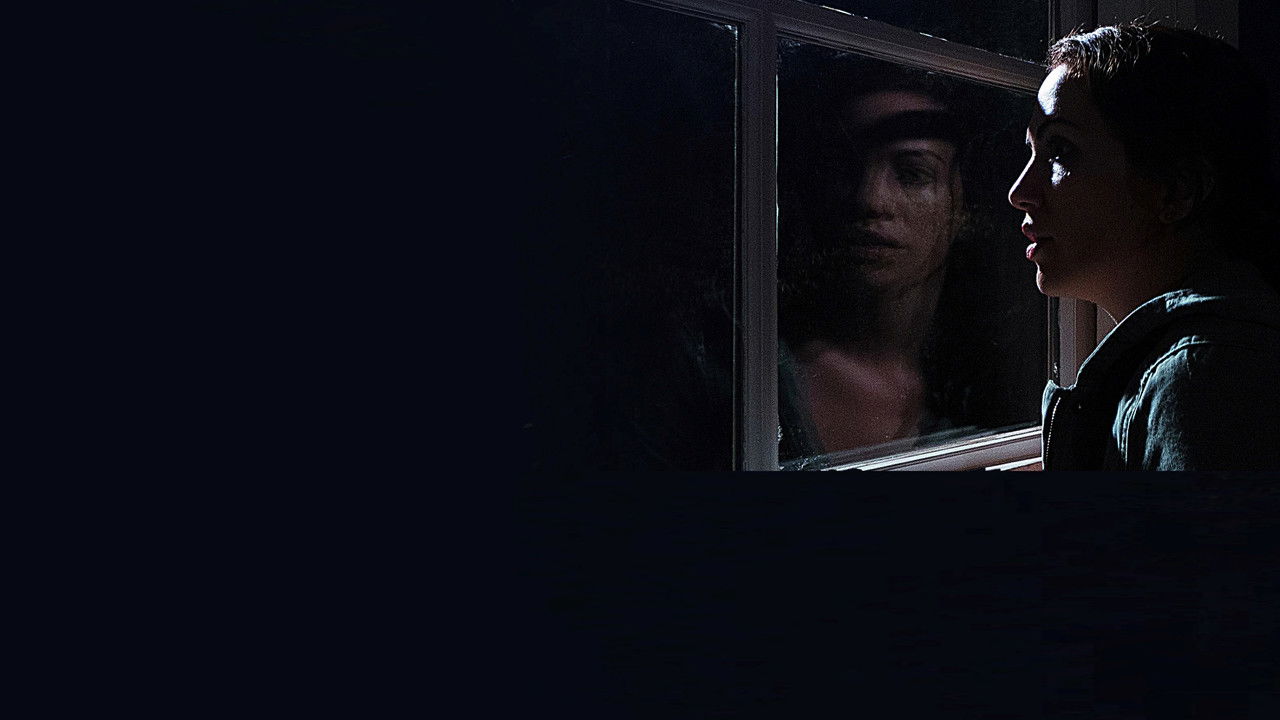

Hush
“Silence can be killer.”
A deaf woman is stalked by a psychotic killer in her secluded home.
About Hush
Why Hush still works
There’s an immediately recognisable trick at the heart of Hush: the lead, Maddie Young, can’t hear a scream. That single fact reshuffles every domestic comfort we take for granted — alarms, phone calls, knockings — and gives the film a neat, terrifying premise.
Directed by Mike Flanagan and running just 81 minutes, Hush keeps its focus tight. It’s a thriller and a horror film that places its chips on escalating choices: a masked man outside, a powerless house, and a woman who has rebuilt a fragile life in near‑isolation after losing her hearing and voice. Kate Siegel plays Madison “Maddie” Young, and the cast around her — from the stranger who becomes the hunter to neighbours and a visiting friend — exists to test that setup again and again. Small, quick, unromantic and punishingly efficient: that’s why people still bring it up.
The idea that sets Hush in motion
Hush stakes everything on one conceit: Maddie, a writer who became deaf and lost the use of her voice as a teenager, lives alone in the woods. Home is meant to be a refuge; here it’s a fragile, custom‑built safety that can be tested on a bad night.
That vulnerability becomes a practical problem when a masked intruder targets the house. The story avoids sprawling complications — it’s mostly about isolation, observation and resourcefulness. When Maddie tries to run, she’s nearly picked off by crossbow bolts and forced back inside; escape, it quickly becomes clear, is never guaranteed.
Even a bold, improvised move — climbing to a window, leaping to the roof — brings its own cost. Maddie is shot in the leg during an attempted escape, yet the same moment also allows her to knock the attacker off the roof and steal his crossbow. The setup is simple, but the stakes that simplicity creates are immediate and ruthless.
Why Madison "Maddie" Young matters
Maddie is the kind of lead that forces the story to do its work properly. Her deafness and loss of voice are not tacked‑on quirks; they are the engine of every decision she makes and every danger she faces. The film keeps returning to the practical consequences of that loss: missed shouts, unread alarms, a reliance on sight and text that most thrillers don’t need to bother with.
Her relationships matter too. She has moved from New York to live alone with her cat while struggling to write a follow‑up novel, and her sister Max is the person she calls — a tether to family that matters when the stranger steals her phone mid‑video call. Those connections give the night a human cost beyond the immediate fear.
The script trusts her to be active rather than passive. When she can’t shout for help she writes messages on glass, types a description into her laptop and locks herself into the one room she can defend. Those moments — lipstick on the door, fingers racing on a keyboard — show how the character’s intelligence and grit replace the sounds she no longer has.
Hush has more on its mind than the plot suggests
On the surface, Hush is a tightly controlled home‑invasion thriller. Beneath that, it’s negotiating what ‘home’ actually protects you from. Maddie’s house is meant to be a self‑made sanctuary — a place she retreats to after success and loss — and the film examines how thin the domestic shield can be when someone knows how to dismantle it.
There’s also a quiet meditation on loss and freedom. Maddie’s deafness is a personal tragedy and a new mode of being; her isolation in the woods is a kind of freedom she chose, but that same freedom makes her vulnerable. The movie keeps returning to the tradeoffs between safety and solitude. Mortality lingers in the wings too. The night reduces choices to survival maths: run and risk being shot, or stay and fight with what’s at hand. Those decisions make the film feel less about spectacle and more about the compressed, urgent reality of being human when everything you relied on is gone.
Hush could not belong to any other decade
Released in 2016, Hush carries the 2010s’ appetite for compact, high‑concept thrills — films that take one neat idea and squeeze every last drop of tension from it. It’s a film that feels economically of its moment: short, sharp and confident in its premise.
The decade liked its genre experiments tidy and clever; Hush sits comfortably in that trend by refusing to expand its world beyond what the premise needs. There’s no fat. Everything exists to ratchet the situation tighter.
That restraint is part of its personality. The 2010s produced a lot of small‑scale horrors that aimed to shock through craft and constraint rather than spectacle, and Hush is a textbook example of that approach.
What has aged — and what hasn't
Many of Hush’s strengths are timeless: the central idea — a deaf woman fighting for her life in her own home — still lands hard. The themes about home and family continue to feel immediate because they’re grounded in choices the character makes, not in gimmicks.
Details that hinge on practical improvisation age well. The lipstick message on the glass and the way Maddie turns a laptop into a lifeline are the kind of small, believable improvisations that still feel urgent and smart when you watch now.
If anything feels of its time, it’s the film’s confidence in compact storytelling — but that’s hardly a flaw. The 81‑minute runtime keeps the pace brisk, and the core setup — isolation, vulnerability, resourcefulness — is as effective in 2026 as it was on release.
Why Hush still matters
Hush endures because it finds a fresh angle on a familiar horror premise. Maddie’s backstory — a writer who lost hearing and voice and retreated from city life to the woods with her cat — gives the film a quiet core that elevates the night’s violence beyond mere set pieces.
The movie keeps a tight focus on how ordinary items become tools or threats: a stolen phone used to taunt her, a dropped earring that reveals the killer’s arrogance, a crossbow that becomes both menace and weapon. Those moments stick because they’re believable extensions of the setup.
There are also scenes that stick in the memory for how they compress desperation into small actions: a neighbour’s fatal arrival, a bloody message scribbled on glass, a last‑ditch fight in a bathroom. They’re compact, brutal and unromantic — the kind of sequences people who grew up with the film tend to quote because they cut to the bone. Finally, the ending — where survival comes through improvised violence, a recovered phone, a 9‑1‑1 call and a quiet moment with her cat — underlines why the film still means something to viewers: it’s about getting through the worst night and finding the small, human things you decided were worth keeping.
Does Hush still hold up?
Yes. Hush is a tidy, lean thriller that still delivers. Its premise — a deaf woman, a masked intruder, and a house that both shelters and traps — is simple, and the film makes the most of that simplicity rather than apologising for it.
If you like horror that trusts a small idea and wrings tension from practical choices, Hush is still worth a watch. It’s 81 minutes of focused dread from Mike Flanagan, where the danger feels intimate because the lead’s losses — hearing, speech, solitude — are woven through every scene.
There are no grand final statements here, just a steady piling on of threats and the stubborn cleverness of a protagonist who uses what she has: lipstick on glass, a laptop for evidence, a corkscrew as an improvised weapon. Those choices keep the film feeling immediate.
So, if you’re deciding whether to press play in 2026: do it. Hush still proves that the scariest things are often the simplest — silence, a locked door, and the knowledge that someone on the other side knows exactly what you can’t do.