House of Wax
“You've never been scared until you've been scared in 3-D.”
A sculptor opens a wax museum to showcase the likenesses of famous historical figures, but quickly runs into trouble when his business partner demands the exhibits become more extreme in order to increase profits.
About House of Wax
Why House of Wax still stands out
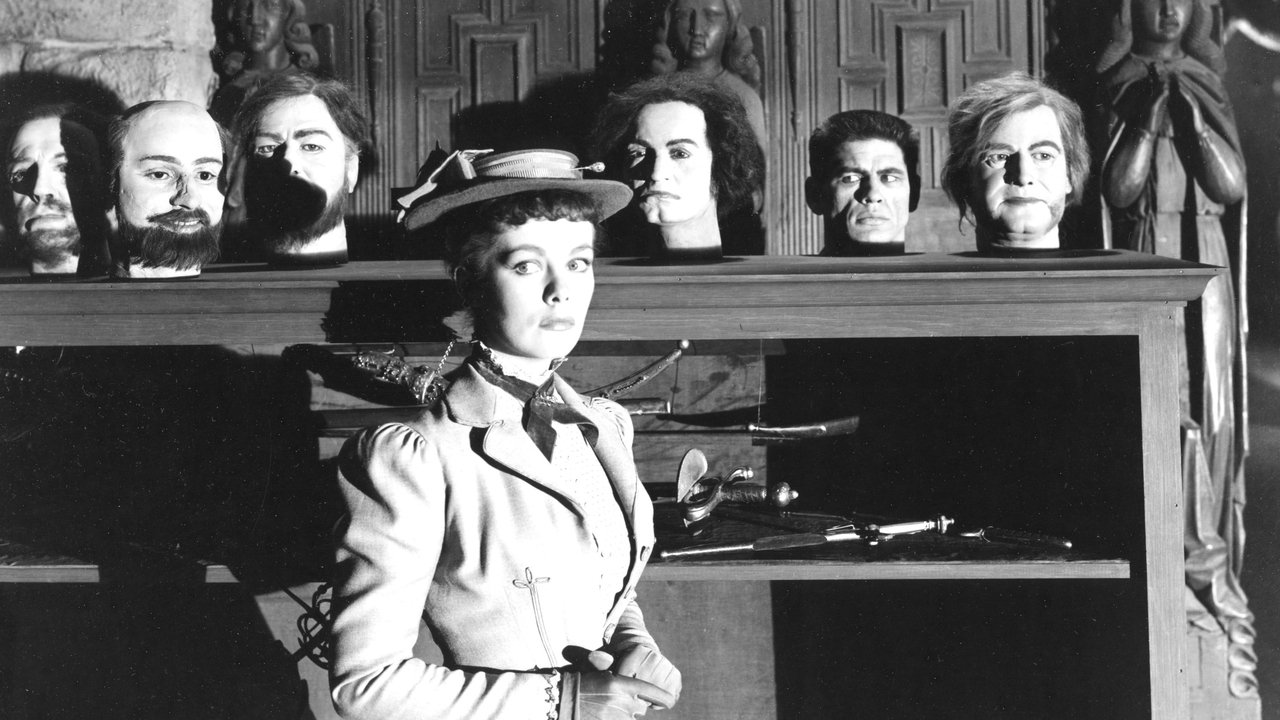
There’s an immediately unnerving promise at the heart of House of Wax: a turn‑of‑the‑century New York wax museum that specialises in—shall we say—rather grisly tableaux. That single idea gives the film a finger on the audience’s throat from the first moment, because a place that celebrates famous deaths is already halfway to being a moral puzzle.
André de Toth keeps the machine tight and unshowy; the film runs a lean 85 minutes and refuses to dilly‑dally. Vincent Price turns up as Professor Henry Jarrod, the sculptor who owns the museum, and the movie largely pivots around what his choices do to the people and business around him.
What lifts House of Wax above mere spooky decoration is that it’s also about appetites. Greed and the hunger for spectacle are woven into the plot — people arguing over what will draw crowds, the pressure to trade craft for shock — which gives the horror a social bite as well as a chill.
The idea that sets House of Wax in motion
The story opens with business and body counts in uneasy balance. After a payout, a violent death is disguised as suicide — an event that starts a chain of suspicion and unease around the museum and the people who work for it.
Jarrod himself survives the blaze that destroys his earlier enterprise, but not unmarked: he returns physically changed and dependent, shown in the film as a man who must negotiate new limitations even as he rebuilds his name.
There’s a running police thread: a petty‑criminal assistant is picked up when incriminating property turns up on him, which slowly pulls police attention toward the darker corners of the museum world.
And then the great late twist of discovery: a friend turns up something inside a figure meant only for display. That single discovery tightens the screw on everything else — it’s the clean, effective setup that turns spectacle into suspicion and keeps us watching.
Why Professor Henry Jarrod matters
At base, Jarrod is the gravitational centre of the whole picture: a talented sculptor who runs a museum devoted to famous, often bloody, ends. The museum isn’t just his business; it’s where his life, craft and the story’s moral questions collide.
Vincent Price is credited in the role, but the important point for the film is that Jarrod’s choices set the plot in motion. When his business is pushed and fails, the ripple effects touch every relationship around him — customers, rivals and the people he hires to keep the place functioning.
Those around Jarrod help define him on screen: there’s the local detective who becomes tangled in the investigation, the younger sculptor who represents a kind of artistic continuity, and family figures who tie the everyday world to the museum’s gothic business.
Because the film frames the waxworks as both art and commodity, Jarrod matters not only as a personality but as the figure who embodies that uneasy middle ground between craft and commerce.
House of Wax has more on its mind than the plot suggests
Strip away the jump scares and the masked reveals and the film makes a fairly plain point: spectacle can be a commodity that warps judgment. The story repeatedly returns to the idea that people will push extremes to get an audience’s attention.
Linked to that is a quieter complaint about consumption. The museum trades in curated horrors for paying visitors, and the film keeps nudging us to notice how appetite — for money, for novelty, for sensation — can change what gets shown and who gets hurt.
House of Wax could not belong to any other decade
House of Wax arrived in 1953, early enough in the decade to feel like a direct continuation of the era’s appetite for tightly plotted, audience‑forward thrills. Its running time and pacing reflect a studio instinct to get to the point and keep viewers engaged.
That early‑50s positioning helps explain the film’s priorities: it doesn’t indulge in slow psychological unraveling so much as it prefers a compact, showman‑style delivery. It’s very much a product of its moment — shaped by what audiences were expected to take home after an evening at the pictures.
Why House of Wax still matters
You remember the museum. That’s the hook that sticks: a place built to display death as attraction, and a proprietor who tries to rebuild in the wreckage of his earlier life. The premise is simple, monstrous and hard to forget.
The film follows a familiar human trajectory — a partner pushes for bigger shocks, disaster follows, and someone is left to pick up the pieces — but it turns that trajectory into a string of memorable beats: arson, survival with injury, the attempt to reopen and the moral choices involved in how to sell the new show.
That reopening is notable because Jarrod’s new enterprise explicitly leans into the very spectacles his old rival praised, complete with assistants and displays that blur the line between art and something far darker.
And the film doesn’t shy away from the consequences: investigative threads pull the truth into light, the horrifying discovery about what the figures actually are is made explicit, and the story closes on the physical and moral cost of trading one’s art for commerce.
Does House of Wax still hold up?
Yes — if you’re after a tight, idea‑driven horror picture that prefers moral sketches to long interior monologues. The film’s premise (a sculptor whose museum traffics in grisly tableaux) remains striking, and Vincent Price’s central role anchors that notion in a single human figure you can follow.
There are clear, simple story engines at work: a partner pushed by the market, arson and insurance fraud that set a chain reaction in motion, and a survivor who must rebuild both reputation and business. Those beats keep the action moving and the stakes immediate.
The themes of greed and consumerism are well baked into the narrative: the film is alert to how the pressure to sell spectacle can warp choices, which gives the horror some moral weight as well as thrills.
So yes — watch it. It’s compact (85 minutes), economical and unembarrassed by its own showmanship. If you want something that still makes you squirm while reminding you how business and taste can become dangerous companions, House of Wax is worth the evening.