His House
“When ghosts follow, they never leave.”
After making a harrowing escape from war-torn South Sudan, a young refugee couple struggle to adjust to their new life in a small English town that has an unspeakable evil lurking beneath the surface.
About His House
Why His House still stands out
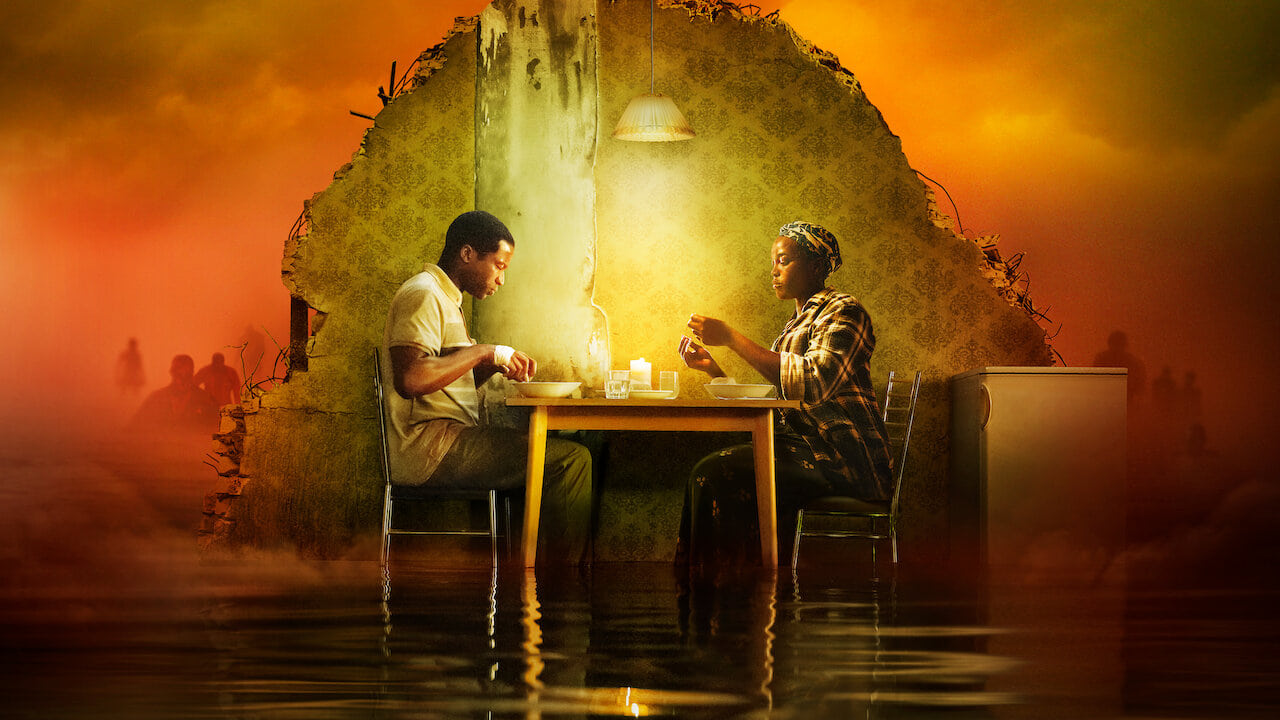
There’s a moment early on when you realise His House is doing two jobs at once: it’s charting the aftermath of a desperate crossing from South Sudan, and it’s setting up a classic haunted-house bargain. The couple at the heart of it — Bol and Rial — arrive in Britain with everything a parent carries: grief, guilt and a single stubborn hope that they can keep what’s left of their family together.
Remi Weekes’ 2020 film squeezes all of that into a brisk 93 minutes and refuses to be conventional about where the scares come from. It’s a thriller and a ghost story, yes, but it’s also a movie preoccupied with home, safety and the fragile rules that make a house livable.
Wunmi Mosaku plays Rial and Sope Dirisu plays Bol. The film keeps both their choices under a careful, unsparing light — the private acts that look like survival to some and betrayal to others.
The idea that sets His House in motion
At the centre of the film is a simple, effective trick: the domestic and the supernatural are braided together by a folklore explanation. Rial identifies the presence in their home as an apeth — a night witch — and tells a village tale about a thief who accidentally stole from one by the river.
That tale matters because it turns the house into a ledger. The apeth isn’t just scary; it’s owed something. When the thief built his home the apeth moved in with him and haunted him — a small folk logic that snaps the couple’s past choices onto their present terrors.
Once that ledger exists, repairs and officialdom become insufficient. The supernatural requires a different accounting. Which is to say: the setup works because the film gives the haunting a motive rooted in culture and history rather than leaving it as atmospheric wallpaper.
Why Rial matters
Rial is the film’s emotional compass. We meet her as someone who won’t let go of her culture: she keeps their daughter’s necklace close, sits on the floor to eat and resists the small, public acts Bol performs to fit in. Those details aren’t flourish; they’re choices that keep her connected to what was lost.
When strange phenomena begin — visions of Nyagak and a mysterious man that seem to escape into the walls — Rial is the one who names the force and offers the only language that explains it. Calling the presence an apeth gives her agency, even as the house strips other choices away.
Rial’s backstory is crucial to why she matters. At one point she’s thrown back into South Sudan in a classroom and reunited with old friends who were massacred. We learn she survived by hiding. That survival shapes her: it’s not just trauma, it’s a set of habits and refusals that steer her through the haunting.
In the end, Rial makes the decisive act that defines the couple’s future. She chooses to save Bol rather than surrender to an alternative that would return Nyagak; she slits the apeth’s throat and then, with Bol, decides to stay in the repaired house. Her choices anchor the film’s idea of what living with the past actually looks like.
His House has more on its mind than the plot suggests
On the surface it’s a ghost story. Dig a little and it’s about family — and specifically the brutal choices parents can make in the name of protection. The film repeatedly returns to that parental imperative: what are you willing to do, and what are you willing to live with afterwards?
There’s also a steady concern with home and safety. The house is meant to be sanctuary: instead it becomes a site where the couple’s past, private failures and public pressures are made physical. Freedom is complicated here; asylum is not a clean slate but a place where past debts and present threats collide.
Authority is threaded through the picture too. The couple arrive under strict conditions, aware that mistakes could mean deportation. Those external rules press on the personal choices they make inside the house — making small domestic acts feel like political stakes.
Finally, mortality sits quietly in the background: loss, the shortness of life and how the living carry the dead. The ghost is both literal and a reminder that some debts can’t be erased by paperwork or goodwill.
His House could not belong to any other decade
His House arrived in 2020, at a moment when stories about migration and belonging were very much in public view. The film’s specific timing matters because it folded those conversations into a horror template, asking what ‘settling’ really costs.
That placement in the early 2020s also gave the film a kind of conversational shorthand: audiences were ready to see a haunted-house story that doubled as a political and familial drama. It felt of the moment without needing to be trendy about it.
Put simply: being a 2020 movie isn’t decoration here. The film uses its moment to make the outside world — asylum rules, suspicion, the pressure to assimilate — pressurise the domestic story at its centre.
What has aged — and what hasn't
Many of the film’s strengths are the very things that keep it feeling current. Its focus on family and the idea of home remain sharp: the emotional choices Bol and Rial make are recognisable and hard to shrug off, even now.
The folklore device — the apeth who moves in with the house and haunts it — keeps the supernatural grounded in human story. That linking of myth to moral consequence still gives the scares an emotional backbone rather than leaving them as fleeting shocks.
There are elements that age differently. Bol’s gesture of burning everything they brought with them reads as a desperate attempt to erase the past, and the fact the apeth continues to torment him means the film still feels honest about how quickly symbolic acts can fail. That stubborn refusal of easy solutions still works.
And finally, the decision to stay — to live with the ghosts rather than be chased by them — feels like a mature, quiet ending. The repaired house and the couple’s choice to remain make the film more than a horror neat-finish; it’s a story about learning to carry what you cannot ever fully put down.
Why His House still matters
The film’s memory lives in its combination of real-world urgency and intimate terror. Bol and Rial’s crossing — an overcrowded boat across the Channel where many do not reach shore — is the kind of detail that anchors the supernatural in lived experience, and it keeps the haunting from ever feeling like mere genre play.
Once they’re granted probationary asylum they’re placed in a shabby house on the outskirts of London and given strict restrictions — a bureaucratic pressure-cooker that colours every decision. Neighbourly racism and the caseworker’s offhand remark hoping they’re ‘the good ones’ press on them in ways the ghost never could alone.
Those pressures are what make the couple’s private fractures feel like public stories. Bol tries to prove they belong; Rial clings to culture and the memory of Nyagak. When folkloric explanation meets the reality of asylum rules and social hostility, the film’s concerns feel memorably joined-up.
Finally, the ending — Rial killing the witch, the house repaired, the couple choosing to stay — leaves a lingering, difficult image: that sometimes survival is about choosing to live with the past rather than pretending it doesn’t exist. That thought is why the film keeps being returned to by viewers who remember it.
Does His House still hold up?
Yes. His House still holds up because its scares are never purely decorative: they’re bound to a refugee story that keeps intruding on the domestic. The opening facts — a perilous crossing where many don’t survive and a probationary asylum that lands the couple in a shabby house under strict rules — keep the stakes real throughout.
Remi Weekes packs the film into 93 minutes without skimping on the moral weight. Bol’s attempts to assimilate and Rial’s refusal to let go of their culture create a tension that is as moving as it is unsettling; the supernatural only sharpens that human argument.
If you’re thinking about whether to watch it now, go for the way it treats grief and responsibility. It’s not content to scare you and leave; it wants you to live with its choices afterward, the same way the couple choose to live with their ghosts.
In short: His House still works because it makes horror earn its right to be haunting — by making the house mean something you can recognise the morning after the credits roll.