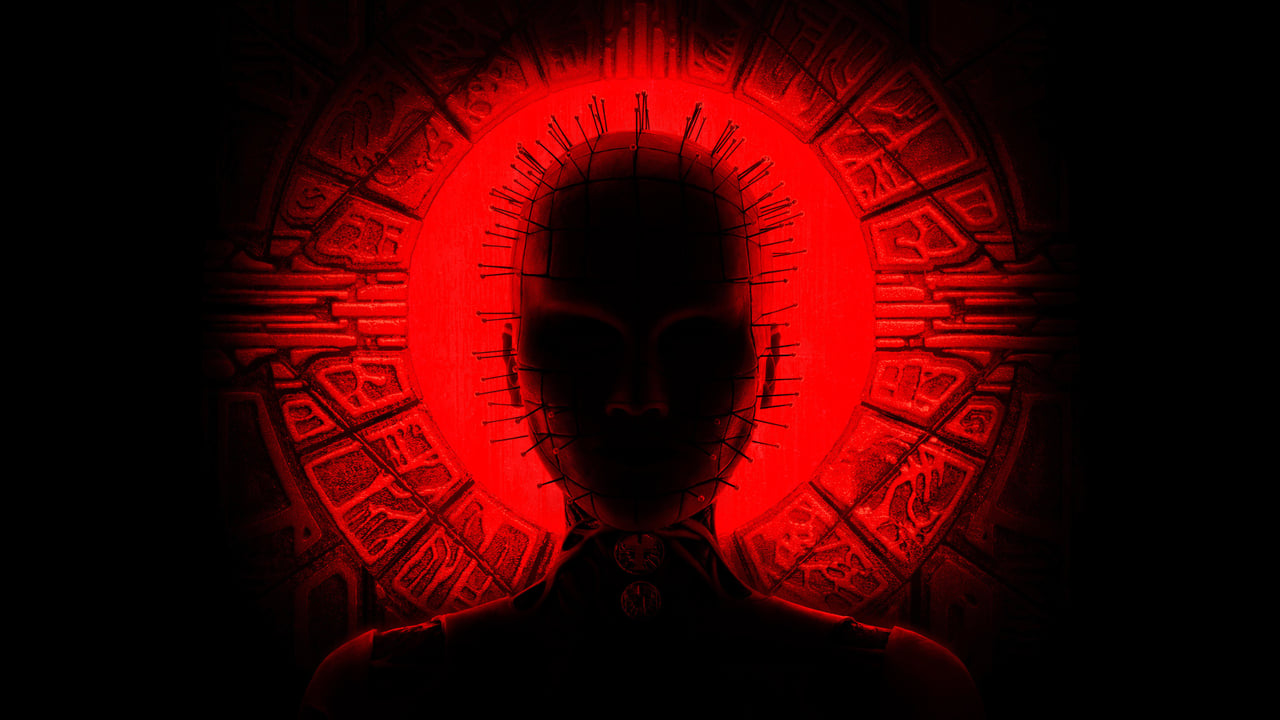
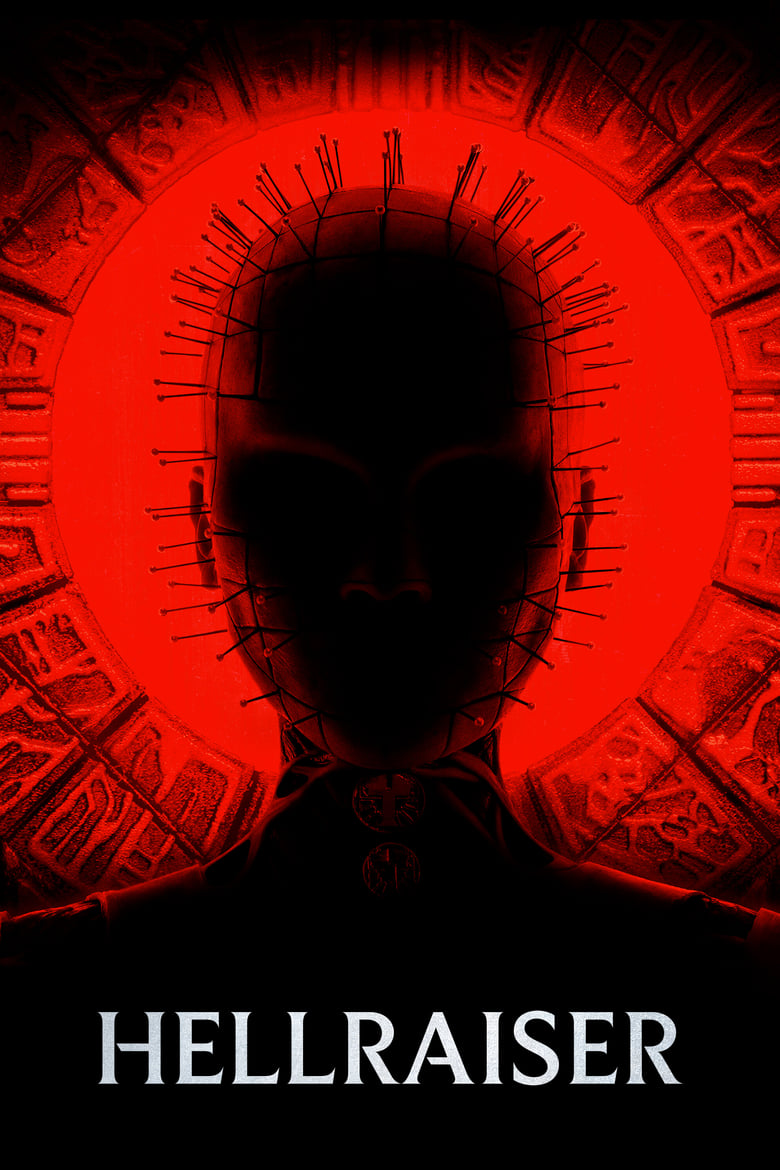
Hellraiser
“Unlock your fears.”
A young woman struggling with addiction comes into possession of an ancient puzzle box, unaware that its purpose is to summon the Cenobites, a group of sadistic supernatural beings from another dimension.
About Hellraiser
Why Hellraiser still stands out
It opens like a dare. A rich man at a party hands a stranger a beautifully odd mechanical cube, it snaps a blade and the room becomes a doorway. Limbs and chains follow. That opening isn't shy: it tells you straight away this Hellraiser wants to shock you, and it does so with a kind of mechanical, grotesque clarity.
David Bruckner directs with an appetite for both the grand and the intimate. He stages that initial horror and then pulls the camera back to a more human centre: Riley McKendry, a young woman trying to hold a life together six years after hitting rock bottom. That shift — from the mansion’s extravagant cruelty to Riley’s cramped, complicated household — gives the film its shape. The Cenobites remain the monstrous engine, but Riley is the emotional gearbox: she’s the reason you care which doors get opened.
The idea that sets Hellraiser in motion
The film hinges on a tidy, brutal bargain: a mysterious puzzle box that insists on being completed and demands marked lives in return. When Riley and her boyfriend find the box in an empty warehouse, it’s both a curiosity and a threat — a small object with very large consequences.
From there, things escalate quickly. People vanish or are taken; the Cenobites arrive and demand sacrifices; Riley and her handful of allies try to work out how to stop the machine in front of them. At one point she is confronted with an awful ultimatum: choose two others, or choose herself.
That simplicity is a strength. The puzzle box gives the story a rule-set you can follow — the configurations, the sacrifices, the promise of a "gift" — and that rule-set keeps the horror focused. It’s not ambiguity for its own sake; it’s a compact, merciless logic that forces characters to make painful decisions.
The physical shelter of the mansion — and later the steel doors the protagonists cling to — turns the story into something like a siege. You get the sense the real question isn't only whether they can stop the Cenobites, but what people will do to protect a home and each other while the monsters are banging at the walls.
Why Riley McKendry matters
Riley isn’t a scream-queen set piece; she’s the person the movie keeps coming back to. Six years into recovery, she’s sharing a house with her estranged brother, his partner and a roommate — a precarious domesticity that makes every threat feel personal.
The film makes her curiosity a believable pressure: she solves the puzzle in a park, she hauls the mystery home, and that agency propels the plot. The box is dangerous because she touches it, and because she won’t leave the problem alone.
Her relationships give the stakes weight. Matt’s guilt over their past and his later wound — he cuts himself while trying to help her — make the horror intimate. This isn’t just a creature-feature about monsters; it’s a story about how families get pulled apart and, sometimes, what keeps them tied together.
Hellraiser has more on its mind than the plot suggests
Strip away the set pieces and Hellraiser keeps returning to a handful of simple human things: family, loss, the idea of home and what it costs to protect both. The supernatural puzzle works as a testing device — put people under pressure and see what they do for one another.
Parental protection is not literal here. The film treats protection as a broader instinct: to defend those you love from harm even when the price is horrific. That instinct collides with freedom — the box promises strange rewards — and courage becomes the currency that decides who pays and who survives.
Loss hangs over many of the choices. The offer to restore someone resurrected by the Cenobites reads as a cruel shortcut through grief, and Riley’s refusal to take it turns a typical resurrection beat into a moral crossroads about acceptance and the cost of easy solutions. That mixture — courage, loss, protection and the longing for freedom from pain — gives the horror emotional ballast. The movie’s terror works best when it’s not only about bodies being torn but about what those torn bodies mean to the people left inside the house.
Hellraiser could not belong to any other decade
Released in 2022, this Hellraiser wears its era in the way it mixes old and new. The puzzle-box premise is pure horror folklore, but the film’s concerns — recovery, chosen families, fragile households — feel very much like 2020s anxieties.
That decade’s horror has often been about close relationships under strain, and this film places a fractured domestic unit at the centre of cosmic cruelty. It’s a 2020s horror in its choice of intimate stakes rather than simply expanding spectacle.
So while the Cenobites themselves are timelessly gruesome, the movie frames their threat through contemporary wounds and conversations about home, responsibility and the messy ethics of trying to save the people closest to you.
In short: the monsters are classical, the social questions are of now. That combination is what makes this Hellraiser feel of the twenty-twenties rather than an update pretending to be new.
What has aged — and what hasn't
The film’s focus on a close household under threat still lands. Riley’s situation — a recovering addict living with her estranged brother, his partner and a roommate — feels immediate and recognisable, and that rootedness helps the horror remain readable.
The emotional beats tied to family and home age better than the gore. Matt’s guilt and the physical wound he suffers while trying to help Riley keep the stakes felt and small, which makes later monstrous moments land harder because they’re attached to people you’ve already met.
There are moments that lean on familiar genre moves — the solved puzzle in a park, the van journey that goes wrong — but those beats are used to escalate character pressure rather than create cheap shocks. That restraint helps the film still feel watchable now.
In other words: the human choices hold up. The central idea of a domestic unit scrambling to protect itself makes the film feel less like a period piece and more like a present-tense nightmare.
Why Hellraiser still matters
There are images from the film that lodge in the memory — the box snapping shut, the Cenobites’ demands, the way chains arrive like businesslike instruments of doom. Those sequences give the film a durable, nightmarish shorthand.
But what keeps people talking is how the supernatural is tethered to small, painful decisions. The box’s rules — several configurations that demand victims and promise a reward from Leviathan — turn grand metaphysical ideas into grotesque, domestic bargaining.
Key moments linger: a lawyer trying to recover the object, a hidden passage in a bar, a friend flayed in a hallway. Each set-piece ties back to the film’s central moral choices, which is why the story’s final offer — that Matt could be brought back — feels less like a shock tactic and more like a test of the characters’ souls. That blend of tactile horror and ethical pressure is the legacy: Hellraiser remains a film people return to when they want a horror that asks what we’ll trade to stop grief, and whether some doors should remain closed even if the alternative hurts.
Does Hellraiser still hold up?
Yes — with a caveat. If you want a film that pairs gruesome invention with moral pressure, Hellraiser works. It’s a 2022 horror that trusts its creepy toybox and trusts its lead to carry the choices that follow from opening it.
The film is strongest when it keeps the terror personal: a fractured household, a brother who injures himself trying to help, friends in a van trying to get a woman home. Those are recognisable, human situations wrapped in monstrous consequences.
There are moments of spectacle — the Cenobites demanding sacrifices, Leviathan’s bargain — and the movie uses them to test characters rather than decorate them. Riley’s refusal to accept a resurrection offer is the kind of bleak, grown-up decision that lifts the film above mere gore-for-gore’s-sake.
So watch Hellraiser if you like your horror to make you uncomfortable in a thoughtful way as well as a physical one. It’s a modern fright with old-fashioned moral stakes: the box is the temptation, but the people inside the house are the thing you’ll remember.