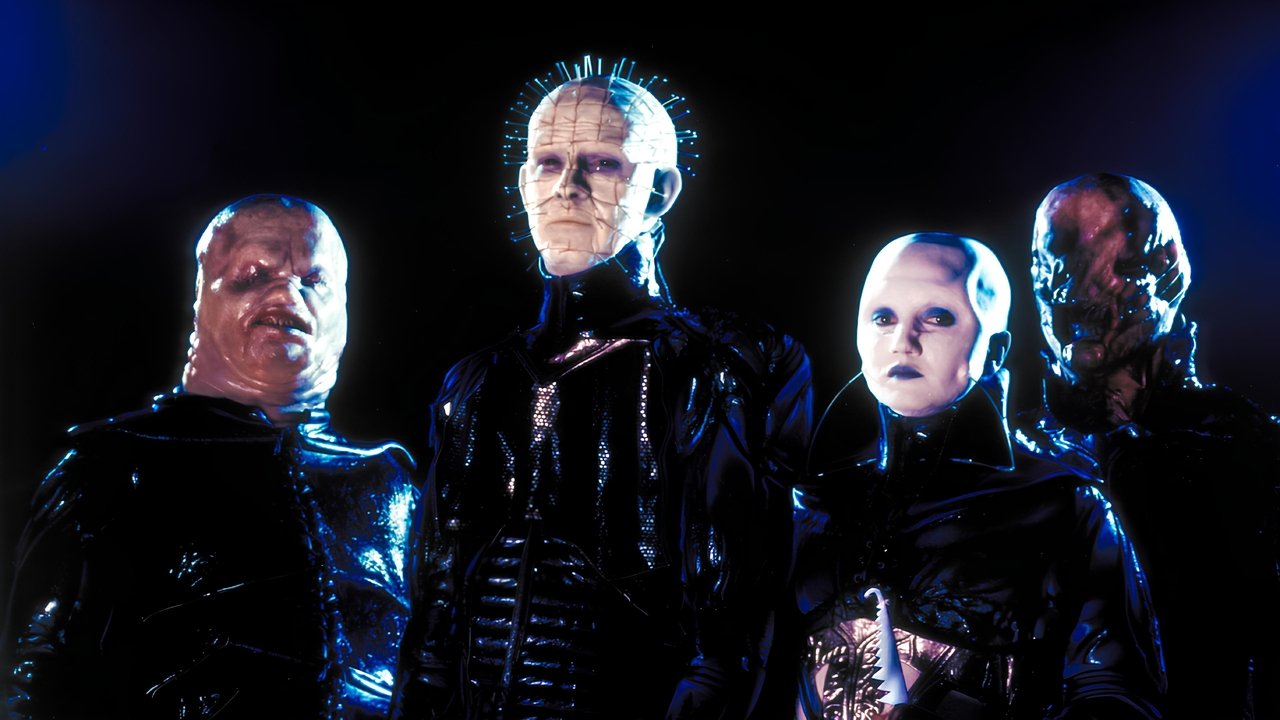

Hellbound: Hellraiser II
“Time to play.”
Now confined to a mental hospital, young Kirsty insists her supposedly dead father is actually stuck in Hell following his wife’s betrayal. Few believe the young woman’s lurid stories aside from the thrill-seeking Dr. Channard. Kirsty is undeterred and, with the help of a fellow patient, heads to Hell for a rescue.
About Hellbound: Hellraiser II
Why Hellbound: Hellraiser II is still worth talking about
There are horror sequels that simply crank everything up. Then there’s Hellbound: Hellraiser II, which leans into the first film’s appetite for strangeness and asks different questions: what happens after the box has been opened and the rules are no longer private? That shift — from a single shocking incident to a full-scale mythology — is what keeps people arguing about it.
Tony Randel directs a 99-minute plunge through grief, memory and temptation. The film brings back Pinhead and expands the world around him: Kirsty Cotton wakes up in a psychiatric hospital, a bloody mattress becomes an object of obsession, and new characters — like the puzzle‑loving patient Tiffany — are drawn into the mess. Genre-wise it’s a horror and a fantasy at the same time, which is why it still feels a little untidy in the best possible way. It has the blunt teeth of a horror picture and the weird architecture of a fantasy — and that collision is what makes it worth revisiting.
The idea that sets Hellbound: Hellraiser II in motion
The engine is simple and a touch perverse: the fallout of the first film. Kirsty Cotton, traumatised and hospitalised after her father’s death, is still clutching the story of the puzzle box and a bloody mattress that shouldn’t exist.
A doctor with a private fascination for the box brings that mattress home and uses another patient to trigger it. That small, clinical act — the misuse of care and the betrayal of trust — is the propellant. It’s not some grand cosmic plan at first; it’s curiosity and cruelty inside a respectable house.
Kirsty’s life inside the hospital introduces Tiffany, a young, mute patient who can solve puzzles the way other people read a book. That talent isn’t a gimmick: it’s the specific skill the story needs to push deeper into the puzzle‑world and the moral choices that follow.
And crucially, Kirsty ends up in possession of the box herself and follows the people who opened it into the labyrinth it reveals. That choice turns a domestic nightmare into an active journey — a rescue, a confrontation and a test of whether the world of the Cenobites can be understood or negotiated with.
Why Pinhead matters
Pinhead arrives in this film with history attached: the shell of a man named Elliot Spencer, once a British military officer in the Raj, is the origin behind the Cenobite the characters now face. That backstory gives him a weirdly human shadow — a reminder that these figures started out as people.
We see Pinhead and the Cenobites more as an environment than a single threat. They find Kirsty in the labyrinth and, in a bafflingly polite way, tell her she is free to explore. That line turns the encounter from a pure attack into a test: the Cenobites have rules, and they invite you to walk them.
Pinhead’s presence is useful because it reframes the stakes. He isn’t merely the monster at the centre of the poster; he’s the point where memory and transformation collide. When Kirsty shows him a photograph of Spencer, something in him shifts and the film asks whether the monster remembers being a man.
That flicker of remembered humanity matters to the story. It’s one of the places the film’s themes — family, memory and what we owe one another — fold back into the horror, making the Cenobites more than set dressing and Pinhead more than a face with nails.
Hellbound: Hellraiser II has more on its mind than the plot suggests
On the surface it’s a tale of blood, boxes and a descent into a maze. Underneath it’s asking about freedom. The film spends a surprising amount of time on who gets to be free and at what cost — whether freedom is an emancipation or a hunger.
Family rolls through the whole thing: Kirsty’s actions are driven by the ties to her father and the wound left by betrayal. The monsters, too, are haunted by their previous lives, so family and memory blur into one another in the labyrinth.
Home and safety are treated cynically. The hospital and a doctor’s house — places that should shelter and heal — become the vectors for violence and temptation. The movie is interested in what happens when the places we trust turn dangerous. Courage and heroism in this film aren’t heroic in a tidy, blockbuster way. They’re scrappy, pragmatic and sometimes sacrificial. The film foregrounds the small acts — solving a puzzle, wearing someone’s skin as a disguise — as the routes back to safety, however partial that safety might be.
Hellbound: Hellraiser II could not belong to any other decade
Released in 1988, Hellbound sits at the tail end of a decade that loved extremes. If the 80s had a cinematic temperament it was a taste for spectacle married to earnestness — and this movie wears both on its sleeve.
That combination lets it swing between clinical, melodramatic scenes in hospitals and genuinely strange fantasies in the labyrinth. It’s the sort of tonal leap that felt comfortably bold in an era when genre films were happy to mix registers.
Being a late‑80s film also helps explain its appetite for expanding myth. This was a moment when sequels often tried to turn single ideas into ecosystems — and Hellbound does exactly that, moving the puzzle box from an incident to a whole set of rituals and rules.
Call it period flavour rather than nostalgia: the film’s commitment to making the nightmare feel like a world — not just a chase — is very much of its time, and that particular kind of ambition is why you can sense the decade in its choices.
What has aged — and what hasn't
Some elements still land cleanly. The movie’s preoccupation with family and memory — Kirsty clinging to the idea of her father, the Cenobites’ flickers of humanity — gives the spectacle a human heartbeat that modern viewers can still feel.
Other choices feel more awkward now. The plot turns on the doctor bringing a mattress home and persuading vulnerable, mentally ill patients to participate in something dangerous. Using institutional power to exploit the unwell reads differently today and can be uncomfortable to watch.
The idea of seduction and consumption — Julia drawing patients to feed her regeneration — still works as a grotesque horror image, but its reliance on the voicelessness of certain characters (patients, a mute child) can feel like a blunt narrative shortcut.
Small closing details remain deliciously eerie: a team moving Dr Channard’s possessions discovers there’s more hiding inside the house’s accoutrements than boxes and books. That final, quietly grim note translates well; it’s the kind of last image that keeps people thinking after the credits.
Why Hellbound: Hellraiser II still matters
People remember this film because it enlarges the original’s questions. The return to Kirsty’s trauma, the introduction of Tiffany and the further exploration of the Lament Configuration make it feel like a franchise story that’s still interested in character, not just shocks.
It’s also where the mythology gets weirder: Leviathan as a rotating diamond above the labyrinth and Julia’s campaign to bring souls add an almost religious scale to the horror. Those big, strange ideas stay in the head in a way a standard jump‑scare rarely does.
The film’s central exchanges — Pinhead’s offer of exploration, the Cenobites’ brief recollection of being human — create emotional beats amid the carnage. Moments like Spencer’s recognition give the spectacle a melancholy edge that people tend to hold on to. And it finishes on a small, nasty image that refuses to feel clean: while Channard’s house is cleared out, someone discovers the house still contains a presence. That sort of lingering detail is why viewers walk away with an odd, persistent chill instead of mere tiredness.
Does Hellbound: Hellraiser II still hold up?
Yes — with an asterisk. If you want a tidy, modern horror that smooths edges and explains everything, this isn’t it. But if you appreciate a film that expands its first‑film premise into something messier and more mythic, it’s worth watching. Tony Randel directs a compact 99‑minute film that keeps the stakes personal even when the set pieces grow strange.
Doug Bradley’s Pinhead remains the anchor, and Ashley Laurence’s Kirsty is the practical centre: she’s the one who carries grief into action, who pleads for a destroyed mattress and then follows the problem into the very thing that made her world fall apart. That tension between being scared and being responsible is the movie’s clearest virtue.
Be prepared for choices that haven’t aged comfortably — the exploitation of vulnerable patients and the way certain characters are positioned as voiceless plot devices can grate. But the film’s core interests — freedom, family and the idea that home can be a trap as well as a refuge — still hit in ways that feel honest rather than gimmicky.
Watch it as a late‑80s film that wasn’t content to recycle shocks. Hellbound: Hellraiser II asks you to stay with the nightmare long enough to remember who you came in with — and that, for all its flaws, is why it still matters.