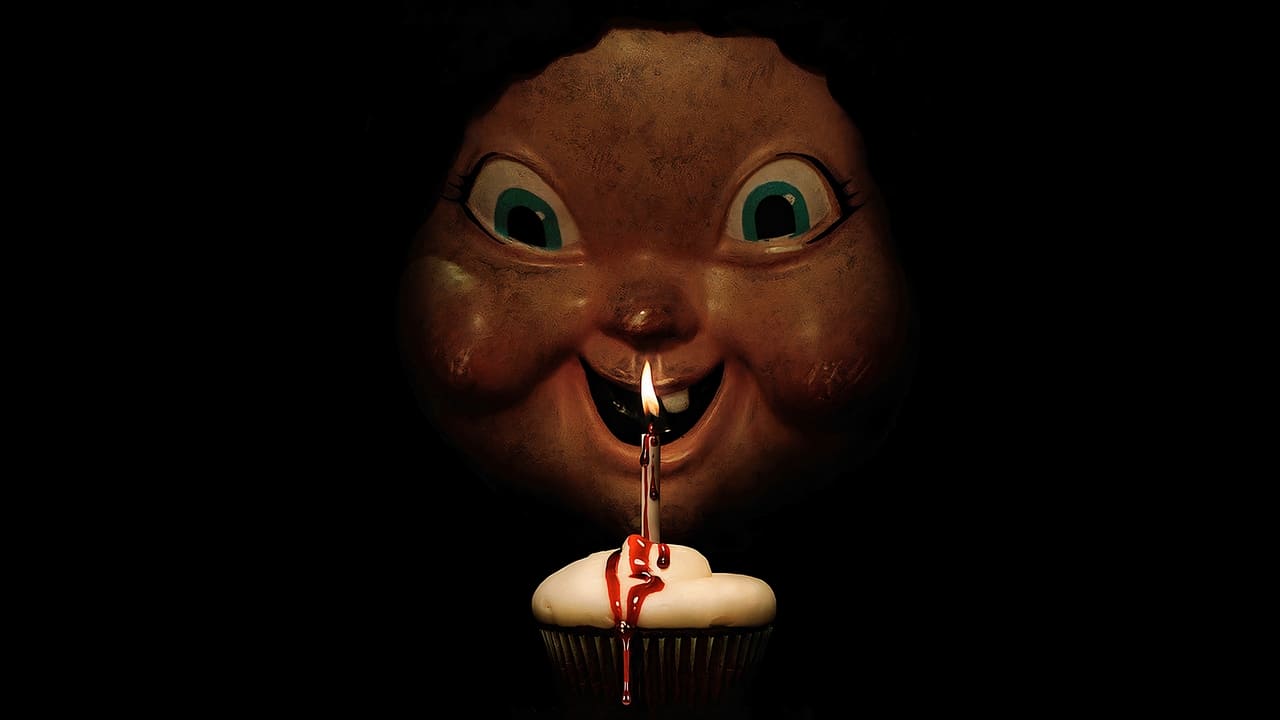

Happy Death Day
“Get up. Live your day. Get killed. Again.”
Caught in a bizarre and terrifying time warp, college student Tree finds herself repeatedly reliving the day of her murder, ultimately realizing that she must identify the killer and the reason for her death before her chances of survival run out.
About Happy Death Day
Why Happy Death Day still stands out
Happy Death Day opens on a piece of business every film student knows how to love: a young woman wakes up in the wrong bed and has to account for the night before. Tree Gelbman finds herself in classmate Carter Davis’s dorm room after a drunken evening and promptly brushes him off — but it’s the start of something very peculiar.
Christopher Landon’s 2017 film condenses that one odd morning into a loop. Tree keeps waking up in Carter’s bed to relive the same birthday, and in each cycle the cheerful surface glitches into slasher violence. That collision — birthday-party comedy sat next to masked-murder tension — is the film’s personality in miniature. It’s efficient storytelling: 96 minutes that mix mystery, time-travel beats and black-comedy gags without lingering. Jessica Rothe’s Tree is the axis the movie spins around, and Israel Broussard’s Carter is the hand that helps her turn the dial.
The idea that sets Happy Death Day in motion
The movie gives you its hook quickly: after partying, Tree wakes on her birthday in Carter’s dorm and thinks she’s simply having a rough morning. That ordinary disturbance turns extraordinary the instant murderous violence repeats itself.
At first Tree treats the loop like a puzzle to be solved. She keeps running the same day, testing choices and following leads, as if each iteration is a clue to a whodunnit. That strategy turns the time loop into a tool rather than just a gimmick.
Some loops take her from a hospital bed to a car chase; others force her into painful moral decisions. Carter’s practical suggestion — make the loop pay: look for the killer — is the plot’s honest engine: it makes repetition useful rather than merely annoying.
And beneath the sleuthing is a simpler human beat: Tree’s life isn’t the same at the end of the film as it was at the start. She ends a complicated affair and opens the door to a reconciliation she’d been avoiding, which reframes the whole exercise of second chances.
Why Tree Gelbman matters
Tree Gelbman isn’t a cipher for the plot — she’s the thing being tested by it. The day rewinds around her, but it’s her choices that change. That matters because the movie asks you to watch someone learn, not someone be entertained by the gag.
We meet her in that familiar shaky state — disoriented after a party, waking up in Carter’s room — and the loop forces a kind of accounting. The repetition strips away excuses. Part of the story’s momentum comes from watching Tree confront what she’s been avoiding.
She shares a flat with Lori Spengler, and the roommate relationship eventually ties into the mystery itself. Tree’s private life is messy: an affair with a married professor is on the record, and the loop becomes the blunt instrument that forces honesty with herself and others.
There’s also an estranged family line that matters. Tree meets her father during the events of the film and, by the end of her odyssey through the day, that meeting is the start of a reconciliation she’d previously dodged. The plot’s repetition becomes a chance to repair real things.
Happy Death Day has more on its mind than the plot suggests
On the surface the movie is a whodunnit wrapped in a slasher joke. Underneath, it’s occupied with freedom — the backward kind that comes from being forced to repeat a choice until you learn why it matters.
Mortality sits at the heart of that setup. If you truly don’t know whether you’ll die tomorrow, or later the same day, the everyday decisions gain a weight they didn’t have before.
Loss threads through the film, too. The loop isn’t just an annoyance; it’s a rehearsal for grief and the fear of losing what matters. That gives the story a seriousness beneath its comic exterior. Finally, questions about lifespan — what you can do with the time you have — animate the whole premise. The repeats turn time itself into a lens: not how long you live, but how you live while you can.
Happy Death Day could not belong to any other decade
Being a 2017 film places Happy Death Day squarely in the 2010s moment when genre boundaries were being cheerfully blurred. The movie’s very existence — a short, neat device wrapped in crowd-pleasing packaging — feels like a product of the decade’s appetite for clever one-note premises.
Its timing matters because the 2010s were a period where audiences were happy to accept high-concept ideas carried out briskly. Happy Death Day runs its loop, makes its point, and leaves room for a laugh — all within a compact runtime and release window.
That economy is part of its 2010s personality: the era liked films that could stake a clear idea and then execute it without over-explanation.
Put simply: the film belongs to 2017 because it uses a neat, explainable hook and treats it with both affection and speed — a combination that felt very of its time.
Why Happy Death Day still matters
People remember Happy Death Day because the loop changes what feels at stake. Tree repeatedly waking back in Carter’s bed — and having to convince him the day is repeating — turns an initially funny premise into an ongoing mystery with real consequences.
The film’s clever misdirection also lingers: the cupcake gag, the hospital scenes and the string of suspects give the story memorable beats. One minute you’re in party mode; the next you’re running toward a hospital break-out and a bell-tower showdown.
Crucially, the loop isn’t resolved by brute force alone. Tree comes up against a moral choice — killing one threat would make another loss permanent — and that pushes her into desperate action that reframes everything she’s been through.
And the final reframing — discovering the true source of the threat, watching relationships shift, and seeing Tree and Carter finally reach a tentative normality — gives the whole exercise an emotional endpoint that people can take home. It’s the mix of twist, personal repair and a neat punchline that keeps the film in conversation for viewers who grew up with it.
Does Happy Death Day still hold up?
Yes — if you want a tight, imaginative mid‑budget genre piece that doesn’t overstay its welcome. At 96 minutes, Christopher Landon delivers a short, sharp concept with enough plot turns to keep the loop from going stale.
The film’s pleasures come from its blend: the recurring morning in Carter’s dorm, the repeated deaths, and the way those repeats force Tree to confront choices she’d been dodging. That combination gives comedy moments a darker underside and makes the mystery matter.
There’s also a satisfying payoff for viewers who like the idea of growth earned through repetition: Tree stops running from her life, ends the affair that’s causing harm, and opens a door to reconcile with her father. The loop, in other words, is less a gimmick than a course of study. If you’ve never seen it, treat it as a neat double feature: a whodunnit that uses time tricks to ask what you would change if tomorrow — literally — kept coming back. It still works because it uses that return to make somebody better rather than just to set up more scares.