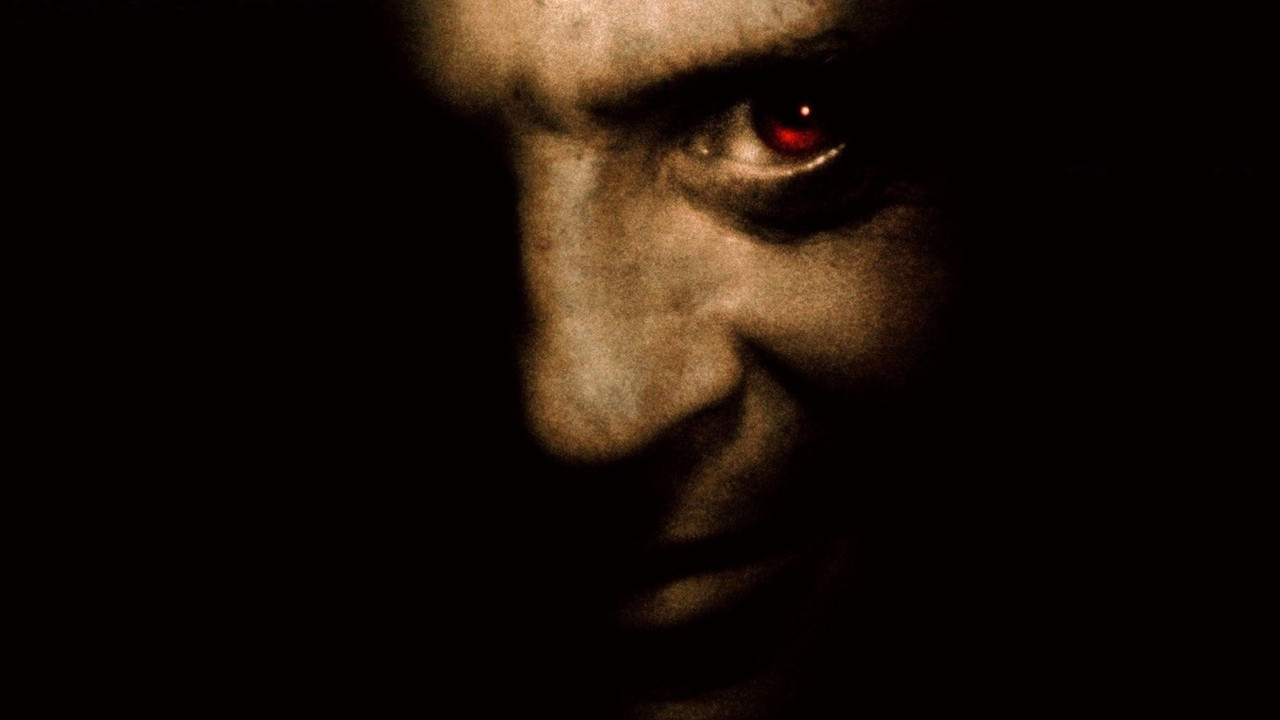
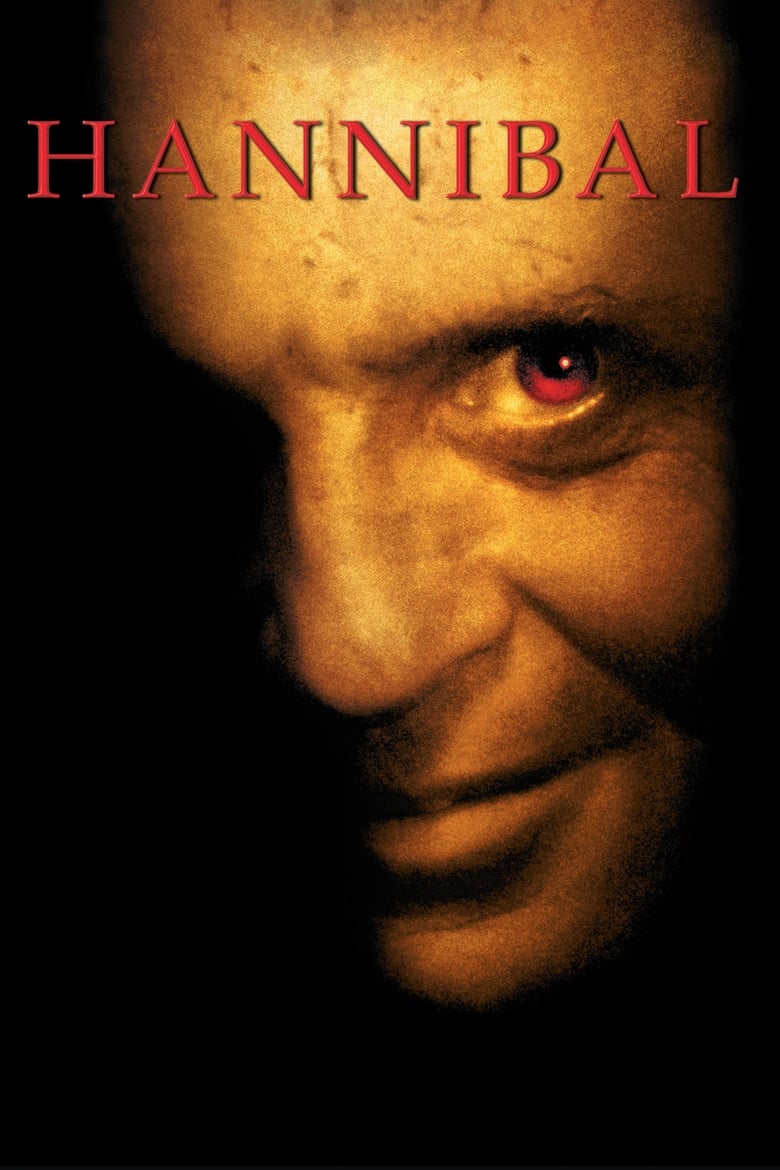
Hannibal
“His genius undeniable. His evil unspeakable. His name...Hannibal.”
After having successfully eluded the authorities for years, Hannibal peacefully lives in Italy in disguise as an art scholar. Trouble strikes again when he's discovered leaving a deserving few dead in the process. He returns to America to make contact with now disgraced Agent Clarice Starling, who is suffering the wrath of a malicious FBI rival as well as the media.
About Hannibal
Why Hannibal is still worth talking about
There’s a particular kind of cinema pleasure in watching a film that isn’t afraid to be both theatre and stomach. Hannibal, directed by Ridley Scott and running a full 132 minutes, trades in moments that lodge themselves: an old wound reopened, a letter that smells of someone pretending to be harmless, and a set of set-pieces that mix menace with a grimly specific taste for spectacle.
At its centre are two names the film refuses to let you forget. Anthony Hopkins returns as Hannibal Lecter, the escaped cannibal whose history with Clarice Starling still shapes everything that follows. Julianne Moore plays the agent at the sharp end of that history: blamed for a botched raid, pushed into a mess she did not ask for, and pulled toward a man who upends every expectation of what danger looks like.
Then there are the secondary players who make the machine move — Mason Verger, a surviving victim with money and axes to grind; a perfume clue that turns polite curiosity into a hunt; and a final, theatrical cruelty that doubles as a statement. Those elements don’t make the film gentle. They do make it memorable.
The idea that sets Hannibal in motion
Start with a professional humiliation. Clarice Starling is blamed for a drug raid gone wrong — five people dead — and that single event is the pebble that ripples through the whole movie.
Into that rippling water goes Hannibal Lecter, who has been at large since his escape. He doesn’t storm Clarice’s life in a blizzard of violence; he nudges it. A letter arrives from someone hiding in plain sight, carrying a signature detail that only a careful observer would notice: a fragrance tied to a very particular product.
That small, cultured mystery — a clue identified by a perfume expert — is the attractive force. It draws characters across continents and into collisions where social niceties fall away.
And when manners finally break, the film makes the cost explicit. One of its most shocking moments turns a private, obscene punishment into an almost ritual meal, signalling the lengths the story will go to underline what’s at stake.
Why Hannibal Lecter matters
Hannibal Lecter is not just the film’s antagonist. His past escape and the crimes that precede this story hang over every decision the other characters make, which means he functions — in the broad sense, not the technical one — as the organising absence at the film’s centre.
Anthony Hopkins’s casting is a constant reminder: Lecter is a figure the world recognises, even when he is supposed to be hidden. The movie keeps returning to that tension between a very civil public face and the very dangerous history that lies beneath.
Because the plot begins with Clarice’s professional fall, Lecter’s looming presence becomes the test for the institutions and the people around her. He’s the reason careers tremble, threats are manufactured and alliances shift.
So Lecter matters because everything else in the film orbits him: reputations, revenge plots, the very idea of what danger looks like when it comes wrapped in manners.
Hannibal has more on its mind than the plot suggests
Strip away the spectacle and the film keeps circling a handful of blunt ideas. One is authority: bodies that are meant to protect can be incompetent, compromised or actively malicious.
Close to that sits the question of home and safety. The movie repeatedly unsettles the places we assume are secure, turning private spaces into sites of violation rather than refuge.
Greed is explicit here — not just financial greed but the hunger for control, revenge and immunity. A lot of the action is driven by people with the means to bend institutions to their will.
And running through all of it is loss and mortality: characters measure themselves against what they’ve survived and what they no longer have, which keeps making their choices feel urgent and, at times, ugly.
Hannibal could not belong to any other decade
Released in 2001, Hannibal lands at the start of the 2000s, a period happy to make big, confident studio thrillers that mixed glossy production values with genuinely nasty ideas.
That early-00s appetite for scale — stories that demanded continental moves and a sense of spectacle — suits the material. This is a film that expects you to accept both high culture curiosities and very low, very physical payoffs.
It’s of its moment in how it balances showmanship with moral discomfort: a mainstream picture that still wants to push the audience’s tolerance for unpleasantness.
Seen now, it’s a reminder of what early 2000s mainstream thrillers aimed to be: unmistakable, unshy and designed to make a strong impression rather than fade quietly.
What has aged — and what hasn't
One of the film’s recurring tricks is turning domestic spaces into traps. The theme of home and safety is everywhere, and that’s an idea that still lands: a supposed sanctuary becomes a place where power is exercised with impunity.
A striking example is the moment Clarice wakes up in someone else’s house wearing an unfamiliar cocktail dress. It’s a compact image of dislocation and lost control — personal vulnerability staged inside someone else’s home.
That sequence still reads as deliberately uncomfortable: the film makes you register how far the idea of safety has been eroded for its characters.
At the same time, modern viewers may find certain dynamics — the mix of seduction, power and manipulation that threads some scenes — harder to watch uncritically. The movie doesn’t apologise for its choices, which can feel either refreshingly blunt or awkwardly of its time, depending on your tolerance.
Why Hannibal still matters
There’s a practical reason the film keeps coming up: it put a number of memorably over-the-top images into the public imagination. A wealthy, vindictive survivor bent on revenge; a grotesque bodily punishment turned into spectacle; and a sequence where a policeman’s bargain goes horribly wrong and the consequences are made public — these are scenes people recall.
It’s also a movie that manufactures a lot of narrative pressure out of social power. Mason Verger’s ability to use wealth and influence to redirect Clarice’s career, and the presence of a corrupt official who expects favours in return, give the plot a political bite that still feels resonant.
Then there’s the small, uncanny detail work: a letter from someone hiding under a false identity and the perfume clue that exposes him. Those moments of detective curiosity sit neatly beside the film’s more brutal pleasures.
And finally, there’s the odd tenderness buried among the cruelty: Lecter carrying an unconscious Clarice to safety, and a final, unsettling image of him sharing a grisly taste with a child, underline the film’s refusal to leave its characters in tidy moral categories.
Does Hannibal still hold up?
If you want a polished, confidently amoral early-00s thriller, Hannibal still delivers. It’s a 2001 Ridley Scott picture that runs its full 132 minutes with the kind of narrative appetite that doesn’t apologise for being both cultured and gruesome.
The film asks you to follow a messy moral map: a disgraced agent pulled back into a case because a vindictive, disfigured victim has the money to make things happen; an escaped cannibal who can still unsettle the world by the way he appears and the things he chooses to do. Those are solid, simple hooks, and they work as hooks today.
There are caveats. Some scenes trade on discomfort and power imbalances in ways modern viewers may find uneasy, and a few of the film’s deliberate shocks are exactly that — designed to shock rather than to be subtle. If you’re sensitive to those elements, this won’t be light viewing.
But if you’re up for a film that wears its nastiness like a couture coat — precise tailoring, very sharp edges — then yes: watch it. It still amazes and annoys in equal measure, and it finishes with a line that sums its outlook perfectly: Hannibal, ever curious, encourages others to 'try new things.'