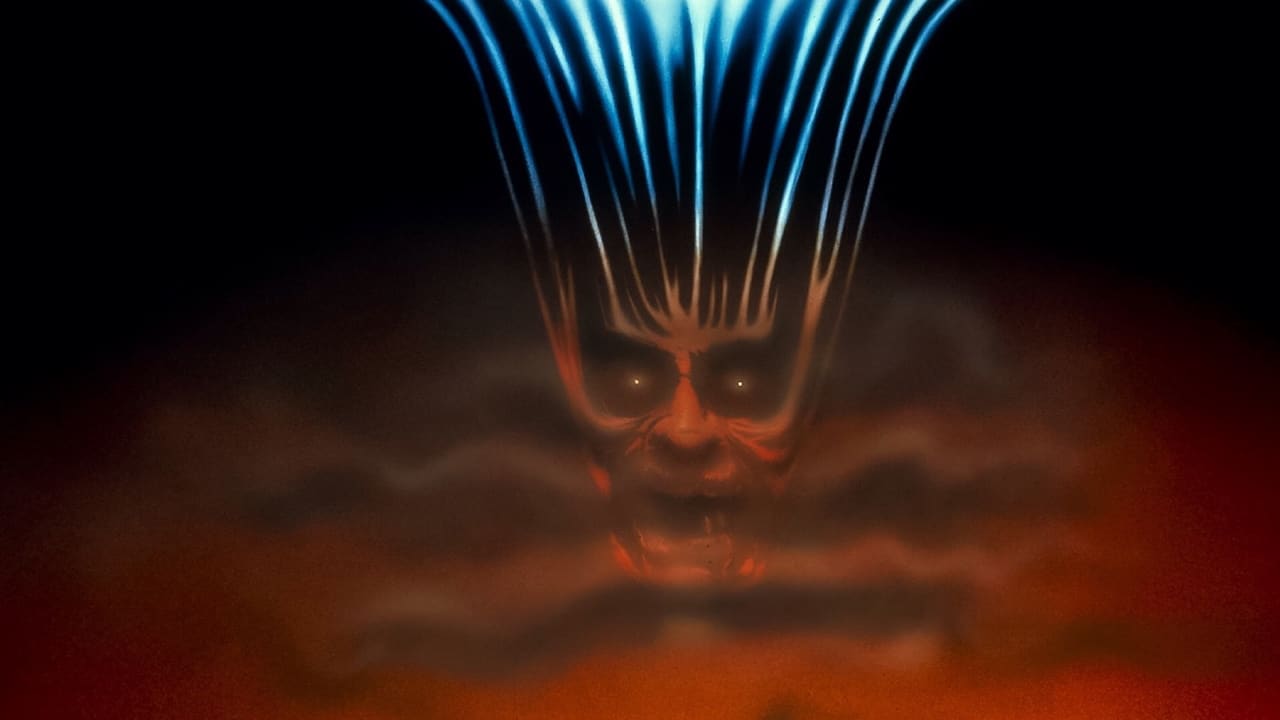
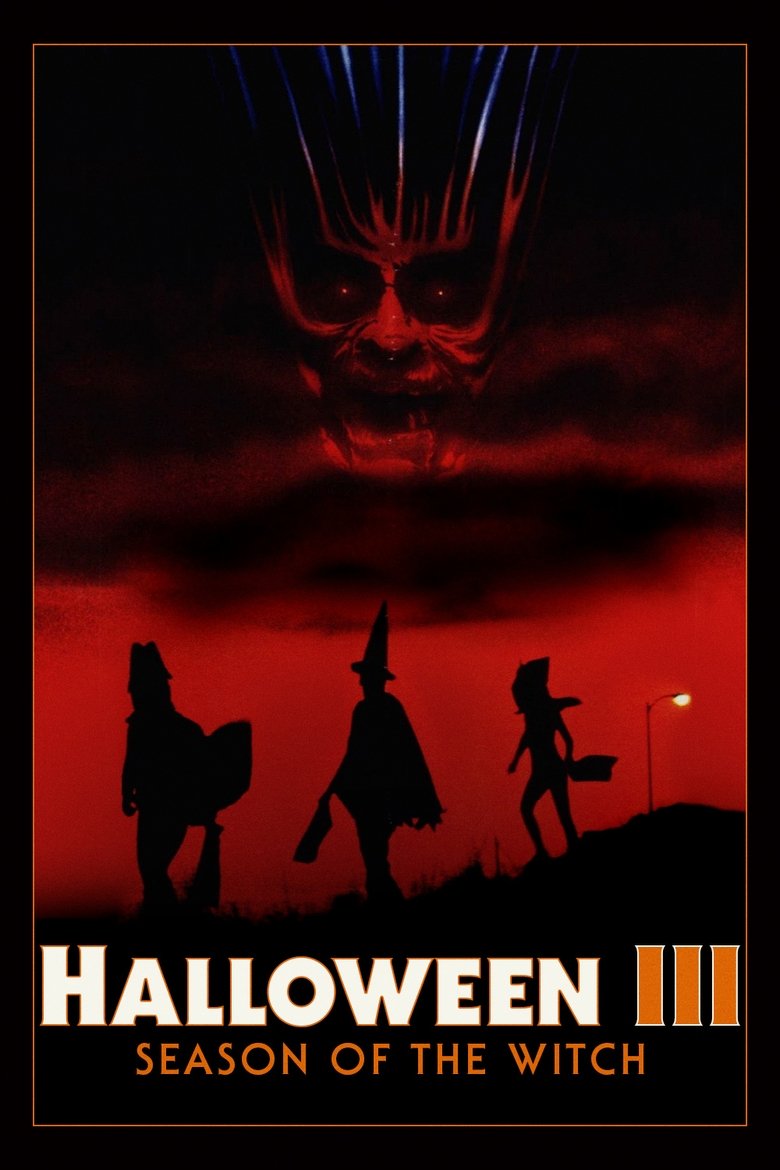
Halloween III: Season of the Witch
“The night no one comes home.”
After a terrified toy salesman is mysteriously attacked and brought to the hospital clutching the year's most popular Halloween mask, Dr. Daniel Challis sets out to investigate the strange events and finds himself thrust into a nightmarish conspiracy.
About Halloween III: Season of the Witch
Why Halloween III: Season of the Witch still works
You know that image — a man clutching a jack-o'-lantern mask and running like his life depends on it? That first, breathless chase sets the tone. Halloween III is not here to ease you in politely; it drops you straight into a small, ugly panic and refuses to explain itself in friendly subtitles.
Tommy Lee Wallace directs a weird little monster of a film that runs for just under one hundred minutes. It doesn’t linger for nostalgia or wink at genre expectations. Instead it moves with a clear, odd-headed purpose: a mystery about masks, microchips and a factory that feels like a neighbour you suddenly realise you never knew. At the centre is Dr Dan Challis — the flawed, tired doctor who becomes the person everyone relies on to make sense of the nonsense. The film frames him as a man juggling a messy home life while being dragged into something that threatens children, families and ordinary freedom. That combination of domestic strain and public danger is what keeps the film oddly urgent.
The idea that sets Halloween III: Season of the Witch in motion
The hook is simple and unpleasant: a local shopkeeper dies after being chased while carrying a distinctive Silver Shamrock Halloween mask, and his daughter Ellie takes the mystery to Dr Dan Challis. That initial human loss is the hinge the rest of the film swings on.
Small discoveries escalate fast. A motel guest’s curiosity about a mask’s medallion turns lethal, and her body is quietly taken away in a Silver Shamrock van. Ordinary objects — a novelty mask, a shiny token — suddenly feel dangerous.
Things go from odd to mechanical when Ellie is seized and taken to the Silver Shamrock factory. Daniel follows and is captured by suited men who turn out not to be men at all but androids created by Conal Cochran. The threat has a smiling, manufactured face.
The factory holds the explanation and the horror: a commercial triggers microchips hidden in the medallions, and those medallions kill. Daniel manages to rupture the scheme by turning the tech against the factory itself, but the film keeps pulling the rug: the Ellie he rescues is not the Ellie he left with.
Why Dr. Dan Challis matters
Dr Dan Challis is not the squeaky-clean, incorruptible hero you see in some genre pictures. He’s an alcoholic doctor pulled from the everyday — a man with a messy split from his ex-wife and two kids — and the movie is interested in that mess.
That domestic baggage matters because the film’s central threat targets families. When Cochran openly shows Dan what the masks can do by destroying the Kupfers, the stakes land; this is personal, local terror, not a remote sci-fi abstraction.
Challis is the logical lens for the story: he’s a professional used to dealing with death, but unprepared for manufactured ritual and corporate cunning. The plot uses his ordinary competence and his flaws in equal measure — he’s the kind of character who can call the problem correctly, even if his life is on shaky ground elsewhere.
And crucially, his relationship to Ellie’s investigation — finding her father’s car, following leads into the factory — gives the film a forward momentum driven by human connections rather than by spectacle alone.
Halloween III: Season of the Witch has more on its mind than the plot suggests
On the surface it’s a horror-sci-fi mash: masks that kill, a factory full of secrets, and an eccentric villain with an elaborate plan. Dig one or two layers down and the film becomes curiously domestic. The core themes — family, parental protection and freedom — keep turning scenes about technology back into scenes about people.
The threat is corporate and impersonal in construction but intimate in consequence. Masks — objects designed for children and households — are turned into instruments of control. That converts a commercial product into a violation of family life and safety.
The film repeatedly returns to the idea of freedom: not just national or political liberty, but the small freedoms of parents to keep their children safe, of shopkeepers to do honest work, of a town to communicate with the outside world — all of which the antagonist’s plan seeks to disrupt. Finally, there's a quiet conversation about what counts as humanity. Artificial life — Cochran’s androids — blurs simple moral lines, and the film uses that unease to raise the stakes for its human characters. It’s not only machines vs people; it’s about who gets to decide what a person is.
Halloween III: Season of the Witch could not belong to any other decade
Released in 1982, the film occupies an early-eighties place where mainstream studios would let a horror picture play with ideas rather than just franchise beats. There’s a slightly jolting confidence in allowing a horror film to be about industrial manipulation and weird rituals instead of the expected slasher formula.
That opening sequence — a chased shopkeeper clutching a Halloween mask — feels like a modern folktale set in small-town America, and the movie’s willingness to treat consumer goods as vectors for danger taps into anxieties about mass production and unseen corporate reach that were in the air then.
It’s the decade’s temperament more than any fashion detail: a readiness to mix genres, to let sci-fi tech sit inside an everyday setting, and to make ordinary objects suspicious. That blend gives the film an adventurous, slightly off-kilter energy.
Put simply: the idea of a benign novelty company hiding something sinister feels like a turn-of-the-decade story — both a product of its time and something a little ahead of it.
What has aged — and what hasn't
Some elements slide straight into modern view. The family angle — Dan’s fraught home life and the clear, present danger to children — still reads as urgent. Those stakes are timeless and keep the audience invested beyond the novelty of the villain.
The movie’s small-town setting and its focus on a single factory as the locus of horror also work well for contemporary audiences. There’s an economy to the storytelling: the conspiracy is local enough to feel believable, and that makes its implications more chilling.
Where it creaks a little is in its willingness to accept certain plot conveniences — cut lines of communication, sudden kidnappings and concentrated corporate omnipotence — without always pausing to explain them. Modern viewers more used to intricate, plausibility-driven thrillers may find that occasionally frustrating.
But when it comes to the visceral moments — the way ordinary household objects are weaponised, and the suddenness of the Kupfer family's fate — those scenes still land. The film can still make a casual domestic image feel menacing, which is where much of its enduring power lives.
Why Halloween III: Season of the Witch still matters
Certain images from the film stick. The opening flight of Harry Grimbridge — frantic, small-scale and oddly tragic — gives the story an immediate human cost, and Marge Guttman’s curious probing of a mask medallion ends in a grotesque, unforgettable way. Those scenes lodge in memory because they are ordinary people encountering extraordinary menace.
The Silver Shamrock factory and Cochran’s explanation about stolen Stonehenge fragments turn the plot into a peculiar mixture of folklore and corporate scheme. It’s the sort of bizarre plan that’s hard to forget precisely because it feels both mythic and bureaucratic at once.
The film’s climax — where Daniel uses the company’s own broadcast against it and pours medallions down from a rafter — is theatrically satisfying in a way that also keeps the story tightly focused: it’s an act of chaotic improvisation that still fits the film’s logic. And the desperate, almost cinematic final career of the story — Daniel running to stop a television broadcast, succeeding with some networks and failing with another — leaves an unsettling, modern image of how technology can outpace our ability to control it. That sense of helplessness resonates long after the credits.
Does Halloween III: Season of the Witch still hold up?
Yes — with caveats. If you come for a traditional slasher, this will surprise you; it’s not that movie. But if you’re open to a compact, peculiar horror-sci-fi that places a family man in the centre of a manufactured threat, it delivers. The film’s tight runtime and singular focus mean there’s little fat and a fair amount of nerve.
Tom Atkins’s Dr Dan is the movie’s anchor: a fallible, domestically tangled figure forced into an extraordinary fight. That personal strand — a man trying to protect his children and make sense of danger — keeps the film grounded whenever the plot flirts with the outré.
The story’s most effective choices remain its willingness to make objects of childhood into instruments of power, and to treat corporate manufacture as a vector for real harm. The sequence in the factory and the subsequent scramble to stop a broadcast still pack an uneasy, modern panic about how small acts scale into mass danger.
So watch it for the strange ideas, the tight plotting, and the way a modest horror outing places parental protection and small-town vulnerability at its centre. It isn’t flawless, but it’s brave and weird in equal measure — the kind of film that will puzzle you, unsettle you, and then stick in your head.