
Halloween II
“More of the night he came home.”
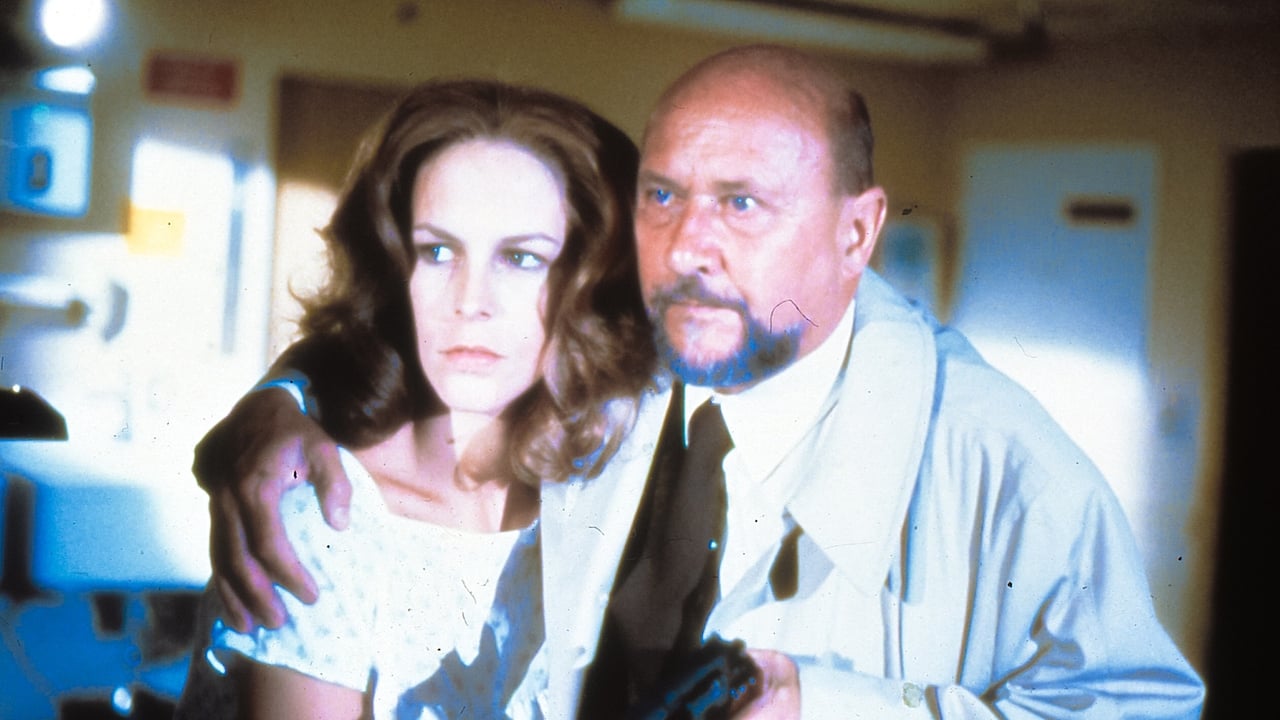
After failing to kill stubborn survivor Laurie and taking a bullet or six from former psychiatrist Dr. Sam Loomis, Michael Myers has followed Laurie to the Haddonfield Memorial Hospital, where she's been admitted for Myers' attempt on her life. The institution proves to be particularly suited to serial killers, however, as Myers cuts, stabs and slashes his way through hospital staff to reach his favorite victim.
About Halloween II
Why Halloween II is still worth talking about
The film picks up in the immediate aftermath of that famous fall: Michael Myers has been shot off a balcony, but the story does not end. Instead it pushes the panic forward, following the people who have to live through what he started.
Rick Rosenthal directs a tight, 92-minute second chapter that keeps Laurie Strode at its centre — Jamie Lee Curtis is back in the role — and moves the action into the bright, claustrophobic urgency of a hospital where help is supposed to be at hand. It’s worth revisiting because Halloween II does something sequels often try and fail to do: it doesn’t just repeat the first film’s shocks. It relocates them so the danger becomes a test of who protects whom, and what family ties get dragged into the open when violence returns.
The idea that sets Halloween II in motion
The basic premise is simple and effective: Laurie is taken to Haddonfield Memorial Hospital after the previous night's events, a place that should be refuge. Instead it becomes a trap when news of her location reaches Michael.
Michael’s arrival is practical and ruthless — he cuts phone lines and slashes tyres to make escape and outside help impossible — and that single choice turns the hospital into a closed field where ordinary rules stop working.
Across town, an adult revelation shifts the urgency. Marion tells Loomis that Laurie is Michael’s younger sister — she was adopted — and that information reframes the pursuit from random terror to something with a personal, ugly logic.
Loomis reacts the only way he can: he forces the marshal to drive back to Haddonfield, because this is no longer just an investigation. It’s a return to save someone who, whether she knows it or not, is at the heart of the nightmare.
Why Laurie Strode matters
Laurie is the film’s fulcrum. Jamie Lee Curtis returns as the young woman who survived the first night and now has to endure being hunted again, but in a setting that strips away the safety of home and forces the terror into the open light of a hospital ward.
Her importance isn’t just that she’s the target; it’s that the movie makes her survival mean something else. Learning she was adopted — and being told she’s Michael’s sister — turns Laurie from final girl into a figure dragged into family history she never asked for.
That family revelation reframes every chase and panic. A drawing of a family with a knife stabbed into the figure labelled “sister” sits uneasily under the surface of the story, a small image that makes the violence feel like an inheritance rather than a random outbreak.
So Laurie matters because she’s both what the night is about and the reason everyone else does what they do: protect, pursue, cover up. The film keeps coming back to her because her survival is the film’s question.
Halloween II has more on its mind than the plot suggests
On the surface it’s a hospital siege; underneath those fluorescent lights the film keeps returning to a handful of hard ideas. Mortality sits there constantly — people drop away through the night — and the movie refuses to make that loss tidy.
Family is threaded through like a slow bruise. The revelation that Laurie was adopted and may be Michael’s sister turns a slasher into a family drama of sorts: suddenly the violence read as a personal wound rather than senseless carnage.
Parental protection and authority crop up as adults rush to repair what the night tears apart. The discovery of that family drawing and the references to occult connections raise the stakes: this isn’t merely a man with a knife, it’s a story that tries to give a motive, however dark. So beneath the chase there are questions about who is responsible, who keeps children safe and how much protection costs when the threat refuses ordinary explanations.
Halloween II could not belong to any other decade
Released in 1981, Halloween II sits at a moment when horror was pushing harder into sequels and bigger setups, and this film shows that impulse plainly: continue the story, widen the consequences, and do it economically.
It wears its era lightly; the film’s appetite for continuation — taking a single terrifying night and showing the fallout — is very much an early-80s way of treating a successful horror idea.
That placement matters because it shapes how the movie treats its themes. The familial revelation and the escalation into a public space like a hospital fit a period that liked to ask what happens to private trauma when it can’t stay private.
What has aged — and what hasn't
Some elements keep working because they’re structural rather than fashionable. The family twist — that Laurie was put up for adoption and may be Michael’s sister — still gives the proceedings a grim, personal undertow that modern viewers can recognise as higher stakes than a simple body count.
Other bits feel of their time. The film leans on the idea of a quasi-explanation — drawings and hints about Samhain and the occult as a reason for Michael’s apparent indestructibility — which can read now as a clumsy attempt to pin meaning on something meant to be unknowable.
Moments of mistaken identity and sudden tragedy still land; when Loomis mistakes Ben Tramer for Michael and Ben is struck by a police car that bursts into flames, the consequences are brutal and unglamorous, and they still unsettle.
And the basic scenario — a hospital cut off from help, staff picked off overnight — retains an immediate, practical tension that doesn’t rely on trends to feel threatening.
Why Halloween II still matters
People remember Halloween II because it keeps the pressure on Laurie and turns the fallout of the first film into its own claustrophobic nightmare. Laurie is carted to Haddonfield Memorial and the movie asks: what happens when the danger follows you into care?
It’s a catalogue of small cruelties — Michael stealing a kitchen knife, killing the teenage girl next door, cutting phone lines, slashing tyres and systematically isolating the place meant to save lives — and those choices harden the story into a sustained, night-long siege.
The film also doubles down on the idea that the past refuses to stay buried. Marion’s revelation about Laurie’s adoption makes the chase personal, while repeated deaths and the tragedy of mistakes — like Ben Tramer being misidentified and killed in an accident — give the night real emotional cost. Finally, the film closes on a violent, high-stakes resolution: Loomis and Laurie face Michael in an operating room where desperate measures end with both men engulfed by fire, and Laurie surviving the night but clearly marked by it. That ending reinforces why the sequel sticks in people’s memories: it refuses a neat, clean finish.
Does Halloween II still hold up?
Yes — with a caveat. Halloween II is a purposeful, compact 92-minute continuation that keeps Laurie Strode at the narrative centre and forces the horror into a setting where protection should be automatic: a hospital. That choice gives the sequel a tense practicality.
If you’re drawn to horror that treats mortality and family seriously — the adoption reveal, the drawing that pins a knife to the figure labelled “sister”, the steady attrition of characters through the night — this film rewards you. It’s less about clever scares and more about the terrible arithmetic of who survives.
Some late decisions — the film’s flirtation with occult hints as an explanation for Michael’s seeming indestructibility — can feel like an awkward fit for modern tastes, but they don’t erase the effective core: a personal chase turned public, and the emotional cost that comes with surviving.
So if you’re choosing tonight, watch Halloween II for the way it tightens the first film’s fear around Laurie and then asks what survival actually costs. It’s a sequel that keeps you in the room until morning — and then leaves you wondering who was saved, and at what price.