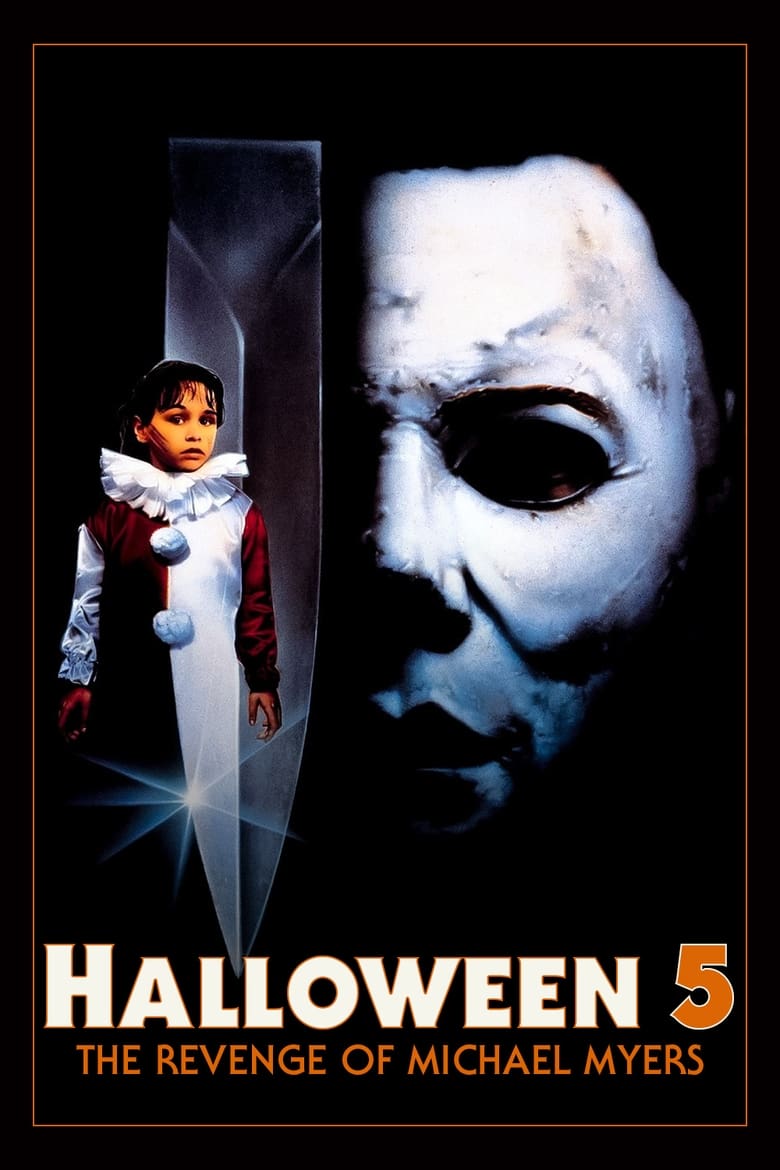
Halloween 5: The Revenge of Michael Myers
“Michael lives. AND THIS TIME THEY'RE READY!”
After lying in a coma for a year, Michael Myers awakens and stalks his way back to his small hometown in Illinois, intent on killing his niece, Jamie, who has been confined to a mental institution since his last attempt to slay her.
About Halloween 5: The Revenge of Michael Myers
Why Halloween 5: The Revenge of Michael Myers still stands out
The movie opens with a scene that makes you feel the blunt, unpleasant fact of survival: Michael is shot down a mine shaft, left for dead, and somehow crawls back up. That refusal to stay dead sets a tone — this is not a neat lesson in consequences; it’s a stubborn, ugly persistence.
Dominique Othenin-Girard directs and keeps the movie moving briskly — it’s 96 minutes that rarely dawdle — but the film’s personality is anchored elsewhere: Danielle Harris’s Jamie Lloyd is the poor relay between normal life and whatever it is Michael has become. She’s at the centre of the film’s urgent question: who protects the children when the adults can’t agree on how? And when the end arrives it refuses to be consoling. The film closes with a quiet, chilling knock-on-the-door of uncertainty — a man in black arrives, the police station is compromised, and Jamie realises the chase is not over. It’s a sequel that stubbornly keeps the danger alive instead of pretending the problem has been solved.
The idea that sets Halloween 5 in motion
The simplest way into this film is: Jamie is broken, and Michael is back. Jamie has been admitted to the Haddonfield Children's Clinic after a violent episode, and she’s not the same child she used to be.
Meanwhile, Michael reappears in town in a form both ordinary and monstrous — at one point he even takes on the shape of a boyfriend Jamie’s friend once knew, which lets the film quietly mess with trust. That encounter leads to a Halloween-party sequence where ordinary teen behaviour collides with lethal intent.
Jamie’s condition isn’t just trauma; there’s a strange connection between her and Michael that the story treats as meaningful. She can sense when people she loves are in danger, which turns her from a passive victim into an odd kind of alarm system.
So the setup works because the threat is both external and intimate: Michael is the returning menace, but Jamie’s link to him makes every ordinary moment feel like it could be a warning bell.
Why Jamie Lloyd matters
Jamie Lloyd is not just another final girl; she’s the thread the whole film pulls on. Played by Danielle Harris, Jamie has been damaged to the point of being admitted to an institution after attacking her foster mother, and the movie keeps her close to the centre rather than sidestepping her story.
That closeness matters because Jamie isn’t merely someone the adults discuss; she feels Michael’s moves. When she convulses or regains bits of speech, it’s not a throwaway horror trope — it’s the film insisting that the threat and the victim are linked in a direct, personal way.
Her relationships tilt the picture away from pure spectacle. Friendship and family are the anchors here: Jamie’s attempts to warn Tina through her stuttering friend Billy, and her grief at the losses around her, give the carnage real consequences.
And because the film keeps returning to Jamie — even pulling her into the final confrontation — she prevents the story from turning purely into a cop-versus-killer exercise. The hunt for Michael is also, crucially, about trying to reclaim a child who has already been wounded.
Halloween 5 has more on its mind than the plot suggests
At face value it’s a slasher: man returns, people die. But the film keeps slipping into questions about authority. Officers argue, plans go wrong, and the people who are supposed to keep the town safe are fallible in ways that matter to the story.
Parental protection sits beside that. The movie repeatedly stages adults trying to shield children — and failing. The sense that the grown-ups’ solutions are makeshift or partially effective gives the violence a sharper edge.
Fear and mortality are standard horror fare, but here they get a domestic spin. Death isn’t only a shocking set piece; it’s an interruption to ordinary domestic life. The losses Jamie experiences — friends, foster family, safety — turn abstract dread into something that hits in the gut. Underlying all of this is the idea of home and safety. The film spends time showing how fragile those things are: a party, a clinic, even a police station can’t be relied upon as sanctuaries, which keeps the audience on uncertain ground.
Why this could only be a late‑80s Halloween film
Released in 1989, Halloween 5 sits at the tail end of a decade that kept asking sequels to keep upping stakes rather than settling scores. The idea of an apparently defeated villain returning — shot down a mine shaft and somehow crawling back — fits a late‑80s appetite for persistence rather than tidy endings.
That persistence also shows up in the movie’s willingness to push its central problem rather than wrap it. Instead of offering closure, it doubles down: one year later, Michael comes back to Haddonfield to resume the hunt for his niece, which encourages the film to be about continuation rather than resolution.
The film’s timing in 1989 makes it feel like a transitional creature: part slasher shorthand, part what‑if domestic nightmare, and not interested in pretending the loop can be closed quickly.
So while it shares DNA with earlier slashers, its impatience with neatness — the villain kept alive, the child still vulnerable — is very much a product of where genre cinema had reached by the decade’s end.
What has aged — and what hasn't
The movie’s basic emotional drives — fear, friendship, family and the question of whether home can be a sanctuary — are still legible. Those are human, simple things, and they don’t date the way fashion does.
Jamie’s link to Michael keeps the stakes personal, so the film isn’t merely a procession of kills; it’s a story about loss and protection that still reads in a modern context. That personal angle helps the film dodge feeling like a relic.
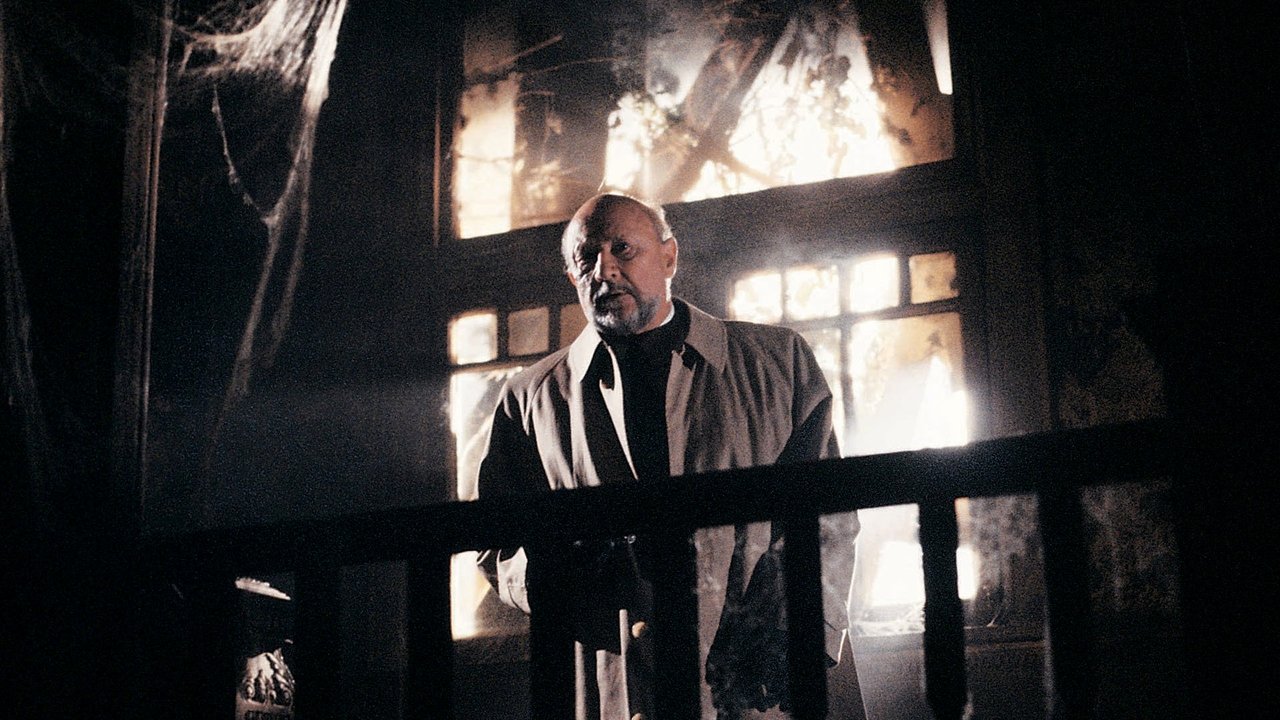
Some sequences hinge on the idea that the adults will do the right thing: Loomis and Meeker set a trap at the abandoned Myers house to draw Michael back. That kind of plan— adults trying to outwit an older evil to protect the young — still plays up today because it’s easy to understand and emotionally direct.
Where the film is less comfortable now is in its willingness to treat safety as something temporarily patchable; the final unravelling at the police station — a secure place turned dangerous — leaves modern viewers with a familiar unease about institutions failing at their most basic job.
Why the movie still matters to those who grew up with it
For many viewers the film is inseparable from Jamie Lloyd’s story: she’s been institutionalised after attacking her foster mother, mute and disturbed, and yet still the person who senses danger before it arrives. That lingering presence — a child both fragile and central to the plot — is one of the reasons people remember the film.
The movie also leans into a darker domestic register than some entries in the series. Casual teenage moments become dangerous: at a farm party, teens’ private behaviour is interrupted by sudden, brutal violence. Those scenes register because they take ordinary rites of passage and make them perilous.
Several beats stick in the mind for good reason. Tina sacrificing herself to save Jamie, Michael’s pause when Jamie calls him 'Uncle' and he briefly removes his mask, and the final, unnerving image of the police station compromised by a mysterious man in black — these moments stubbornly refuse to be tidy. So its afterlife comes from the combination of a wounded child at the centre, the failure of protective adults, and set pieces that convert everyday places into sites of loss. People who grew up with that mixture tend to carry its particular ache with them.
Does Halloween 5 still hold up?
Yes — with a big caveat. If you want polished closure, this is not the Halloween to pick. The film insists, across its 96 minutes, that Michael’s return is not a mystery to be solved but a persistent danger to be managed, and that stubbornness is both its strength and its frustration.
What still works is the emotional logic: Danielle Harris’s Jamie is recognisably at the film’s heart; she’s been traumatised, admitted to the children’s clinic, and yet she remains the connective tissue that forces adults like Loomis to act. The moral questions — authority, parental protection and the limits of safety — are simple but effective.
What may test modern viewers is how the story treats institutions and plans. Loomis and Meeker’s setup at the abandoned Myers house and the foolsafe you-thought-you-had at the police station both go sideways, which keeps the film tense but can also feel like it trades on a world where adults are only ever half competent.
So watch it if you’re interested in a late‑80s slasher that pins its scares to family and loss rather than cleverness. It won’t reassure you, but it will remind you why horror often returns to the same old houses: because some stories refuse to stay dead.