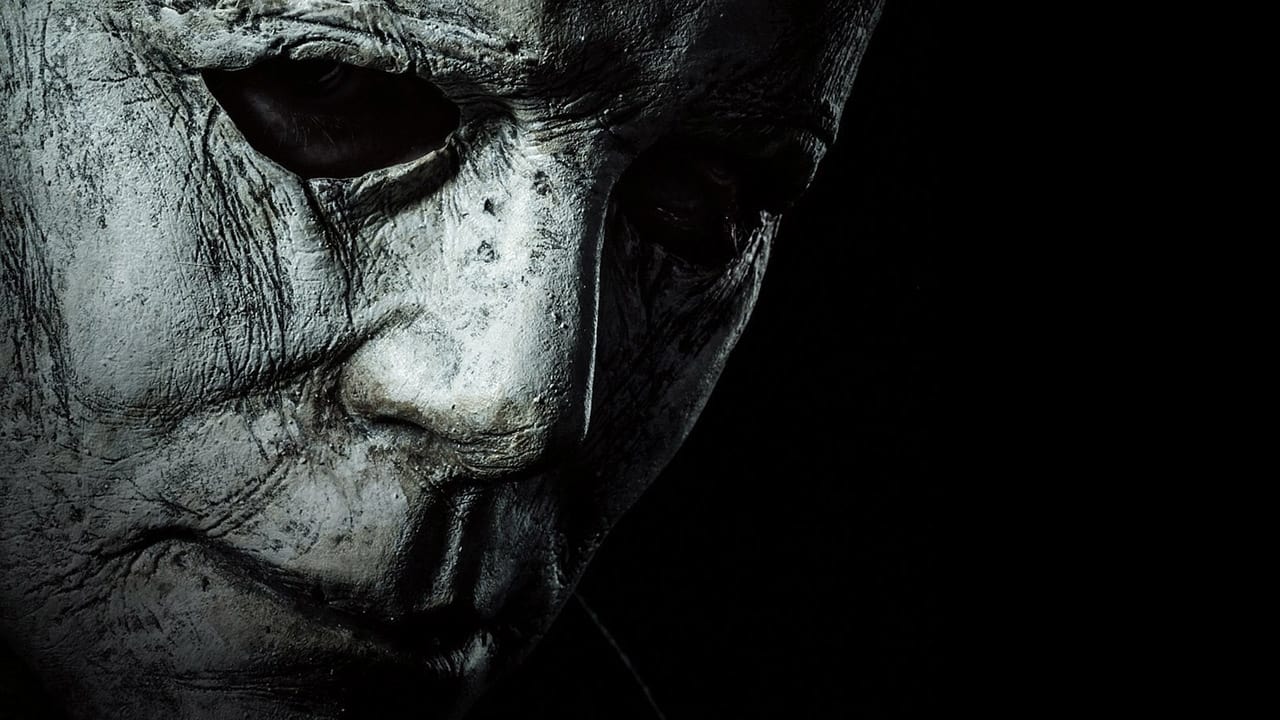
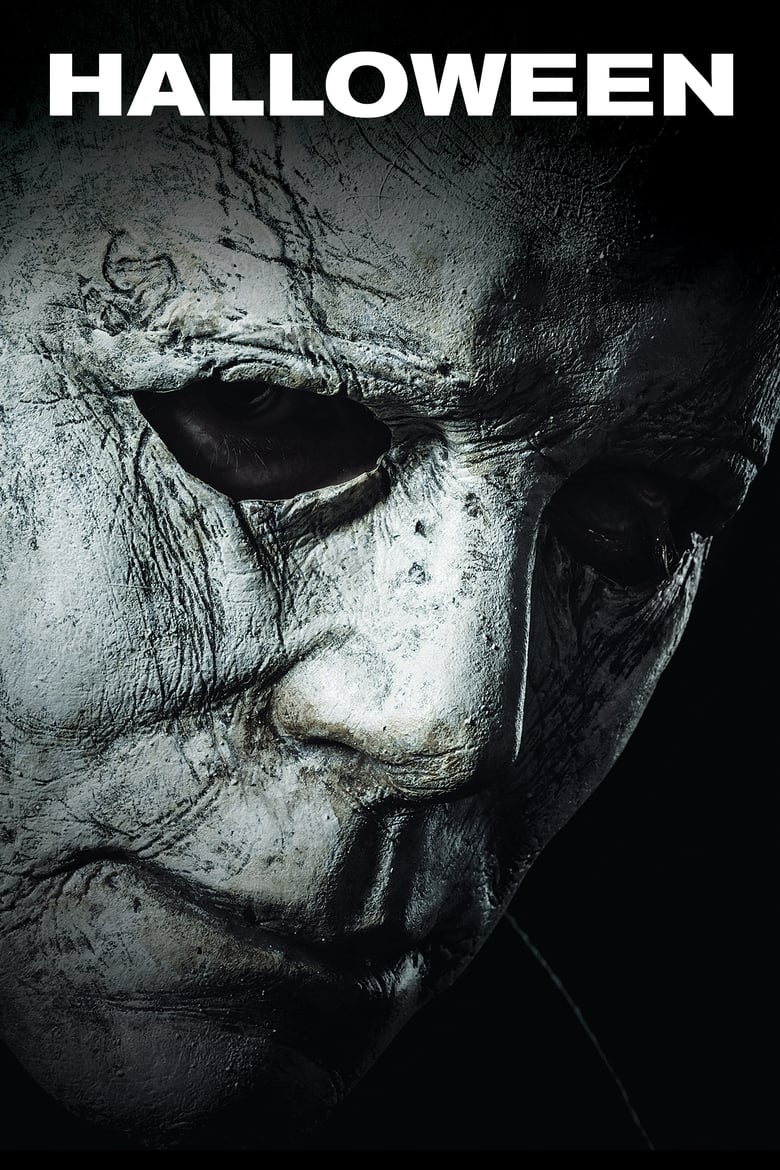
Halloween
“You don't believe in the Boogeyman? You should.”
Laurie Strode comes to her final confrontation with Michael Myers, the masked figure who has haunted her since she narrowly escaped his killing spree on Halloween night four decades ago.
About Halloween
Why Halloween is still worth talking about
Something about a heavily fortified house feels instantly recognisable. In Green's Halloween, Laurie Strode has spent decades turning fear into architecture — she drinks, she doesn't go out, and her life is built around the idea that the worst thing that happened might happen again.
The film wastes no time reminding you why: Michael Myers, long institutionalised at Smith's Grove, is being prepared for transfer when the routine goes wrong and he escapes. That setup hands the story a blunt, effective engine — an unstoppable presence suddenly back on the streets of Haddonfield. It's a straightforward 105-minute slasher that owes its momentum to familiar pieces placed in new positions: Jamie Lee Curtis as Laurie, Nick Castle as Michael, and David Gordon Green directing with the explicit aim of putting family, home and fear front and centre.
The idea that sets Halloween in motion
The film's ignition is almost mundane: Michael is on a transfer and the transport fails. A bus crash, a few murders, and a stolen truck later, and Haddonfield has its old nightmare back on the loose.
That return forces the story into two simple but potent moves — it pulls Laurie out of long-term survival mode and it tests how the people around her respond when her warnings turn out to be true.
The contrast is what matters: Laurie's world is built around containing risk, while the town treats Michael's escape as a problem for the police to solve. That difference creates the friction that fuels the rest of the film.
And because the inciting incident is mechanical and immediate — a transfer gone wrong — the story never has to invent motive or complication. It can just watch characters react to the proximate danger.
Why Laurie Strode matters
Laurie is the film's weather. Everything else — the teenagers, the police, the curious podcasters — is measured against how her life has been altered by the Shape. She hasn't moved on; she has fortified.
That fortress isn't just physical. It's relational. The state removed her daughter when Karen was twelve, and that rupture is a through-line: Laurie is not only protecting herself from a killer, she's been protecting against the possibility that her family will be hurt again.
Which is why Allyson — Laurie's granddaughter, who keeps trying to maintain a relationship with her grandmother — matters. She is the small, stubborn link between a woman who has hoarded fear and a family that has tried to carry on without her.
It makes Laurie more than a survivor; she becomes a symbol of what trauma does to domestic life. The film keeps returning to family and friendship to show that trauma isn't just a memory, it's an inheritance.
Halloween has more on its mind than the plot suggests
On the surface it's a slasher: a killer escapes, people die. Underneath, the movie keeps returning to family, home and the price of being constantly afraid. Those themes guide the choices the characters make when the obvious solution — run, call the police — isn't enough.
Home and safety are treated as fragile props. Laurie's house, and the idea of keeping people inside it, becomes an experiment in how much protection actually costs. The film asks whether safety built on paranoia is still a life worth living.
Freedom and mortality show up as practical dilemmas: young people sneaking out, relationships fraying, and the old truth that normal life is always one unlucky night away from being undone. Fear threads through all of it; it shapes families, decisions and loyalties. By making these themes the chassis of a slasher, the film turns genre mechanics into human consequences.
Halloween could not belong to any other decade
Coming out in 2018, this Halloween wears the decade in its decisions rather than its wardrobe. The film rests on unpacking consequences of past trauma for a present day community — a preoccupation that matched much of the era's cinema.
Its opening hinge — a long-confined killer being moved and then escaping — feels explicitly modern because it relies on institutions misfiring, not on mysterious curses or myth. That trust-failure is very of-the-2010s storytelling.
And yet the movie keeps one old-school slasher note: when Laurie falls from the balcony and later is missing from her apparent body, the film leans into a blank, uncanny beat that links back to the franchise's original shock tactics.
So it's both of its time and loyal to the genre: a present-day framing that still plays the old scares for keeps.
What has aged — and what hasn't
The core ideas hold up. Family friction, the arithmetic of protection, and the moral messiness of preparing for catastrophe are still sharp and readable. The film's insistence that trauma reshapes domestic life feels timely and unshowy.
Laurie's fortress logic — keeping her daughter and granddaughter close, using the house as sanctuary — still plays because it's a clear, human reaction to repeated violence. The police relocating Karen and her husband to Laurie's home for protection underlines how the house functions as the story's centre.
Where the film shows strain is in how many moving parts it needs: an obsessed psychiatrist who engineered Michael's escape, officers stationed outside the house who are killed, and the sequence of chases that lead to the showdown. Those beats can feel like a lot to balance, but they also underline the movie’s thesis — protection fails in messy, violent ways.
The end image — the basement burning while Michael is nowhere to be seen — keeps its teeth. It refuses tidy closure, which means the film ages better than thrillers that promise a neat wrap-up.
Why Halloween still matters
People who grew up with the franchise bring an automatic attention to anything that returns to Laurie and Michael. This film trades on that attention and repays it by making their relationship — and its fallout for a family — the film's persistent concern.
It opens with Michael being readied for transfer and then undone by an escape, a premise that smartly positions the entire town as vulnerable to a single institutional mistake. The return of Michael's mask, the killings that follow, and the way the town scrambles all feel like faithful continuations of the basic myth.
The movie also introduces contemporary angles: true crime curiosity in the form of two podcasters, and a psychiatrist who becomes dangerously obsessed and admits orchestrating the escape so he can observe Michael outside of hospital walls. Those choices give the story new angles without erasing the central Laurie-versus-Shape drama. Finally, the film refuses a tidy ending. Laurie, Karen and Allyson enact a last-ditch plan inside the house, set the place alight and walk away with uncertainty behind them; a final breath in a post-credits moment reminds you the problem hasn't been solved. For fans, that is exactly the kind of unresolved note that keeps conversations going.
Does Halloween still hold up?
Yes — but with a rider. Halloween works when you watch it as a family drama disguised as a slasher. Its strengths live in how it treats Laurie Strode: as a woman who built a life around fear and who still tries to keep her family safe when everything goes wrong.
The film's inciting mechanics — Michael's transfer, the escape, and the ripples through Haddonfield — are efficient and familiar, which is precisely the point. They let the movie spend time on consequence rather than manufacture mystery.
There are moments when plot complications pile up — a psychiatrist's obsession, officers falling outside Laurie's door, the final arson — and those beats make the film busy. But that messiness also helps the central idea land: protection is provisional, and living under threat breaks trusts as often as it keeps people alive.
So if you want tidy answers, this isn't the one. If you want a slasher that remembers what dwelling and family mean after trauma, then yes — watch it. And stay to the end: the burning basement and Michael's final breath are reminders that some nights don't stop, even when the lights come back on.