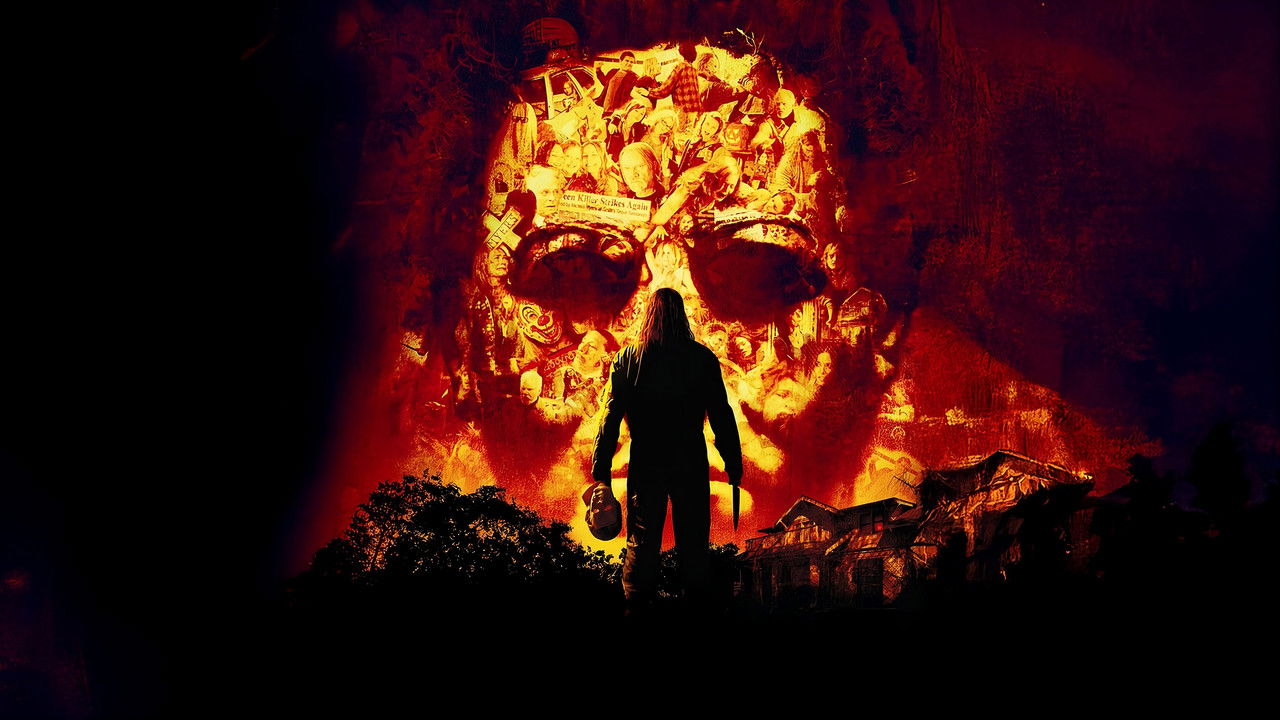
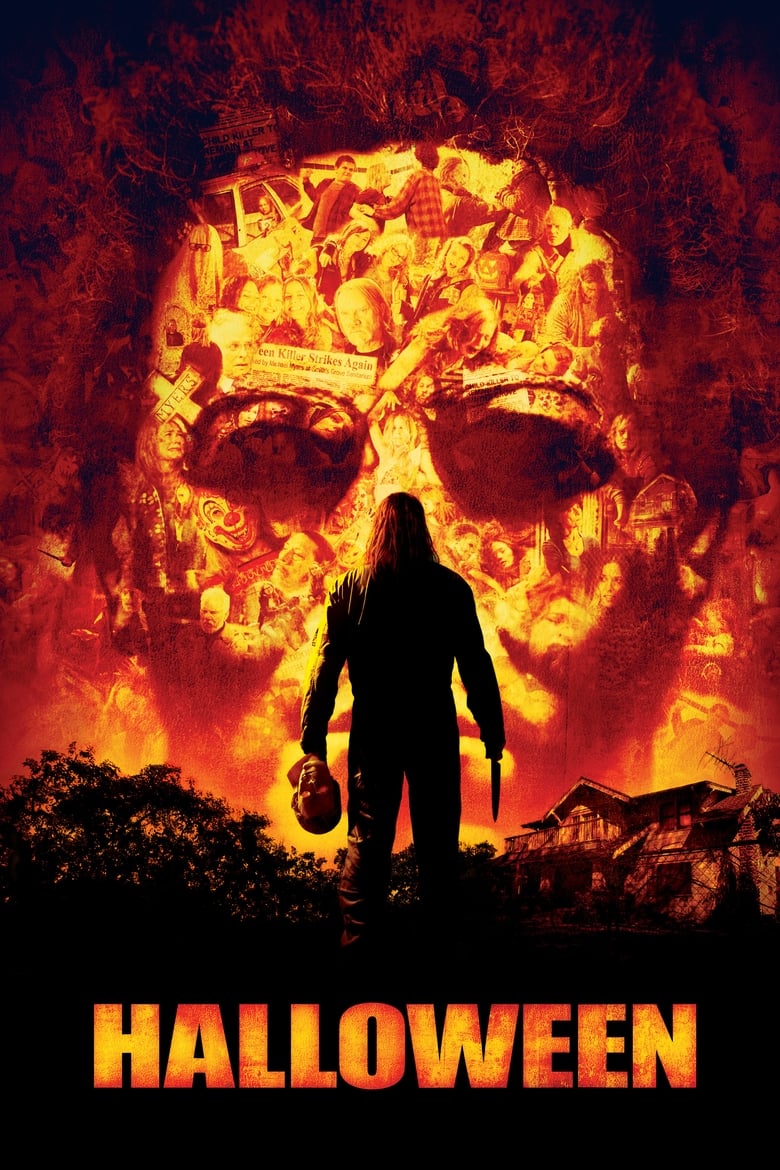
Halloween
“Evil has a destiny.”
The early years of young Michael Myers and the events leading up to his fateful Halloween night murder rampage in the quiet town of Haddonfield, Illinois.
About Halloween
Why Halloween is still worth talking about
The film opens with something you can’t easily shrug off: a ten-year-old boy called Michael Myers committing a set of intimate, awful murders that won’t let the small town of Haddonfield forget him. That moment doesn’t feel like a preface so much as a promise — this movie will be interested in the roots of evil, not just the jump scares that follow.
Rob Zombie rebuilt Halloween in 2007 as a return trip to what made the original frightening, only this time the lens turns more insistently on family. Michael’s early life — and the fact he spares the baby he calls “Boo” — frames everything that happens later, so the trauma is always present, even when the plot moves to teenage Laurie and a single evening of terror. It’s compact for what it does — 109 minutes of horror that treats the domestic as a battleground — and the cast keeps the story anchored: Malcolm McDowell as Samuel Loomis, Scout Taylor-Compton as Laurie Strode, a young Daeg Faerch and later Tyler Mane as Michael, and Sheri Moon Zombie as Deborah Myers.
The idea that sets Halloween in motion
The basic engine is straightforward: Michael Myers is convicted after a gruesome childhood crime and sent to Smith’s Grove, where Dr. Samuel Loomis looks after him. Years later, Loomis thinks the case is closed and tries to move on — but the thing he contained doesn’t stay contained.
Michael escapes from the sanitarium, kills his way back toward Haddonfield and recovers the knife and mask he hid under his childhood floorboards. That return trip turns the movie into a hunt that’s also a homecoming, with history literally resurfacing inside the walls.
Meanwhile the film follows teenage Laurie Strode and her friends as they get ready for Halloween; small-town youth rituals provide the evening’s ordinary rhythm, which the film then violently disrupts. Laurie notices Michael watching her during the day, which turns what could be a simple stalker plot into something more personal.
When violence begins — Lynda and her boyfriend at Michael’s abandoned house, Annie and Paul at a different house — Loomis learns Michael is loose and heads to Haddonfield. The set-up works because the threat feels inevitable: a past evil has escaped its hospital and is walking directly back into the lives it changed.
Why Samuel Loomis matters
Samuel Loomis is the pragmatic hinge of the story: the psychiatrist who spent years with Michael and carries the weight of that history. The movie gives Loomis the job of translating the past for everyone else — he’s the man who knows what happened and who keeps trying to make others listen.
That history is specific and grim. After one of the state’s longest trials, Michael was committed to Smith’s Grove under Loomis’s care. Loomis’s continued involvement — and eventual attempt to close the file — is what heightens the sense of responsibility when the killer slips out.
Loomis’s relationship with Michael is complicated by the boy’s early attachments: Michael initially cooperated with Loomis and with his mother Deborah, whom he loved. Those personal ties make Loomis’s warnings feel less like professional alarm and more like a man trying to protect a town from something he saw form up close.
Because the film keeps returning to family, Loomis’s role matters beyond the procedural. He’s the one who can name the connection Laurie unknowingly shares with Michael, and that knowledge changes the way the evening’s threats read — as something that isn’t random, but inherited and hard to escape.
Halloween has more on its mind than the plot suggests
On the surface it’s a slasher about a killer on the loose. Underneath, the film keeps circling a handful of family-sized ideas: what family does, what it hides and what it damages. Michael’s earliest act — murdering members of his own household while sparing the baby — sets up a story about the corrosive effect of family secrets.
Home and safety are folded into that same argument. The movie repeatedly takes safety for granted — the babysitting, the night routines — and then shows how quickly domestic spaces can become theaters of violence when history returns to claim them.
Friendship and youthful freedom are used as counterweights: teenage rituals and small acts of trust make the evening feel normal until that trust is betrayed. Those moments make the violence sting harder because it interrupts something communal rather than merely individual. So while there are knives and chase sequences, the film’s emotional heft comes from how those scenes reconfigure relationships: family becomes a map of threat, home becomes unreliable, and freedom is suddenly complicated by lineage and the past.
Halloween could not belong to any other decade
This is a Halloween very much of its moment: a 2007 reinvention that chose to revisit and expand an old story rather than quietly restore it. The decision to retell the origin and to centre the brutality in family history reflects the era’s taste for remakes that rework the emotional scaffolding of familiar films.
Put simply, it’s part of the 00s habit of taking known properties and pushing their edges — making them louder, darker, more explicit. That impulse is what gets this Halloween out of nostalgia and into argument.
You can feel the decade’s appetite in the way the film wears its premise proudly: it announces itself as a 2007 project and then insists on digging into the backstory rather than preserving a neat, mysterious stranger.
That approach is why the film sits comfortably in conversations about 2000s movies: it’s a remake that treats the source material as a springboard for something more personal and confrontational.
What has aged — and what hasn't
A lot of the film’s central material still lands: the way family history reshapes the evening’s violence, and the simple, chilling idea of a killer returning to his childhood house and pulling the private past into public view. That single image — the mask and the knife recovered from beneath floorboards — still gives the story a nasty, tangible logic.
Scenes that hinge on ordinary domestic rhythms — babysitting, late-night hangouts, friends looking out for each other — retain their emotional bite because they provide the normal life that the film wants to puncture. When those scenes are interrupted, the contrast still reads today.
Some plot mechanics wear differently depending on what you bring to the film. The emphasis on a deliberate origin story — Michael as a damaged child who makes masks and withdraws from the world for fifteen years — asks modern viewers to accept a specific psychological reading rather than a purely supernatural or inexplicable one. If you’re curious about motive, that will still work for you.
Finally, the film keeps the stakes personal: Laurie’s connection to Michael, and the knowledge Loomis brings, make the horror feel intimate rather than anonymous. That intimacy is what helps the film remain watchable now; the violence isn’t only set-piece shock, it’s tangled with lineage and loss.
Why Halloween still matters
People who grew up with Halloween — or discovered it later — often remember this version for how insistently it rewrites the backstory. The opening childhood murders and the later reveal that Laurie is Michael’s adopted sister make the film feel less like a standalone night of terror and more like a family tragedy that kept bad consequences rolling for years.
Rob Zombie’s retelling spends time inside Michael’s early world: his papier-mâché masks, his withdrawal, the slow collapse that precedes the sanitarium sentence. Those details turn Michael into something more than a masked shape; he becomes an origin you can point to, which keeps conversations about the film focused on motive and damage rather than mystery alone.
The film also stays vivid because of the things it stages in public — Michael’s escape from Smith’s Grove, his killing of a truck driver to get back to Haddonfield, and him returning to the house where he stashed his mask and knife. Those beats give the story physical momentum: evil travelling back to the place that made it. Finally, the movie’s closing escalation — Laurie wounded and trapped, Loomis driving to warn the town and trying to intervene — leaves a strong imprint. The ending where Laurie screams as sirens wail is an image people mention because it collapses everything the film has been building: family, failed protection, and the small town’s loss of innocence.
Does Halloween still hold up?
If you want a faithful mood piece that preserves the idea of Michael Myers while digging into his origins, this 2007 retelling delivers. It is a remake that treats family as the engine of horror: Laurie’s link to Michael, Michael’s childhood violence, and the recovery of the mask and knife beneath the floorboards give the film a tight, if brutal, logic.
It’s worth noting this is a film that leans into its premise: Rob Zombie directs a version of Halloween that foregrounds backstory and consequence rather than leaving the killer as an unaccountable force. The runtime’s compactness — 109 minutes — keeps the film focused on those threads rather than sprawling into too many subplots.
That focus means the film will satisfy viewers who like their slashers with personal stakes. Malcolm McDowell’s Samuel Loomis acts as the connective tissue, the man who knows what happened and tries to stop it from repeating; and Laurie’s ordeal — kidnapped, fighting back, and finally collapsing into madness as sirens approach — is the emotional endpoint the story has been accelerating toward.
So should you watch it now? Yes, if you’re curious about a version of Halloween that makes family the horror and treats home as fragile. It’s not a gentle resurrection of an old movie; it’s a remake that insists on showing the damage. If that prospect interests you, the film still has teeth.