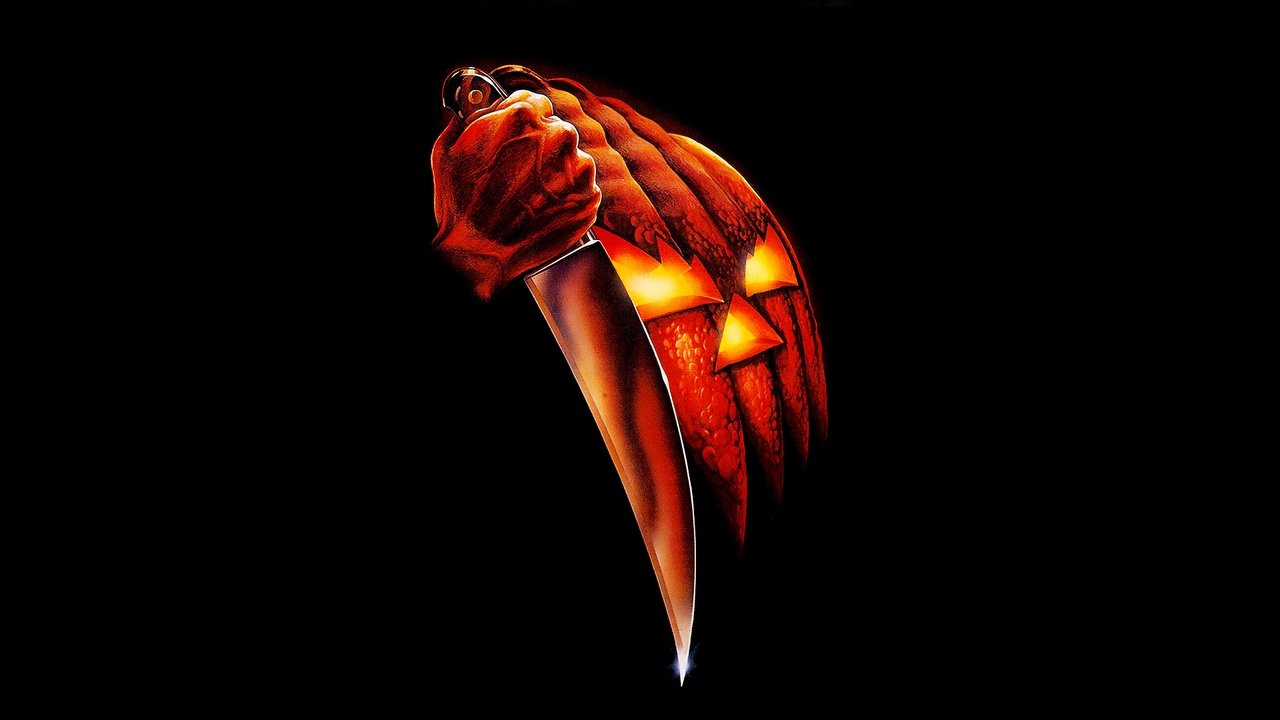
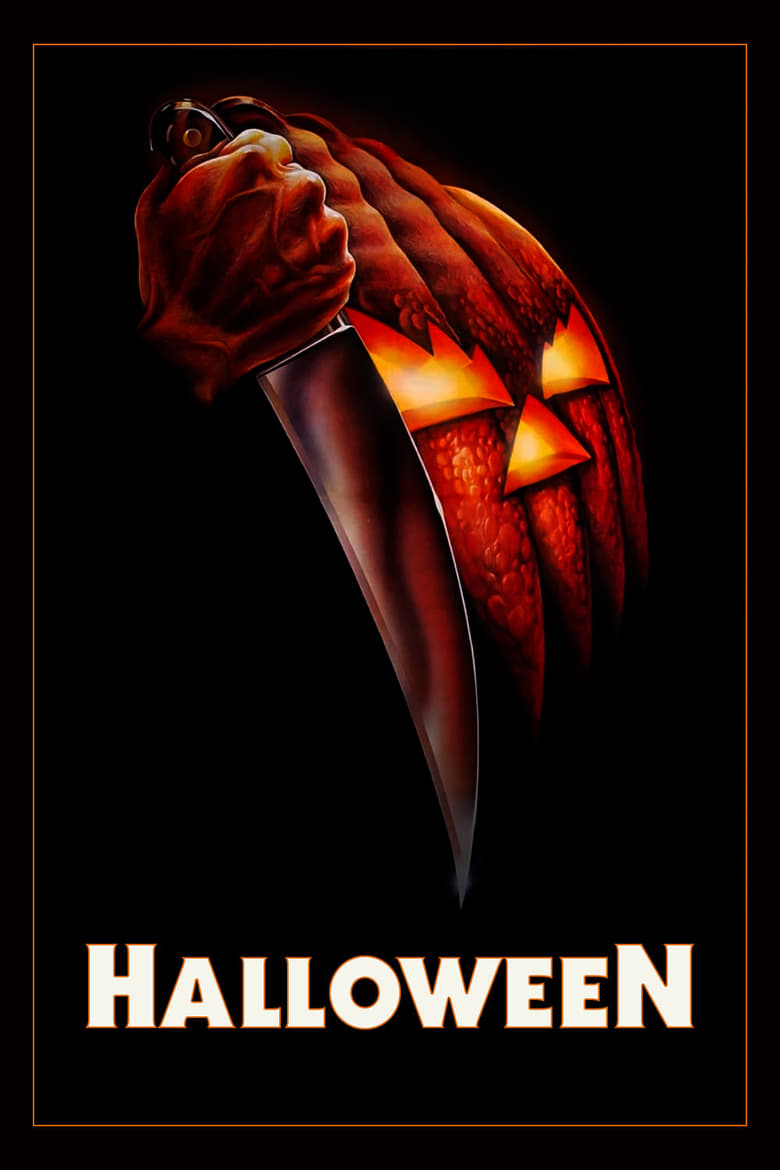
Halloween
“The night he came home!”
Fifteen years after murdering his sister on Halloween Night 1963, Michael Myers escapes from a mental hospital and returns to the small town of Haddonfield, Illinois to kill again.
About Halloween
Why Halloween is still worth talking about
Start with the image most people remember: in 1963 a six‑year‑old boy in suburban Haddonfield stabs his teenage sister to death. It’s violent and bewildering in a single shot; the film doesn’t linger on explanation, it simply hands you that cruelty and asks what happens next.
That question — what happens next — is the engine of Halloween. John Carpenter directed the 1978 movie and keeps it tight: 92 minutes of slow, escalating dread that pivots on ordinary teenage life and the adults who think they have it under control.
And if you need someone to voice the panic, there’s Samuel Loomis. Donald Pleasence plays him — the psychiatrist who senses there’s something elemental about the danger — while Laurie Strode, played by Jamie Lee Curtis, spends a long evening trying to keep children and normal routines safe from a threat that refuses to stay buried.
The idea that sets Halloween in motion
There’s not much plot glamour here. Loomis arrives at the sanitarium and, after a chaotic moment, realises Michael Myers is loose and on his way back to Haddonfield. That single fact turns an ordinary town into a place where everyday choices feel suddenly dangerous.
The immediate action is modest and surgical: Michael returns, steals a mask and a couple of knives, and begins to shadow normal young people doing normal things — notably Laurie Strode and her friend Annie Brackett as they go about babysitting on Halloween night.
That tidy premise works because it removes the excuse of grand conspiracies or elaborate motives. It’s just a man who walked away and came home. The evening’s quiet routines — keys, housework, babysitting, phone calls — become the terrain where danger moves in and out.
Why Samuel Loomis matters
Samuel Loomis exists to be the voice that refuses to normalise Michael Myers. We first meet him on October 30, 1978, driving to the sanitarium to take Michael to a hearing; that journey is the practical handoff that sets the rest of the night in motion.
Donald Pleasence plays Loomis, and the character’s usefulness is plain: he is the adult who takes the danger seriously when others shrug and carry on. That scepticism — adults seeing trouble but not quite believing the scale of it — is what allows the film’s tension to grow.
Loomis also functions as the connective tissue between the past and the present. He knows the 1963 killing and the childhood home Michael left behind, and he follows those traces back to Haddonfield. When he and the sheriff visit Michael’s house, they aren’t indulging a theory; they respond to the fact that something unquiet has returned.
Halloween has more on its mind than the plot suggests
On the surface it’s a slasher: someone comes home and starts killing. Underneath, the movie is quietly obsessed with safety and its failures. Home is meant to be refuge, but the film spends its time showing domestic spaces being breached, small rituals interrupted and trust exposed as thin.
Mortality is never abstract here. The opening child murder and the later, ordinary accidents that become attacks keep reminding you that vulnerability sits in the everyday: pets, phone calls, babysitting — ordinary things suddenly hazardous.
Family and friendship are the human stakes. Laurie’s relationships, and the way others dismiss her unease, make the danger personal. The film treats fear as both a social failure (adults not listening) and a lived experience for those left to cope when safety collapses.
Halloween could not belong to any other decade
There’s a particular late‑70s mood to the film’s premise: a post‑1960s anxiety settling into small towns. The movie was released in 1978, and that timing colours how it treats authority and domestic complacency.
The plot hinge — Loomis bringing Michael from the sanitarium on October 30, 1978 — gives the film a very specific sense of era without dressing the story up in nostalgia. It’s not about fashion; it’s about a cultural moment when institutions and ordinary lives carried fresh doubts.
So while Halloween doesn’t trade on period spectacle, it wears its year honestly: the fears it stages feel like the sensible fears of a community that thinks it’s safe — until it isn’t.
What has aged — and what hasn't
Some things still land with a jolt. The opening murder, and the sense that a childhood act can ripple into adult life, remains starkly effective. That premise — small cause, large consequence — doesn’t date.
The film’s focus on teenagers and babysitting gives it a simplicity that works for modern viewers: ordinary young people trying to keep things normal become easier to empathise with, not less. The domestic beats — a dead phone, a missing dog, a stolen tombstone — still read as clear, immediate threats.
Where it feels old is in the economy of explanation. Choices are economical, which is refreshing, but it also leaves some characters sketched rather than explored. Still, the core emotional pressures — fear inside the home, family on edge — still translate.
Overall, the movie’s refusal to mythologise the violence means it can feel blunt today in a way that’s often more unsettling than glossy modern horror.
Why Halloween still matters
People remember Halloween because it turned a small-town evening into a ledger of losses. The film opens with an inexplicable childhood killing and then tracks what happens when that violence returns: Loomis realises Michael is loose, Michael comes back to Haddonfield, steals a mask and knives, and quietly begins to undo ordinary life.
There are moments that lodge themselves in memory. Michael’s thefts — a mechanic’s coveralls, a white mask, household knives — are banal details that become ominous. The stolen tombstone and the bodies found in a bedroom underline how private grief becomes public terror.
The film also gives us a gallery of characters who anchor the fear: Laurie trying to protect the children, Annie and Lynda representing ordinary teenage life, Loomis who follows the trail back to the house. Those roles make the night feel populated, not just functional.
And it ends the way it began: with someone who should be contained vanishing when you thought it was over. That lingering refusal to tidy things up is part of why the film keeps being talked about — it doesn’t wrap the threat in an answer.
Does Halloween still hold up?
Yes — but not for the reasons a trailer might promise. If you want spectacle, you’ll find it spare; if you want a tight, unsettling night that makes ordinary routines feel precarious, this still works. The film’s premise — a lost childhood violence returning to a suburb — is simple and durable.
Donald Pleasence’s Samuel Loomis gives the film its necessary alarm, and Jamie Lee Curtis’s Laurie Strode is the practical centre who must keep children and a house intact while the world unravels. Those two figures — the adult who understands and the young woman forced to act — give the story its human stakes.
It also still scares because it respects the small details: a dead phone, a stolen tombstone, a missing dog. These are not grand set pieces; they’re domestic failures that mark where safety broke, and they feel immediate even now.
So should you watch Halloween today? Yes. Watch it as a compact exercise in unease — 92 minutes that trade explanation for pressure, and end with an image that refuses tidy closure. It’s a reminder that the most alarming thing about terror might be how quietly it slips back into the places you thought were safe.