Gremlins
“Cute. Clever. Mischievous. Intelligent. Dangerous.”
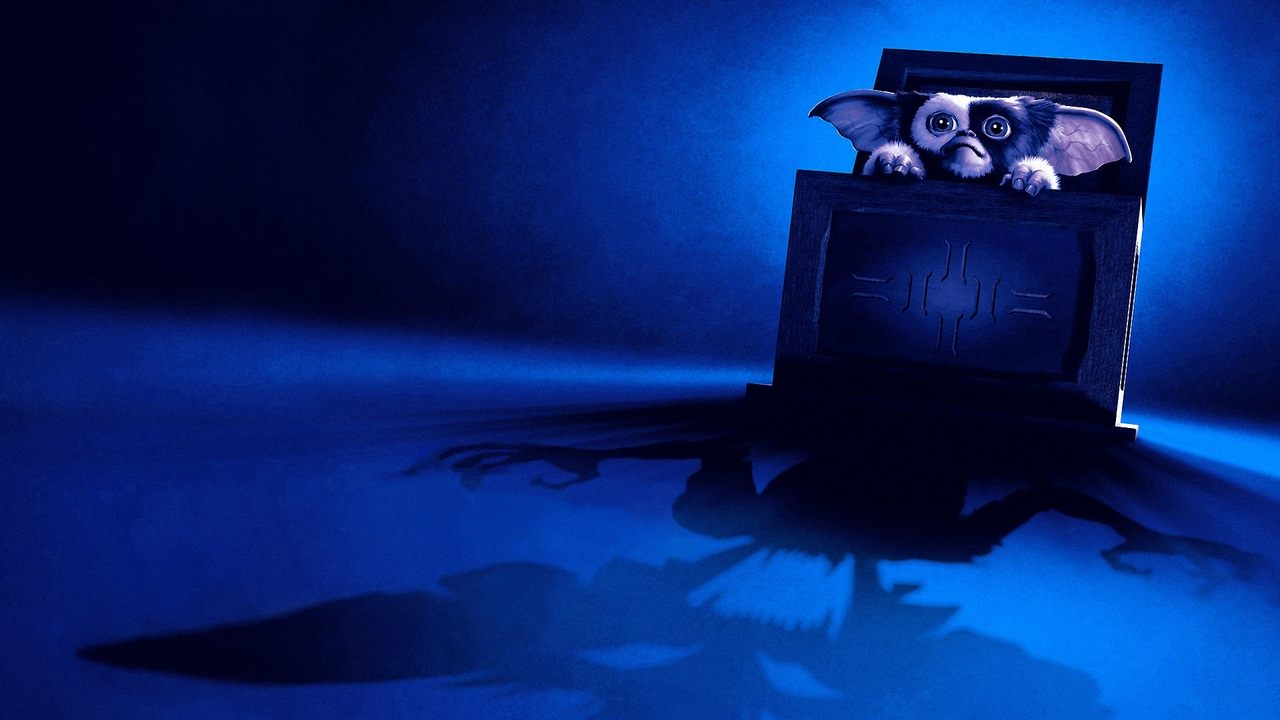
After receiving an exotic small animal as a Christmas gift, a young man inadvertently breaks three important rules concerning his new pet, which unleashes a horde of malevolently mischievous creatures on a small town.
About Gremlins
Why Gremlins still works
Start with a small, furry creature bought in an antique shop and you might expect a cosy family film. Gremlins doesn’t take that route for long. From that gentle beginning — Randall Peltzer’s Chinatown find — the movie spends its 106 minutes happily dismantling the idea that home is an inviolable sanctuary.
Joe Dante directs a film that can be affectionate about its characters and brutal about what happens to them. That contrast — sweet meets savage — gives the comedy-horror energy: Gizmo is cute and harmless until accident and curiosity turn him into the seed of something far more chaotic. And at the centre is Billy Peltzer, the ordinary young man caught trying to protect the people and places he cares about. It’s his muddle of responsibility and panic that keeps the movie emotionally readable even when the gremlins are running the show.
The idea that sets Gremlins in motion
The film’s engine is deliciously simple: a mysterious mogwai comes with three explicit, easily repeatable rules — no bright light, no water and absolutely no eating after midnight. Those rules are the contract the audience makes with the story.
It only takes an accident to blow that contract apart. A spill of water and Gizmo’s pleasant, docile nature produces more mogwai — and they’re not the safe sort. The contrast between the original pet and his offspring is what turns a tidy premise into a ticking problem.
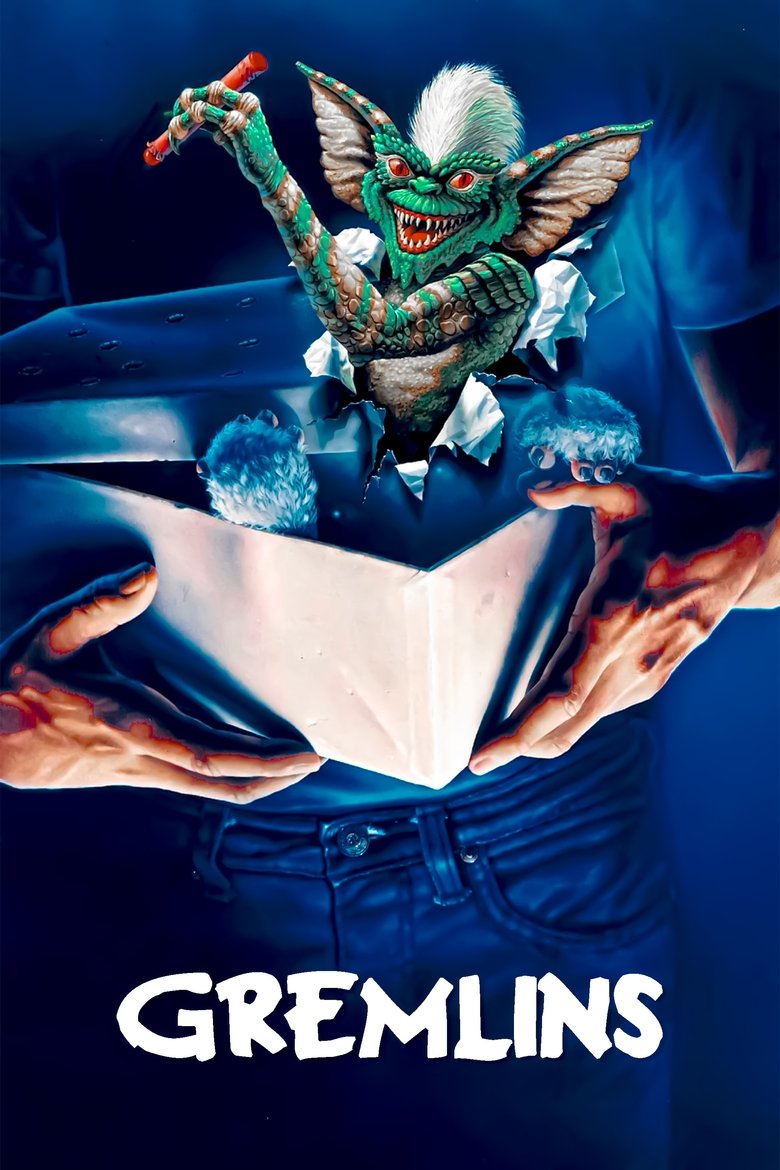
Once the rules are broken again — the gremlins trick Billy into feeding them after midnight by sabotaging his clock — things flip. The cute mogwai cocoon and hatch into something reptilian and vengeful, and the personal stakes escalate quickly: this is no longer a boy-and-his-pet tale, it’s a town-under-siege scenario.
Gremlins keeps the setup lean. The rules do the heavy lifting: they’re a simple promise to the viewer that, if broken, will have consequences — violent, funny and often unexpectedly dark.
Why Billy Peltzer matters
Billy is the movie’s anchor. He’s not heroic in a comic-book sense; he’s a young man trying to do right by his dog, his girlfriend and his family when the rules he’s been given fail him. Zach Galligan plays him, but the important thing is what the role does: it makes the audience root for someone who’s mostly flailing.
The arrival of Gizmo is supposed to be a solved problem — a present that will ease the family’s concerns — but Billy’s responsibility is put to the test almost immediately. The accidental spill that spawns more mogwai forces him into active rescue mode rather than passive panic.
Billy’s protective instincts also shift the film away from pure monster-mayhem. When he saves his co‑worker and girlfriend Kate during an attack and they hole up in the bank, the story becomes about people protecting each other against an outside force that has broken into their home life.
When the chaos ends and Sam Wing comes back to take Gizmo, the moment underlines Billy’s growth: he’s been tested as a guardian of his household and, in the process, becomes someone who can be trusted with care — or at least that’s the film’s hope.
Gremlins has more on its mind than the plot suggests
On the surface it’s a monster movie. Underneath is a compact set of concerns about family, the vulnerability of home and how authority responds when things go wrong. Those themes are simple, but they’re threaded through the film’s jokes and scares in a way that keeps the stakes personal.
Home and safety get tested constantly: the gremlins don’t just terrorise a mall or a theatre, they invade the Peltzer house and attack family members. That direct assault makes the chaos feel intimate and therefore scarier.
Authority is another recurring note. The community and its officers are shown as ineffectual against the gremlins’ mischief, which lets the younger characters — Billy and Kate among them — carry the responsibility of protecting one another. Above all, Gremlins is a movie about parental protection and the messy fact that grown-ups don’t always have the answers. The Santa stunt that killed Kate’s father is a reminder that well‑meaning adults can still cause harm; the film keeps circling back to who should be protecting whom, and how fragile those protections can be.
Gremlins could not belong to any other decade
Gremlins was released in 1984, and it wears that moment on its sleeve not by costume or soundtrack but by its appetite for mixing tones: family-friendly setups quickly give way to nastier, adult shocks. That tonal swinging felt especially of its time.
The film sits at an intersection of genres — monster, comedy-horror, and Christmas — which was a creative gambit filmmakers were willing to take in the decade. It’s the kind of high-concept idea that cinema in the 80s liked to test: take two opposites, throw them together, and see what sparks fly.
Because its premise is so clear and its runtime economical, Gremlins behaves like a compact genre experiment. It’s not dressed as a period piece, it simply emerges from an era when mixing family entertainment with real bite was a recognisably 1984 kind of trick.
What has aged — and what hasn't
The film’s central concerns — family, home and the scramble to protect both — still land. Scenes about Billy trying to keep his dog from being put down by a miserly neighbour read as plain human dilemmas, and those small domestic worries make the later chaos feel earned rather than arbitrary.
Some of the darker moments can still surprise modern viewers: people are injured and killed during the gremlins’ rampage, and the movie doesn’t shy from consequences. That willingness to let the stakes be real keeps it from being merely nostalgic fluff.
Other bits age well simply because they’re clever mechanics: the gremlins tricking Billy by sabotaging his bedside clock to get fed after midnight is a neat, mischievous set-piece that still plays as a smart escalation rather than a contrivance.
Finally, the aftermath — a scolding from Sam Wing about negligence and Western carelessness — now reads as a neat coda. It pulls the personal story back into a slightly larger commentary, which helps the film feel more than just a parade of gags.
Why Gremlins still matters
There’s a simple durability to Gremlins that keeps it in conversation: the initial wonder of a strange pet, the clarity of three rules, and then the increasingly imaginative ways those rules get broken. That setup — and what follows from it — makes for memorable set-pieces.
Scenes such as the gremlins massing at the YMCA pool and then spreading through the town show how the movie scales its trouble from household nuisance to full-blown civic crisis. Watching the Peltzers fend for themselves in a bank during an attack gives the mayhem a human spine.
The film also keeps its emotional payoffs tidy. Gizmo’s small but crucial act of opening the skylight to expose Stripe to sunlight, and then the quiet moment when Gizmo bids Billy goodbye, bracket the chaos with a note of tenderness. And finally, the film’s last moments — Sam Wing’s rebuke and his eventual concession that Billy might be ready to care for Gizmo — reframe the entire story as a lesson in responsibility. That tidy moral punctuation is part of what people who grew up with the film still remember.
Does Gremlins still hold up?
Yes — with a caveat. Gremlins is a 1984 movie that runs efficiently for 106 minutes and knows precisely what it is trying to do: use a cute premise to spark trouble and then force its characters to act like adults in a childish mess. That combination still entertains.
If you want something that balances the warmth of a family picture with genuine bite, Gremlins delivers. Billy and Kate’s attempts to protect one another and their neighbourhood give the film a human centre, while the gremlins provide the chaotic payoffs.
Some moments are darker than modern family films often allow, and that may surprise viewers expecting only light comedy. But those darker beats are also what make the stakes feel real — people get hurt and the police aren’t a magic fix — which keeps the tension honest.
Bottom line: watch it if you enjoy a holiday movie that’s not afraid to be mean as well as funny. It’s still a sharp, compact rollercoaster — equal parts domestic fuss and monster mayhem — and it closes with a small, sensible lesson about care that lands better than you might expect.