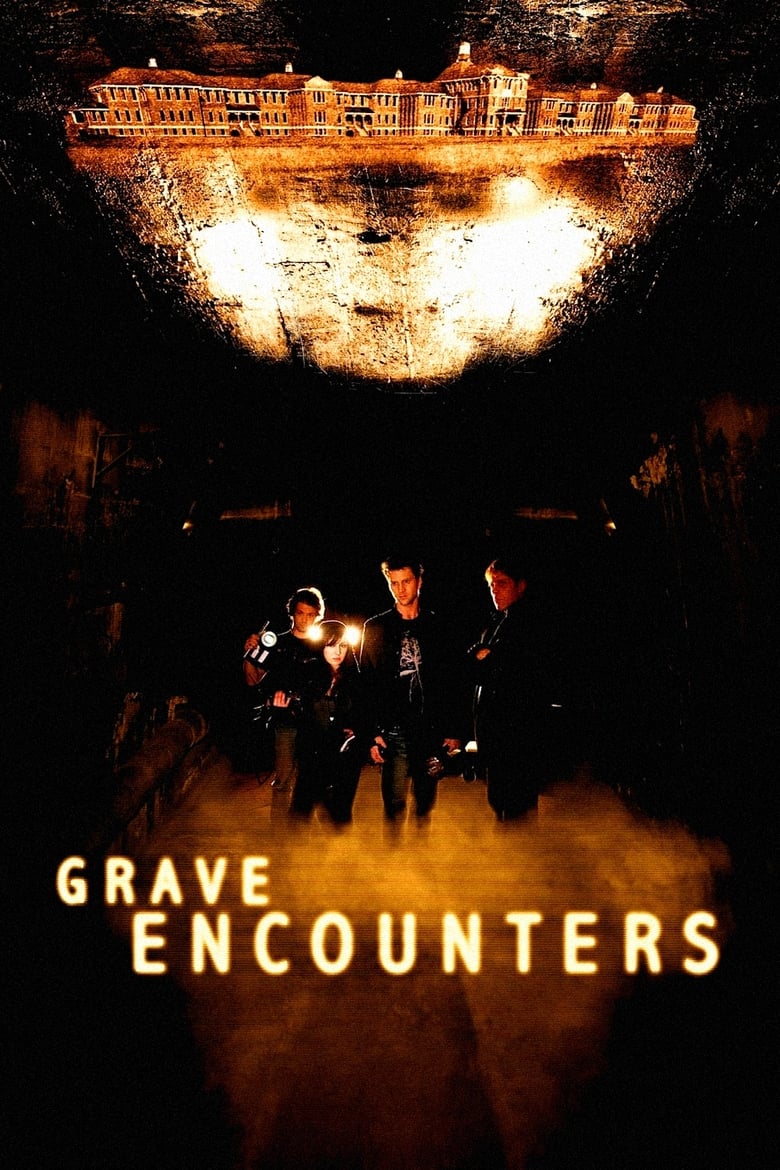
Grave Encounters
“They were searching for proof... they found it.”
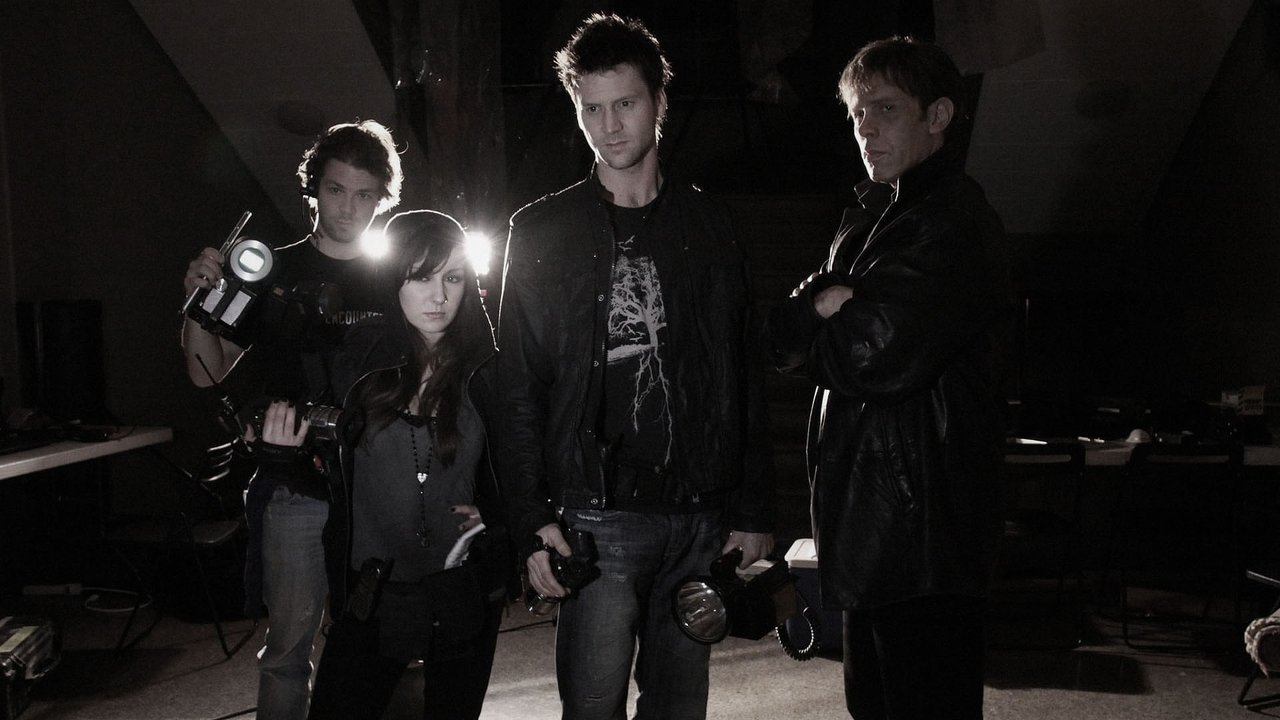
A crew from a paranormal reality television show lock themselves in a haunted psychiatric hospital. They search for evidence of paranormal activity as they shoot what ends up becoming their final episode.
About Grave Encounters
Why Grave Encounters still stands out
There’s an instantly grabby hook at the film’s heart: a paranormal TV crew vanishes and what we’re watching is the recovered footage from the show’s final episode. That simple framing gives Grave Encounters a built-in storyteller — and a built-in audience — before the first scream.
Colin Minihan keeps it short and sharp. In ninety-five minutes the film sends a ghost-hunting crew into an abandoned psychiatric hospital, locks the doors and lets the situation do the work. The premise is neat because it turns everyday television habit—turning on to be spooked—into something you’re forced to live through with the characters. Sean Rogerson’s Lance Preston is the face that carries the investigation and the camera; Jerry Hartfield’s framing as the show’s producer gives the movie its retrieved-tape authority. That combination of presenter, presenter’s footage and a locked building is what makes this one worth revisiting.
The idea that sets Grave Encounters in motion
At its simplest, Grave Encounters is built on a tidy set-up: a paranormal reality crew are invited to an abandoned psychiatric hospital with a dark history and decide to spend the night. The show-within-a-film framing gives the audience a reason to watch and a reason to mistrust what’s on screen.
The hospital’s backstory—told on the day tour by its caretaker—matters because it supplies a concrete human horror to attach the supernatural to. The experiments and lobotomies conducted by the hospital’s late doctor give the place a nasty mythology that the crew are there to probe.
From a structural point of view the decision to lock the crew in and let them set up base is clever: it concentrates the story into a single night and forces the revelatory beats to happen in close quarters. It’s the kind of constraint that sharpens tension quickly.
That constraint also makes later moments — sudden, inexplicable violence and the sense that exits are lying to you — land harder. The hauntings don’t feel incidental; they’re the consequence of a crew who chose to stay when they could have left.
Why Lance Preston matters
Lance Preston is the crew’s on-screen leader: the ghost hunter whose name is on the show and whose choices pull the rest of the team into trouble. That’s a useful narrative trick — make one person’s curiosity the engine of the piece and the audience can ride along, trusting or doubting as the camera does.
We meet Lance as part of a hand-picked ensemble: an occult specialist, a surveillance operator, a cameraman and a fake psychic medium. Within that group dynamic, Lance functions as the presenter who pushes the investigation forward, which keeps the film lean and watchable.
Because the movie is presented as recovered footage, Lance’s point of view becomes the audience’s point of view. When he makes the call to stay, we feel the consequences more keenly than we would in a standard horror set-up.
In short: Lance matters because he is the lens through which the hospital’s menace is revealed. The story is built around his decision to treat a place like Collingwood as a show location — and the film pays the price when that decision goes wrong.
Grave Encounters has more on its mind than the plot suggests
On the surface it’s a horror about a haunted hospital. Underneath, it’s interested in why we believe the supernatural in the first place — and what that belief costs. The movie repeatedly asks: what happens when spectacle becomes an act of trespass?
Loss and fear thread through the night. The crew aren’t just chased by ghosts; they’re separated from certainty, from one another and, eventually, from escape. That slow stripping away of normal anchors is where the film’s dread sits.
Freedom, too, is a quietly recurring idea: not only the loss of freedom that comes with being trapped, but the perverse notion that the hospital’s residents offer a kind of ‘cure’ that only looks like release. It’s a grim bargain central to what the film is showing us. Mortality and isolation fold into those ideas. When violence arrives suddenly — as when Houston becomes disoriented and attacked by something unseen — it feels less like spectacle and more like an illustration of how exposed people are when the world that made sense vanishes.
Grave Encounters could not belong to any other decade
Arriving in 2011, Grave Encounters wears its era on its sleeve because it takes the language of reality TV and collapses it into a horror film. That marriage — TV presentation as horror device — was very much a device of the period.
The found-footage frame, the short running time and the tight focus on a single-night investigation feel neatly of the 2010s: economical storytelling that borrows the aesthetics of other media to ramp up immersion.
It’s also a decade where the idea of watching ‘real’ terror on a screen felt especially immediate. Using a show’s recovered tape as the narrative surface lets the film play to the anxieties of an audience used to spectacle and feeds them something darker.
Put another way: this movie makes sense as a 2011 creature because it exploits contemporary media habits — tuning in, voyeurism, the promise of authenticity — and turns them into narrative pressure.
What has aged — and what hasn't
Fear, the movie’s primary currency, still works. Moments of sudden, inexplicable violence — like Houston getting lost and then attacked by an unseen force — have a bluntness to them that translates well even now.
Part of that durability comes from the film’s refusal to over-explain. When the crew encounter phenomena, the movie often stays with the shock and its immediate consequences rather than handing the audience tidy answers.
Where it’s less patient is in its willingness to keep piling on set-pieces once the rules of the place are broken. For some viewers that turns intensity into repetition; for others it’s a relentless, watch-with-your-hands-over-your-eyes rhythm that still hits.
Overall, the central sensation — being trapped and hunted by something that doesn’t play by normal rules — remains effective. The details of how that happens are sometimes messy, but the experience of fear is intact.
Why Grave Encounters still matters
People remember the conceit: a paranormal show cancelled after its crew disappeared and the idea that we’re watching the recovered episode. That framing keeps the film in conversations because it turns a TV format into a horror artefact.
The hospital’s backstory — a doctor who performed unethical experiments and lobotomies — gives the film a concrete, ugly past to hang its scares on. That makes the hauntings feel tied to a history, rather than floating random shocks.
There are also little, lingering notes that stick: the crew’s identification bracelets, the moment they discover exits leading to other hallways, the way departures become false. Those elements make the setting memorable in a sensory way. Finally, the endnotes — the recovered nature of the footage and the implication that the crew didn’t come back — keep the film operating like a story you might tell round a fire. It’s a neat, chilling package that leaves an image in the skull.
Does Grave Encounters still hold up?
Yes — with a caveat. If you come for polished answers and a clear ruleset, it can feel messy. If you come for a compact, relentless found-footage scare built around a show that should never have stayed the night, it still delivers.
Its strengths are the things it leans into: the recovered-footage framing, the single-night pressure-cooker of an abandoned hospital, and a handful of brutal set-pieces (Houston’s disappearance among them) that still land as shocks.
It’s a 2011 horror film through and through — short, sharp and economical — and Colin Minihan’s choice to frame the whole thing as the final episode of a cancelled show is the neat twist that keeps it interesting afterwards.
So, should you watch it now? If you enjoy found-footage horror and don’t need everything explained, Grave Encounters is worth the ninety-five minutes. If you demand tidy closure, it will frustrate you — but it will do so in a way that’s intentionally, grimly effective.