Godzilla
“Godzilla, a weapon of science, a great battle of wonder and terror!”
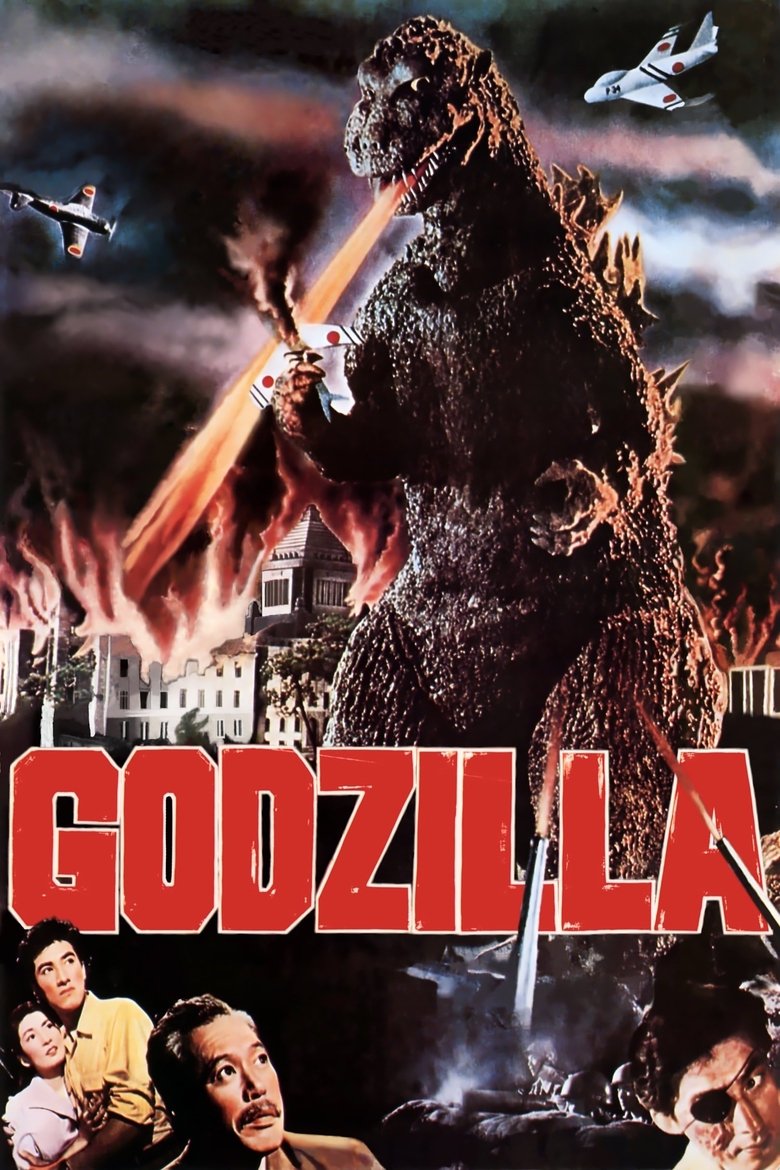
Japan is thrown into a panic after several ships are sunk near Odo Island. An expedition to the island led by Dr. Kyohei Yamane soon discover something far more devastating than imagined in the form of a 50 meter tall monster whom the natives call Gojira. Now the monster begins a rampage that threatens to destroy not only Japan, but the rest of the world as well.
About Godzilla
Why Godzilla is still worth talking about
Remember how a film grabs you and refuses to let go? Godzilla does that by beginning very small: a damaged freighter, a handful of survivors, an island with its fishing emptied out. It’s an urgent, practical opening that refuses cheap thrills for the darker business of aftermath.
That quiet misery is the engine. Ishirō Honda’s 1954 film runs a tight 100 minutes and never forgets that the monster’s appearance is a human catastrophe — people lose homes, livelihoods and, crucially, a sense of safety. The creature is folded into a world of scientists, reporters and villagers trying to understand what just happened. So why keep talking about it? Because Godzilla treats fear like a domestic problem as much as a cinematic spectacle: it’s about ruined houses, personal decisions and the hard choices people make when their world is overturned. That makes it a monster movie with a conscience — and a reason to watch, even now.
The idea that sets Godzilla in motion
The film’s premise is boldly simple: something destroys ships and wrecks coastal villages, leaving enough clues to suggest a very big, very dangerous animal. That initial mystery — fishermen missing, catches gone, wrecked boats — gives the story an immediate, plausible dread.
From there, the human side takes over. Scientists and officials trawl the evidence; a paleontologist identifies gigantic footprints and a fossil that point to an ancient creature made newly dangerous by modern events. The movie treats investigation as a communal duty, not a solo detective trick.
Alongside the inquiry you have private stakes: an arranged engagement collapsing because the woman involved loves a salvage-captain, and a secret laboratory project that someone is terrified to reveal. Those personal threads keep the scale of the disaster honest — it’s global in consequence but intimate in effect.
Eventually the state tries force — electrified defences, frigates and depth charges — and fails. The film makes the practical attempts to stop the threat feel real and inadequate, which is what pushes characters toward the grim choices that close the story.
Why Hideto Ogata matters
Hideto Ogata is the film’s practical, steady presence — the salvage-captain who becomes the human link between domestic life and the wider catastrophe. He’s not an abstract hero; he’s a man whose job literally involves hauling wreckage out of the water, which makes his decisions feel rooted in workaday responsibility.
His relationship with Emiko provides the movie with a grounded emotional through-line. When Emiko breaks off an arranged engagement because she loves Ogata, the story stops being just about national peril and becomes about ordinary futures: marriages, consent, the small hopes people cling to even while cities burn.
That family angle matters because it keeps the film honest. Ogata isn’t there to deliver speeches about doom; he’s there to navigate loss and to push for action when others hesitate. His choices anchor the film’s practical side.
In short: Ogata supplies the film with a believable, human response to an unbelievable event. He’s the local voice, the personal stake and the willingness to act — the human scale amid the monster-sized problem.
Godzilla has more on its mind than the plot suggests
Take away the dinosaur and the explosions and the film is still a study in fear. Not the adrenaline-pump kind, but the slow, logistical fear that comes when people must reckon with what they can and cannot protect.
Family is threaded through the action: relationships are tested, plans are postponed, and ordinary future-making is interrupted. These personal losses are as important as the ruined buildings because they describe how a community survives the idea of living after devastation.
Mortality and home are constant companions. The film shows hospitals full of the maimed, villagers petitioning for relief, and the obvious fragility of safety. That makes Godzilla less a simple monster story and more a film about how societies respond when the ground literally shifts under them. Technology sits uneasily in the mix. The monster’s connection to modern weapons and testing gives the catastrophe a modern origin, and the story asks whether our inventions protect us or provoke a new kind of danger. There’s a steady, uncomfortable line that runs between human progress and unforeseen consequence.
Godzilla could not belong to any other decade
Released in 1954, the film wears its moment on its sleeve. It’s a production built from the anxieties and the questions of its time: sea disaster, vanished ships and the sudden arrival of something the nation has to name and face.
That shipwreck opening anchors it in a post-war world worried about the consequences of modern weapons and testing. The movie isn’t interested in nostalgia; it’s working through the immediate, practical fallout of a technological age that suddenly feels dangerous.
Because it treats catastrophe as civic business—villagers petitioning Tokyo, scientists debating disclosure, officials trying militarised fixes—the film reads like an argument about how a country rebuilds its sense of normality after large-scale trauma.
Put simply: Godzilla is of the 1950s because it answers that decade’s question about how everyday life copes when modernity goes badly wrong.
What has aged — and what hasn't
What survives is the film’s seriousness. Its focus on fear, family and the erosion of home haven’t become quaint. The scenes of ruined villages and overcrowded hospitals still read as clear human consequences rather than cheap spectacle.
The human responses — villagers ringing an alarm bell, scientists arguing over disclosure, families seeking permission to marry amid chaos — keep the movie feeling lived-in. Those grounded elements make moments of destruction mean something beyond showmanship.
That said, elements that are purely spectacle for spectacle’s sake will feel of their time to a modern viewer. But because the film continually returns to practical loss and interpersonal stakes, those moments rarely dominate the emotional landscape.
If you revisit Godzilla now, you’re most likely to be struck by how often the story asks practical questions: how do communities survive, who gets to make dangerous decisions, and what do we owe each other when recovery starts?
Why Godzilla still matters
The film left a particular kind of after-image: not just a monster roaring across a city, but a nation parsing loss. It begins with the freighted ruin of boats and an island’s shattered fishing, and ends with people making unbearable choices because normal measures don’t work.
A paleontologist’s discovery — giant footprints and a fossil — gives the plot a scientific spine, which the rest of the story circles back to when officials try and fail to neutralise the creature with conventional force. That failure is the point where the film becomes less about spectacle and more about responsibility.
There’s also the moral knot of the secret weapon: a device that can disintegrate life. The decision to use it, and the consequences that follow, leave the movie less like a simple victory and more like a ledger of cost. People mourn, and the film lets them. Finally, the story ends on a sober note about vigilance: the suggestion that if the tests that created this danger continue, another calamity might follow. That thought — uncomfortable and practical — is part of why the film remains a meaningful conversation-starter for viewers who grew up with it.
Does Godzilla still hold up?
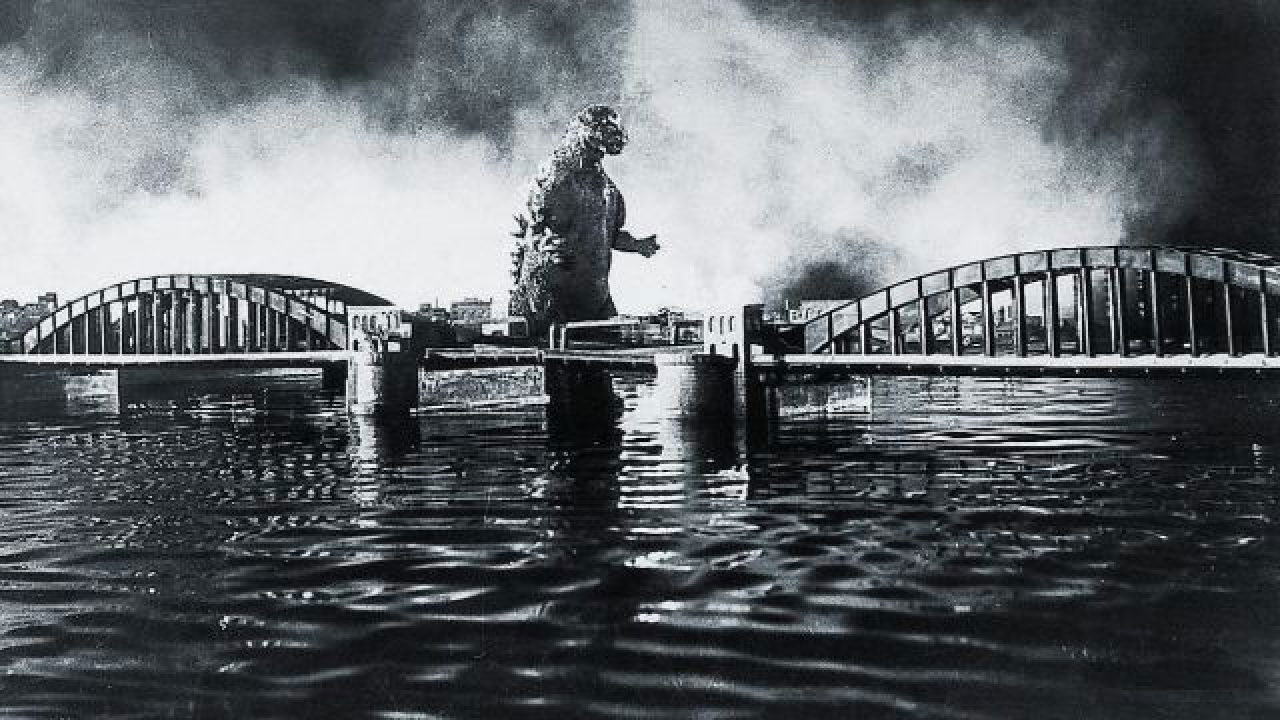
Yes — if you want a monster movie that behaves like a serious adult about damage and consequence. The plot’s concrete beats — a destroyed freighter, villagers pleading in the capital, Godzilla surfacing in Tokyo Bay and doing real damage — give the film an unflinching logic.
Because the stakes are personal as well as civic — Emiko breaking off an arranged engagement for Hideto Ogata; scientists torn between study and the need to stop the threat — the film remains emotionally accessible. Those human choices make the ending, grim as it is, feel earned rather than merely sensational.
The darker elements are still what make it worth watching: a scientist’s terrible secret weapon; the decision to use it; grief for a life taken. These are not throwaway thrills but the kinds of moral reckonings that still land with a modern audience.
So yes: watch Godzilla. Not just for the creature, but for the way it keeps asking what we do when our inventions become threats, and for the small human decisions that carry the largest costs.