Ghost Story
“The Time Has Come to Tell the Tale”
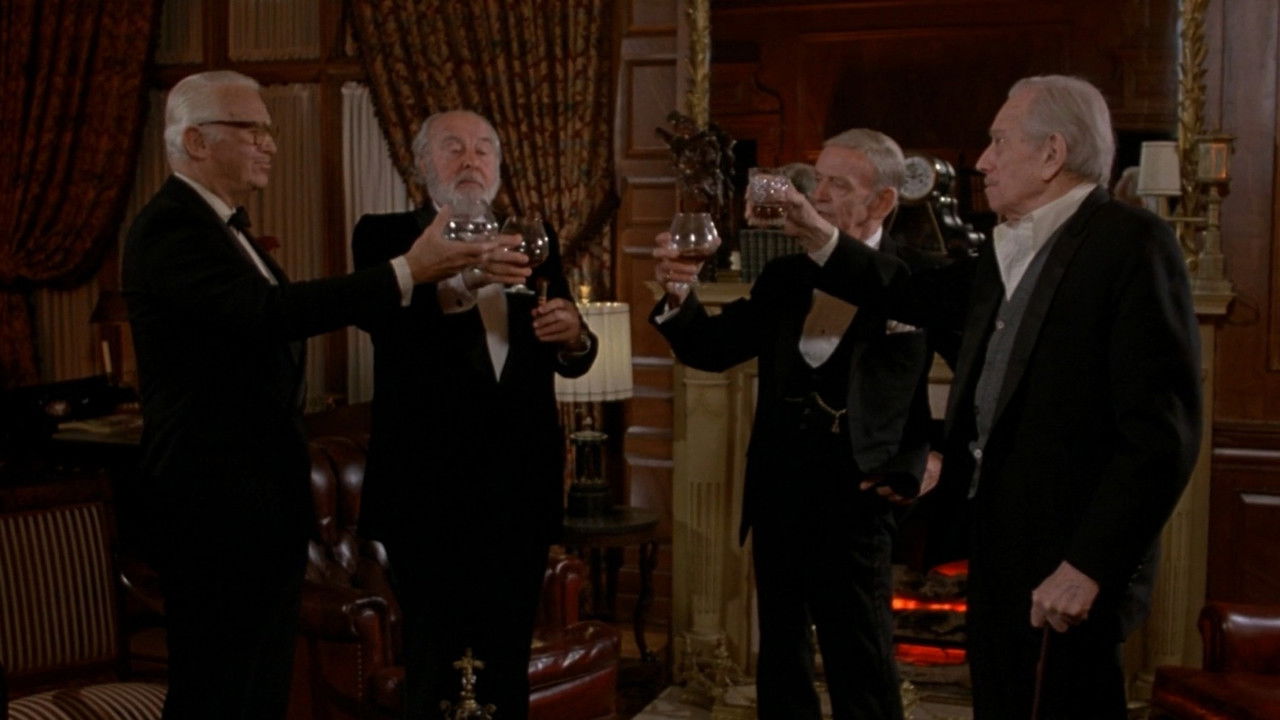
Four successful elderly gentlemen, members of the Chowder Society, share a gruesome, 50-year-old secret. When one of Edward Wanderley's twin sons dies in a bizarre accident, the group begins to see a pattern of frightening events developing.
About Ghost Story
What makes Ghost Story worth revisiting
The film opens inside an old men’s club — the Chowder Society — where four lifelong friends meet each week to swap horror tales. That cosy, almost ceremonial start is a neat sleight of hand: it frames the movie as a chat among equals and then lets the past they share do the creeping.
It’s an early-80s picture from John Irvin, comfortable with a deliberate pace and content that a town’s quiet surface can be brittle. The cast is centred around a quartet of elders whose shared history is the engine of the plot; one of them is Ricky Hawthorne, played by Fred Astaire. Clocking in at 107 minutes, Ghost Story keeps its scope snug. It’s not a spectacle so much as a slow tightening — friendship, family and the idea of home are all at stake, and those everyday things are what the film keeps returning to.
The idea that sets Ghost Story in motion
It begins with a jolting death. Edward Wanderley’s son, David, plunges from his New York window after a terrifying encounter — he claims the woman he’s been with suddenly turned into something dead and horrific. That single, modern-sounding incident arrives like an interruption in the chowder-club chatter and pushes the plot from polite reminiscence into investigation.
Back home in Milburn, Edward’s other son, Don, returns at his father’s request. He’s the outsider who carries a story of his own: in a flashback he recounts an affair with a mysterious secretary called Alma, a relationship that unravels when he realises she isn’t quite right.
Don uses that confession as his entry ticket into the Chowder Society, effectively turning a ghost tale into a plea for people to pay attention. The film then alternates between present unease and the old private history that connects these men to a young woman named Eva.
That balance between contemporary shock and an older misdeed is what makes the setup work. The living are forced to answer for what they did, and the past — once shrugged off in drunkenness and secrecy — begins to insist on a reckoning.
Why Ricky Hawthorne matters
Ricky Hawthorne is one of the four men at the centre of the Chowder Society, and having Fred Astaire in that role gives the character a curious weight — he’s not a background elder so much as one of the keepers of the group's story.
He matters because he’s part of the compact that hides a terrible moment from the past. In the spring of 1929 the four friends were taken with Eva Galli; that shared attraction is the stain that keeps returning later in life.
Ricky’s presence in the club underscores how friendship operates in the film: it’s loyalty and mutual protection, but it’s also the pressure to keep one another’s secrets. The men’s reluctance to confront the truth turns their friendship into a kind of fortress.
That makes Ricky memorable not because he’s flashy but because he’s implicated. He helps show how ordinary bonds — family ties and long friendships — can be the setting for choices people hope will never be examined again.
Ghost Story has more on its mind than the plot suggests
At first glance it’s a ghost story; dig a little and you find a film about what people do to protect the places and relationships they love. Family threads run through everything: fathers, sons and the obligations that come with them.
Home and safety — another big note — are treated as fragile. The idea that your town, your house and even your nearest friends offer refuge is tested when a past secret arrives to prove otherwise.
Friendship here is double-edged. The Chowder Society’s weekly habit is affection in practice, but the same loyalty that keeps men close also enables a shared silence. That silence costs them: grief, suspicion and a slow erosion of trust. Loss and mortality are the film’s quieter concerns. Death arrives not only as a supernatural threat but as the inevitable consequence of decisions made decades earlier; the men are living with the long bills of their youth.
Ghost Story could not belong to any other decade
Released in 1981, Ghost Story sits at the start of a decade that liked to mix genres and take its time with mood. It’s not an effects-driven shocker; it’s more interested in using horror conventions to probe adult anxieties.
That early-80s placement matters because the film treats its supernatural premise with a kind of old-fashioned seriousness rather than a postmodern wink. It’s comfortable with long-setups and character-centred plotting.
If you’re looking for late-80s bombast, you won’t find it here. But you will find a picture that belongs to its moment by choosing character and consequence over sheer spectacle.
What has aged — and what hasn't
A modern viewer will still recognise the bones of the story: Don returning home at his father’s request and the uneasy task of convincing others that something is wrong. Those beats about family obligation and protective instinct feel immediate.
Themes such as home, safety and the loyalty between old friends remain convincing. You don’t need to dress them up: the idea of someone insisting on marrying in their hometown, or a brother scoffing at a warning, still lands as believable behaviour.
The film’s emphasis on interpersonal consequences — how one man’s affair and the others’ silence ripple through decades — keeps it relevant. That way of linking private shame to public danger ages better than any particular visual trick might.
Where it might feel dated is in its tempo; this is not a rapid-fire modern scare film. But if you come for the slow reveal and the way the narrative makes old friendships look complicated, much of it still plays.
Why Ghost Story still matters
People who remember Ghost Story tend to remember the way it stages truth as a thing that must be dragged up. The Chowder Society — four men bound by ritual — gives the film a recognisable centre: small, social rituals that hide big negligence.
There are set-pieces that stick in the mind: a son’s fall in New York, Don’s flashback affair, and the discovery of a past that has been deliberately submerged. Those moments give the story a moral clarity — an action in one decade has consequences in the next.
The presence of a mysterious woman who connects generations — Alma/Eva — makes the film less about a haunting and more about what a community will not admit. That idea remains a powerful engine for the movie’s tension. Ultimately, Ghost Story keeps being watched because it treats ordinary relationships as the true site of horror. The film remembers that ghosts arrive through people, not just through houses.
Does Ghost Story still hold up?
Yes — if your idea of a good ghost tale is one that cares about what people did to each other rather than just what the spectre looks like. The film is an early-80s horror-drama that uses its 107 minutes to unwind a decades-old wrong and show the costs borne by family and friends.
You should watch it if you like horror that’s quiet, a little patient and rooted in human relationships: a son coming home, elders who have kept a secret, and a mysterious woman whose past refuses to stay buried. Those plot and theme elements keep the film moving and give the scares a reason to exist.
If you prefer fast modern shocks, Ghost Story may feel slow. But its core — friendship turned protective silence, parental anxieties and the vulnerability of home — still lands. It’s a ghost story about consequences as much as apparitions.
Ultimately, Ghost Story’s appeal is simple: it asks what happens when men decide some memories are more bearable if buried. That question is oddly stubborn. It keeps coming back.