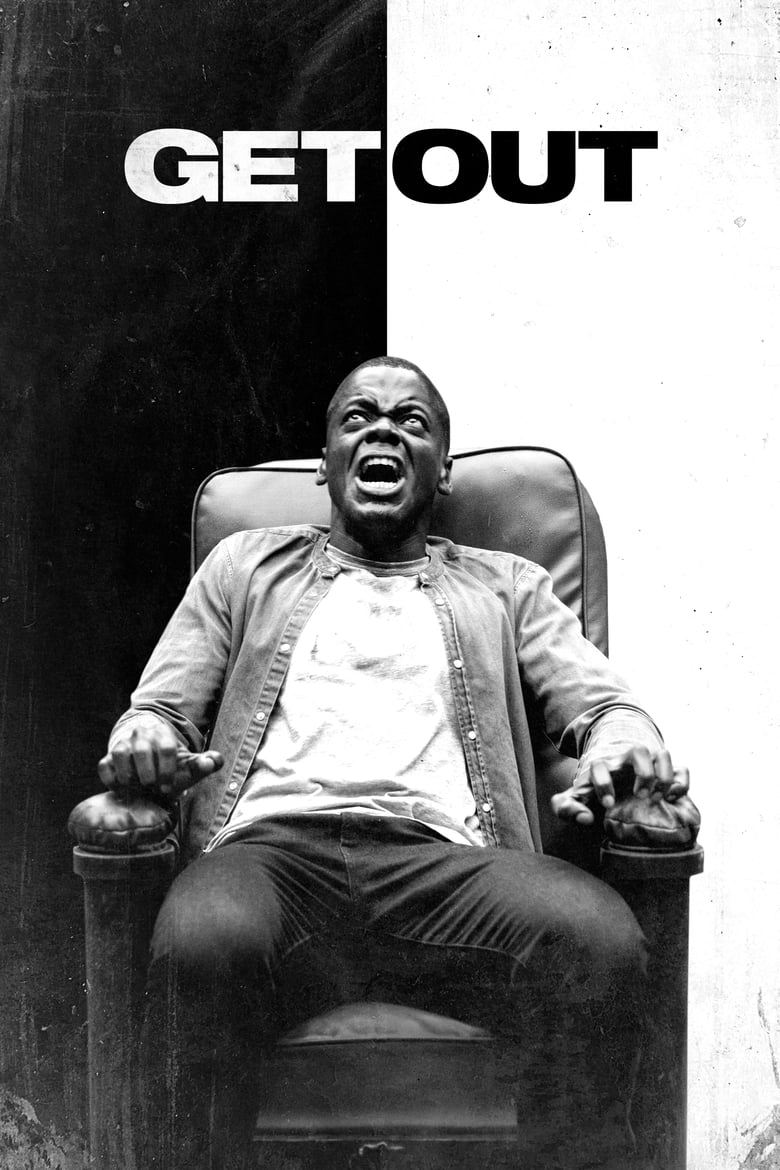
Get Out
“Just because you're invited, doesn't mean you're welcome.”
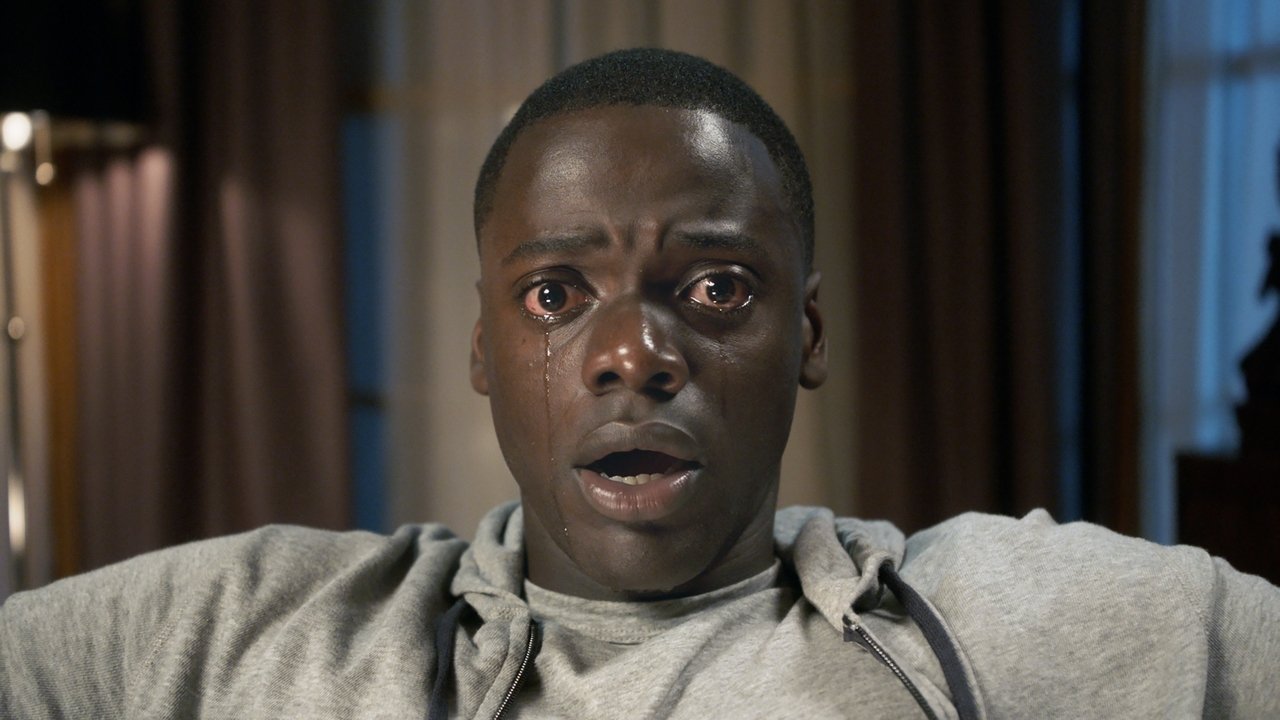
Chris and his girlfriend Rose go upstate to visit her parents for the weekend. At first, Chris reads the family's overly accommodating behavior as nervous attempts to deal with their daughter's interracial relationship, but as the weekend progresses, a series of increasingly disturbing discoveries lead him to a truth that he never could have imagined.
About Get Out
Why Get Out is still worth talking about
It begins with a simple, recognisable dread: a Black man walking alone on a suburban street at night. That opening stroke matters because it primes you for the film’s basic trick — ordinary settings suddenly feel unsafe.
From there Jordan Peele funnels that unease through a single point of view: Chris Washington, the photographer whose trip to meet his white girlfriend’s family should be nothing more than awkward small talk and forced smiles. Instead, those smiles become a slow machine for something else — a way of measuring how close the polite world will let him come. If you remember one detail from the movie, it’s probably the little spoon-and-teacup device Missy uses in a hypnotherapy session. The film turns hypnosis into the gateway to the “sunken place,” and that single concept — small domestic ritual morphing into literal powerlessness — is why people still bring Get Out into conversations today.
The idea that sets Get Out in motion
The film hinges on a neat, economical premise: Chris goes to meet his girlfriend’s family and everything that should be reassuring slowly stacks up into alarm. Small awkward conversations, odd behaviour from the Black household staff, a blind art dealer who takes an unhealthy interest in Chris’s photos — the ingredients are domestic and believable.
Peele lets those details accumulate rather than exploding straight away. A thrown remark, a strained laugh, a strange response to a camera flash — each moment nudges Chris (and us) toward suspicion.
Then there are harder, stranger beats that give the premise teeth. When Chris photographs a guest called Logan with a flash, Logan suddenly lunges and screams “get out,” which the family explains away. That misdirection keeps the mystery alive: is Chris overreacting, or is something genuinely wrong?
The setup works because it keeps the stakes personal. There’s always the option to leave — to get back in the car and drive away — and the story lets that choice hang over Chris until the point where the house refuses to let him.
Why Chris Washington matters
Chris Washington is the movie’s anchor. He’s introduced as a working photographer who has to negotiate other people’s assumptions as easily as he frames a shot. That career detail matters: his camera is both a tool and a way to read other people, which is useful when everyone around him starts acting off-kilter.
The script gives him a private history that keeps the audience close: a childhood trauma where his mother died in a hit-and-run, and a guilt he carries about not calling for help. It’s the kind of detail that makes his decisions — including the instinct to trust and to test — understandable and human.
When the house turns from unsettling to outright dangerous, Chris’s resourcefulness is foregrounded without turning him into a cartoon survival hero. He sends a photo to his friend Rod to check an odd name, he resists hypnosis, and later uses simple, improvised tricks to block the family’s control.
There are also painful echoes: an attempt to escape that disastrously involves Georgina, and the guilty hesitation that follows. Chris is the character who feels most exposed — not just physically, but morally — and that exposure is what keeps the audience invested.
Get Out has more on its mind than the plot suggests
On the surface it’s a tidy horror-mystery, but beneath that the film is interested in family, freedom and control. The Armitage household is pitched as an emblem of authority — a father who is a neurosurgeon, a mother who uses psychiatry — and those respectable roles are part of what makes the situation so corrosive.
The story literalises a loss of freedom: the hypnotic “sunken place” is an image for being present in your own life but unable to act. That idea hooks into broader anxieties about autonomy and who gets to decide a person’s fate.
Family figures take on doubled meanings. There’s the warmth you expect from kin, and then there’s the way family can be used as cover: a social structure that, in the film, hides a very deliberate abuse of power. Finally, the film keeps fear close to friendship. Chris’s attempts to reach out — to confide, to call a friend — are part of how the film builds tension. Those connections are what he fights to keep, and what make the darker discoveries land harder.
Get Out could not belong to any other decade
Get Out arrived in 2017, which matters: it’s a film of the late 2010s that wears the decade’s conversations on its sleeve without being a period piece.
The movie engages directly with social anxieties that were very much in public discussion at the time. It does so by folding those anxieties into a familiar horror setup — that comfortable house, the polite dinner party — rather than by hitting viewers with rhetoric.
That approach felt of the moment: smart, culturally tuned-in storytelling that used genre mechanics to make a point without turning into a lecture. It’s part of why, even now, the film reads as a distinct product of the 2010s.
What has aged — and what hasn't
The film’s central conceit — a weekend visit that turns into a fight for freedom — still reads clearly. A lot of what the movie does rests on ordinary social interactions turning sinister, and that method hasn’t dated: uncomfortable remarks from a roomful of well-off guests still land as sharply as they did on first viewing.
Certain characters remain effective because they’re deliberately ambiguous for a long time. The family’s Black staff behaving oddly continues to unsettle, precisely because the film refuses easy explanations until it has to.
Some of the story’s harder revelations — the recorded explanation about transplanting brains into Black bodies — still shock because they are framed as a cold, clinical ideology rather than melodrama. That composure keeps the horror stubbornly plausible.
And the quieter choices — Chris deciding to tell Rose, or the small signals he sends for help — pay off when the film moves into its final set pieces. Those human decisions give the spectacle weight, which helps the movie survive repeat viewings.
Why Get Out still matters
People who grew up with the film often point to moments that lodged in the mind: the silent auction of a Black body, the way well-meaning guests deliver invasive compliments, the spoon-tapping that becomes a weapon. These are the raw materials of its staying power.
It also gave us images that are easy to describe in a sentence but hard to shake: hypnosis turned into a place where a person is present but powerless; a friend recognising a missing man from a photograph; the polite family ritual that masks a monstrous plan. Those particular beats are memorable because they compress a social idea into a vivid scene.
The balance of social observation and genre clarity made it something people returned to — not as a case study but because the film supplies conversational hooks that are also chilling set pieces. Finally, the way the story ties private guilt and personal loss to a larger, organised scheme gives its scares an emotional spine. That combination of the personal and the systemic is why viewers keep finding reasons to talk about the film.
Does Get Out still hold up?
Yes. Get Out still works because it is short, sharp and disciplined — 104 minutes that mostly refuse to waste the audience’s attention. It trusts a few strong ideas and keeps returning to them until they hurt.
The film’s central mechanics — the teacup hypnosis and the “sunken place,” the social manoeuvres of a wealthy, outwardly respectable family, and the tiny, human gestures that hold a life together — remain persuasive. They are the reasons the plot’s darker turn feels earned rather than gratuitous.
It helps that the story keeps Chris’s perspective at the centre: the hurt from his past, the attempts to reach out to a friend, the very practical choices he makes under pressure. Those elements keep the horror grounded in something recognisably human.
If you haven’t seen it, watch it.