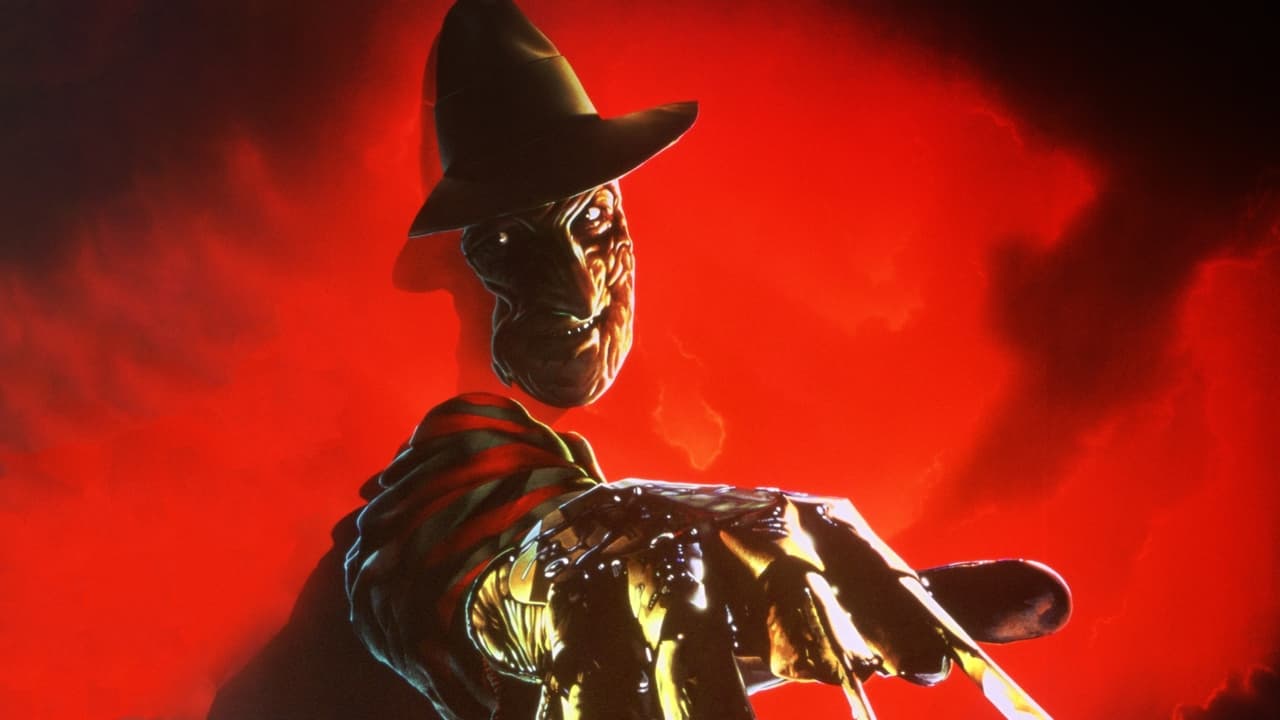
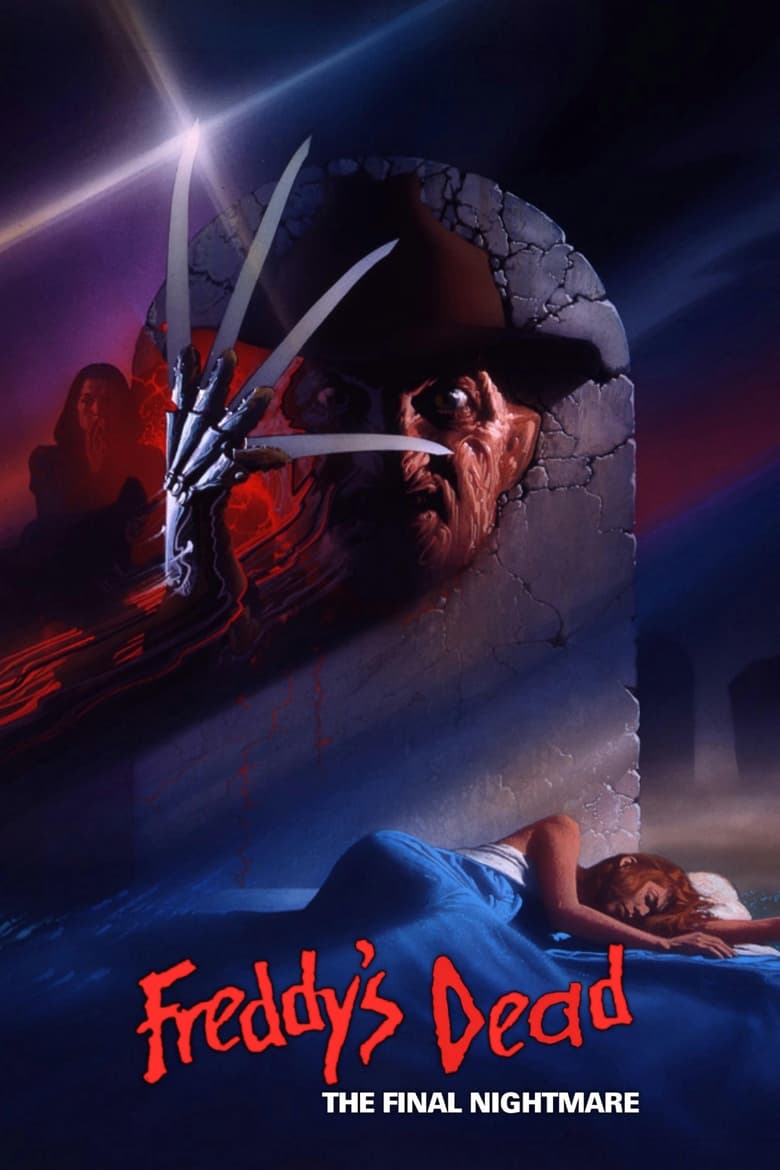
Freddy's Dead: The Final Nightmare
“They saved the best for last.”
Just when you thought it was safe to sleep, Freddy Krueger returns in this sixth installment of the Nightmare on Elm Street films, as psychologist Maggie Burroughs, tormented by recurring nightmares, meets a patient with the same horrific dreams. Their quest for answers leads to a certain house on Elm Street -- where the nightmares become reality.
About Freddy's Dead: The Final Nightmare
What Freddy's Dead: The Final Nightmare gets right
The movie opens with an audacious premise: set “ten years from now,” Freddy Krueger has returned and, in the film’s grim sweep, killed almost every child and teenager in Springwood. That’s not a detail for shock value alone; it instantly makes the story about survival, memory and the cost of growing up when there is nowhere safe to sleep.
Rachel Talalay steers the whole thing with a tight running time — 89 minutes — and a willingness to mix tones. This is Comedy Horror with a Slasher and Fantasy bent: it knows how to be disgusting, silly and strangely sentimental in the same breath, and it keeps the engine running fast enough that the central twist can land without the film stalling.
At the centre of the noise sits Robert Englund’s Freddy and a quieter counterpoint: Maggie Burroughs, who discovers she was born Katherine Krueger. That parentage turns what could have been another body-count exercise into a confrontation about family, and the movie is at its strongest when it lets that conflict do the heavy lifting.
The idea that sets Freddy's Dead: The Final Nightmare in motion
The plot hooks on a simple practical beat: the police find a lone, amnesiac teenager named John and hand him over to a shelter for troubled youth, where Dr. Maggie Burroughs becomes his caregiver. That’s the colossally useful premise — someone who might know the truth about Springwood is placed under the care of the woman who will have to confront that truth.
From there the story funnels into dream logic and an unusual rule: Freddy’s power is not entirely self-contained. Doc discovers that dream demons continually revive Freddy, and that those demons can be thwarted if Freddy is dragged into the real world. The setup works because it gives Maggie a way in — not just to learn what Freddy is, but to fight him on different terms.
Why Freddy Krueger matters
Put plainly: Freddy is the narrative muscle and the thing everyone has to reckon with. Robert Englund returns to the role, but the film also asks us to look at Freddy as a figure whose violence reshaped a town. In this story the stakes are amplified — he’s not just a local bogeyman any more; set ten years on, he’s almost exterminated an entire generation.
That scale changes how the character functions. Freddy becomes less a prankish nightmare-figure and more an embodiment of inherited damage: the children and teenagers who survive are living with his consequences. The movie uses that to push questions about family — who you are when your past has been shaped by someone monstrous.
The film doesn’t shy away from Freddy’s origins either. We see him as a child and a teenager, which matters because the screenplay makes a point of showing a history of teasing and abuse that helps explain how he became what he is. The result is a Freddy who is still frightening, but now sits inside a chain of cause and consequence.
Because the story ties Freddy to family and memory, the character matters beyond the scares. He’s the reason identities are in question, the reason Maggie’s discovery about her own origins lands with a punch — and the reason the shelter kids’ attempts to get away feel meaningful rather than incidental.
Freddy's Dead: The Final Nightmare has more on its mind than the plot suggests
Beneath the blood and the set-pieces, the film keeps circling a small set of ideas: family, growing up, power and freedom. Those themes aren’t tacked on. They’re sewn into the mechanics — who remembers whom, who can be called back from the past, and who gets to decide a child’s fate.
Memory is a particularly neat pivot. If most of Springwood’s kids are dead, memory becomes an act of resistance: remembering the lost, the abused and the violated is how the survivors keep the truth alive. That’s why the discovery that Maggie is Katherine Krueger reframes the fight — it turns a supernatural battle into something deeply personal.
Power moves through both supernatural and human institutions. The film explicitly links Freddy’s resurrections to dream demons, and makes the case that those outside forces can be confronted if you change the playing field. There’s also a quieter nod to institutional authority — shelters, the police, even the town as a whole — and how they fail the young, which pushes the film in a darker direction than a straight slasher might.
All of which means the movie is, at its best, a crowd-pleasing nightmare with an agenda: it wants you to think about who gets to protect children, who fails them, and what it takes for the next generation to break those cycles.
Freddy's Dead: The Final Nightmare could not belong to any other decade
Released in 1991, Freddy's Dead sits at that odd hinge between the excesses of the 1980s franchise era and the more self-aware horror of the 1990s. The film’s willingness to mix tones — broad comedy, lurid fantasy and old-fashioned slasher beats — feels exactly like a movie trying to recalibrate a franchise for a new decade.
That recalibration is part of why the film reads as distinctly of its moment. It’s not just a straight horror sequel; it’s a sequel that plays with the franchise’s own mythology and pushes the story toward a kind of finale, which is very much in the spirit of early-90s franchise endings.
Put another way: it feels like a 1990s movie because it’s willing to reshuffle the rules rather than repeat the same tricks. That approach makes it messy, occasionally indulgent — and, yes, memorable.
What has aged — and what hasn't
Some of the film’s choices hold up better than you’d expect. The focus on shelter kids with messy backstories gives the story emotional stakes that survive time: the kids’ attempts to escape, and the reasons they want to, still feel real and urgent. That keeps the movie from being just a string of kills.
Other elements sit more awkwardly now. The premise that almost every child and teenager has been killed is still a bold narrative gamble — it raises the stakes, but it also forces the film into some neat shortcuts, especially when memory and who-remembered-what start to bend the plot to fit the finale.
There are moments that read like period curiosities too: a cameo by a Teen on TV is a blink-and-you’ll-miss-it detail that mainly registers as the kind of casting riff the era enjoyed. And the decision to show Freddy as a child and teenager is a double-edged sword — it adds psychological heft, but it also asks the audience to accept a lot of backstory in a short runtime.
Above all, the themes about family and abuse remain thorny and interesting in a modern watch. The film doesn’t pretend to have tidy answers, and that messiness is one of the things that still keeps it watchable today.
Why Freddy's Dead: The Final Nightmare still matters
People remember the film because it tried to do something definitive with Freddy’s story. It’s the entry that makes the series about inheritance: John’s arrival, the discovery at the orphanage and Maggie’s realization that she was born Katherine Krueger turn a supernatural franchise into a messy family drama. That gamble is the film’s lasting note.
It also wraps the mythology in an interesting rule: Doc discovers Freddy’s power relies on dream demons that continually bring him back, which gives the heroes a practical way to fight him. The idea of pulling Freddy into the real world reframed the showdown and gave the finale a different rhythm from previous sequels.
The layers of revelation — John thinking he might be Freddy’s child, the orphanage discoveries, and the hand-to-hand attempt to drag Freddy out of the dream — all contribute to a finale that feels like a proper, if theatrical, end. The pipe-bomb resolution and the ejection of the dream demons are the sort of grand, literal-minded set-piece that sticks in the memory.
For those who grew up with it, the film matters because it tried to bring emotional consequence to a monster who had been mostly a gag and a threat. It doesn’t always succeed cleanly, but the attempt gives it a place in the franchise that people still talk about.
Does Freddy's Dead: The Final Nightmare still hold up?
Short answer: yes — if you’re willing to accept a sequel that’s more interested in messy ideas than tidy answers. The film won’t please everyone, but it rewards viewers who care about what a horror monster means to a town and to a family.
There’s genuine value in the film’s ambition. Doc’s discovery about dream demons and the plan to pull Freddy into the real world gives the final confrontation a clear rule to follow, and Maggie’s discovery that she is Katherine Krueger turns the climax into something cathartic rather than merely explosive. The fact she physically drags Freddy into the real world and finishes him off — violently and literally — brings the story to a decisive close.
It helps that the film is brisk — 89 minutes — and directed with a sense of urgency by Rachel Talalay. That economy means the movie rarely lingers on moments that don’t matter to the central questions about power, memory and growing up.
So watch it for the strange mixture of franchise mythology and family drama; skip it if you want your horror neat and understated. Freddy’s Dead doesn’t tidy up every loose end, but it does try to make the franchise’s violence mean something — and that attempt, messy as it is, keeps the film interesting decades on.