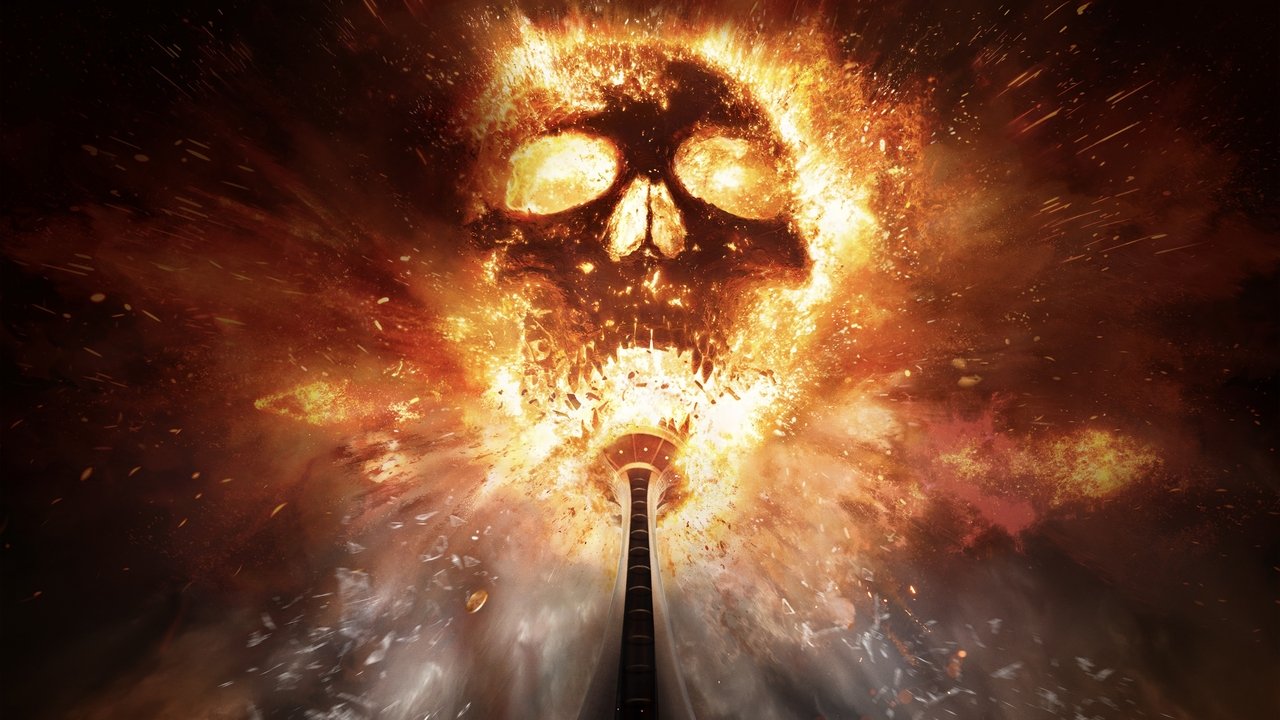

Final Destination Bloodlines
“Death runs in the family.”
Plagued by a violent recurring nightmare, college student Stefanie heads home to track down the one person who might be able to break the cycle and save her family from the grisly demise that inevitably awaits them all.
About Final Destination Bloodlines
Why Final Destination Bloodlines still works
It starts with a simple, horrible image: a dinner at the Sky View in 1969 that should have ended in disaster. Iris Campbell stops the collapse and, by doing so, sets a long, patient schedule of deaths into motion.
Fast-forward to 2025 and the ledger of consequences has become a family problem. Stefani Reyes turns up at home because the same vision that saved people decades earlier now haunts her sleep. That pivot — from anonymous survivors to a tightly bound clan — gives the familiar Final Destination idea a new gravity. Zach Lipovsky runs the show for 110 minutes, and he uses that time to keep the film taut where it matters: the personal stakes. Put simply, if the movie's engine is fate, its fuel is family.
The idea that sets Final Destination Bloodlines in motion
The hook is elegant and stubbornly simple: Iris tells a story about a premonition, about how preventing one disaster only rearranged the ledger. Death, the film implies, doesn't forget. It simply recalculates.
Iris keeps a notebook cataloguing those recalculations — names, dates, the rhythm of how accidents come to pass — so the family can try to stay one step ahead. That notebook is the film's literal and emotional MacGuffin.
When Stefani refuses to accept the story at face value, Iris forces the issue in the bluntest possible way to make belief unavoidable. That moment makes the threat tangible: it's not just theory any more.
And then there's the uneasy guidance from an old hand who knows the rules. He leaves the family with two grim options and a parting shrug: sometimes you can outsmart fate; other times you are forced into impossible choices.
Why Stefani Reyes matters
Stefani is the audience's handle on the whole business. She's not a blank-slate scream-queen; she's a college student who has been dragged back into a family history she only half-understands, because the nightmares force her hand.
Her return home peels back the family dynamics — an overprotective upbringing, a mother who disappeared from their childhood, an absentive past that explains why the clan now lives on edge. Those details make the danger feel intimate: this isn't strangers on a bus, it's relatives at a barbecue.
Crucially, Stefani is given proof and a choice. Iris literally hands her the notebook and then removes doubt in a way that won't be ignored. That shove turns Stefani from skeptic into the person who has to make sense of the ledger and try to protect the people around her.
Because the film roots the supernatural mechanics inside a family, Stefani's decisions matter beyond survival beats. They're about loyalty, resentment and what you're willing to risk for people who raised you badly.
Final Destination Bloodlines has more on its mind than the plot suggests
On paper it's a slasher-style rules movie about cheating an abstract force. In practice, it folds that concept into family tension. The ledger becomes a family heirloom of sorts — a record meant to protect but also a catalogue of grief.
Mortality here is not an off-screen idea; it's domestic. The film repeatedly asks how long a family can hold itself together under the pressure of impending loss, and what sorts of compromises people make when the ones they love are literally being picked off.
Parental protection figures heavily. Parents and guardians in the story try everything from isolation to secret-keeping to risky gambits, because their instinct is to shield the younger generation even when every choice is terrible. Those recurring beats — a notebook meant to organise chance, the overprotective upbringing, the desperate attempts to bend the rules — give the film emotional purchase beyond its set-piece horrors.
Final Destination Bloodlines could not belong to any other decade
This is a 2025 film through and through: it arrives at a moment when genre films are happy to blend old formulas with personal stakes. The date matters because the movie deliberately slots franchise mechanics into a modern, family-centred story.
Calling it a 2020s horror is not just chronological bookkeeping; it explains why the film feels less like a throwback and more like a reinvention of an idea for our decade.
If you want to understand why this version exists, start with the release year — the film is operating inside contemporary conversations about generational responsibility and inherited trauma, even while it indulges in the old favourite of elaborate, fatal set pieces.
What has aged — and what hasn't
The choice to make this about family gives the film a shelf-life that outlives any one practical gag. The central idea — a young woman haunted by the same vision that once saved a room full of people — keeps the stakes emotional rather than purely kinetic.
The family dynamics, in particular the history of overprotection and an absent mother, still read today. They make reactions believable: people don't act like extras, they act like relatives with bad histories and complicated loyalties.
At the same time, some of the gambits the characters try are old franchise tricks — desperate strategies to cheat fate that end in escalations. That familiarity can feel either comfortingly ritualistic or a little tired, depending on how hungry you are for novelty.
Overall, what endures is the film's insistence that mortality is a domestic problem here. That keeps the movie resonant even when the specific set-piece mechanics are familiar.
Why Final Destination Bloodlines still matters
People remember this instalment because it turned the franchise's abstract rules into a family saga. Handing the mechanics to a clan — grandparents, cousins, absent parents — gave the fatalism a familiar, domestic face.
It also brought back a very specific kind of franchise folklore: a notebook that catalogues escapes, a mysterious figure who understands the rules, and a pattern where attempts to outwit fate only rearrange the danger. That continuity comforts and chills in equal measure.
There are memorable moments that stick: the public, almost farcical deaths at a barbecue, the disastrous attempt to cheat death with a controlled resuscitation, and the final, bleak punctuation that leaves the question of survival annoyingly unresolved. Above all, the film matters because it turned survival into inheritance. The story is about what you pass on — secrets, scars, rules — and how those inheritances can protect you, betray you, or do both at once.
Does Final Destination Bloodlines still hold up?
Yes — if what you want is a franchise horror that feels personal rather than purely procedural. By centring Stefani and her family, the film turns the mechanics of fate into something you can actually argue about at a kitchen table.
It doesn't reinvent the rules of the series. It re-frames them. That means some sequences will read as familiar beats, but the emotional investment is different because the losses belong to named, complicated people rather than nameless extras.
Watching it in 2025, you'll notice the film's appetite for hard choices: proof that the supernatural is real, desperate attempts to bend the rules, and a finale that refuses tidy consolation. Those are choices that keep the film feeling sharp rather than merely efficient.
If you're deciding whether to watch: go for the family angle. Final Destination Bloodlines still bites because it treats mortality like a domestic argument — messy, stubborn and almost impossible to win.