Dracula
“The story of the strangest passion the world has ever known!”
A British estate agent travels to Transylvania to meet the mysterious Count Dracula, who is interested in leasing a London castle. After Dracula enslaves the agent and drives him to insanity, the pair return to London together, where Dracula, a secret bloodsucker, begins preying on socialites.
About Dracula
Count Dracula is still the reason this movie works
If you want to know why people still talk about Dracula, don’t start with the studio or the year. Start with the visitor: a man arrives at a castle on business and is welcomed inside. That arrival — a solicitor called Renfield travelling to Count Dracula’s Transylvanian home — is the movie’s small, insistent engine.
The film gets to the point. At seventy-five minutes, Tod Browning’s Dracula announces itself as a tight, single-minded horror. It opens with ordinary warnings (the villagers tell Renfield not to go near the castle) and then quietly turns them into something more sinister: the coach that takes him there is not what it seems. From the moment Renfield is ushered into the Count’s company, the film pivots from local superstition to personal menace. The Count is presented as a charming, eccentric host — and, crucially, as the thing the movie keeps returning to. That combination of domestic courtesy and otherworldly threat is the simple trick that makes the whole picture tick.
The idea that sets Dracula in motion
The film’s premise is almost surgical in its clarity: a mysterious foreigner arrives in England and slips into the lives of a small circle of people. That intrusion begins when Dracula turns up at a London theatre and is introduced to Dr Seward’s household.
Seward’s small group — which includes his daughter Mina, her fiancé John Harker and a friend, Lucy — is the film’s domestic unit. It’s not a sprawling cast; it’s a household that can be poked and unsettled, which is precisely what Dracula proceeds to do.
Lucy’s fascination with the newcomer is an early alarm. She becomes the first to fall victim to the Count’s visits and, despite medical efforts, dies following a series of blood transfusions. The sequence turns an intimate medical procedure into a grim countermeasure against something far older than modern science.
From there the film tightens into protection and precaution. Van Helsing takes responsibility for Mina’s safety: he instructs a nurse to watch over her and to leave on the wreath of wolfsbane meant to deter the vampire. That insistence on guarding the home — on keeping one person safe while the threat circles — is the story’s practical heartbeat.
Why Count Dracula matters
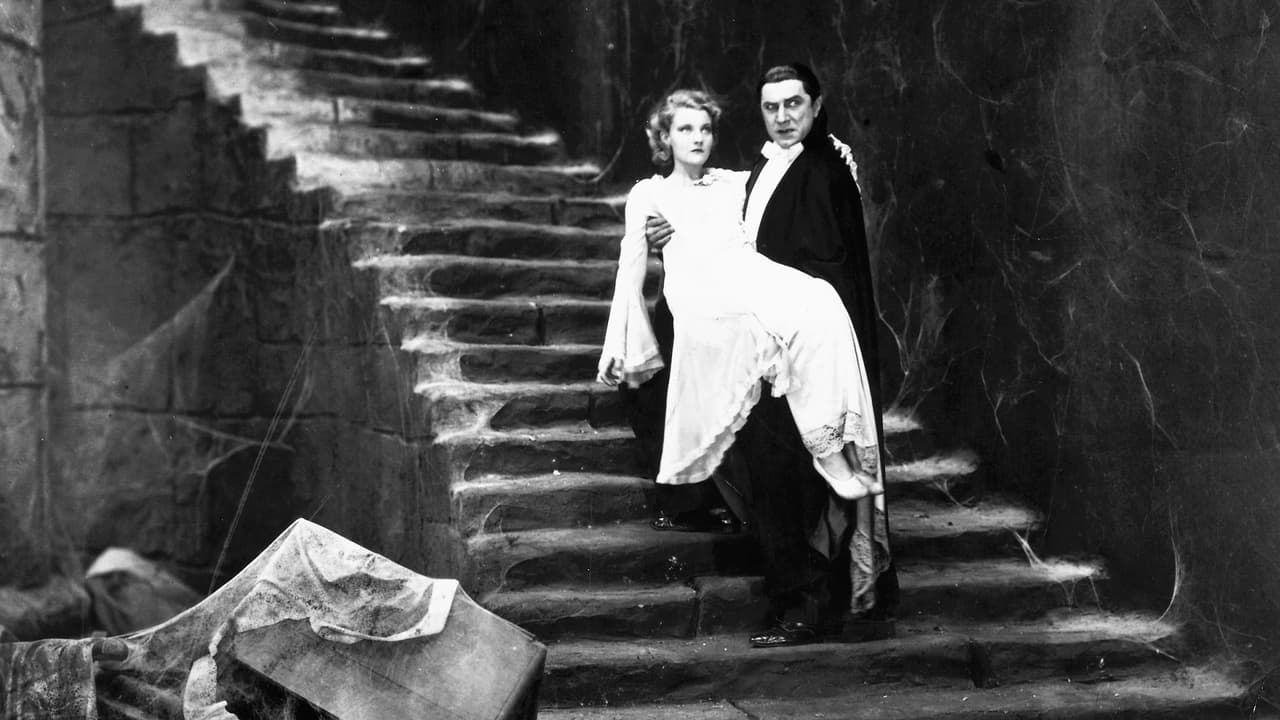
Bela Lugosi is the actor credited as Count Dracula, and the film makes the character the hinge on which everything else swings. He’s not a distant cosmic horror here; he’s a visitor who crosses a threshold and then tests the rules of the house.
The movie sets that up in very human terms. Renfield, a solicitor on a business trip, is taken to Dracula’s castle and welcomed by a figure described as charming and eccentric — which is exactly what makes him dangerous. The menace is personal, not philosophical.
Dracula’s significance comes from what he does to family life. He isn’t content with the odd victim; he targets people inside a household — Mina, Lucy — so the film becomes less about faraway curses and more about how a stranger can unsettle the people you care for.
That focus on intimate violation — a guest who eats away at the domestic bonds around him — is what keeps Count Dracula at the centre of the story. Everything else in the film orbits that simple and unnerving idea.
Dracula has more on its mind than the plot suggests
On the surface Dracula is a vampire story. Underneath it’s a film about fear as a communal experience: villagers worry and warn, experts argue, and a household must decide how far it will go to protect its own.
Home and safety is a repeated touchstone. The action centers on a family unit and the measures taken to keep a daughter safe. That’s what makes Van Helsing’s insistence on a wreath of wolfsbane and constant bedside care feel urgent rather than merely theatrical.
Exploitation is another quietly present idea. The Count doesn’t merely kill; he takes — he occupies lives and drains them. The film frames that taking as an invasion of domestic space: the predator’s appetite becomes a direct threat to family life. Mortality, parental protection and the desire for freedom all line up behind those main ideas. The characters are not debating abstract ethics; they are reacting to a very plain danger to people they know, and that plainness gives the movie its emotional weight.
Dracula could not belong to any other decade
Dracula arrives in 1931 and wears that date plainly. It’s an early sound-era horror picture that fits the period’s appetite for short, sharply focused films rather than long genre epics.
That compactness — the film runs for just seventy-five minutes — pushes it toward clarity. There’s no room for wandering subplots; the story moves in a straight line toward the danger at the heart of the household.
The movie’s genre identity — firmly vampire horror with dramatic stakes — also anchors it in the early 1930s. It takes a well-known gothic tale and sets it in a concise form suited to the tastes and production realities of that moment.
So while the trappings of cinema would change as the decade unfolded, this particular Dracula feels of its time because it builds everything around a single, economical dramatic idea rather than breadth or spectacle.
What has aged — and what hasn't
What still works: the core idea. The villagers’ warnings, the threat to a household and the simple, relentless question of how to keep a loved one safe still land. Fear and the idea of home under siege are as immediate now as they were then.
Renfield’s early journey — from solicitor bound for business to someone who returns transformed — continues to read as a useful device. The film gives us a clear before-and-after that keeps the stakes readable: an ordinary man crosses a threshold and emerges changed.
Van Helsing’s role, too, still plays: an expert who recognises the danger and insists on practical measures such as wolfsbane and vigilant nursing. Those moments keep the story anchored in action rather than abstract dread.
What feels more dated is the film’s bluntness. The threats are literal and immediate, and the moral map of protection versus predation is laid out without much ambiguity. That lack of subtlety can be a relief or a limitation, depending on what you want from an old horror picture.
Why Dracula still matters
There are memorable, almost theatrical beats the film sticks in your head. Renfield’s coach ride — the driver who disappears and a bat leading the horses — is the sort of image that tells you, very quickly, that ordinary rules no longer apply.
Renfield’s arrival at the castle and his welcome by a charming but dangerous host gives the film an early parable: beware hospitality that feels too easy. That scene does a lot of work; it sets the tone for how the Count will move through other people’s lives.
The film also commits to showing the cost. The schooner Vesta sequence, where Renfield returns as something like a raving slave, supplies a tidy, horrific illustration of exploitation. It’s literalised here, and the bluntness gives it a kind of awful clarity. Finally, the face-offs — Van Helsing recognising the truth, the clash that follows, the use of faith and practical defence — offer a dramatic resolution that puts the threat back outside the home. The movie’s legacy is not just its images but the way it frames invasion and defence as two sides of the same story.
Does Dracula still hold up?
Short answer: yes — with a caveat. If you want a modern, psychologically layered vampire story, this isn’t that film. But if you want a tight, effective piece of atmospheric horror that treats invasion of the home as an almost domestic crisis, Dracula still delivers.
A lot of that depends on its economy. At seventy-five minutes, Tod Browning’s 1931 picture doesn’t dilly-dally: Dracula arrives, insinuates himself, and the circle of protection responds. The film’s brevity is an asset; it keeps the premise neat and the danger immediate.
There are standout moments that justify revisiting: a coach driven by a vanishing driver and guided by a bat; Renfield’s transformation into a slavish, raving presence aboard the Vesta; the repeated scenes where Van Helsing insists on practical measures to protect Mina. Those beats still have teeth.
So watch it for its particular strengths: an idea rendered simply and persistently, a household under threat, and the clear moral drama of keeping a daughter safe. Dracula is not a modern remake in period costume; it’s an economical, unnerving reminder that horror can be about the people left behind when the guest refuses to go home.