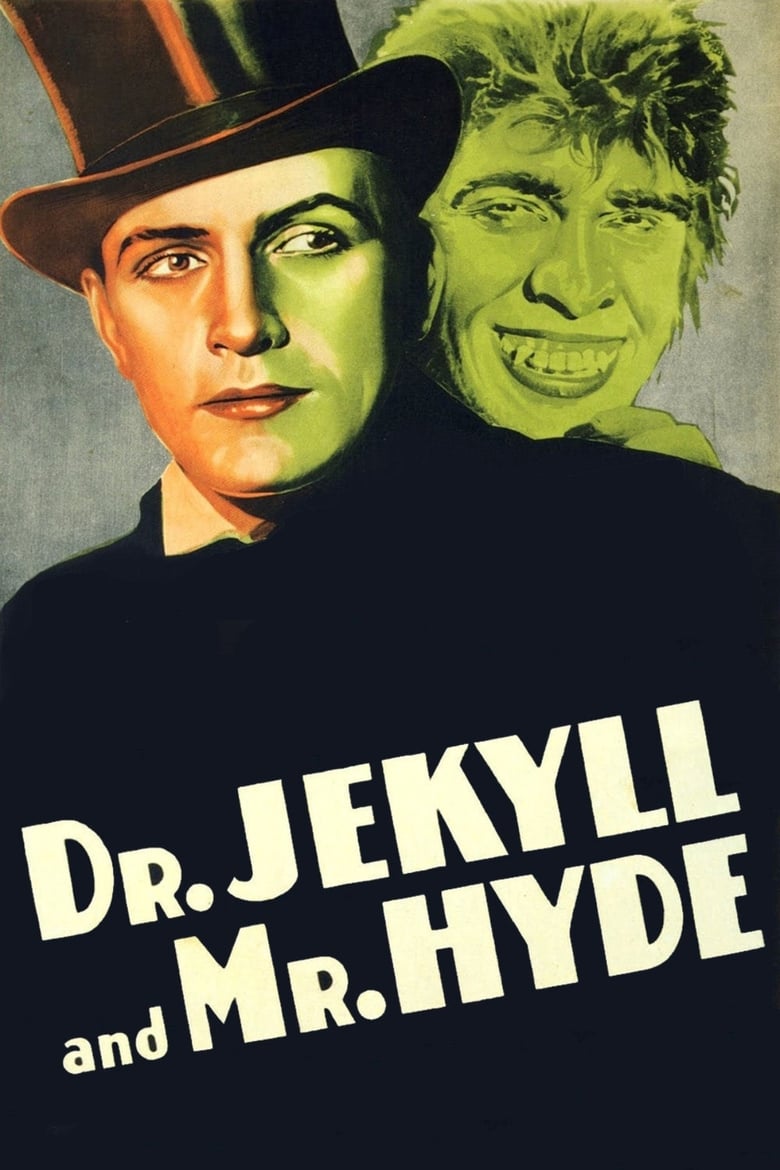
Dr. Jekyll and Mr. Hyde
“Put yourself in her place! The dreaded night when her lover became a madman!”
Dr. Henry Jekyll believes that there are two distinct sides to men: one that is good and one that is evil. He believes that by separating the two, man can become liberated. He succeeds in his experiments with chemicals to accomplish this and transforms into Hyde to commit horrendous crimes. When he discontinues use of the drug, it is already too late.
About Dr. Jekyll and Mr. Hyde
Dr Jekyll is still the reason this movie works
What keeps Mamoulian’s film alive isn’t a single shock or trick; it’s the central belief at its heart — that every decent man carries darker urges alongside his better impulses. That moral tug-of-war is the engine, and everything else, from the violence that follows to the personal losses, spins from it.
The film was made early in sound cinema and runs a neat 92 minutes, which helps: there’s no padding. Mamoulian directs, and the story is anchored by Dr Jekyll — a man convinced that a scientific solution can free him from inner conflict, and therefore free him to marry the woman he loves immediately. That last point is crucial. The pressure to wait — imposed by Muriel Carew’s father — makes Jekyll’s experiments feel less like abstract curiosity and more like a desperate, private bid for freedom. Credit and blame pile on one quiet man, and once the bottle is opened, the movie becomes about far more than chemistry.
The idea that sets Dr. Jekyll and Mr. Hyde in motion
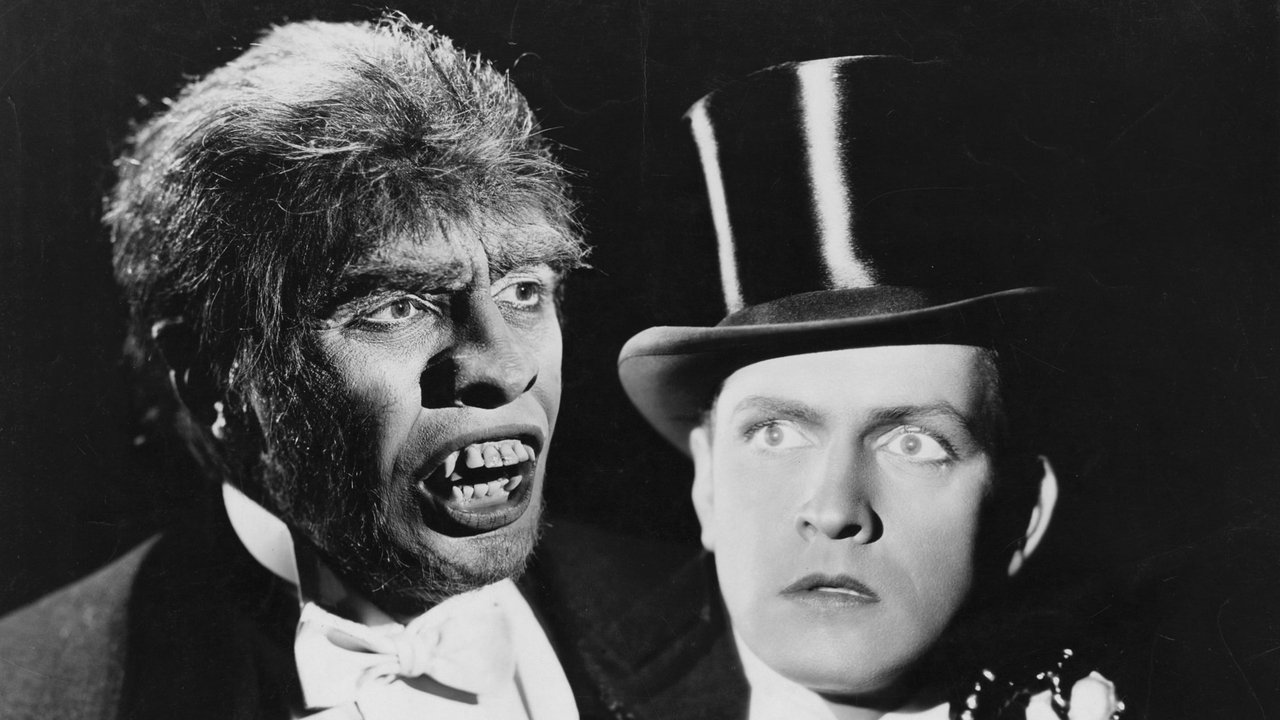
The basic engine is economical and ruthless: Jekyll believes drugs can separate the polite self from the one that breaks rules, so he drinks a concoction and becomes Edward Hyde — a man who obeys impulse and pleasure without the ballast of conscience.
That transformation isn’t an occasional indulgence. Hyde’s behaviour escalates into outright cruelty and violence, and the film lets that escalation land hard rather than sidestepping it.
Jekyll’s attempts to control the change collapse under stress. There are moments when the doctor returns to his better self only to be pulled back into Hyde again, and the repetitive loss of control becomes the film’s persistent dread.
The setup takes us from an experiment driven by personal longing to a situation that ends in catastrophe: the cycle breaks only when violence meets law enforcement, and the story resolves in a way that insists consequences are unavoidable.
Why Dr Jekyll matters
Fredric March plays the man at the centre of the trouble, but the reason Jekyll matters isn’t celebrity or spectacle — it’s his domestic stakes. He’s not an abstract scientist tinkering for curiosity’s sake; he’s a man trying to secure a family life, to marry Muriel and settle his private affairs.
That desire to marry immediately turns the plot’s scientific gamble into a personal gamble. Jekyll’s choices affect a circle of people who expect stability: an engaged couple, a disapproving father, the private household that keeps the house running.
Because family is woven through his motives, Jekyll’s fall feels intimate rather than mythic. The movie makes you feel that what he loses is more than reputation; it’s the chance at a particular ordinary future.
So Jekyll matters because he makes the stakes plain. He’s where the private meets public — a doctor who tries to contain his private life with a bottle, and in failing, drags everyone around him into the consequences.
Dr. Jekyll and Mr. Hyde has more on its mind than the plot suggests
On the surface the film is a horror story about a transformation. Underneath, it’s a meditation on family: who gets protected, who pays the price when a household’s promise of safety collapses.
Home and safety are central. The movie repeatedly shows how private spaces — the home, the engagement, the domestic routine — can be violated when a single person’s impulses are unleashed.
Authority is another running thread. Rules, orders and the weight of a father’s decision form the social backdrop to Jekyll’s private experiment; those external controls help explain why his yearning for freedom becomes so urgent. The film also brushes against bigger, darker ideas: mortality, the desire for personal freedom and even the pressure of institutions. These aren’t lecture-room theses, they’re the emotional weather the characters walk through.
Dr. Jekyll and Mr. Hyde could not belong to any other decade
This is a 1931 picture through and through: it arrives at the start of the 1930s and carries the economy and moral urgency you expect from films of that moment.
Being a 1931 production gives the film a particular shape — concise, sharp and willing to fold big ideas into a compact runtime.
It’s also part of that early-1930s slate of horror and speculative pictures that liked to test the line between scientific curiosity and human consequence.
Put simply: its era matters because the film’s appetite for moral complication and short, decisive storytelling fits what 1930s movies were doing at the time.
What has aged — and what hasn't
Some elements remain sharp: the way the film draws an ordinary life into catastrophe — a man who sees someone attacked on the street, intervenes and then finds that intervention tied to much darker consequences — still feels immediate.
Family and home remain persuasive anchors. Jekyll’s relationship plans and the erosion of domestic safety keep the story human-sized, which helps the work avoid becoming mere monstrous showmanship.
Other beats age differently. The procedural clues — a broken cane, a panicked friend who recognises evidence and brings the law to the door — read now as straightforward devices, but they still move the story toward a moral and social reckoning.
Finally, certain plot choices that hinge on private shame and secrecy still play: a desperate letter to a colleague, the breaking off of an engagement to protect others, those are the kinds of narrative decisions that sit well with modern viewers looking for motive and consequence.
Why Dr. Jekyll and Mr. Hyde still matters
There’s a reason people keep coming back to this story in whatever form it takes: at its core it dramatizes a simple, unnerving idea — that a respectable man can contain a monstrous self — and Mamoulian’s film keeps that question personal rather than abstract.
The domestic consequences give the narrative a real human cost. Jekyll’s hope to marry Muriel, and the way her father’s decisions press on that plan, turns scientific experimentation into something that threatens family and future.
The film doesn’t shy away from the darker fallout either: relationships are abused, an innocent woman is manipulated and harmed, and violence intrudes on places people expect to be safe. Those ramifications make the story feel consequential, not merely sensational. And at the end, when law and panic converge, the film’s refusal to tidy the moral mess — the violent climax and the final return to the dying man — leaves a bleak, memorable impression. It’s a legacy of seriousness: the movie treats the moral question as real and costly.
Does Dr. Jekyll and Mr. Hyde still hold up?
Yes — with qualifiers. If you’re after a tight, morally serious horror-sci-fi from 1931 that keeps the action concentrated on family and the loss of domestic safety, this one still delivers. Mamoulian’s film is short, purposeful and interested in consequences rather than spectacle.
Fredric March’s Jekyll is the pivot: a man who wants to marry Muriel but is held back by her father’s command, and who turns to chemistry as a last-ditch attempt at freedom. That personal pressure gives the scientific plot real stakes, which is why the story still feels affecting.
Be warned: some of the movie’s violence, and the way it treats vulnerable characters, is stark and unpleasant. The narrative does not soften Hyde’s cruelty or its effects on others; those choices may make parts of the film hard to watch for modern audiences.
Still — for viewers willing to sit with an uncomfortable moral problem played out in a compact, early-30s package, this is worth seeing. It asks a blunt question about who we are when the rules fall away, and it refuses the easy consolation of a tidy answer.