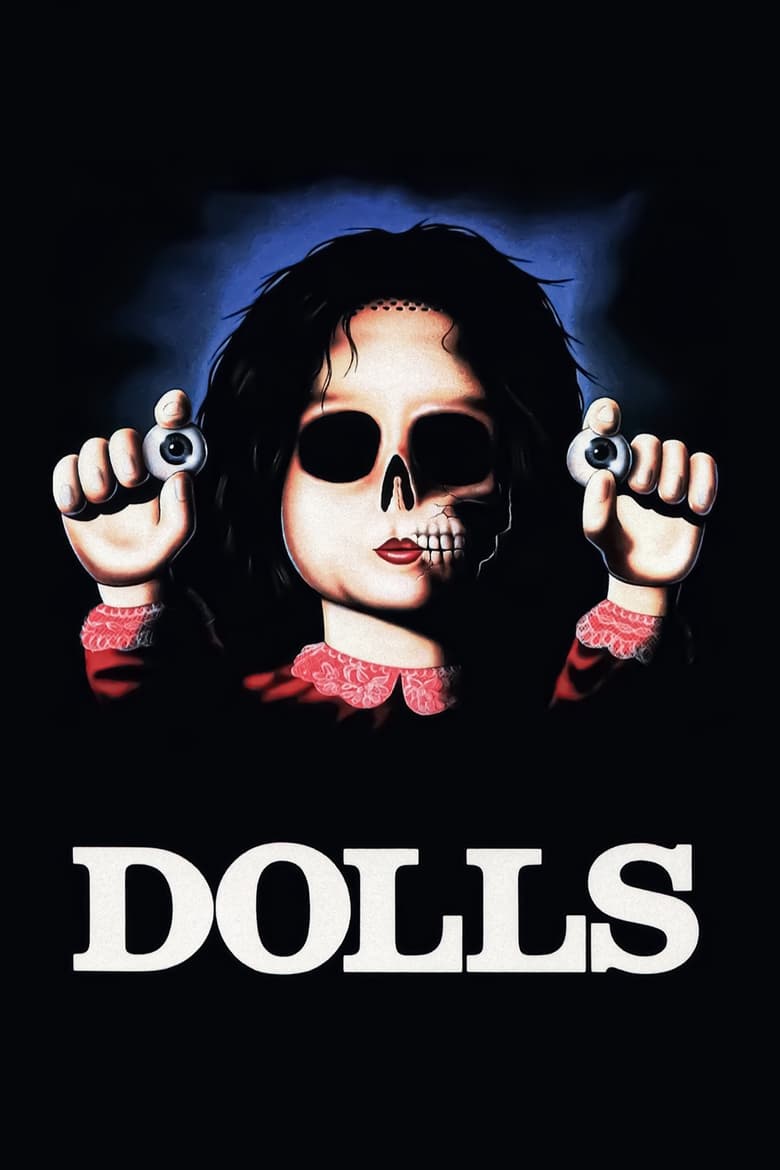
Dolls
“They walk. They talk. They kill.”
A precocious girl, her nasty parents, two punk-rock losers and a weak-kneed salesman inadvertently become the guests of two ghoulish senior citizens in their dark, haunted mansion.
About Dolls
Why Dolls still stands out
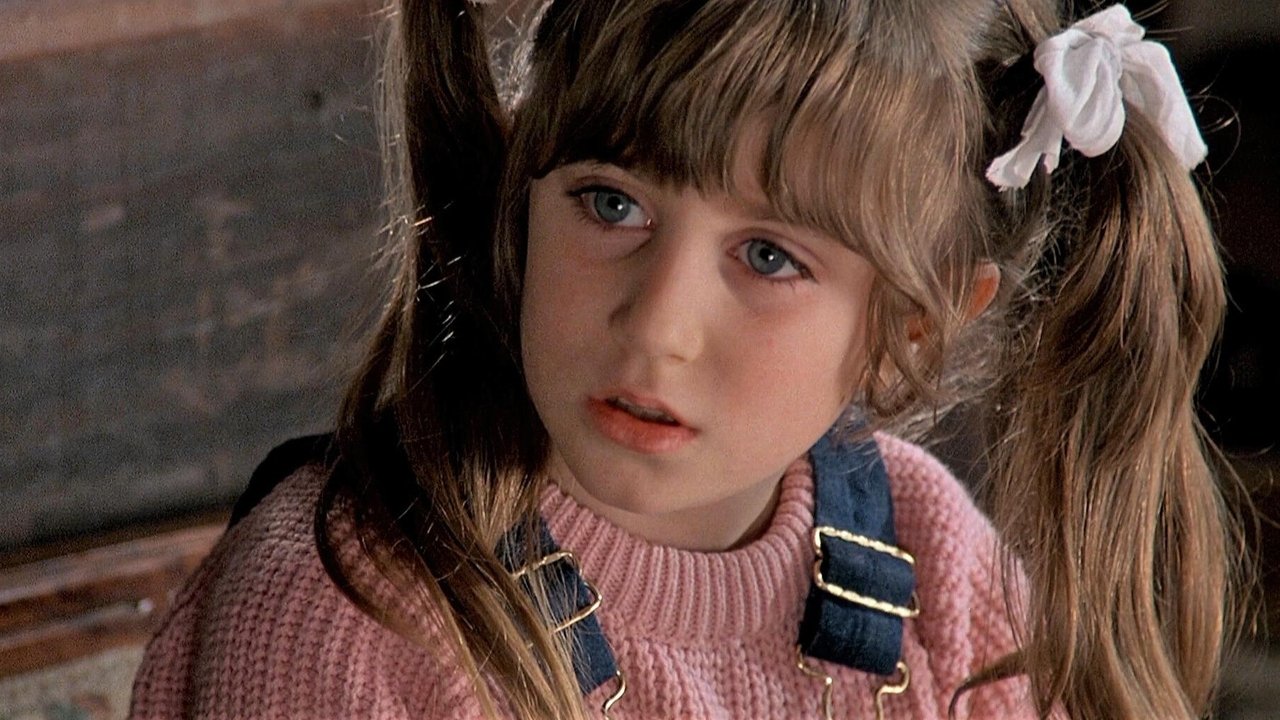
Start with a storm. A violent thunderstorm leaves Judy, her father David and her stepmother Rosemary stranded in the countryside, and that simple set-up is the film’s sharpest trick: it drops a fractured family into a place that promises shelter and gives them a very particular exam instead.
Stuart Gordon directs, and he keeps things compact — Dolls runs for 77 minutes — which helps the film hold a steady tone without getting swamped. The house they stumble into belongs to Gabriel and Hilary Hartwicke, who make toys; one of those toys, a Mr. Punch doll, becomes the story’s hinge after Gabriel gives it to Judy when she loses her beloved teddy. From there the movie uses its small cast and agreeable premise to mix family themes with horror. Hitchhikers, a gullible businessman and petty thieves all arrive and — because this is a horror film that cares about who has kept a child's sense of wonder — the dolls act as both defenders and judges. It’s tidy, spiteful fun with a clear idea at its core.
Why David Bower matters
Ian Patrick Williams is credited as David Bower, but the character’s job in the movie is clearer than his job title: he’s the absent, often indifferent father who brings the family to the house and refuses to listen when his daughter raises the alarm.
That refusal is crucial. When Judy sees danger in the hallway and runs to tell him, both David and Rosemary dismiss her as a child making things up. Their disbelief flips the power balance in the film — the child who is ignored becomes the moral centre by default.
David’s behaviour also lets the film play out its family theme. Judy ultimately ends up with a happier future — she will be able to stay with her caring mother in Boston — and the movie gestures toward replacement and repair when Judy hints that Ralph could be a new father figure.
So David matters because he’s the contrast: the kind of adult who’s lost whatever tenderness the Hartwickes prize. His stubbornness drives the stakes and makes the dolls’ judgement feel, frankly, earned.
Dolls has more on its mind than the plot suggests
On the surface it’s a horror about toys turning on people. Underneath, Dolls keeps circling family: who protects children, who honours their softness, and who discards it.
Fear in the film isn’t gratuitous shock; it’s tied to parental protection and the idea of home and safety. The house is a haven that turns selective — it rewards those who retain warmth and punishes those who have hardened.
There are also sharper notes: loss and mortality sit alongside the gentler theme of love. The movie frequently reminds you that childhood things carry emotional weight, and that losing or denying them can have consequences.
That’s made literal in small gestures — Judy’s lost teddy is found to have been discarded, and Gabriel’s gift of a Mr. Punch doll to her is less about a toy and more about restoring a child’s claim to gentleness.
Dolls could not belong to any other decade
Dolls arrived in 1987, and part of its character comes from being a compact horror made at a time when movies could be small, direct and a touch eccentric.
That late‑80s slot gives it a certain confidence: it doesn’t have to pad a concept to feature length. Instead it leans into its premise and finishes before it outstays its welcome.
Because it sits in that era of filmmaking, Dolls embraces a straightforward mix of the uncanny and the domestic — the film knows what it is and gets on with it. If you want the era distilled: this is a short, honest bit of genre filmmaking from 1987 that prefers a brisk, tidy run rather than grandstanding.
What has aged — and what hasn't
The parts that hold up are almost all thematic. Family dynamics, the fear that people who should protect children will fail them, and the question of what home actually means are still straightforwardly affecting.
Those themes are tidy and direct; they don’t rely on cultural shorthand that dates quickly, so a modern viewer can still register the emotional logic without needing to be told why it matters.
Because the film keeps its anxieties about home and parental protection front and centre, viewers today can still read the stakes plainly. It’s not coy about who is caring and who has retreated from care.
Where it might feel quaint is in how economical the storytelling is — Dolls doesn’t complicate its moral shape. That economy is a choice, and for many viewers it remains a strength rather than a problem.
Why Dolls still matters
People who remember Dolls tend to recall its central, slightly childish cruelty: a house full of beautifully made toys that can be tender to the deserving and savage to the selfish. The Hartwickes’ workshop and its collection of dolls supply the film’s most memorable images.
Set pieces stick — Isabel’s attempt to steal and the dolls’ violent response is the sort of moment that lodges in the memory: petty theft punished by toys dragging her into darkness feels as much like a moral fable as a horror beat.
Those moments are tied to character beats that linger: Judy convincing Ralph to look at the hallway, the point where a sceptic accepts that something uncanny is happening, and the way the Hartwickes themselves explain that the dolls are a test for visitors.
And there’s a final cruelty that resonates: the film makes clear that those who refuse to change can never leave. David’s slow transformation into a doll to take Mr. Punch’s place is the kind of grim punctuation that gives the movie its rueful sting.
Does Dolls still hold up?
Yes — if you approach it on its own modest terms. Dolls is a compact 77‑minute horror that knows its game: a stranded family, a cottage full of toys, and a clear moral line between those who keep childhood alive and those who have closed up.
It’s not trying to be everything; Stuart Gordon’s film is interested in family, parental protection and fear, and it delivers those ideas without hedging. The story’s neat moral arithmetic—those who value childhood are spared, those who don’t are trapped—still reads plainly.
There are limits. The film’s insistence on tidy judgments means it won’t satisfy anyone who wants ambiguity or modern moral complexity. But if you like horror that’s at once whimsical and vindictive, it does exactly what it intends. So, watch it for the premise, the atmosphere and the peculiar moral scolding. It’s short, precise and has the kind of final image — the replacement of the guilty and the possibility of a kinder future for Judy — that lingers in a pleasantly uncomfortable way.