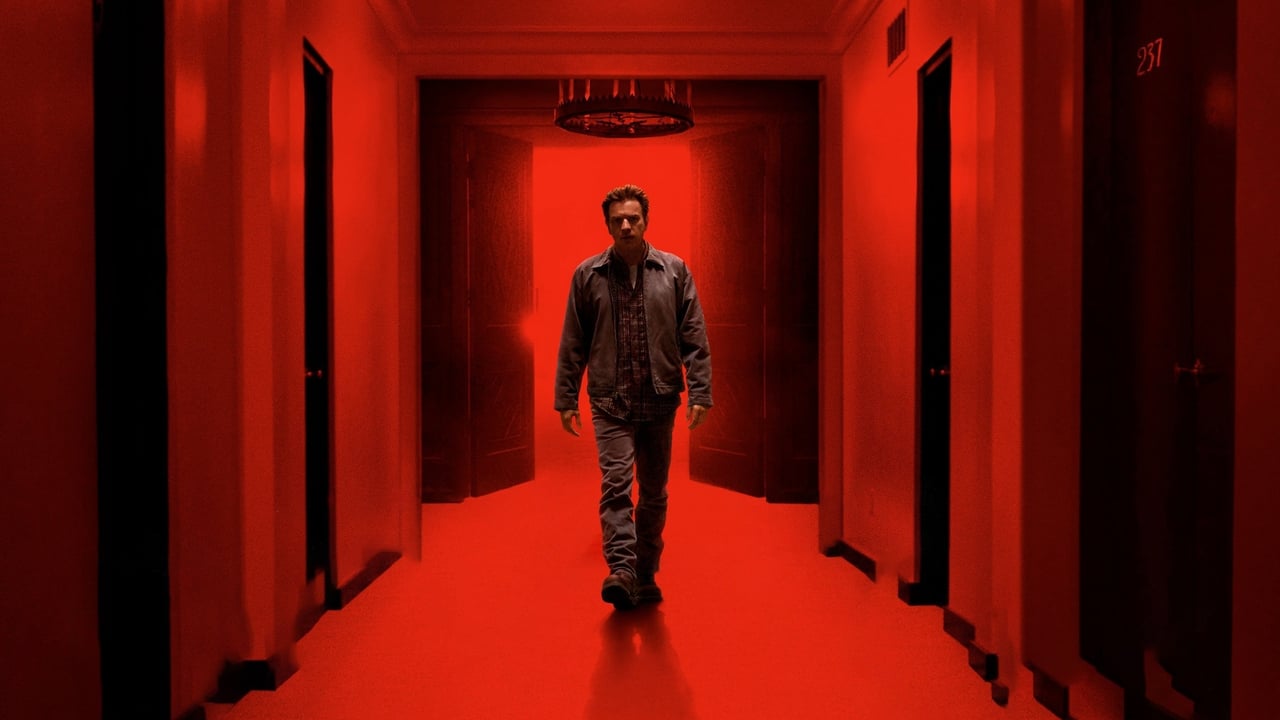
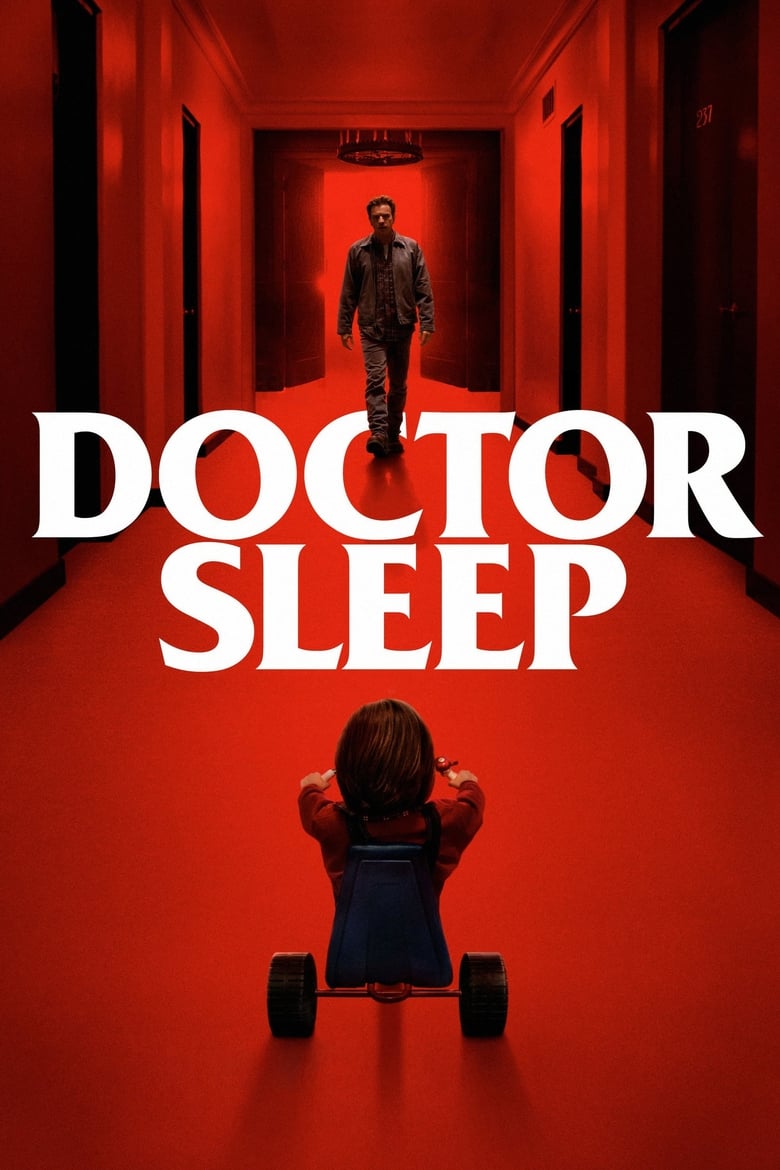
Doctor Sleep
“Return to the Overlook.”
Still scarred by the trauma he endured as a child at the Overlook Hotel, Dan Torrance faces the ghosts of the past when he meets Abra, a courageous teen who desperately needs his help -- and who possesses a powerful extrasensory ability called the "shine".
About Doctor Sleep
What Doctor Sleep gets right
Doctor Sleep starts with a simple, unsettling idea: the past won’t leave Danny Torrance alone. The ghosts from the Overlook keep circling him, still hungry for his "shine", and that insistence — not cheap nostalgia — is the film’s engine.
Mike Flanagan, directing the 2019 picture, takes his time. At 152 minutes it’s patient where some modern horror is punchy; that length lets the story build a real sense of lineage rather than a quick cash-in. What pulls the movie forward is the collision between two forces: an uneasy, survivor’s Dan and a very deliberate threat led by Rose the Hat, while a child with even greater abilities, Abra, threads them together.
The idea that sets Doctor Sleep in motion
The film rests on a tidy premise: Danny Torrance has never stopped being haunted by what happened at the Overlook. Those ghosts are still after his gift, and the old survival tricks he learned as a child — Hallorann showing him how to lock spirits away — remain part of his toolbox.
As an adult, Dan has tried to escape by rebuilding a life; moving, joining Alcoholics Anonymous and trying to stay present. That recovery is what steadies the story when the supernatural stuff ramps up.
On the other side of the map is the True Knot, a travelling group led by Rose the Hat who don’t just hunt people, they harvest a psychic essence to stay alive. When Rose senses a new, enormous well of power, she turns her attention to it.
That power belongs to Abra, a girl whose shine is even greater than Dan’s. She reaches across the psychic space between them, and her plea for help — she shows Dan a crime scene location and asks him to intervene — is what draws these strands together.
Why Rose the Hat matters
Rebecca Ferguson plays Rose the Hat, the focal point of the True Knot. She’s not just another monster; she’s the leader of a group that treats psychic power as a commodity, which makes her the human face of the film’s appetite.
Rose’s interest in Abra is pragmatic — this is about survival — but it’s also the story’s sharpest moral contrast. Where Dan’s arc is about resisting what he once became, Rose represents surrender to appetite and entitlement.
Her partnership with figures like Crow Daddy gives the threat a social shape: this isn’t a lone lunatic, it’s an organised, ageing troupe whose dwindling resources have turned them dangerous in new ways.
Because Rose is the True Knot’s axis, every choice the film makes about family, friendship and freedom runs through her. She’s the reason the danger feels personal rather than abstract.
Doctor Sleep has more on its mind than the plot suggests
At face value it’s horror: a secret power, a terrible cult, grisly violence. But beneath the spectacle the film keeps circling family. Dan’s history at the Overlook hangs over him, and his decisions are motivated by the desire to protect and be forgiven.
Supernatural belief here functions less like an excuse for scares and more like a language for intimacy. The psychic connection between Dan and Abra lets the movie talk about mentorship, trust and the kind of hand-holding that isn’t sentimental because it has stakes.
Power is treated ambivalently. There’s the obvious hunger of the True Knot, but the film also asks what power is for: domination, comfort, or stewardship? That question turns the chase scenes into arguments about how you use a gift. Mortality and the idea of freedom weave through all of it: an ageing cult scrambling for more years, a man rebuilding his life, a child whose future is suddenly contested. Those threads stop Doctor Sleep being just a sequence of set-pieces and make it feel like a story about continuing — or breaking — a lineage.
Doctor Sleep could not belong to any other decade
Released in 2019, Doctor Sleep lands at the tail end of the 2010s — a moment when franchise cinema often looked backward to move forward. This film is explicitly a continuation, a decade-spanning return to a trauma that never quite healed.
The story itself ticks through time: Dan’s alcoholic years in 2011, and the desperate, hunger-driven state of the True Knot by 2019. That temporal reach matters because the movie treats consequences as long-lived.
The decade’s appetite for revisiting older properties is handled here with seriousness: rather than a wink, this is an attempt to give an adult character room to change and reckon with the past.
Put another way: Doctor Sleep feels of the 2010s because it uses genre to ask mature questions about recovery, ageing and what a second act might realistically cost.
What has aged — and what hasn't
The big emotional elements hold up: the backbone of family and the Dan–Abra connection still reads as sincere. The psychic friendship between an older survivor and an extraordinary child doesn’t feel gimmicky; it provides the film with steady human ballast.
The True Knot’s premise — an organised group feeding on "steam" — remains effective as a narrative engine because it turns a supernatural idea into a social problem: a community literally scraping for resources.
Some of the film’s darker scenes, like the recruitment of Andi and the violence that shocks Abra into action, can still unsettle modern viewers. Those moments keep the stakes real and prevent the movie from drifting into safe nostalgia.
Overall, the story’s insistence on recovery and the choices required to stay sober and present is what ages best. The emotional throughline hasn’t been hollowed out by time.
Why Doctor Sleep still matters
For viewers invested in Danny Torrance’s story, this film matters because it gives him an arc that reaches a conclusion: from an alcoholic trying to bury a gift to someone who uses that same gift to comfort the dying and to protect a new generation.
Introducing Abra as a young person whose shine outstrips Dan’s matters for the same reason: it hands the narrative forward. Their psychic friendship turns the sequel into a passing-of-the-torch story rather than a mere remake.
The True Knot and the idea of steam provide a memorable antagonist that isn’t merely supernatural wallpaper — they force the film to ask what people owe each other across time, and what cruelty looks like when institutionalised. Finally, the film’s endgame — Dan confronting the Overlook again, rejecting the bottle, and the image of Abra being told to "shine on" — gives fans a tidy emotional punctuation. It’s a farewell that still rings.
Does Doctor Sleep still hold up?
Yes — with a small, sensible asterisk. Doctor Sleep is worth watching if you want a sequel that treats its central character with respect and gives the supernatural material a purpose beyond spectacle.
Mike Flanagan’s 2019 follow-up is deliberately long at 152 minutes, but that room lets the film build Dan’s recovery — the AA thread and his work as a hospice orderly, earning him the nickname "Doctor Sleep" — into something that matters when the ghosts return.
Rebecca Ferguson’s Rose anchors the True Knot as a tangible threat, while Abra’s telepathic bond with Dan keeps the film emotionally immediate; together they turn what could have been a franchise exercise into a story about power, protection and choices.
If you care about family, about whether people can change, and about a quieter kind of horror that centres on hunger and longevity rather than jump scares, Doctor Sleep still shines. It asks to be taken seriously — and it mostly deserves that courtesy.