DeepStar Six
“Not All Aliens Come From Space. Save Your Last Breath... To Scream.”
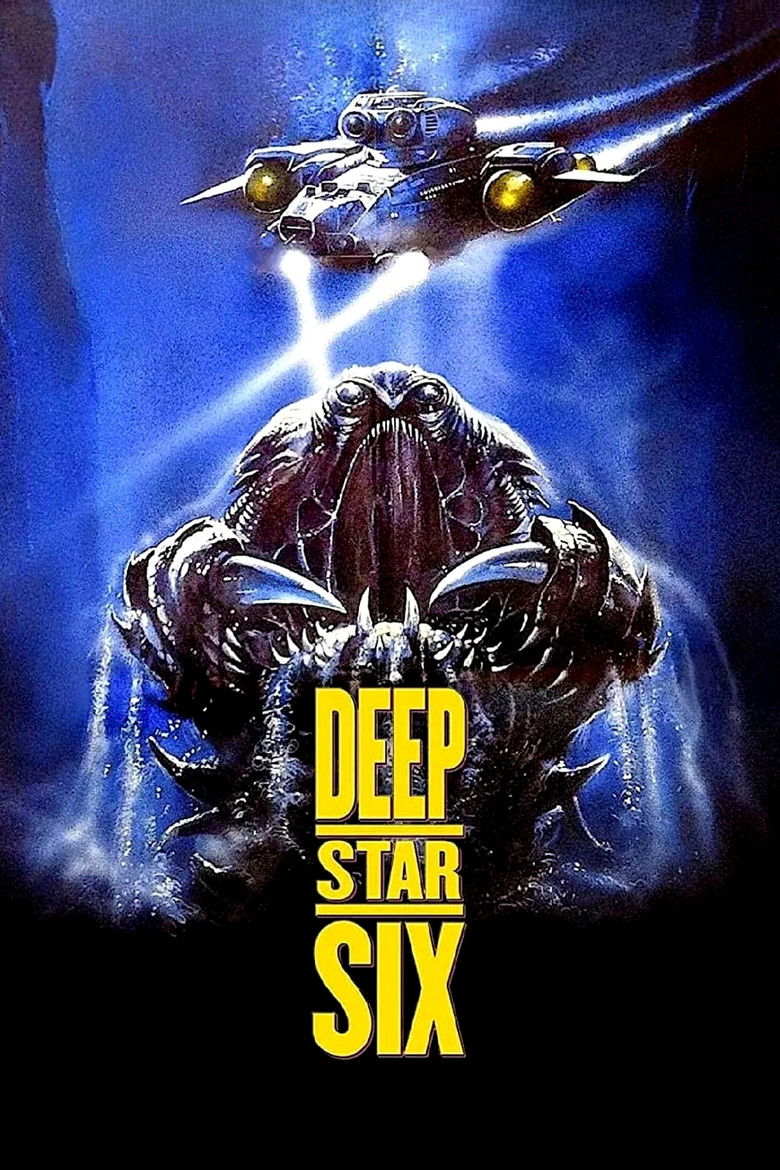
The crew of an experimental underwater nuclear base are forced to struggle for their lives when their explorations disturb a creature who threatens to destroy their base.
About DeepStar Six
What makes DeepStar Six worth revisiting
There’s a simple, irresistible idea at the film’s core: an experimental deep‑sea naval station with a handful of people on the last week of their tour, and everything that can go wrong proceeds to do so. That cramped, communal pressure — eleven military and civilian crew sharing the same physics and the same ticking problems — gives the picture an immediate dramatic engine.
Sean S. Cunningham keeps the running time brisk and the tone lean. Release‑year trivia aside, DeepStar Six feels like a film that knows the rules of its genre and decides to race them: a seabed detonation tears open the sea floor, an unmanned probe goes missing, and what follows is a steady, escalating series of decisions that drag the crew deeper into trouble. There are a few recognisable faces keeping the human side honest — a station commander who makes a costly last stand, a medic who’ll risk everything, a mechanic who snaps under pressure, and a pilot who refuses to let someone go. When the script funnels those characters into its set pieces — the sinking hatch, the reactor countdown, the raft with the creature still in tow — you can see exactly why people who grew up on late‑80s genre films come back to this one.
The idea that sets DeepStar Six in motion
At heart this is a tidy what‑if: an unmanned probe is sent into a newly opened fissure and contact is lost. Two submarine pilots go after it. That single lost signal is the domino that pushes the crew from curiosity into catastrophe.
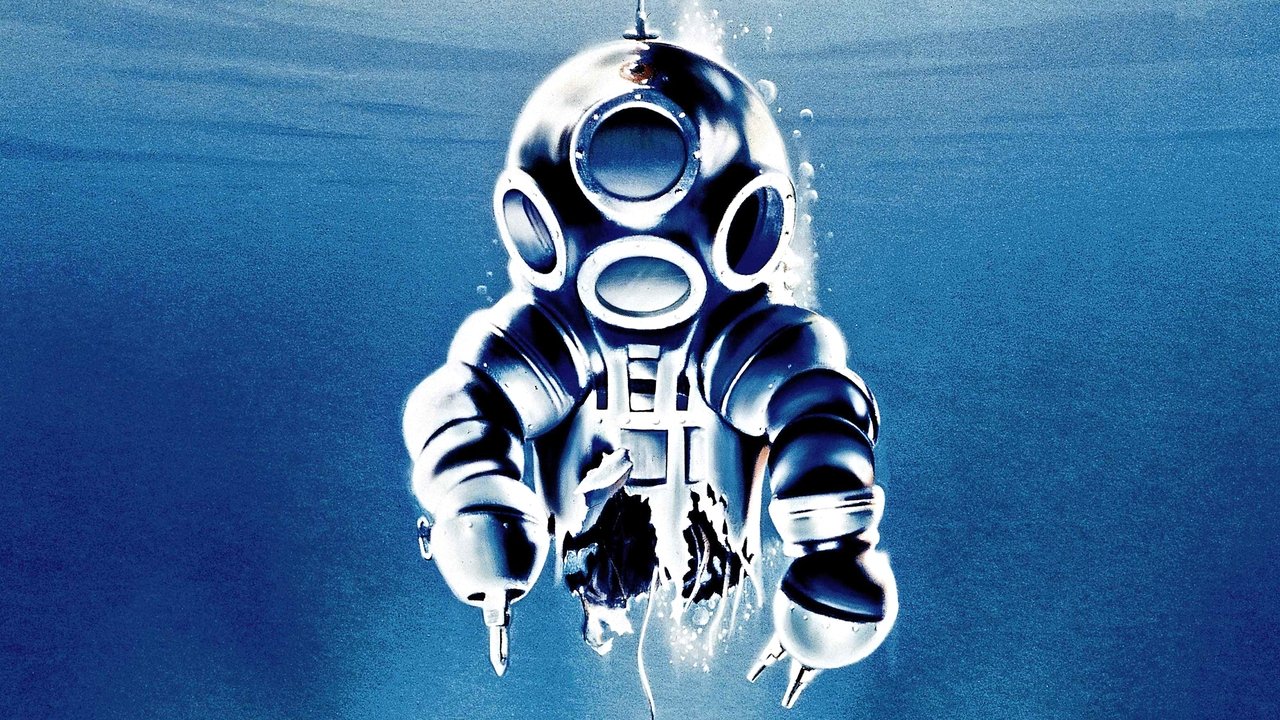
Parallel to the probe drama, the film gives us the practical realities of an undersea installation — repairs, suits, airlocks. An engineer takes a JIM suit out to fix damage, and what looks like a routine patch job becomes deadly when the creature takes an interest in light sources. Suddenly a technical task is a fight for survival.
Those two incidents — a probe that vanishes, a repairman attracted to the monster — are the story’s clean geometry. Problems multiply because the people involved are working with specialised equipment and limited escape options; their choices have to be practical, and the consequences are immediate.
It’s a good setup because it keeps the stakes intelligible. There’s nowhere to run, very little help on the way, and the film trusts the premise enough to let the crew make mistakes that feel believable rather than plot‑driven.
DeepStar Six has more on its mind than the plot suggests
On the surface it’s monster versus humans. Below the surface it’s about fear — ordinary, contagious fear — and how it reshapes decent people. When one crew member breaks under strain, that crack runs through the whole group; the movie treats panic as an infectious problem as much as a lethal one.
There’s a strong current of protection running through the story. People keep risking themselves for others: a commander who won’t leave a pod, a medic who fights the creature to buy an escape. That instinct reads like parental protection writ for adults in uniform — not literal parents, but the same impulse to keep someone else alive.
Courage here isn’t glamorous. It’s practical. It’s the choice to get back into a leaking compartment or to strap on a suit in the face of something unknown. Likewise, heroism in DeepStar Six is often quiet and costly — small, dangerous acts rather than big speeches.
And then there’s the moral weight of mistakes: orders to collapse a cavern, a technician following protocol with catastrophic results. The film pays attention to mortality and lifespan — you can feel how decisions have permanence in that environment — and to peer pressure, the subtle forces that push people toward actions they wouldn’t otherwise take.
DeepStar Six could not belong to any other decade
Released in 1989, DeepStar Six sits at the tail end of the 1980s — a period when genre films often mixed straightforward thriller mechanics with a little speculative science. It’s a product of that era’s appetite for clear, door‑closing stakes and compact runtimes.
That era loved genre hybrids, and this film wears a handful of labels comfortably: action, horror, science fiction and monster movie all tucked into one ninety‑minute package. It doesn’t dally; it runs a tight premise from first problem to last consequence in the way late‑80s genre films frequently did.
Being of its decade also means the film trusts practical, procedural tension: experiments, protocols, suits and countdowns. Those elements are not decorative; they’re the rules the characters must live by, and the decade’s cinematic instincts supply the discipline to make those rules feel immediate. So yes, it’s recognisably eighties in its construction — but that isn’t a complaint. The film uses the decade’s economy to its advantage, and that briskness is part of its personality.
What has aged — and what hasn't
Fear still works. The film’s core engine — people trapped with limited options while a monster exploits those limits — is timeless. The claustrophobia and the slow, steady unpicking of the group remain effective because they’re built from character choices, not flash.
Snyder’s breakdown is a useful touchstone when watching now. The way stress compounds — guilt, a hallucination, impulsive escape — shows the film taking psychological strain seriously rather than treating everyone as purely functional cast members.
What feels a bit of its moment is the film’s brisk morality. Some decisions are driven by protocol and routine in ways that read as late‑80s genre shorthand; modern audiences might wish for more nuance in the system that produces those protocols, but the movie never pretends to be anything but direct and efficient.
Overall, if you can settle into the film’s pace and accept its straightforward approach, most of what counts — the tension, the fear, the moral cost of mistakes — still holds up.
Why DeepStar Six still matters
People remember DeepStar Six because it combines a clear, memorable premise with a string of nerve‑testing set pieces. An experimental underwater project intended to test colonisation and a missile platform becomes a pressure cooker the moment a cavern is destabilised — and that practical escalation lodges in the memory.
The film keeps returning to consequences: an order to collapse a cavern, the probe that goes missing, a desperate rescue that ends with a commander sacrificing himself to save others. Those narrative beats give viewers emotional purchase; the choices feel consequential rather than ornamental.
There’s also a grim clarity about human error. A technician’s attempt to follow protocol leads to a chain reaction that endangers everyone; someone breaking under strain leads to irreversible outcomes. That strand — the price of mistakes made under pressure — is why the film still resonates for people who caught it on late‑night television or in rental‑store rotations.
Finally, the small, survivable moments matter. A medic’s last act buys the final escape; a pilot’s refusal to abandon someone keeps the human thread intact through the chaos. Those are the images that stay with you, and they explain why viewers still talk about this film with a kind of affectionate, nervous fondness.
Does DeepStar Six still hold up?
Yes — if you want a compact, nervy undersea thriller that trusts its premise and moves with purpose. DeepStar Six isn’t trying to be subtle; it’s trying to put a plausible crew into an escalating emergency and watch how ordinary people respond, and it mostly succeeds.
The human moments are what save it from being a pure set‑piece exercise: a rescue that costs a commander everything, a technician compelled by protocol into disaster, a medic who buys time with a terrible last stand. Those beats give the action moral weight and keep the audience invested in the people, not just the monster.
It’s not flawless. The film’s straightforward approach sometimes shortcuts deeper explanation, and a few decisions read like the kind of genre shorthand common at the end of the 1980s. But its themes — fear, courage, the price of mistakes — still land because the story makes those consequences matter practically. So should you watch it? If you enjoy compact creature thrillers where character choices drive the danger, yes. DeepStar Six remains a neat little machine of tension: short, efficient and designed to make you hold your breath until it lets you exhale.