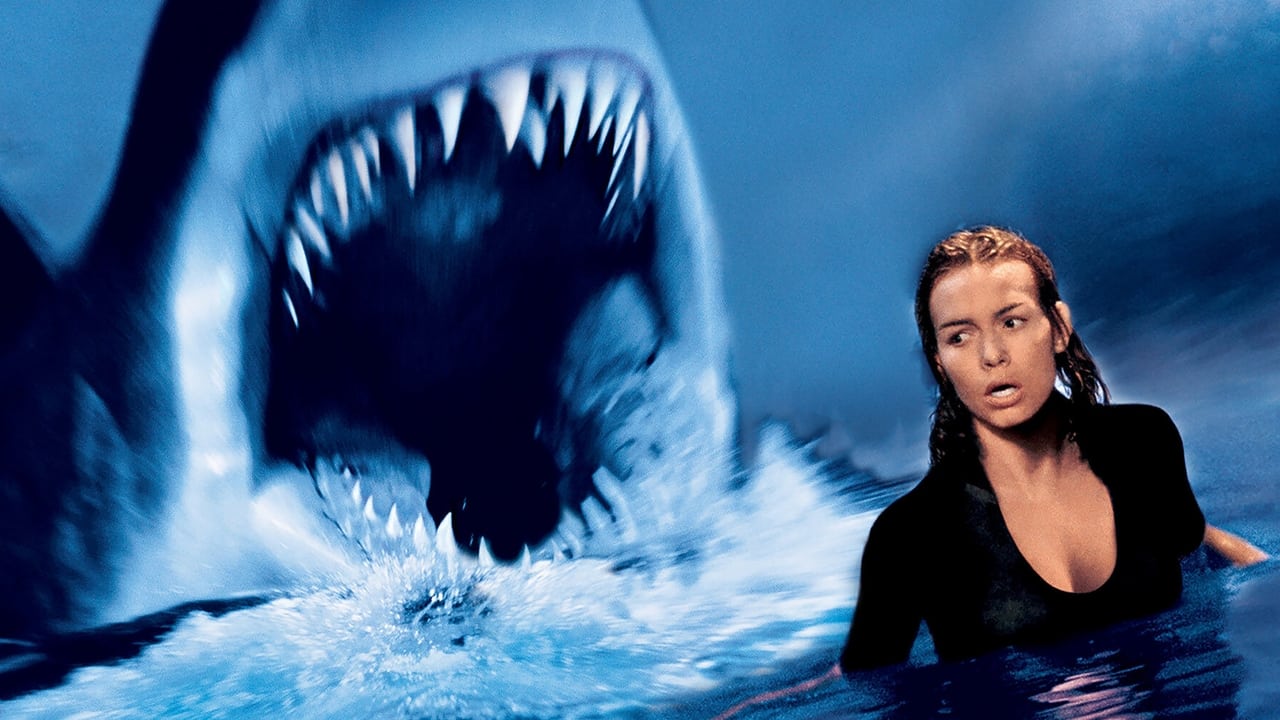
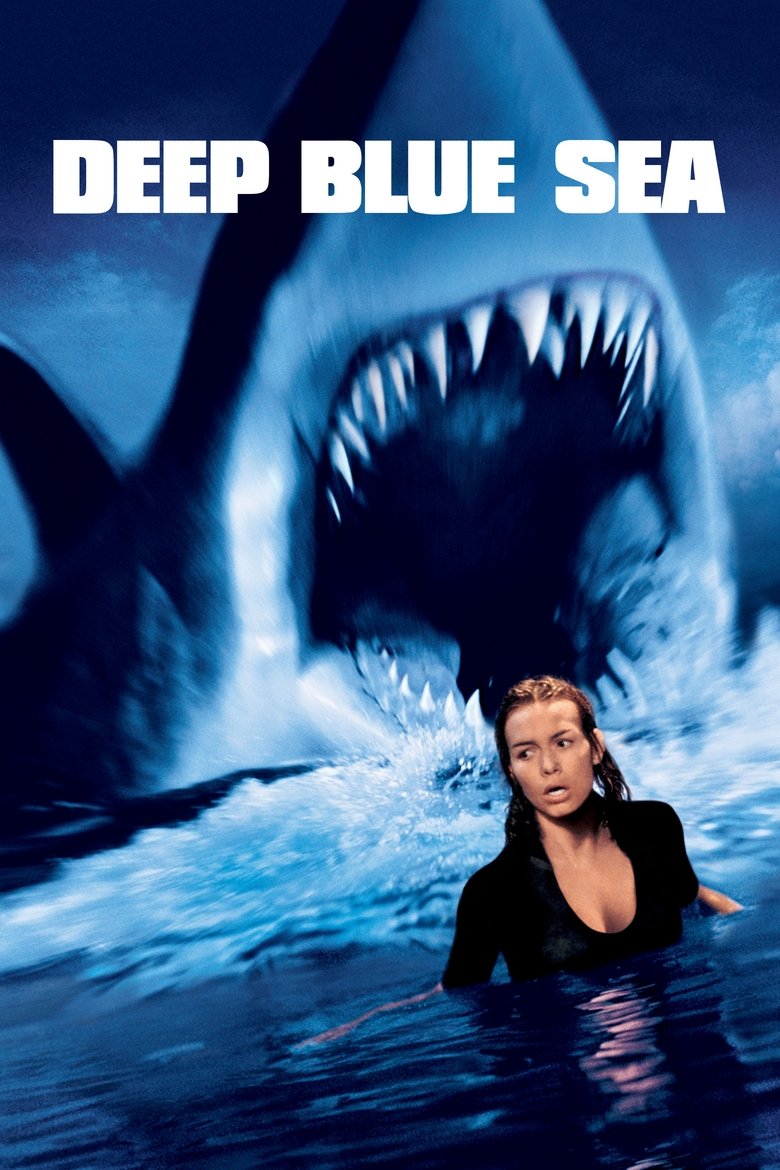
Deep Blue Sea
“Bigger. Smarter. Faster. Meaner.”
Researchers on the undersea lab Aquatica have genetically altered the brains of captive sharks to develop a cure for Alzheimer's disease. But there's an unexpected side effect: the sharks got smarter, faster, and more dangerous. After a big storm damages their remote research facility, they must fight for their lives.
About Deep Blue Sea
What makes Deep Blue Sea worth revisiting
Start with the set: a remote underwater facility where scientists harvest an unusually large protein from mako sharks in search of an Alzheimer's cure. That tidy high‑concept hook gives the whole film something to bite on — moral complication wrapped in a practical, physical danger.
Renny Harlin steers the thing with the kind of headlong energy the idea demands. The cast populates the lab with recognisable faces — Thomas Jane’s Carter Blake, Saffron Burrows’ Dr Susan McAlester, LL Cool J’s Sherman “Preacher” Dudley and Samuel L. Jackson’s corporate emissary, Russell Franklin — so the movie always has someone for the spectacle to land on.
At 105 minutes it doesn’t linger. Horror, action and science‑fiction rub shoulders, and underneath the teeth and explosions sit themes about who gets to control nature and what happens when people try. That mix is why Deep Blue Sea still nudges the memory: it’s a creature feature with an agenda and an appetite for big, unforgettable moments.
The idea that sets Deep Blue Sea in motion
The basic engine is straightforward: a shark gets out, causes trouble and the film escalates from there. After one of the lab’s sharks escapes and nearly attacks a boat of young people, the project’s financiers dispatch Russell Franklin to see what has gone wrong.
That arrival is important because it introduces an outside authority — money and corporate oversight — into a place already full of scientific ambition. It’s the practical complication that converts a research drama into a survival puzzle.
From there the movie tightens into an ensemble stuck in one compromised environment. The group’s path through the damaged facility leads them to odd corners and unlikely allies, including the cook who ends up hiding in an oven and a shark wrangler who knows how to handle danger at close quarters.
The set up works because it gives the director and cast a clear problem to solve: get out, survive, and reckon with what the experiments have unleashed. It’s compact, direct and endlessly improvable — which the film cheerfully proves it can do.
Why Carter Blake matters
Thomas Jane plays Carter Blake, the shark wrangler brought into the mess to help keep creatures and people separated by a length of rope and a pocket of luck.
Carter matters because he’s physical ballast: he’s the person the movie sends into harm’s way. When the lab’s largest shark smashes a stretcher against the main window — an early and brutal escalation — Carter is one of the people standing in the breach.
That positioning makes him the movie’s practical centre. He’s not the scientist with an ethical confession or the corporate voice of reason; he’s the hand in the water doing the messy business of survival.
As a narrative presence, Carter ties together action beats and human response; when alarms sound and glass gives way, he is the character the plot expects to act first and think second.
Deep Blue Sea has more on its mind than the plot suggests
On the surface it’s a shark movie. Underneath, the picture keeps nudging at questions about control: who gets to experiment on nature, and what happens when powerful institutions decide human ends justify risky means.
Those ideas are encoded as themes you can feel rather than be lectured at: freedom, corporate power, plain old power, parental protection and authority all hover behind the teeth and the water pressure.
That conflict plays out in small, decisive moments. The scientist who electrocutes a shark in her room and accepts destroying her own research is not just staging another escape; she’s admitting the moral cost of what she and her partner did.
So the film’s violence is never purely spectacle. It’s also a reckoning: the attempt to bend biology towards a noble end collides with the messy fact that the creatures involved are now smarter and far less controllable.
Deep Blue Sea could not belong to any other decade
Released in 1999, Deep Blue Sea sits at the tail end of the 1990s — a moment when mainstream cinema still made room for big‑idea genre fare that didn’t need a ten‑film plan to justify itself.
Being a 1990s movie matters because the decade liked to blend genres: horror could coexist with science fiction and action in the same running time without apology, and audiences expected roller‑coaster pacing alongside a recognisable central premise.
Deep Blue Sea fits that mould neatly. It’s compact, high‑concept and unapologetically engine‑driven — the sort of film that uses the idea at its centre as permission to escalate.
That late‑decade timing also helps explain why the film chooses clear, immediate moral questions over prolonged ambiguity: it wants to entertain first and complicate later, and in 1999 that was a sensible bargain.
Why Deep Blue Sea still matters
The movie’s afterlife comes from moments that stick in the memory: the demonstration that the research works (which, awkwardly, involves a shark suddenly biting off a scientist’s arm) and the traumatic chain reaction that follows — a helicopter evacuation that ends catastrophically and leaves the facility badly damaged.
It’s also the bluntness of certain set pieces that lodges in the brain. An on‑air monologue about unity is cut short when the corporate emissary investigating the lab is dragged into a submersible pool by the largest shark — a reminder that spectacle and consequence here move quickly and without ceremony.
There’s a moral wrinkle that gives the carnage texture. The scientists admit they genetically enlarged the sharks’ brains to harvest more of the protein they needed, and one of them ultimately electrocutes a shark and destroys her own work — the film doesn’t shy away from the idea that progress has a price.
And finally, the human beats remain: the frantic plan to stop the last shark with a harpoon wired to a battery, the woman who uses herself as bait because she feels responsible, and the small, oddly warm moment when the surviving pair come ashore and are told (with a shrug) not to dangle their legs in the water. It’s the combination of spectacle and those slightly tender closures that keeps people talking.
Does Deep Blue Sea still hold up?
Yes — if what you want is a tight, high‑concept shark thriller that balances big set pieces with a few moral questions. The premise — scientists harvesting a protein from mako sharks as a potential key to treating Alzheimer’s — gives the action stakes beyond mere survival, and the film leans into that tension.
It’s also a late‑90s package: 105 minutes, directed by Renny Harlin, with recognisable leads such as Thomas Jane’s Carter Blake to anchor the physical scenes. That combination keeps the momentum brisk and the consequences blunt.
The movie earns its continued watchability through a string of striking moments — the demonstration that the research can work but at horrific cost, the helicopter disaster that follows, the revelation the animals were made smarter and therefore more dangerous, and the desperate harpoon‑and‑battery plan to stop the last shark. Those are the beats people remember, and they still deliver.
If you’re after nuance you’ll have to look elsewhere. If you want a proud, occasionally reckless piece of genre filmmaking that asks some ethical questions while refusing to apologise for the thrills, put it on. It still bites.