Death Becomes Her
“In one small bottle... The fountain of youth. The secret of eternal life. The power of an ancient potion. Sometimes it works... sometimes it doesn't.”
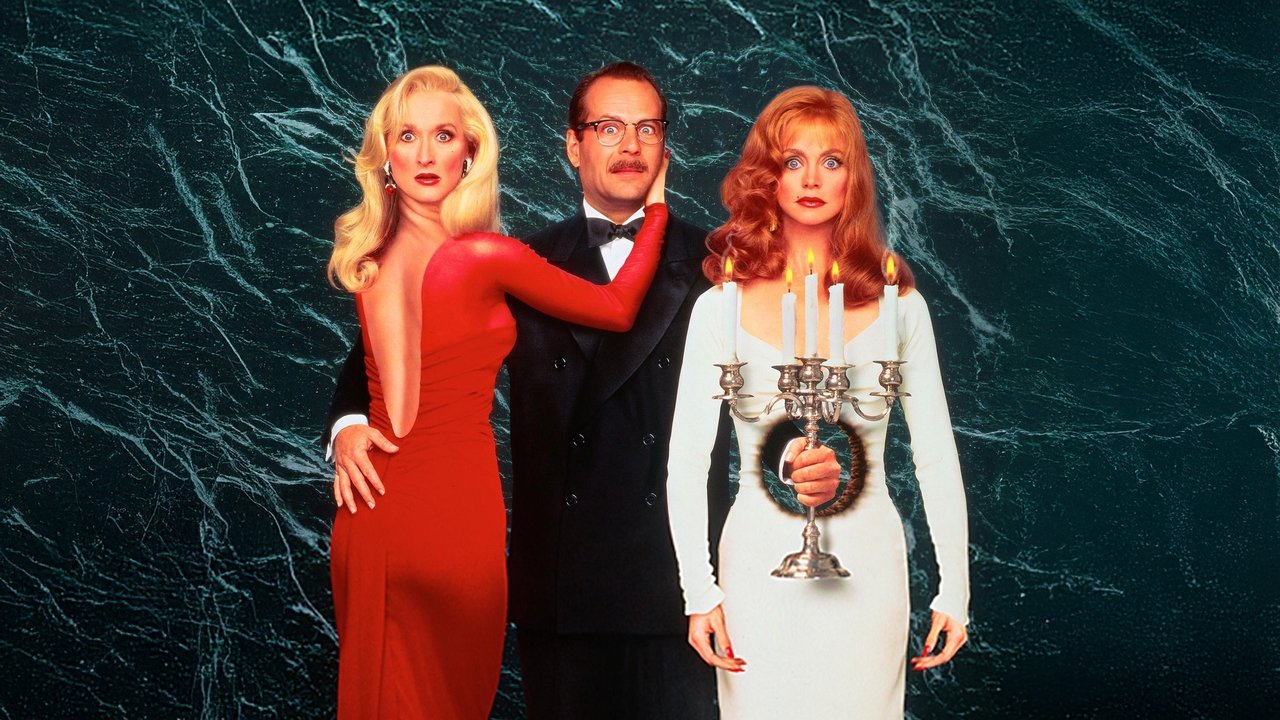
Madeline is married to Ernest, who was once her arch-rival Helen's fiancé. After recovering from a mental breakdown, Helen vows to kill Madeline and steal back Ernest. Unfortunately for everyone, the introduction of a magic potion causes things to be a great deal more complicated than a mere murder plot.
About Death Becomes Her
What makes Death Becomes Her worth revisiting
This is a film that opens with a has‑been actress and refuses to be sentimental about it. Madeline Ashton is introduced as the kind of fading star who still expects the world to treat her as prime time — which, naturally, makes everything she does a little bit furious.
Robert Zemeckis packages that fury as a hybrid — equal parts fantasy, horror and black comedy — and keeps it tight: the running time is brisk, the stakes feel petty and catastrophic at once, and the cast of characters (Madeline, Helen and Ernest among them) move through the mess like people who’ve been rehearsing grudges for years. There’s a glossy cruelty at work here. The film asks, quite cheerfully, what would happen if you could buy back youth — and what you’d be prepared to pay for the upkeep.
The idea that sets Death Becomes Her in motion
At its simplest, the film spins from one basic, poisonous exchange: a party invitation. Madeline sees her rival Helen returned to the world looking younger and enviably at ease, and panic — the kind that makes you rush into the nearest beauty fix — takes over.
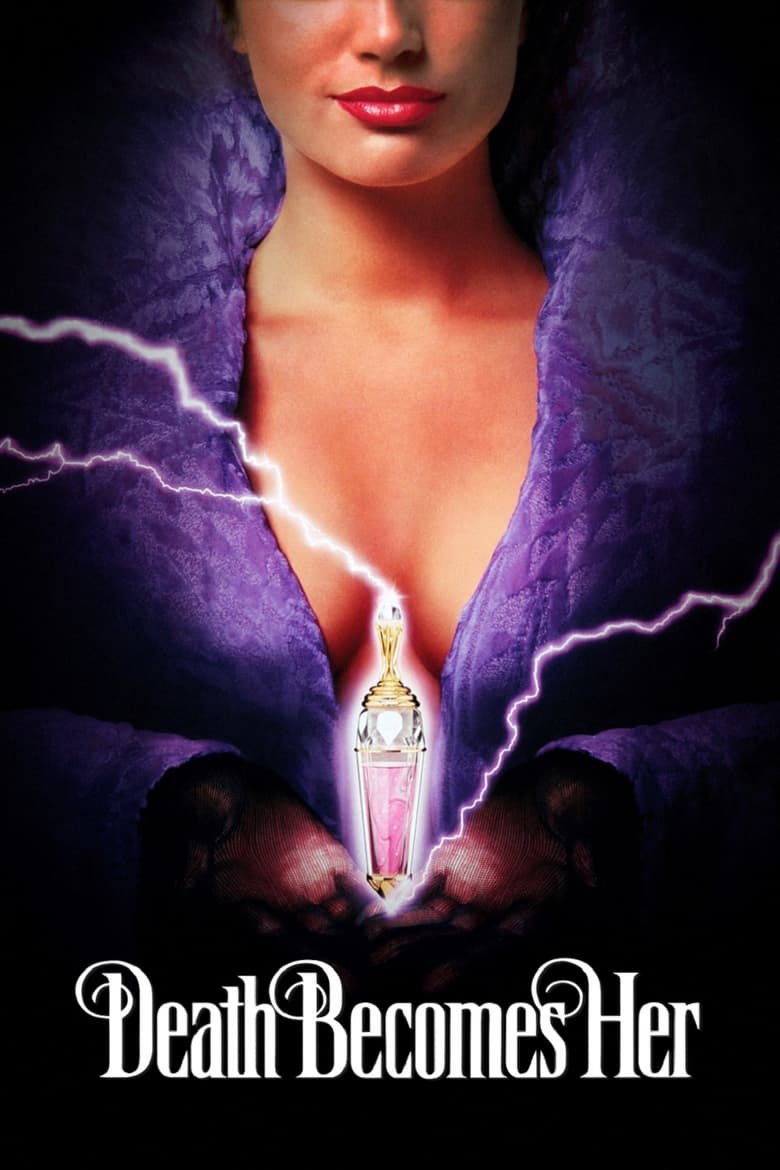
That panic lands Madeline at a very particular house and in front of a very particular offer: Lisle Von Rhuman’s potion promises youth without the price of time. It’s a tidy premise for a satire because the elixir solves the immediate problem but sparks a new, stranger one.
The set pieces that follow turn quick, personal cruelties into larger complications. An argument ends with Madeline pushed down a flight of stairs; declared clinically dead, she improbably comes back. Suddenly immortality isn’t a glamorous escape — it’s a complication that requires someone to keep the lights on.
Which is how the film ends up with a domestic, darkly comic conundrum: the women realise eternal youth needs ongoing maintenance, and they try to secure Ernest as the man who will do that work. That plan, predictably, does not survive contact with human stubbornness and the practicalities of trying to make forever affordable.
Why Madeline Ashton matters
Madeline is the movie’s sharpest engine: a star who expects admiration as an entitlement and refuses to be small. Her career has a public wobble — an ill‑received Broadway musical in 1978 — and that professional bruising makes her cling to looks and status like flotation devices.
The film introduces her as someone who keeps score. She invites a friend‑rival backstage, and that tiny act of social theatre starts a chain of personal betrayals and jealousies. That makes Madeline easy to follow dramatically: her decisions spring from vanity, yes, but also from a terror of obsolescence.
She’s not simply comic ornament; everything the story throws at her — offers of miraculous rejuvenation, marital tensions, physical humiliations — lands because Madeline’s centre is brittle. The plot doesn’t need to explain vanity; it unpacks it.
And when the calendar keeps moving (the film skips years and returns to the consequences), Madeline’s choices are revealed as long‑term commitments. Thirty‑seven years on, the same impulses that drove her earlier are still on show, only more grotesquely.
Death Becomes Her has more on its mind than the plot suggests
On the surface it’s a cartoonish battle over looks. Below that it’s quietly about family and the ties that bind — or entangle — us. The trio at the film’s heart are less a romantic triangle than a dysfunctional household that keeps reassembling itself.
Mortality is not treated as solemn truth but as a commodity and a nuisance. The potion turns death into an administrative problem — and the characters’ reactions reveal what they truly value: companionship, freedom from decline, or simply keeping an old arrangement intact.
Home and safety are oddly central. Ernest, who becomes the fixer for their damaged bodies, represents the domestic labour the women need to sustain their bargain. His refusal to accept immortality is, narratively, a refusal to be trapped into servicing someone else’s forever. And the film closes on a kind of moral punctuation: a life lived fully in the human, mortal sense — with adventures and a family — is praised at Ernest’s eulogy, while the two women remain locked in a maintenance cycle that time can still dismantle in humiliating ways.
Death Becomes Her could not belong to any other decade
Released in 1992, the film wears its era like a well‑cut costume without ever becoming a mere period piece. It’s keyed to a moment when glossy, high‑concept studio pictures could be sharp and strange at the same time.
There’s a particular 1990s appetite for mixing genres — this is fantasy, horror and comedy rolled into one — and the film takes pleasure in that mashup. It’s comfortable being both vicious and playful in the same scene.
That decade also liked movies that talked about surfaces: celebrity, appearance and the commerce of image. This film makes those obsessions its subject matter, which is why its tone feels very of its time.
But while it nods to the 1990s, the questions it raises about ageing and the cost of looking forever young don’t feel nostalgic so much as persistent.
What has aged — and what hasn't
The central dynamics — envy, commodified youth, and a marriage strained by vanity — still read clearly. Seeing Helen suddenly returned to a youthful glamour at a party is a blunt, effective set‑up that still lands as an emotional punch.
The potion as a narrative device keeps working because it forces the characters into a practical problem: once you’re unkillable, how do you live? The film smartly makes the answer domestic — they need someone to maintain their bodies — which keeps the stakes human rather than metaphysical.
Some moments of its cruelty feel sharper now, simply because they aren’t apologetic. Madeline’s dismissal of Ernest and the scene that follows are constructed to show consequences rather than teach tidy lessons. Ernest repairing Madeline’s body at home underlines how unglamorous immortality becomes when it’s actually lived.
And the thirty‑seven‑years‑later coda still lands as a dark laugh: the life lauded at Ernest’s funeral is the ordinary, finite life everyone else chose, while the women’s endless maintenance has turned them into parodies — which is, in itself, a comment that has held up.
Why Death Becomes Her still matters
There are a few sequences you don’t forget because they compress the film’s ideas into a single, gleefully grotesque image: Lisle offering a potion that promises youth, Madeline taking that bargain, Ernest trying to put the pieces back together. Those beats are tidy, memorable pivots.
The movie’s appliances — the potion, the maintenance routine, the increasingly absurd physical states the women find themselves in — give future conversations a shorthand. You can point to a moment in the film and say, with a smile, ‘that’s what everlasting youth would actually cost you.’
It also sticks because it keeps returning to the same small, domestic ironies. Madeline and Helen spend decades desperate to avoid decline, and the long view is savage: their choices trap them into a new kind of dependence. The grotesque images at the end underline how the film turns vanity into a slow‑motion collapse. Finally, the film’s dark humour means it invites repeat visits. People come back either to laugh at its audacity or to marvel at how neatly its central joke — beauty as maintenance — translates into an entire life of small, humiliating repairs.
Does Death Becomes Her still hold up?
Yes — but on the film’s own terms. It isn’t aiming to be tender; it’s a sharp little machine that grinds vanity into comedy and then watches the chips fly. If you’re in the mood for something that’s scabrous and clever in equal measure, it rewards you.
The movie’s concerns about family, mortality and the safety of home life remain clear because they’re dramatised through small choices: a broken marriage, a desperate visit to a mysterious benefactor, and the decision not to accept eternal service. Ernest’s rejection of immortality is telling — he prefers a flawed, finite life to a managed forever.
Watching it now, the blend of genres still feels alive. The premise — a potion that promises youth — is ridiculous, and the film never apologises for that. Instead it treats the ridiculous as an experiment in human behaviour, and the results are frequently brutal and funny.
So yes: watch it. For all its glossy nastiness, it’s a compact, amusingly bitter fable about what people will do to avoid getting smaller — and what happens when the avoidance becomes the new prison.