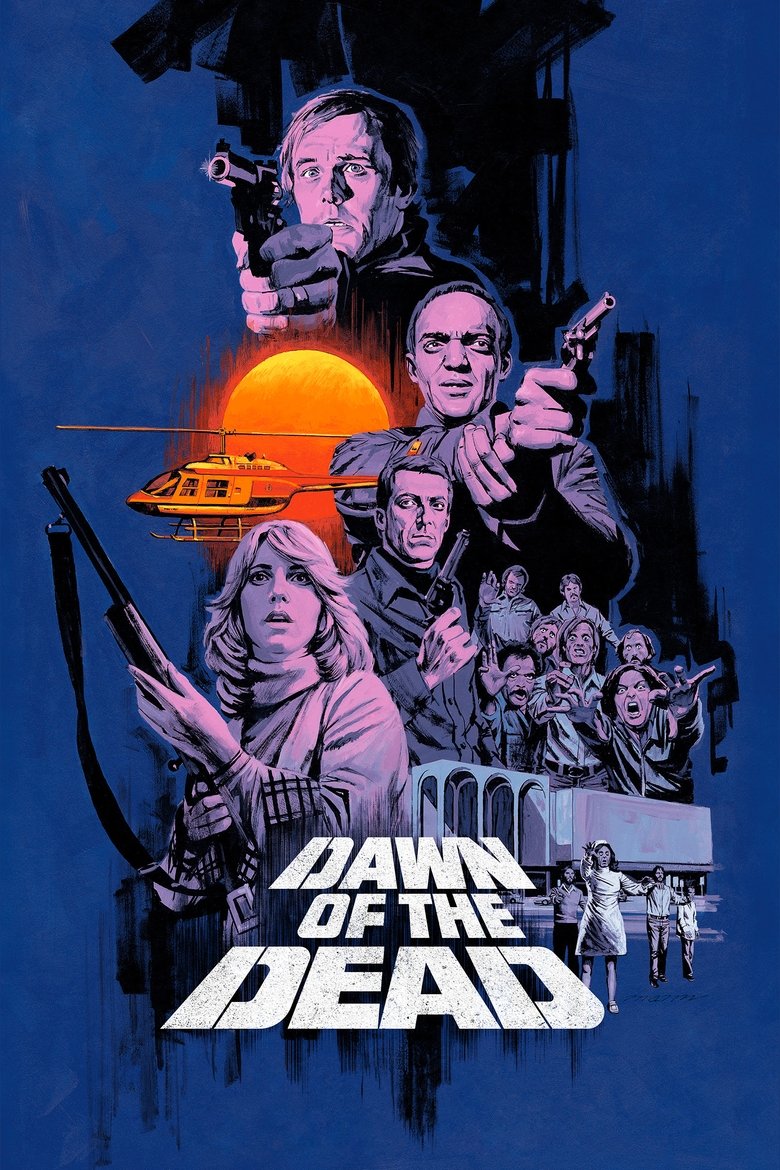
Dawn of the Dead
“When there’s no more room in HELL, the dead will walk the EARTH!”
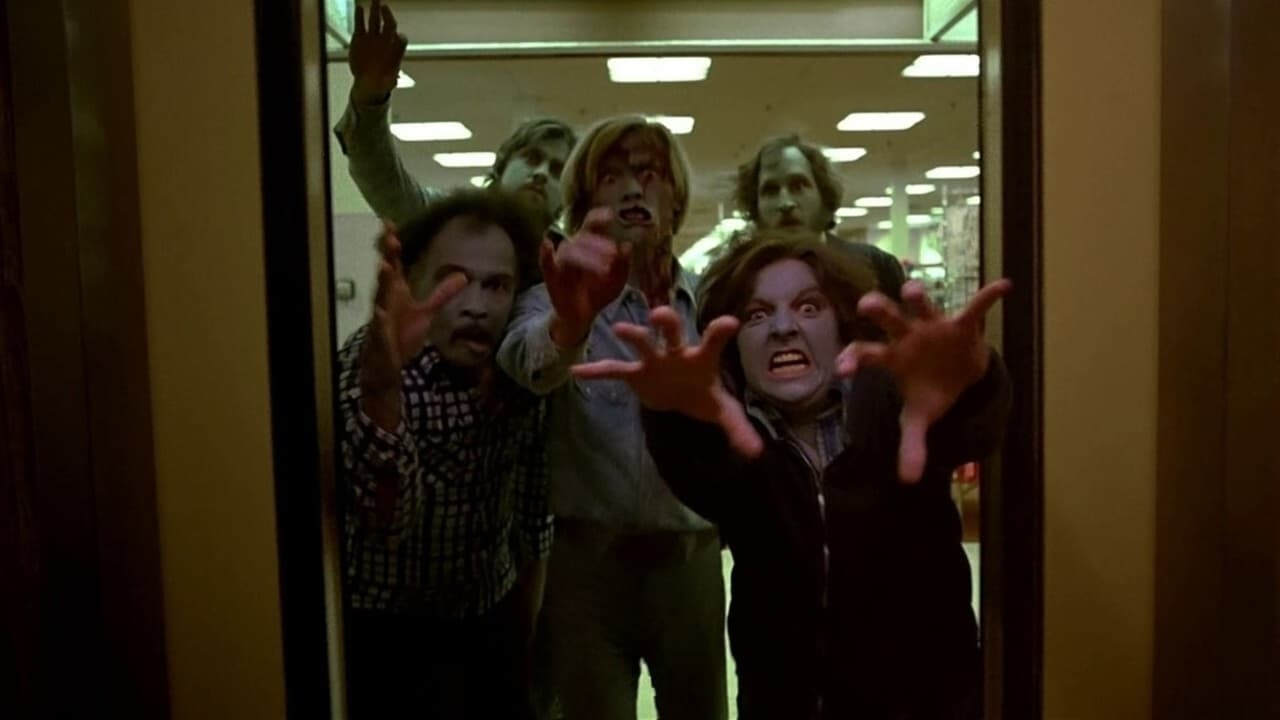
During an ever-growing epidemic of zombies that have risen from the dead, two Philadelphia SWAT team members, a traffic reporter, and his television-executive girlfriend seek refuge in a secluded shopping mall.
About Dawn of the Dead
What Dawn of the Dead gets right
There’s a neat, uncomfortable trick at the heart of Dawn of the Dead: it places ordinary comforts — food, medicine, shelves and shopfronts — at the centre of an absolute emergency. The setup is bald and brutal: an epidemic turns the infected into the walking dead, and millions are reported dead and risen in the aftermath.
George A. Romero directs with the patience of someone who knows exactly which details will bruise. His picture runs a generous two hours and six minutes, long enough to let panic become routine and routine become a strange kind of lifestyle. At the centre of that shifting domesticity is Peter Washington — Ken Foree’s character — a figure who arrives as an officer and stays to see what the living will do with the mall as shelter.
That collision — mass death outside, a shopping mall inside — is why people still talk about Dawn of the Dead. It’s not just a horror film about monsters; it’s a portrait of what happens when the idea of home is suddenly freed from law, order and broadcast reassurance.
The idea that sets Dawn of the Dead in motion
The film’s engine is simple: society collapses under an epidemic and a small group of survivors bolt for anything that looks defensible. After clearing a shopping mall of the undead, this particular group decides the place is too useful to abandon.
They dig in properly. The mall offers food, medicine and, crucially, privacy — so the survivors build a hidden fallback room and barricade themselves in. It’s a pragmatic plan with the tiniest of moral compromises: make the mall livable, but never forget it can be lost.
That tension — secure today, vulnerable tomorrow — keeps the movie taut. Practical precautions sit beside the temptation to enjoy the spoils: when the immediate danger eases, the group drifts into a hedonistic routine with the mall’s goods.
And that slackening has consequences. One member’s recklessness — a decision to press too close to the threat — ends in infection, reminding the others that comfort in a collapsed world is fragile and often temporary.
Why Peter Washington matters
Ken Foree’s Peter Washington arrives as an officer on the street and quickly becomes one of the film’s anchors. He’s the outsider who steps into an urgent plan to desert and escape the city with others — the sort of practical, phone-it-in bravery the situation forces on ordinary people.
Peter’s importance isn’t that he’s the loudest or the cleverest. It’s that he is the person who keeps moving when rules no longer exist: he meets Roger during a police raid, hears a desperate suggestion to abandon official duty, and signs up for the helicopter getaway.
Those choices matter because they show how the film distributes responsibility. Peter’s presence underlines the thin line between keeping order and saving yourself; when one member of their party is bitten after taking unnecessary risks, it’s Peter’s world that tips from ‘we’ll manage’ to ‘we have to decide what to do next’.
In a movie where institutions fail, characters like Peter become the human measures of what a survivor should be — calm enough to plan, human enough to feel the cost.
Dawn of the Dead has more on its mind than the plot suggests
On the surface it’s a survival thriller; under the surface it’s asking about authority. Who gets to decide in a collapse — the state, the armed enforcers, or desperate individuals? That question bubbles under many of the film’s confrontations.
Fear is the obvious engine: the constant threat of reanimation keeps decisions sharp, and fear’s ripple effects explain why people make ugly choices they’d never make in normal times.
There’s also a sustained interest in what counts as home. The mall becomes a stand-in for safety, comfort and, oddly, sovereignty. When safety is portable, what rules come with it?
Finally, mortality lurks everywhere. The film keeps the living close enough to the dead to make every loss immediate, which turns practical choices — barricade or flee, share or hoard — into moral ones.
Dawn of the Dead could not belong to any other decade
Released in 1978, Dawn of the Dead bears the stamp of late-70s cinema: it’s willing to be long, insistent and grim about what society looks like when the scaffolding falls away.
That era’s films often let suspense breathe rather than compressing every moment into an immediate payoff. Romero uses that breathing room to watch people adapt, to let boredom and pleasure creep in alongside terror.
There’s a plainspoken, slightly weary moralism here — not a lecture, but an unblinking look at how people behave when familiar authority is gone. That temperament feels very of its time.
Put bluntly: this is a 1978 movie in its rhythms and patience, not merely its production date.
What has aged — and what hasn't
Fear still hits. The movie’s steady undercurrent of dread — the idea that safety is temporary and can be stolen at any moment — is as gripping now as it was then. That simple emotional logic translates across eras.
And the mall as a site of home and safety keeps working. The juxtaposition of consumer comfort with existential threat remains unnerving: people recognising that their creature comforts can outlast institutions is a feeling modern audiences still understand.
What hasn’t aged, though, would be the expectation that a long, observational middle act is perfectly acceptable. Contemporary pacing can make those stretches feel indulgent to some viewers.
But if you accept the film’s pace, the core anxieties — fear and the search for something like home — read plainly to a modern eye.
Why Dawn of the Dead still matters
There’s a straightforward power to the film’s premise: an epidemic has ripped through the United States, millions have died and reanimated, and social order is collapsing. That clarity lets the movie focus on human responses rather than convoluted mythology.
Romero stages the collapse across settings that make the problem look national: rural places hold for a while, the National Guard can operate in open country, but the cities — where people live packed together — fall into particular chaos. Those contrasts help the story feel comprehensive, not just apocalyptic set dressing.
Important scenes deepen the emotional bookkeeping: a police raid on a low-income housing block, the messy exchange of gunfire, a desperate helicopter escape from a TV studio — all of which explain why a shopping mall feels like the only sane choice for shelter.
Once inside the mall the survivors build a hidden safe room and settle into a life of available goods. That domestic settling, and the moral choices it produces, is why the film keeps mattering: it shows how survival becomes social selection, and how brittle any new order can be when outsiders — a biker gang, opportunistic looters — find a way in.
Does Dawn of the Dead still hold up?
Yes — but with a caveat. If you want a tight, modern thriller that never slows, this isn’t for you. If you want a sustained, sometimes uncomfortable look at panic, authority and the unglamorous work of surviving, then it still lands.
The film’s core facts are stark and straightforward: an epidemic has swept the United States, millions are dead and reanimated, and institutions are failing. That premise gives Romero room to watch people make choices — to desert their posts, to barricade a mall, to build a hidden safe room and, crucially, to enjoy the spoils until complacency or violence undoes them.
Practically, the picture uses those story beats to ask moral questions rather than to deliver shocks for their own sake. Moments like Peter dealing with the terrible aftermath of a friend’s infection, or the sudden collapse of radio and broadcast reassurances, keep a real-world urgency in play.
So yes: watch it for its patient unpacking of fear, for the way a mall becomes both lifeline and trap, and for Romero’s refusal to let survival be merely a chase sequence. It still has teeth — not just as horror, but as a small, savage study of how people behave when home is whatever you can protect tonight.