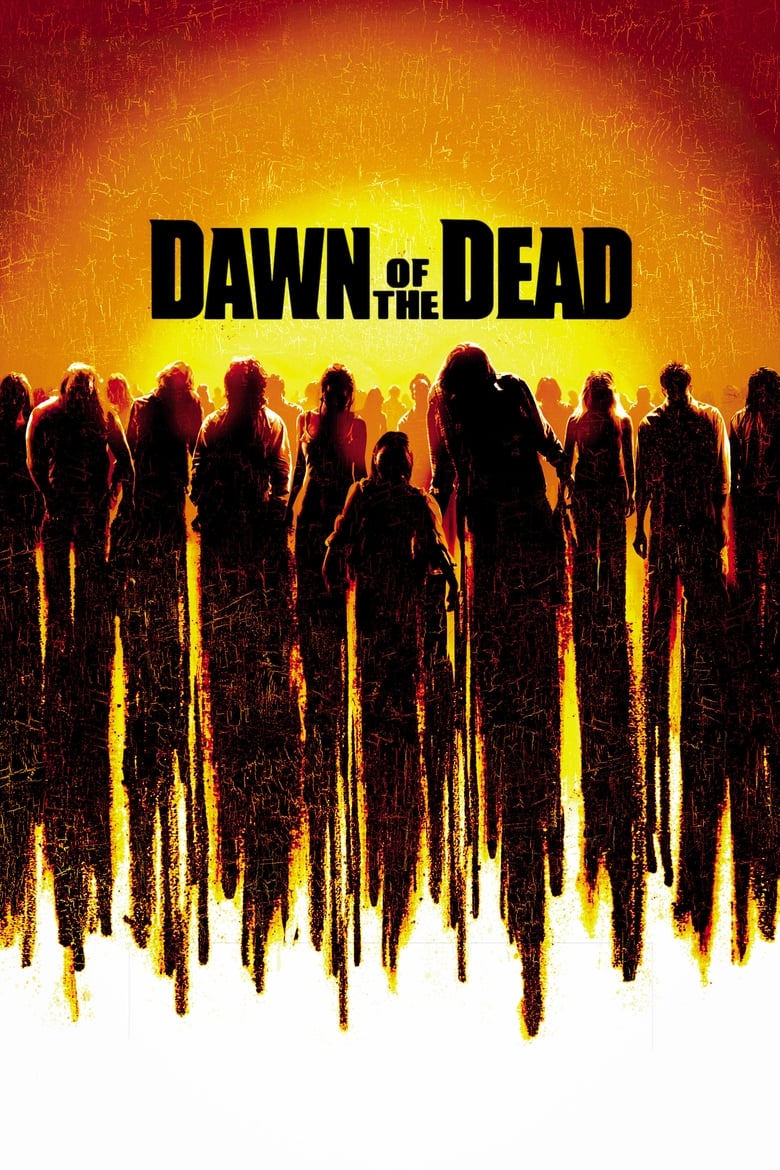
Dawn of the Dead
“When there's no more room in Hell, the dead will walk the Earth.”
A group of survivors take refuge in a shopping mall after the world is taken over by aggressive, flesh-eating zombies.
About Dawn of the Dead
What Dawn of the Dead gets right
Right from its first minutes Dawn of the Dead refuses to make the apocalypse abstract. Ana comes home after a nursing shift and the ordinary — marriage, a bedroom — snaps. A zombified neighbour girl kills her husband, who then reanimates and attacks. It’s a punch to the stomach, and it tells you everything you need to know about what the film cares about.
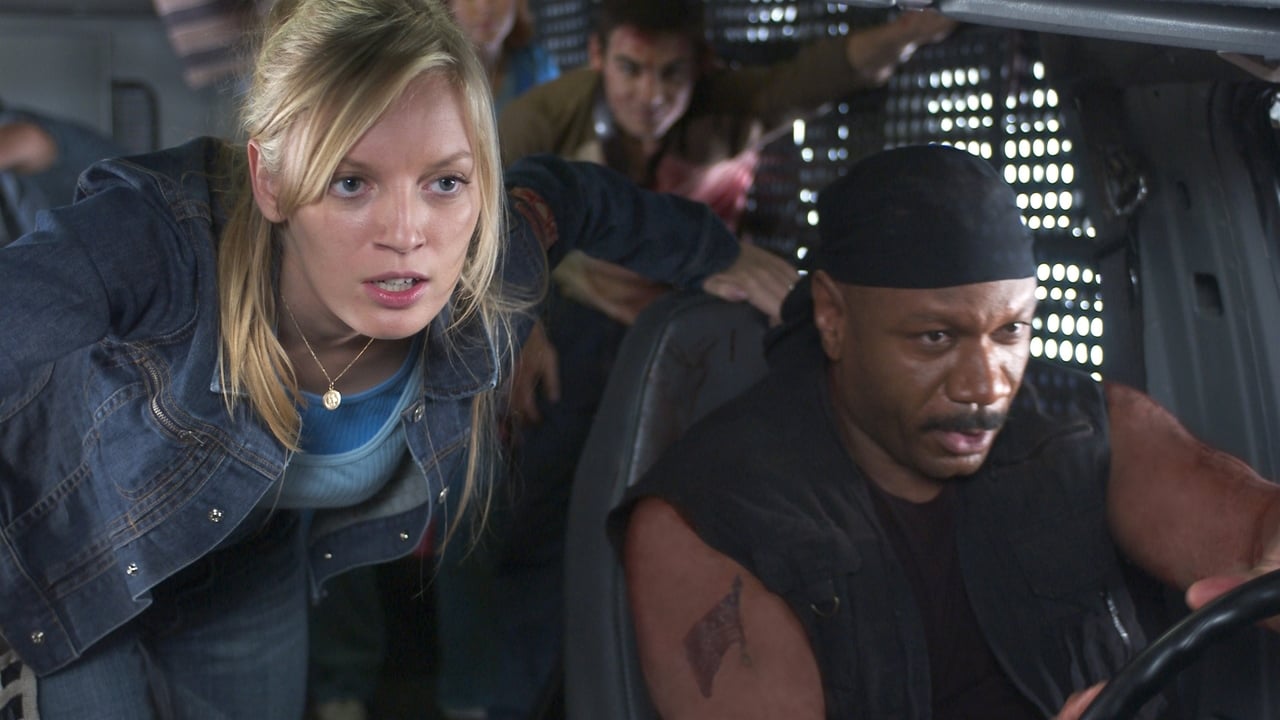
That close focus is braided through the rest of the picture. Directed by Zack Snyder and clocking in at a brisk 100 minutes, the film moves fast: Ana is swept into a ragged group of survivors that includes Kenneth, Michael and others, and the story funnels them into a shopping mall where they try to carve a sleeping place out of chaos. The mall isn’t just a set-piece; it’s a stage for choices about who you’ll protect and who you’ll have to leave behind. For all its splatter-and-action credentials, Dawn of the Dead keeps nudging you back to questions most genre films skim: what is worth defending, and how long can any of it last? Those questions are the quiet engine that keeps the gore from being nothing more than spectacle.
The idea that sets Dawn of the Dead in motion
The engine here is simple and effective: a private life — Ana returning home after work — collapses into public catastrophe. That domestic rupture is the film’s pivot; it forces a nurse out of the ordinary and into the very strange business of surviving among strangers.
From that opening shock the world of the film fills in through small, practical beats. The survivors discover other people trying to get by — for instance Andy, who’s trapped in his gun shop across the mall car park — and those encounters keep raising the stakes without stopping to explain every rule of the outbreak.
The setup also establishes how the group handles moral emergencies. A bitten man called Frank chooses isolation, and when he turns the blunt answer falls to Kenneth: he shoots him. That moment nails the tone — spare, grim choices under pressure.
So the premise works because it joins a personal collapse with a string of human decisions. It’s not just about monsters; it’s about what people choose to do when the small civility of everyday life is gone.
Why Ana matters
Ana (played by Sarah Polley) anchors the film in a recognisably human place. She begins the story in a domestic routine — finishing a nursing shift and heading home — and that ordinariness makes the violence that follows feel immediate rather than theatrical.
Her husband’s sudden death and reanimation shoves Ana into a sequence of escapes and small alliances. She ends up with a group led by Kenneth and including Michael, and those new, precarious connections become the emotional angles the film returns to as it progresses.
Ana’s choices also quietly map the film’s themes. When survival demands it she kills to save others — she kills the reanimated Steve and takes his boat keys — and later leaves the mall with a small group after devastating losses. Those moments keep the character rooted in the movie’s practical, no-nonsense world.
Put simply: Ana matters because she is both the audience’s entry point and a constant reminder that this is about people trying to keep something like a life going, not just about clearing rooms full of monsters.
Dawn of the Dead has more on its mind than the plot suggests
Beneath the blood and bangs the film keeps returning to lifespan and the passing of time. Mortality is everywhere: loved ones die, bodies reanimate, and the survivors are forced to measure what a life — and a death — actually means.
Freedom is another recurring concern. The mall appears at once as refuge and trap; it’s a safe place the group can hold, but staying put isn’t freedom, it’s a concession. Decisions about movement — whether to reinforce buses, take a yacht and leave — become philosophical as much as tactical.
Family and parental protection thread through the action. Relationships form fast: people pair up, bond by necessity, and parental impulses surface in awful circumstances (for instance the tragedy around Luda’s childbirth). Those moments turn the film’s survival plot into something almost domestic in temperament. And fear is the glue. Not the pure jump-scare fear but the ongoing, low-grade dread of what the new world means for home and safety. The film asks: when safety is a fragile construct, what are you prepared to defend?
Dawn of the Dead could not belong to any other decade
Released in 2004, Dawn of the Dead sits squarely in the 2000s. You can hear that in the film’s tempo and in the way it treats genre: quick, punchy, and unafraid of mixing gore with character beats.
It’s very much a 2000s movie in how economical it is — a compact runtime and a focus on momentum over digression. That economy gives the film a particular personality: urgent, practical, and occasionally grimly funny.
Seen today, the film reads as a product of its moment without being a museum piece. Its choices and pace mark it as something made in the early twenty-first century, and that decade’s appetite for genre films that move fast and don’t waste beats is baked into its DNA.
In short: the film’s 2004 stamp is part of its character, not a handicap.
What has aged — and what hasn't
The film’s opening — Ana coming home after a shift and finding her life violently overturned — still lands. That immediate, human shock keeps the movie rooted in something people still recognise: the weird vulnerability of daily routines being ripped away.
The themes that threaded through the film — family, home and safety — haven’t lost their grip. Watching people try to keep a semblance of family inside a mall still feels resonant because those are timeless instincts: find shelter, feed each other, protect the weakest.
Fear, too, is durable. The film trades on a steady, practical dread rather than fashion-driven scares, so the tension holds up. It’s not trying to be trendy; it’s trying to make you worry for the people on screen.
That said, the movie’s straightforwardness is part of its charm and its limit. It asks simple, persistent questions rather than attempting to complicate them — which will please some viewers and leave others wanting more philosophical friction.
Why Dawn of the Dead still matters
People remember images and choices. Dawn of the Dead gives both: Ana’s home invasion, the mall as a fragile fortress, and the grim calculus of dealing with the bitten linger in the memory for a reason. Those early shocks — a neighbour’s attack, a husband who reanimates — set a tone that’s hard to shake.
The ensemble details help the film stick: small arcs and brutal losses — the arrival of newcomers, the discovery that bites spread infection, moments like Kenneth and Andy’s whiteboard communication — make the stakes feel personal, not abstract. The characters aren’t just cannon fodder; their relationships matter.
There are also set pieces that people still talk about: efforts to feed a starving Andy by lowering the dog Chips into the parking lot, the decision to reinforce buses, and the plan to take Steve’s yacht and head for an island. Those practical survival sequences make the film feel lived-in. And finally, the ending — camcorder footage of the group running out of supplies, reaching an island and being overwhelmed — leaves a lasting aftertaste. It’s bleak in a way that lingers: the film doesn’t tie everything up neatly, and the memory of that unresolved finish helps keep the picture alive in people’s minds.
Does Dawn of the Dead still hold up?
Yes — for the right reasons. Dawn of the Dead is compact (100 minutes), purposeful and interested in what people do for each other when everything else collapses. Ana’s journey from a nurse walking into her own nightmare to someone fighting to keep a small group alive gives the film an emotional backbone most splatter-heavy movies skip.
The themes — mortality, freedom and family — are not tacked on; they’re threaded through choices and losses. Kenneth’s hard decisions, Michael’s grim reveal, Ana taking the boat keys and leaving with a handful of survivors: these are practical narrative moves that double as statements about what is worth defending.
It also still plays as a 2004 film: brisk, unapologetic, slightly unforgiving. That personality will charm viewers who want a lean, serious genre film and frustrate those looking for philosophical detours or tidy optimism.
So should you watch it? If you want a zombie movie that remembers people while it’s blowing things up, Dawn of the Dead is still worth your time. It’s not trying to be anything other than a sharp, humane piece of genre filmmaking — and that honesty keeps it alive.