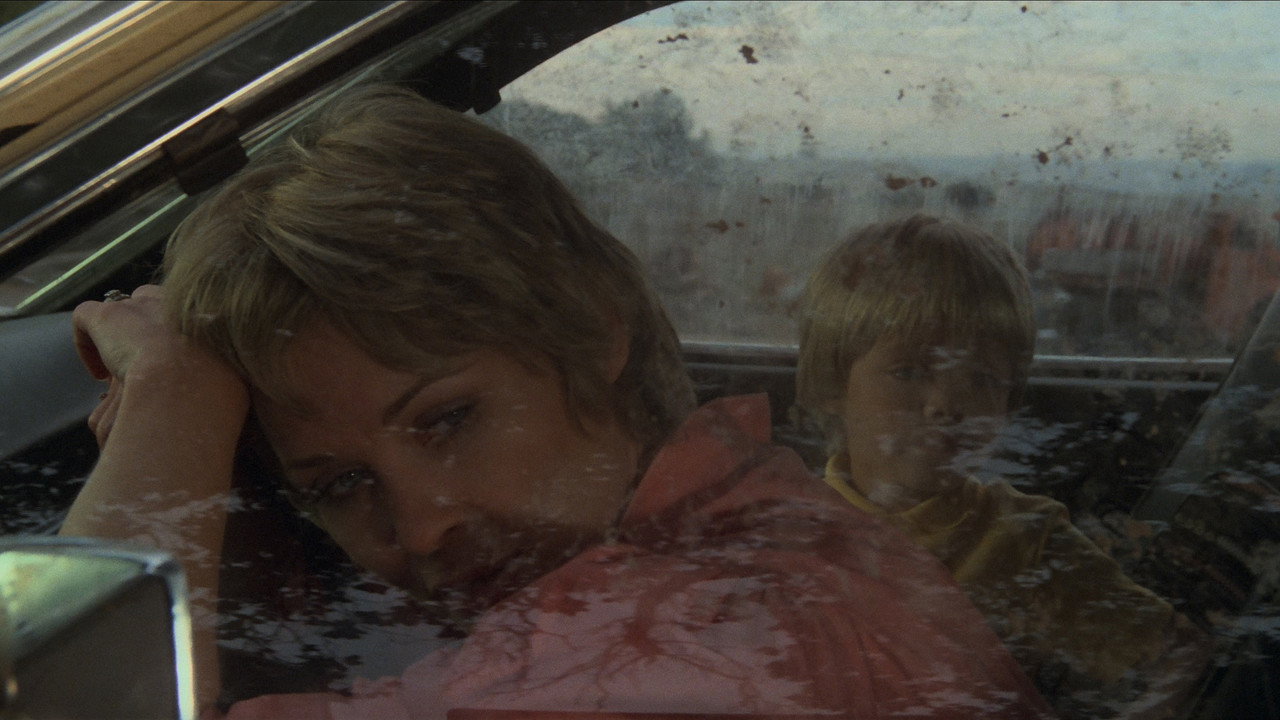

Cujo
“Now, there's a new name for terror.”
A friendly St. Bernard named "Cujo" contracts rabies and conducts a reign of terror on a small American town.
About Cujo
What Cujo gets right
The first, small image is a genius bit of horror shorthand: a friendly St. Bernard, off chasing a rabbit, pokes his head into a cave and gets bitten by a rabid bat. That one private moment — harmless animal meets disease — is the seed from which the film’s entire, escalating nightmare grows.
Lewis Teague stages the whole thing economically. At 91 minutes, Cujo refuses to dawdle: it sets up the domestic world, introduces a handful of people and then, with unnerving speed, strips their safety away. The film’s pace means tension rarely softens into filler. And because this is, at heart, a family story, the human names matter. Donna Trenton is the person the movie keeps returning to; her predicament is the axis the horror spins around. That close attention to parental fear and home — not just jump scares — is what still makes Cujo feel worth revisiting.
The idea that sets Cujo in motion
Cujo’s engine is surprisingly simple: the film centres on a domestic crisis that becomes immediate and personal. At one point Vic Trenton comes back to find his house vandalised and his family missing.
That disappearance is not some distant mystery; it’s a small, brutal emergency. The movie asks you to care about ordinary people being suddenly unmoored from their home life.
What follows — and what the setup promises — is rescue and reckoning. The story compresses the search for the missing family into a tight dramatic problem: someone must find them and end the danger.
Because the stakes are family-sized, the setup works. It’s not about solving an abstract puzzle; it’s a man returning to an empty house and then, shortly after, rescuing those he loves.
Why Donna Trenton matters
Dee Wallace plays Donna Trenton, and the script deliberately keeps the focus tight on her as the family’s emotional anchor. She’s the mother in a situation that asks the audience to measure ordinary courage against extraordinary threat.
The Trenton family are not strangers to the rural people they meet: when Vic, Donna and young Tad take their car to Joe Camber’s place for repairs, they actually hit it off with the Camber household and with Cujo before anything goes wrong. That early friendliness makes the later collapse into violence feel crueler.
Donna’s life is complicated before the dog turns: her marriage is under strain after Vic learns about an affair with an old boyfriend. That domestic fissure matters because it heightens the film’s emotional pressure — we’re invested in this particular family and the chance they might not pull through intact.
Finally, Donna matters because the story is built around family. She isn’t just a victim on a set of horror beats; she represents the ordinary adult trying to keep a child safe when the rules of home suddenly fail.
Cujo has more on its mind than the plot suggests
On the surface Cujo is a classic horror premise about an animal gone deadly. Under the surface it’s a movie about what parents will risk and endure to protect their kids — parental protection is the film’s beating heart.
The film also keeps nudging at the idea that home isn’t an absolute refuge. A trip to a neighbour’s for something as ordinary as car repairs can turn into the precise moment where safety unravels. That collapse of home-first security gives the scares extra moral weight.
Family, in both the intimate and brittle senses, sits at the story’s centre: loyalties, tensions and small betrayals shape how characters respond when danger arrives. Mortality and loss hover nearby, because the threat isn’t cool or elegant — it’s personal and final. Fear and courage play off one another: the movie makes you feel how terrifying it is to be trapped on behalf of someone else, and how that terror can also push ordinary people into extraordinary action.
Cujo could not belong to any other decade
Cujo arrived in 1983, squarely in the early 1980s. That placement matters because the film takes a small, domestic premise and pushes it to a near-relentless, genre-blending extreme — a pattern you’ll see in several films from that era.
It’s not a flashy, sprawling spectacle. It’s a compact horror-drama-thriller that prefers personal panic over philosophical rumination, which feels very of its time: lean, a touch lurid, and intensely interested in how ordinary lives break under pressure.
The result is a movie that wears its decade in the choices it makes about storytelling rather than in window dressing: community, family obligations and the sudden fragility of everyday arrangements are all concerns that the early 80s cinema liked to probe.
Being a 1983 picture gives Cujo a particular pacing and appetite for direct emotional impact — it’s efficient, brisk and not afraid to hurt its characters in order to make a point about safety and fear.
What has aged — and what hasn't
The core of Cujo — a family thrown into sudden, intimate danger — still works. The Trenton household’s ordinary rhythms and relationships give the film emotional purchase that doesn’t depend on gadgets or trendiness.
Themes about the fragility of home and what parents will do to protect their children are still recognisable and sharp. Those are basic human things; they don’t date easily.
Some of the plot relies on a neat, mechanical isolation: the alternator on Donna’s car dies and the pair become trapped. That device still serves the story because it forces a claustrophobic, unavoidable confrontation between caregiver and threat.
And fear, as a simple human sensation, hasn’t lost its power. Watching people you care about trapped and suffering is still an effective way to make an audience sit up and hold its breath.
Why Cujo still matters
People remember Cujo not because it invented the dog-as-threat idea but because it threads that threat through ordinary life. The film starts with a benign domestic moment — the dog and the visiting family getting on well — and lets the menace creep in until the world tips.
The escalation feels deliberate: early, subtle signs of infection are missed; the Camber household’s temporary absence leaves a dangerous vacuum; and the dog’s descent into the furious stage makes the local world suddenly unsafe. That escalation is what lingers in the memory.
The central ordeal — Donna and Tad forced into shelter while attempts to escape are repeatedly foiled, the heat becoming another enemy — gives the movie its claustrophobic signature. Those specific moments (a dying alternator, a broken window, repeated attacks) are the images people return to. Finally, it’s the human choices that register. Characters act, fail, hurt and survive: a sheriff is mauled; Donna fights desperately with what she has; in the end she shoots the dog and Vic arrives to rescue them. Those beats are blunt and terrible and, for many viewers, not easy to forget.
Does Cujo still hold up?
Yes — but with a clarification. Cujo isn’t a masterclass in subtlety; it’s a lean, often brutal exercise in domestic dread. The film’s simple origin (a friendly dog bitten by a rabid bat) and its refusal to dilute the central crisis keep it honest to its mission.
For viewers who respond to stories about parental protection and collapsing safety, the movie delivers. Donna Trenton and her son are ordinary people placed in an extraordinary, isolation-driven emergency — the dead alternator and the repeated attacks keep the pressure mercilessly on.
Technically compact and paced to 91 minutes under Lewis Teague’s direction, Cujo’s strengths are its clarity of idea and emotional directness. It’s a horror-thriller that trades atmospheric prettiness for naked, uncomfortable jeopardy.
So should you watch it today? If you want a tight, character-centred horror about what family means when home is no longer safe, yes. Cujo still plays like a reminder: the worst thing isn’t always something supernatural — it’s the everyday turning suddenly lethal, and the person who has to do whatever it takes to keep a child alive.