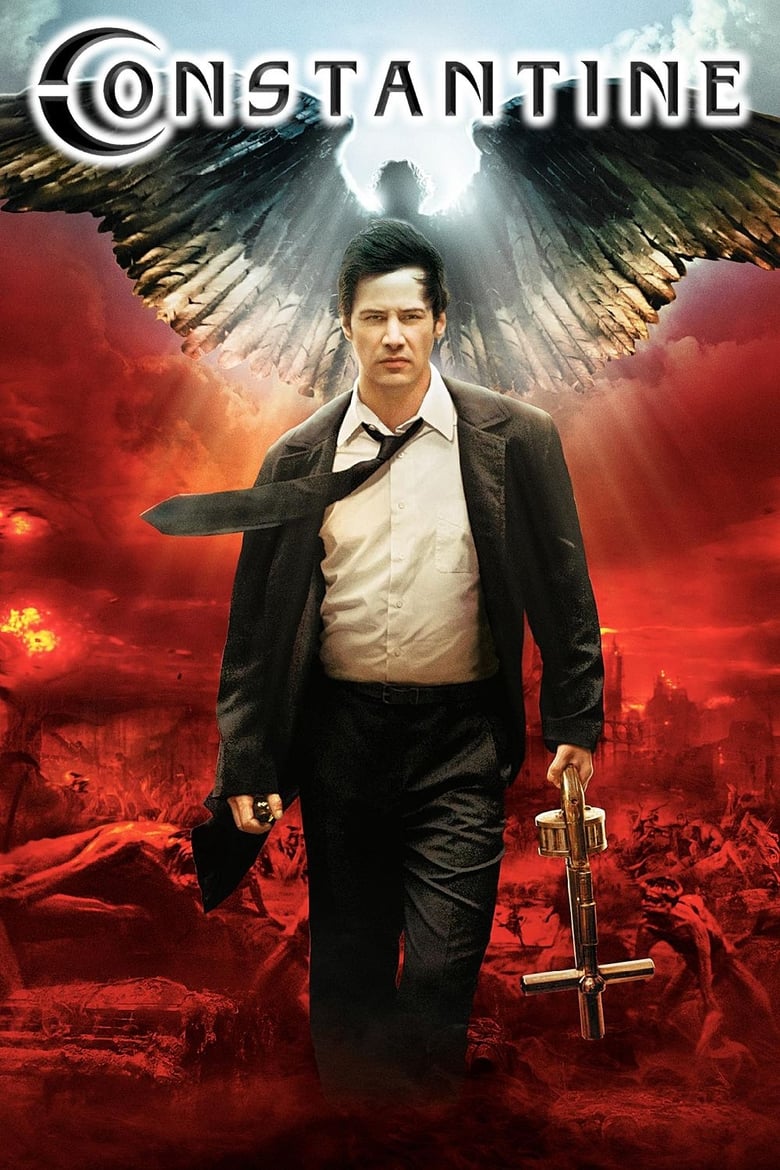
Constantine
“Hell wants him. Heaven won't take him. Earth needs him.”
John Constantine has literally been to Hell and back. When he teams up with a policewoman to solve the mysterious suicide of her twin sister, their investigation takes them through the world of demons and angels that exists beneath the landscape of contemporary Los Angeles.
About Constantine
Why Constantine still works
The movie opens with a simple, unsettling idea: a scavenger in Mexico unearths the tip of the spear that pierced Christ and, predictably, things go wrong. That single conceit — a relic that invites Hell into Los Angeles — gives the film its propulsive, slightly irreverent engine.
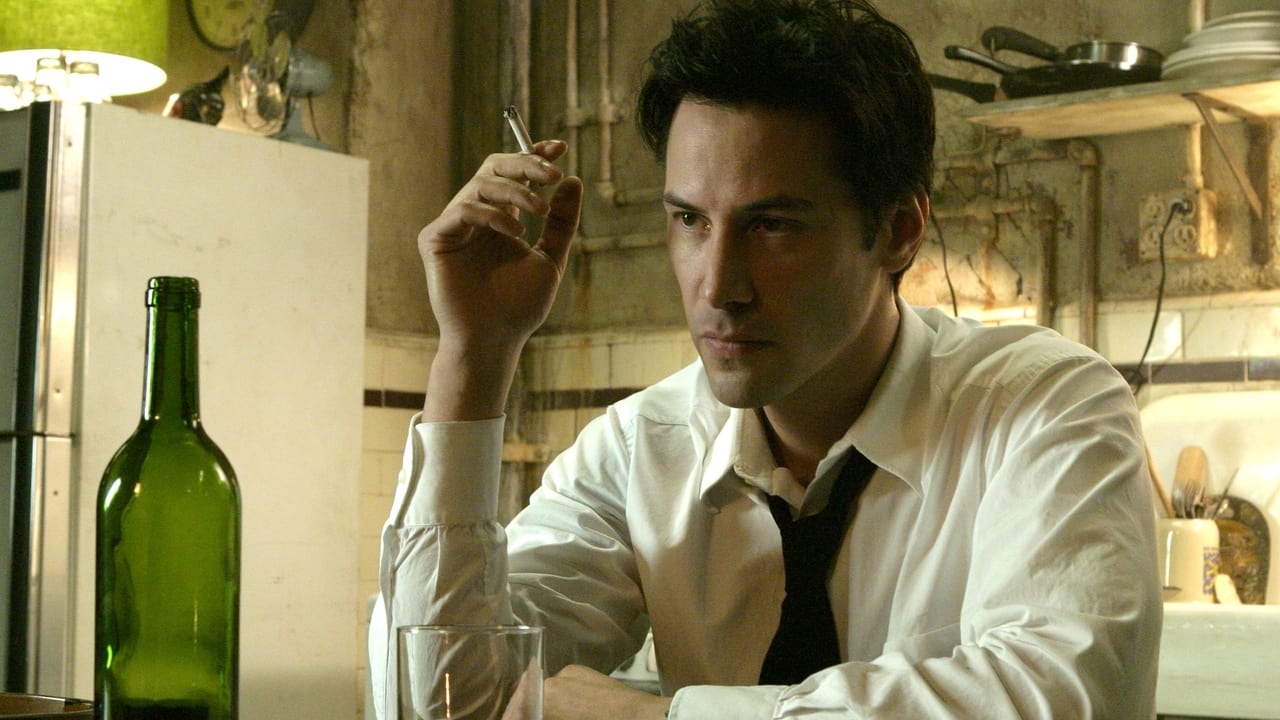
Francis Lawrence directs a compact 116-minute film that refuses to choose between horror, fantasy and comic-book spectacle. It’s all laced together with a preoccupation you don’t always expect from a blockbuster: people trying to keep the ones they love safe. Keanu Reeves plays John Constantine, the weary occult expert who drags the audience into a world where angels and demons negotiate treaties and the day-to-day work is exorcising things that shouldn’t be able to cross the line. That particular mix — street-level grit plus theological strangeness — is what still makes the film watchable.
The idea that sets Constantine in motion
Start with the spear tip. A piece of sacred history turns into supernatural contraband and lands in Los Angeles, which is all you need to justify a lot of very strange things happening to ordinary people.
John Constantine is an occult fixer: when a demon tries to reach Earth through a little girl — a breach that should be impossible thanks to an agreement between Heaven and Hell — he’s the man you call. That opening established the movie’s rules quickly and with minimal fuss.
On top of the immediate demon-problem is Constantine’s own ticking clock. He’s dying of lung cancer and even tries bargaining with an angel for more time, only to be told his choices make him unworthy. It’s a neat way to add stakes that aren’t just about winning a fight.
All of which matters when larger forces move: a powerful, usurping threat uses a human vessel, alliances splinter and the story resolves itself with choices about life, death and who gets the right to decide either one.
Why John Constantine matters
He matters because he’s a professional at doing the things the rest of the world would rather ignore. Early on he exorcises a demon from a child — the film makes that practical, procedural, and therefore strangely believable within its own logic.
He carries the movie’s moral weight without ever being sanctimonious. Family is threaded through his choices: he’s not a brooding loner for drama’s sake, he’s someone whose past brushes continually with other people’s grief and protection.
The film repeatedly ties Constantine into other characters’ families and losses — detectives hunting for a sister, priests making secretive sacrifices — which keeps him from becoming an isolated archetype. He’s at the centre of a network of obligation.
And the personal history that haunts him — glimpses of a tormented youth and the knowledge that his own death has consequences he can’t escape — gives him a reason to act that’s about more than heroics. He’s driven by debt more than glory.
Constantine has more on its mind than the plot suggests
Beneath the demons and the bargains, the film is stubbornly domestic. Family keeps popping up — not as ornament but as a motive: people act to protect siblings, friends and the memory of lost relatives.
Mortality is everywhere, too. Constantine himself is on borrowed time, and the movie asks what you do if you can see the end coming: bargain, fix things, or make a last selfless move?
That overlap — family in the face of limited lifespan — gives the supernatural stakes a human scale. The apocalypse is less interesting here than who survives it and why they should be allowed to. There’s also a steady note of loss: the film treats grief as something that changes how people see the world, and as a force that explains a lot of otherwise irrational choices.
Constantine could not belong to any other decade
Released in 2005, the film sits in that early 2000s sweet spot where comic-book and genre projects were still experimenting with tone. It wasn’t obliged to be slickly self-referential; it could be a bit serious and a bit grubby in the same breath.
That era liked mixes — superhero elements rubbing shoulders with horror and drama — and this film leans into that freedom. The result feels of its moment because it embraces genre-hopping instead of deciding on a single register.
Watch it now and you’ll see a product of 00s filmmaking that was willing to take small risks inside a mainstream package: an adult subject matter and moral messiness tucked into what could otherwise have been a straightforward tentpole.
What has aged — and what hasn't
The film’s insistence on family still lands. Stories about siblings, sacrifice and protection are timeless, and that emotional throughline keeps the supernatural set pieces grounded.
By contrast, parts of the film that hinge on the protagonist’s dark past — notably his teenage suicide attempt revealed as the reason he’s cursed — can feel blunt to modern eyes. It’s an unflinching detail, and viewers today read it differently than audiences might have in 2005.
That detail does, however, make the movie take mortality seriously in a way that few blockbusters attempt: it isn’t just an obstacle to be overcome but central to why the character does what he does.
Overall, the film’s emotional bones — loss, duty and the limited time people get with one another — still provide enough ballast to keep it from feeling purely like a nostalgic curio.
Why Constantine still matters
People remember the film because it combines an arresting premise — the spear tip from biblical lore turning into a modern threat — with a handful of memorable set pieces, like the opening exorcism that breaks the treaty between Heaven and Hell.
It’s also the story of characters trying to protect family: a detective hunting for a sister who refused to accept suicide as an answer, priests making sacrificial choices, and an occultist whose bargains have personal costs. Those threads give viewers things to care about beyond the demon-on-the-street visuals.
The movie leans on bold mythology — Mammon as a usurper, Gabriel’s disgust with humanity, a literal bargain with Lucifer — and stakes that feel mythic rather than merely cinematic. That helps it linger in memory: it’s not just another fight scene, it’s about who gets to decide fate. And there’s an odd little coda — seeing a fallen ally in angelic form after the credits — that leaves the film with a bittersweet aftertaste. Small gestures like that are part of why the story still pops up in conversations years later.
Does Constantine still hold up?
Short answer: yes — if you want a genre film that treats moral questions and mortality as more than window-dressing. It’s a 116-minute, 2005 supernatural thriller that keeps its eye on human stakes even while angels and demons argue about policy.
Francis Lawrence’s film still works because its central tensions are human: a man on the verge of death, a sister unwilling to let go, and a fight over who gets to decide whether the next age belongs to Heaven or Hell. Those are simple, effective hooks that survive the years.
If you’re looking for something glossy and modern, this isn’t that. But if you want a pulpy, thoughtful mix of superhero scale and personal cost — bargains, ritual, a relic that upends a city — it’s worth a watch, not least for how it ties spectacle to family and lifespan.
So yes: give it an evening. It’s the rare mainstream film that asks you to care about who gets saved.