Christine
“How do you kill something that can't possibly be alive?”
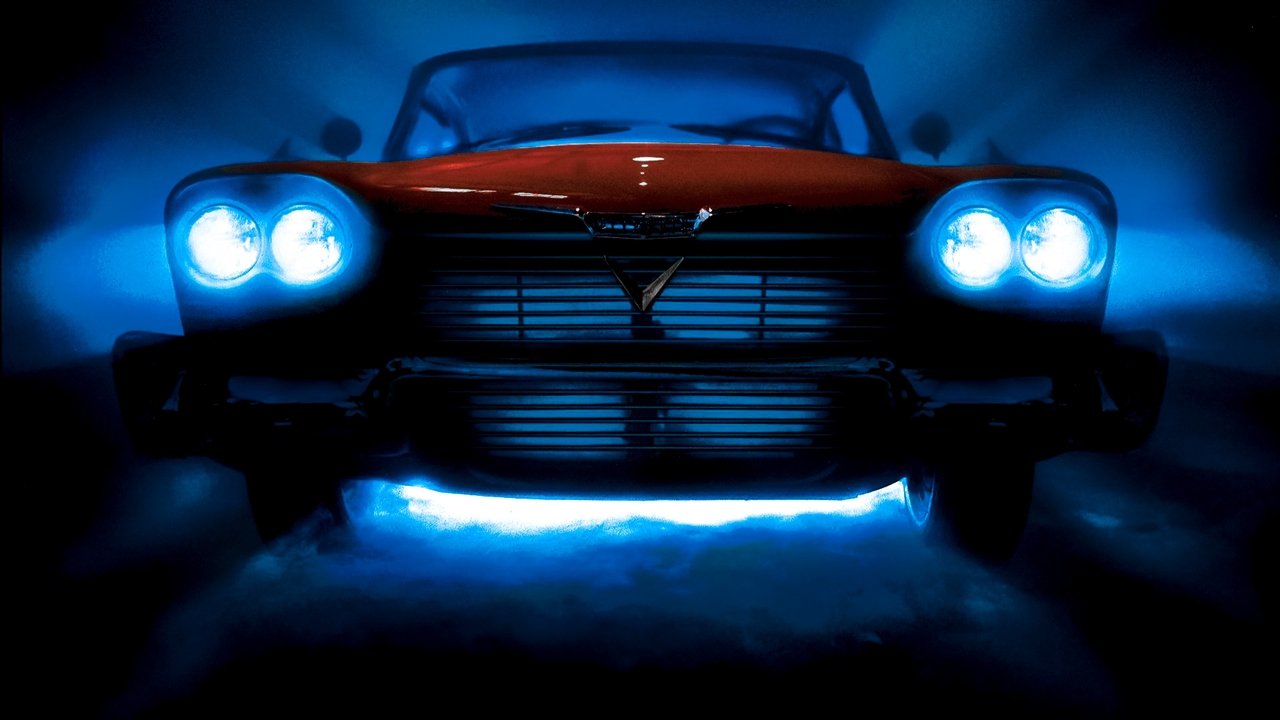
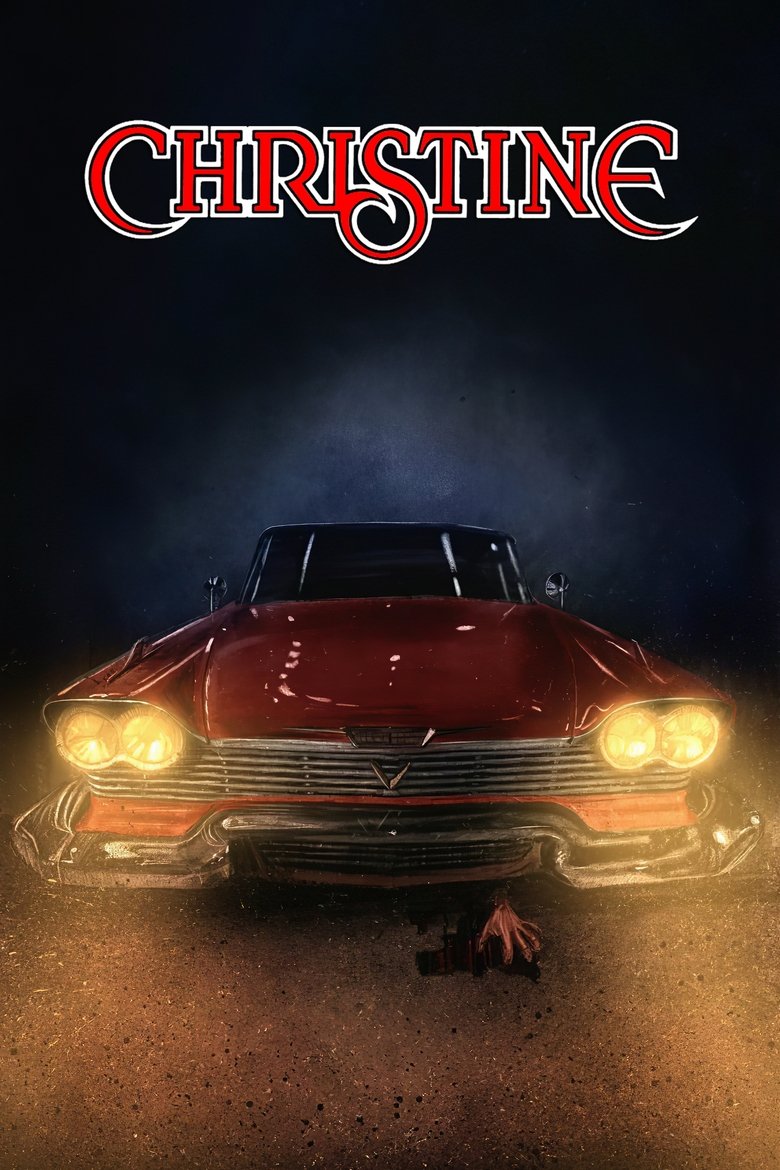
Nerdy high schooler Arnie Cunningham falls for Christine, a rusty 1958 Plymouth Fury, and becomes obsessed with restoring the classic automobile to her former glory. As the car changes, so does Arnie, whose newfound confidence turns to arrogance behind the wheel of his exotic beauty. Arnie's girlfriend Leigh and best friend Dennis reach out to him, only to be met by a Fury like no other.
About Christine
Why Christine is still worth talking about
Those first minutes — a brand-new 1958 Fury on a Detroit production line that snaps shut on a man’s hand — announce this won’t be a cosy suburban horror. It’s blunt and weird and immediately asks you to accept that an object can be violent on its own terms.
John Carpenter directed Christine, and he leans into that bluntness rather than explaining it away. The film runs at a tidy 110 minutes and keeps the narrative focussed on a small group of people: the awkward teenager Arnold "Arnie" Cunningham, his loyal friend Dennis, and the woman who becomes caught up with both of them.
What keeps Christine talking-worthy now is less the supernatural premise than the way Carpenter uses it to probe ordinary things — family, fear and mortality — through one obsession that turns destructive.
The idea that sets Christine in motion
The engine for the whole story is a simple, unnerving fact: this red 1958 Plymouth Fury arrives in the world with danger attached. That early incident on the production line plants the idea that the car carries more than rust.
Years later, in 1978 Rockbridge, California, two schoolmates — Arnie and his only friend Dennis — spot that same Fury, abandoned and decaying, for sale at the house of George LeBay.
LeBay names the car Christine. The purchase that follows is small-scale but consequential: a shy teenager buying a wreck becomes the hinge on which the rest of the movie swings.
It’s a tidy premise: a possessed object, a risky purchase, and the consequences that flow from a single, obsessive choice.
Why Arnold "Arnie" Cunningham matters
Arnie matters because he’s the human face of the movie’s central gamble: what happens when a lonely kid attaches himself to something — and that something answers back. Keith Gordon plays Arnie, who arrives as a bullied high-school senior and leaves altered.
Bullying is the film’s social hinge. Arnie’s first-day humiliation by Buddy Repperton and his gang sets the emotional stakes: he’s vulnerable, easy to influence and desperate for validation. Dennis stepping in for him underlines how small acts of friendship can be decisive.
Buying Christine is the choice that shifts Arnie from passive victim to a young man whose priorities change. The car’s presence reshapes his relationships: it draws him toward Leigh, it angers his parents, and it eventually makes him confront his father. Those moments turn a genre plot into a character story.
There’s also the backstory Arnie inherits through others — warnings from figures like George LeBay about Christine’s past, and the knowledge that obsession with the car has ruined people before. Arnie may be the one behind the wheel, but his trajectory is threaded through family and community responses to his choices.
Christine has more on its mind than the plot suggests
Underneath the haunted-car beats, Christine is rumbling about family. The film pays attention to how Arnie’s choices upset the household order — the pushback from parents, the way friends try to hold him steady — and treats those ruptures as real losses.
Mortality and lifespan are threaded through the narrative, too. We’re reminded that attachments have limits: the backstory of previous owners and victims adds a generational weight to the story, suggesting patterns that repeat unless someone intervenes.
Parental protection appears in different guises, from worried parents to figures in the community who try to stop a self-destructive obsession. Authority here is not always helpful; sometimes it’s absent, sometimes it’s ineffective, and that failure matters.
Fear is the connective tissue: not just fear of a supernatural object, but fear of losing someone to a stubborn, escalating passion — the kind of thing that’s as common in family dramas as it is in horror.
Christine could not belong to any other decade
Christine was released in 1983, and it wears that moment lightly but unmistakably. It’s a product of 1980s storytelling that mixes genre — horror, mystery and teen drama — without feeling like it needs to apologise for being a little bit of everything.
That hybrid approach is part of what makes the film distinct: Carpenter takes a supernatural premise and treats it like a neighbourhood problem as much as a monstrous one, which is very much in tune with the era’s appetite for genre-mashups.
So while the movie could exist in another time on a plot level, its rhythm — the combination of teen-relationship beats and small-town menace — feels squarely rooted in the early ’80s.
If you watch it as a piece of 1983 filmmaking, you get a film comfortable with both teenage melodrama and grim consequences.
What has aged — and what hasn't
Christine’s core is a teen story about possession and belonging, and that central human knot still reads. The moment Arnie and Dennis spot the dilapidated Fury at George LeBay’s house still feels useful: it’s a clear, economical setup that explains desire without lecture.
The family material — parents worried, a son pulling away — is straightforward and therefore durable. Those scenes don’t depend on trends; they hinge on recognisable family friction, which still lands.
Where the film is less comfortable today is in how casually it strings together acts of violence as a consequence of the car’s vengeance, and in moments that expect the audience to accept certain losses as inevitable. The revelation that Christine’s history includes previous deaths and suicides is darker than the teen-movie wrapper suggests.
But small scenes — like Leigh’s near-choking episode and her insistence afterwards that she won’t get back into the car — still read as believable beats of jealousy, danger and personal boundary. Those moments keep the film watchable for modern viewers who want stakes, not just spectacle.
Why Christine still matters
People who grew up with Christine tend to remember two things: the peculiarity of a car that fixes itself, and the personal cost of Arnie’s descent. The film ties those together neatly — Christine isn’t just a haunted object, she’s a catalyst for ruin in a community.
There are memorable set pieces that stick: the night the car seems to repair itself in the garage, the way a vintage radio suddenly plays 1950s rock and sends a character scurrying, and the shocking sequence where the car actively kills members of Buddy’s gang. Those beats give the film something to talk about beyond its central metaphor.
At the same time, the more human notes matter. Dennis’s injury after seeing Arnie and Leigh together — one moment that ends his football career — and Leigh’s near-choking episode at the drive-in, which a passer-by reverses with the Heimlich, ground the supernatural in ordinary loss and danger.
And then there’s the ending: Arnie’s final reach for Christine, the car’s mournful response, and the aftermath — the dump into a junkyard cube, and that tiny twitch of a grille. It leaves a prickle of unease that explains why the film keeps getting mentioned in conversations about obsession, ownership and teenage ruin.
Does Christine still hold up?
Yes — with a clear rider. Christine remains worth watching because it’s not just a novelty about a haunted car: it’s a compact, 110-minute study of how a young man’s choices ripple through a family and a town. Keith Gordon’s Arnie sits at the centre of that: a bullied kid who buys a doomed car despite his friend’s objections.
The film’s themes — family, mortality and the fragile idea of protection — still register. Carpenter directs with a steady hand, and the supporting parts (Dennis, Leigh, Will Darnell, Detective Junkins) make the town feel inhabited, not just stage furniture for set pieces.
Where modern viewers might hesitate is the film’s willingness to treat certain tragedies as fixed outcomes; some of the violence feels abrupt and punitive. But those harsh turns are part of what makes Christine memorable rather than merely entertaining.
If you’re deciding whether to watch it now: go in for the strange mix of teen drama and supernatural horror, and stay for the final image — Arnie’s last touch and the car’s small, unsettling reply — which sums the whole film up: affection turned fatal, and the reminder that some attachments refuse to die quietly.