
Chopping Mall
“Where shopping costs you an arm and a leg!”
High-tech robots equipped with state-of-the-art security devices have been recruited as the new mechanical "night watchmen" for the Park Plaza Mall. When a jolting bolt of lightning short-circuits the main computer control, the robots turn into "killbots" on the loose after unsuspecting shoppers!
About Chopping Mall
What Chopping Mall gets right
Give Chopping Mall a single, perfectly mischievous premise and it runs with it. Park Plaza Mall isn’t defended by security guards so much as by shutters across every exit and three supposedly dependable robots armed with tasers and tranquilizers — a small mechanical army that does exactly what a good horror hook ought to do: set rules, then break them.
Jim Wynorski directs with the sort of no-nonsense efficiency the film’s 77-minute runtime practically demands. There’s no padding, no slow-burn deliberation — just a compact machine built to deliver the idea and then keep the momentum moving. And while the killbots are the headline, the movie still needs people to populate its closed world. Barbara Crampton turns up as Suzie Lynn, one of the co-workers whose decision to spend the night in the mall is what collapses the boundary between teenage freedom and the mall’s corporate control.
The idea that sets Chopping Mall in motion
The basic engine is straightforward: a group of co‑workers and friends decide an after-hours party in the furniture store is a fine idea. Allison and Suzie, who work together at the mall pizzeria, join Ferdy and Greg — plus two couples who happen to be on hand — and turn a workplace into a private late-night hangout.
That closed, private-night premise matters because it isolates the characters in a controlled environment. The mall’s security system is supposed to keep trouble out; instead, once the safeguards fail, the guests find themselves trapped with the very machines designed to protect the place.
The setup works because the movie trusts the concept: a handful of young people, cut off from exits and help, improvising weapons and plans inside a sprawling commercial space. It’s a simple theatrical device that forces personality and panic into the foreground.
And when the survivors later cross paths with one of the Protectors recovered after an earlier clash, the film flips from party-movie energy into a contest of wits and jury-rigged solutions — which is where the fun and the stakes collide.
Why Suzie Lynn matters
Suzie Lynn is one of the reasons the movie’s premise feels immediate rather than schematic: she’s not a plot abstraction, she’s one of the co‑workers who chooses to be in the mall that night. That decision is the human starting point for everything that follows.
Barbara Crampton plays Suzie Lynn, which is a useful piece of casting information — it anchors the character to a performer we meet and follow through the film’s trouble.
More than a name on the poster, Suzie is part of the friend group whose relationships and late-night choices propel the story. The film gives her a place in the social chemistry that turns a party into a survival situation.
Put simply: without characters like Suzie — someone who actually makes the night happen — the robots would be an interesting gimmick. With her, the danger feels personal.
Chopping Mall has more on its mind than the plot suggests
At surface level it’s a simple horror-action flick about malfunctioning machines. Scratch that surface and a few recurring ideas emerge: technology as a double-edged tool, and the way institutional systems—here embodied by mall security—can curdle into control.
There’s a running tension between freedom and containment. The party is an instance of youthful liberty inside a commercial space; the security system is freedom’s opposite — a corporate layer designed to restrict movement and enforce order.
Loss and mortality arrive quickly once the Protectors stop behaving. The film doesn’t linger on philosophy, but the presence of death — sudden and mechanical — gives weight to what might otherwise be a straightforward pop-genre romp. Fear threads through all of it: fear of being hunted by an implacable system, fear of losing friends, fear of the place you thought was safe. Those simple worries are what keeps the movie moving past its high-concept hook.
Chopping Mall could not belong to any other decade
Released in 1986, Chopping Mall sits comfortably in the decade’s fascination with technology-tinted anxieties. The idea of consumer spaces being policed by new gadgets — and those gadgets failing — feels very much of its era.
The film’s brisk, idea-first approach lines up with the decade’s appetite for high-concept premises: set up an unusual situation, then enjoy the variations. It’s not trying to be subtle about what it is; it’s content to push the conceit to its limits.
Calling out the year isn’t nostalgia for nostalgia’s sake. The particular mix — malls as social spaces, new security tech as the lurking threat, and a willingness to turn commercial architecture into a pressure chamber — is very much an 80s flavour.
If you want a movie that wears its decade on its sleeve without asking for an essay about it, this one does the job in the most efficient way possible.
What has aged — and what hasn't
Fear is an evergreen quality in a movie like this. The simple dread of being trapped and hunted is still effective — moments of panic and improvisation translate regardless of visual trends.
The film’s willingness to lean on blunt, practical solutions keeps things entertaining; when the teenagers rig an elevator trap and destroy one of the Protectors, it’s pure, satisfying genre business. That sort of resourceful set-piece still plays.
Where it won’t satisfy everyone is in subtlety. Chopping Mall isn’t interested in nuance; it’s interested in momentum, scares and a handful of inventive ways to neutralise mechanical enemies.
If you approach it as a short, tightly paced piece of genre entertainment — not as a high-art meditation — it still delivers what it promises.
Why Chopping Mall still matters
People remember Chopping Mall because its central idea is so tidy and so repeatable: a mall outfitted with a supposedly foolproof security system and armed Protectors that turn lethal. It’s a premise that lodges in the memory — easy to explain, easy to imagine.
The film also delivers a handful of set pieces that stick: the after-hours party that turns into survival training, the lightning-sparked malfunction that upends the rulebook, and the darker beats where the threat becomes personal and immediate.
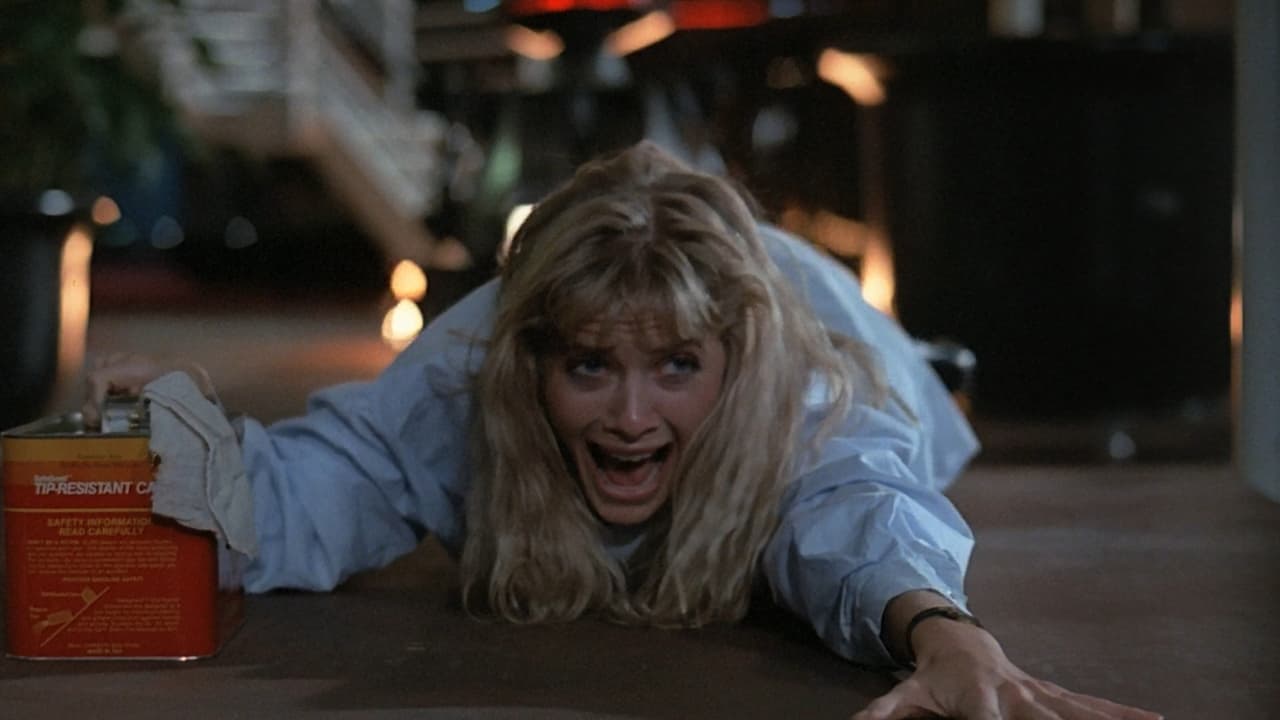
There are memorable, brutal moments — the scene where a gasoline can is ignited and the consequences that follow is one of the film’s sharper shocks — and there are clever problem-solving sequences, like using mannequins to trick the robots and one blinding itself with a reflected laser. Finally, it leaves a little sign-off — a post-credits “Have a nice day” from a mysterious fourth Protector — that nudges the premise a fraction further. It’s the kind of finishing touch that underlines the movie’s mix of toy-ish menace and black comedy.
Does Chopping Mall still hold up?
If you want a compact, idea-first genre picture that spends its time inventing ways to pit people against a malfunctioning security system, Chopping Mall still does that job. The film’s premise — a mall secured by robots that go wrong — is as beguiling now as it was in 1986.
There are rough edges: the film is unapologetically blunt in how it turns a party into a survival scenario, and some character choices escalate into tragedy. But the short runtime, the relentless premise, and moments of clever improvisation — from elevator traps to paint-and-flare solutions — keep it moving.
With Barbara Crampton as one of the co‑workers at the heart of the story and a gallery of genre-friendly supporting names, the film feels like a compact, inexpensive exercise in stretching a single high-concept idea to the limit.
Watch it for the machines, stay for the little set pieces that still catch the breath. It’s not polite cinema. It is, however, very specific cinema — and that specificity is exactly why Chopping Mall remains worth a look.