Children of the Corn
“And a child shall lead them...”
A traveling couple end up in an abandoned Nebraska town inhabited by a cult of murderous children who worship a demon that lives in the local cornfields.
About Children of the Corn
Why Children of the Corn is still worth talking about
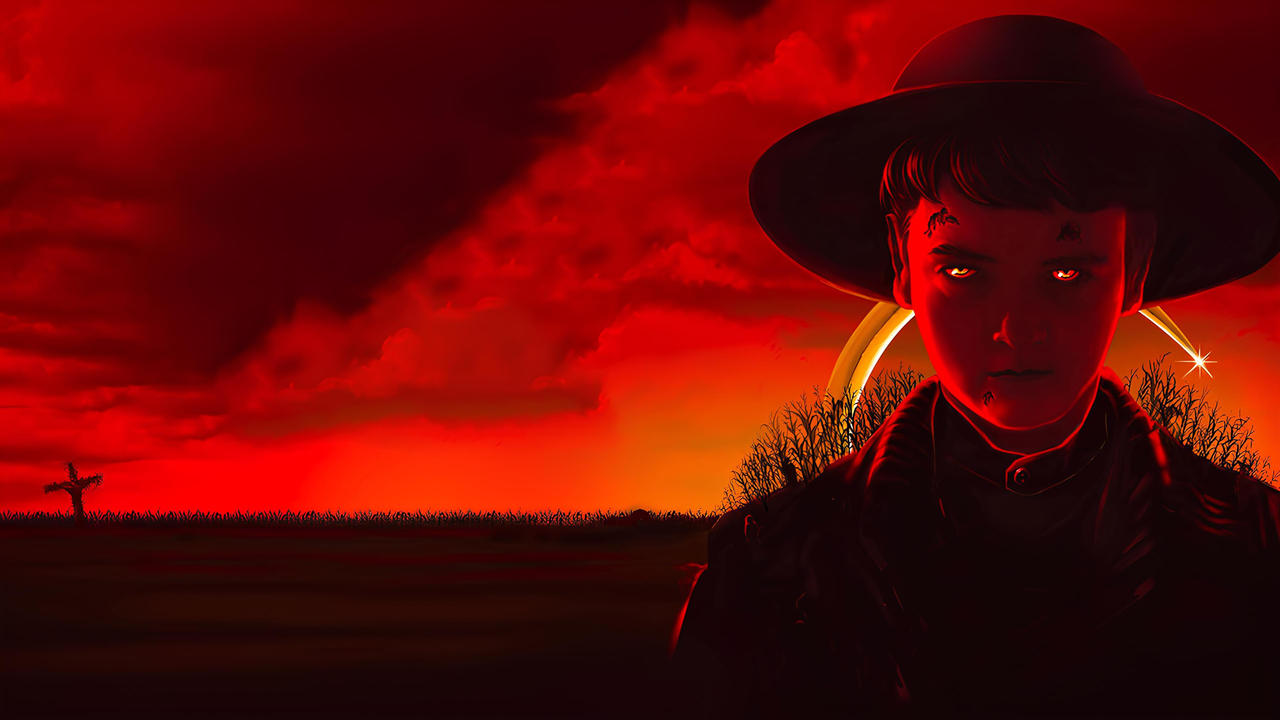
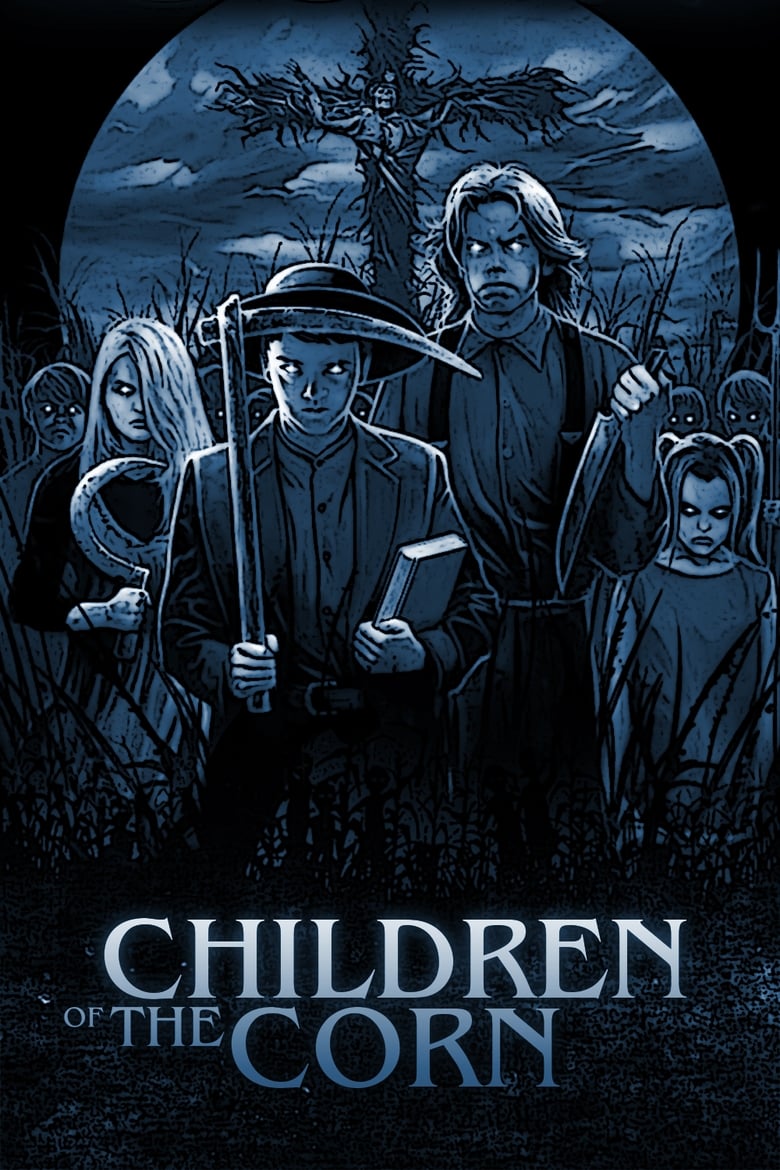
There’s a simple, transfixing image at the heart of this film: a small Midwestern town ringed by endless corn and, somewhere inside it, children who have stopped being children. That picture — Gatlin, Nebraska, and its huge cornfields — is the movie’s stage and its threat all at once.
Fritz Kiersch directs and keeps the film lean: 92 minutes that move from one cold idea to the next without padding. The story lands on a handful of striking players — John Franklin as Isaac Chroner, Peter Horton and Linda Hamilton as the couple who stumble into the town — and lets the situation do the worrying for it. Call it horror, supernatural or slasher: what stays with you isn’t just the nastiness, it’s the way the film wraps those genres around themes of family, parental protection, love and belief. It’s economical, but it asks the audience to care about what the children have become and who will try to stop them.
Why Isaac Chroner matters
John Franklin plays Isaac Chroner, and the character’s essential business is upsetting the obvious rules about childhood. He is a child who organises children into something that looks like a community — only it functions as a cult with a single, cruel logic.
Isaac matters because he’s a pivot. If the film’s emotional work is about family and what people will do to protect it, Isaac is the thing that makes protection urgent. Children who should be dependants become enforcers; family ties are used and abused to justify violence.
That inversion — the child as preacher and executioner — gives the movie a moral shock that lasts longer than any single stunt. He’s not merely scary because he’s violent; he’s upsetting because he upends expectations about who looks after whom.
Put simply: Isaac turns the idea of family inside out. The presence of siblings who haven’t taken part — like Job and Sarah — helps underline that this is a communal breakdown, not ordinary childhood mischief. Isaac’s role forces every adult in the story to answer the same question: who does the protecting now?
Children of the Corn has more on its mind than the plot suggests
At first glance the film is a tidy horror premise: a couple gets lost, finds a ghost-town, and finds worse than ghosts. Peel it open and the film is very interested in parental protection. Burt and Vicky arrive as outsiders and quickly take on the practical, sometimes grim work of keeping children safe from what has happened to their town.
Family is everywhere in the movie — and not in an idealised way. The children’s violent revolt is framed around a perversion of familial and communal obligations: care becomes coercion, and rituals that should bind people together are turned into a reason to sacrifice them.
There’s a strain of love running through the chaos, too. Not romantic love so much as the stubborn, sometimes desperate love that makes Burt and Vicky fight to save the uninvolved kids — Job and Sarah — even when the town seems to have signed away its soul.
And under all of this sits belief: the town prays when the crops fail, and a twisted religious fervour gives the children their orders. The supernatural element — a godlike presence at the heart of the corn — turns ordinary fears about faith and authority into something openly dangerous.
Children of the Corn could not belong to any other decade
Released in 1984, Children of the Corn sits firmly in the era when American horror liked to mix everyday places with sudden, inexplicable menace. It’s not a glossy studio spectacle; it’s a compact, slightly grubby fright about the home front gone wrong.
That compactness matters. The film uses its short runtime to punch quickly from one unsettling image to the next — a practical approach that feels very of its moment, when many horror films traded slow-burn mood for sharp, memorable shocks.
There’s also a decade-long appetite in these stories for small-town anxieties and religious panic: a film that makes a cornfield feel like a courtroom for belief is comfortably at home in the 1980s horror conversation. Put simply, the movie’s tone — economical, a little raw, and satisfied to unsettle rather than explain everything — is an unmistakable product of its release year and the kinds of horror films audiences were watching in 1984.
Why Children of the Corn still matters
There’s a handful of concrete things that keep this film alive in people’s memories. First: the setting — Gatlin and its cornfields — which turns landscape into menace and gives the film a recognisable, repeatable mood.
Then there’s the core shock: a child, Isaac, who recruits and radicalises the town’s youngsters and helps lead the killing of adults. That image — children turned executioners under a dark creed — is hard to shake off.
Specific scenes also lodge in the mind: the church ritual where children drink from Amos, Vicky’s capture and the cross, Diehl’s bargain with the children and the way that bargain breaks when Malachai murders him. These moments give the film a series of vivid, headline images rather than a single neat message.
Finally, the film ties its horror to a tangible solution: the decision to burn the corn, to refuse the god that hides in the rows. That sequence — and the couple’s flight with Job and Sarah at the end — leaves the audience with a mixture of dread and a kind of battered hope, and that emotional mixture is what people tend to carry away.
Does Children of the Corn still hold up?
Yes — with a couple of important caveats. If you watch for atmosphere, unsettling ideas and a tight genre exercise, the film delivers. It sets up a clear and unnerving premise: children under the sway of a bloodthirsty deity in a town that once prayed for its crops and then lost its way.
John Franklin’s Isaac is the linchpin of the film’s effectiveness: the character turns the family theme inside out and forces Burt and Vicky to act as protectors in a place where protection has failed. Those emotional stakes keep the horror from being purely ghoulish.
The movie’s solution — burning the corn to destroy the false god — gives the story a satisfying shape: threat, confrontation, a grim but decisive answer. The couple’s final escape on foot with Job and Sarah leaves the viewer with a sense that some things have been saved, even if the cost was high.
So should you watch it? If you want a short, focused horror whose scares come from an upsetting idea rather than spectacle, Children of the Corn still works. It’s a film that remembers to be mean and honest at the same time — and that combination is why it keeps being worth the watch.