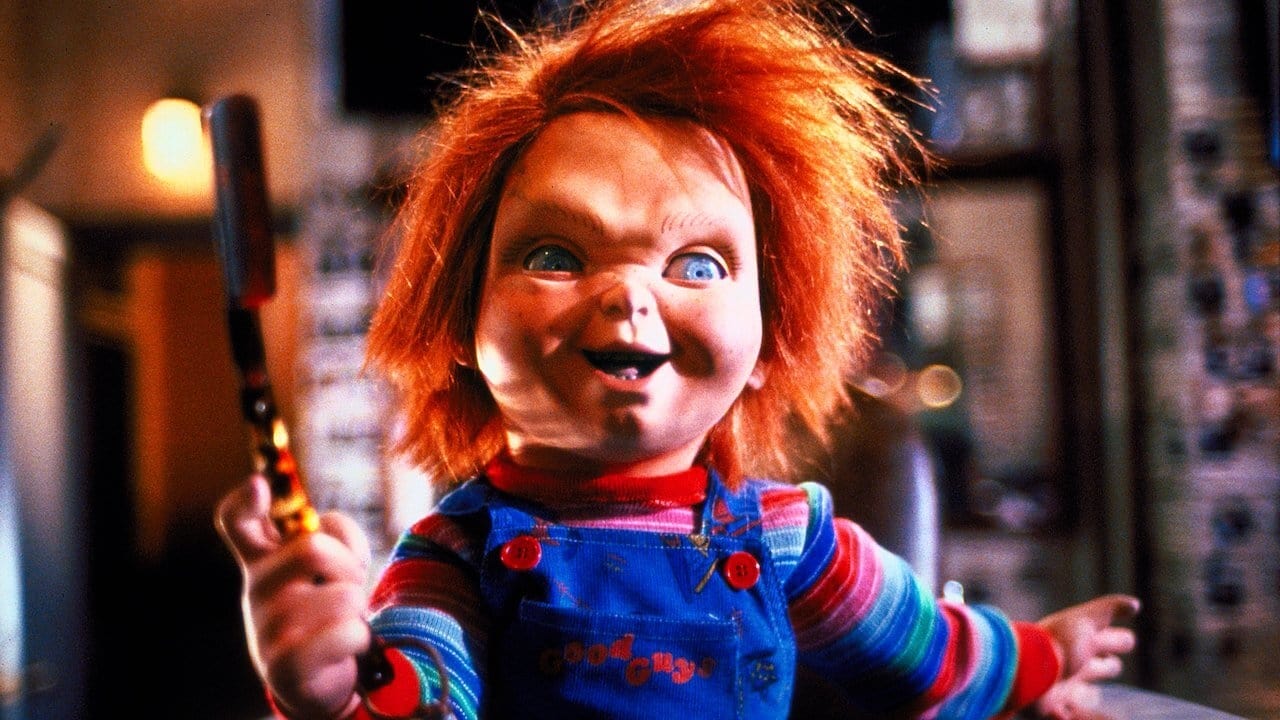

Child's Play 3
“There comes a time to put away childhood things. But some things won't stay put!”
Eight years after seemingly destroying the killer doll, teen Andy Barclay is placed in a military school, and the spirit of Chucky returns to renew his quest and seek vengeance after being recreated from a mass of melted plastic.
About Child's Play 3
Why Child's Play 3 still works
You can describe Child's Play 3 as many things — a slasher with a stunt of a premise, an action-horror with a doll at its centre — but the image that hooks immediately is simple and strange: a toy factory restarted, the same bright machinery making Good Guy dolls again, and one unlucky splash of blood finding its way into molten plastic. That single, grotesque act is the film’s engine; it brings Chucky back and, crucially, gives the movie permission to go somewhere a little meaner than its predecessors.
At 86 minutes and under Jack Bender’s direction the film moves briskly. There isn’t much time for wallowing; instead it layers threat onto a compact framework — a now-teenage Andy Barclay, a military school that favours discipline over listening to his warnings, and Chucky’s single-minded intent to reclaim a living body by any filthy route available. That economy of running-time and purpose keeps the film taut. The cast list reads like the catalogue of trouble ahead: Justin Whalin as Andy, Brad Dourif as Chucky, Perrey Reeves as Kristin de Silva, Jeremy Sylvers as Ronald Tyler, Travis Fine as the nasty Shelton and Dean Jacobson as Harold Aubrey Whitehurst. They’re the players in a story that wears fear, family and a crooked idea of protection on its sleeve, and that combination is why people still turn the film on.
The idea that sets Child's Play 3 in motion
The film opens with a tidy, awful logic: Play Pals reopens its mothballed Good Guy factory and the production line starts again. It’s the sort of corporate shrug that, in this universe, reignites old evils — a neat shortcut to put Chucky back where he can do the most damage.
Chucky’s return is almost accidental: while his remains are being cleared, a drop of his blood lands in molten plastic and the result is a brand-new body. It’s blunt and grotesque, and it gives the movie a physical rebirth to match the franchise’s mischievous cruelty.
Andy Barclay is no longer a child. He’s 16, his mother has been institutionalised again and the authorities have shipped him off to Kent Military School after several failed foster placements. It’s a setting that’s allergic to nuance; when Andy tries to explain what he knows, the institution prefers discipline to listening.
That refusal to believe him — and the film’s obvious delight in putting a supernatural menace inside a regimented, supposedly safe environment — sets up the collisions that follow. Packages arrive, a kid called Tyler ends up with a Good Guy doll, and Chucky’s small acts of mayhem escalate into institutional chaos.
Why Andy Barclay matters
Andy Barclay is the franchise’s tether to any kind of sympathy. He’s done the horror-before; he’s suffered the disbelief that follows telling the truth about a toy that kills. Now he’s older, which changes the stakes without erasing them.
Justin Whalin’s Andy arrives at Kent Military School carrying baggage — not only the trauma of the doll but the very practical absence of a stable home after his mother is committed. The film makes that lack of parental protection matter, because it leaves Andy more exposed and more isolated at the moments he most needs someone to take him seriously.
What makes Andy memorable here is his function in the story: he’s the one who has seen Chucky clearly, who refuses to shrug the danger off, and who steadily tries to keep other people safe even when the adults around him dismiss him. That stubbornness anchors the film’s frantic set-pieces.
He also humanises the narrative’s themes about family. Andy isn’t just the boy who knows about Chucky; he’s a teenager who still wants connection — friendships with a younger cadet, a reluctant ally in Harold, and a spark with Kristin — and those relationships raise the cost of the violence when it lands.
Child's Play 3 has more on its mind than the plot suggests
On the surface Child's Play 3 is a tidy slasher-action hybrid — quick, violent and economical. Underneath that surface the film keeps bumping against a handful of human concerns: fear, the desire for freedom and the instinct to protect the people you love.
Fear in this film isn’t only about jump scares. It’s institutional fear: the cadet college that prefers drills to listening, the adults who insist on neat rules rather than reckoning with Andy’s story. That makes the terror feel less random and more like something that grows when systems fail to protect the vulnerable.
Freedom in this case is double-edged. There’s Chucky’s pursuit of bodily freedom — the grotesque wish to move into a living person — and there’s the human craving for agency, represented by Andy and the younger cadets who have little control over their lives but must take responsibility when the threat becomes real. And the film repeatedly pulls at parental protection and heroism. People fail Andy in different ways, which forces the young characters into hero roles they didn’t want. The result is a horror film that keeps its eye on the cost of survival as well as the thrill of the chase.
Child's Play 3 could not belong to any other decade
Released in 1991, Child's Play 3 sits squarely on the cusp of the early 90s: it has one foot in the late 80s franchise mentality and another stepping toward the decade’s appetite for brisk, blunt genre pieces.
That timing matters because the movie treats its premise with a 90s directness — short runtime, sharp set-pieces, and an eagerness to push characters into uncomfortable, decisive moments rather than linger over them.
It’s a product of the era’s appetite for continuations that tried new angles: take a familiar villain, change the playground, and see what nastiness results. Here the playground is a military academy, which changes the rhythms of the story and lets the film play with institutional authority in a recognisably 90s way.
Put simply: Child's Play 3 wears its decade lightly but unmistakably. Its choices — to age the protagonist, to tighten the pace, to make the environment itself a character — are as much about the early-90s appetite for lean horror as they are about the franchise’s need to keep surprising.
What has aged — and what hasn't
Watching Child's Play 3 now, some of the film’s structural choices feel refreshingly unapologetic. Andy as a 16-year-old sent to a military school is a tidy way to twist the franchise: it raises the stakes for a teen who can’t easily call his mum and forces him into a world where adults are more likely to judge than to listen.
Those themes — fear and family — are resilient. The film’s interest in how institutions can fail the people inside them, and how makeshift bonds can become the real safety net, still lands. The emotional premise is simple, and it still works.
What feels more dated is the film’s bluntness in getting from A to B. There’s less time spent on slow-burn character work; the movie opts for immediacy. That’s a stylistic choice rather than a flaw — some viewers will prefer it, some will not.
Overall, if you’re watching for a compact, often effective dose of genre tension tied to a recognisable emotional throughline, Child's Play 3 still has something to offer. Its core ideas haven’t been hollowed out by time.
Why Child's Play 3 still matters
There’s a memory people keep of this one: Play Pals restarting the Good Guy line and, in the nastiest imaginable factory error, a drop of old blood rekindling Chucky. It’s a tidy franchise trick — bring the villain back by tying him to something industrial and unstoppable — and it’s the sort of image that sticks.
The film also cranks up the franchise’s appetite for invention. Early scenes where Chucky tortures and murders the Play Pals CEO using children’s toys underline that this instalment will be grimmer and a little less jokey. That brutality changes the tone and raises the stakes for Andy, who the villain now seeks out using company records.
Putting Andy into the military school shifts the dynamic in a way people remember: a protagonist without a reliable adult to back him, forced to rely on friends — a boy called Ronald Tyler, the cowardly Harold Aubrey Whitehurst, and Kristin de Silva — and to fight a menace adults refuse to fully acknowledge. That structure turns the cadets into an improvised family, which is an emotional touch the film keeps returning to. And there are moments that genuinely lodge themselves in the memory: a Good Guy bursting out of a delivered package, Chucky messing with the armory and even replacing paint bullets with live ammunition to make the war games lethal. The movie doubles down on set-piece cruelty, and it’s those specific, bold choices — including the final, fan-shredding confrontation where Andy throws Chucky into a massive metal fan — that keep people talking.
Does Child's Play 3 still hold up?
Yes — with a couple of caveats. If you want slow unraveling or deep psychological complexity, this isn’t the one. But if you want a tight, often vicious entry in the series that renews its premise in a way that forces the hero to grow up and fight back, Child's Play 3 delivers. It’s short, purposeful and rarely dull.
The film’s strengths are practical: a lean runtime of 86 minutes, a director who keeps the momentum moving, and a willingness to push the franchise into darker territory. The factory rebirth — Chucky’s blood in the molten plastic — and the later escalation of violence are choices that make the film feel riskier than a comfort-sequel.
It also still matters because it makes the emotional stakes count. Andy is now a teenager who has been failed by adult systems; his friendships and his refusal to give up on warning people give the narrative a moral compass. The presence of characters like Tyler, Shelton and Whitehurst supplies real costs and sacrifices, which the film doesn’t shy away from.
So watch it if you like your horror compact, sometimes brutal and interested in what happens when kids have to become their own protectors. Child's Play 3 isn’t subtle. It is, though, clear about what it wants to do — and it mostly does it well.