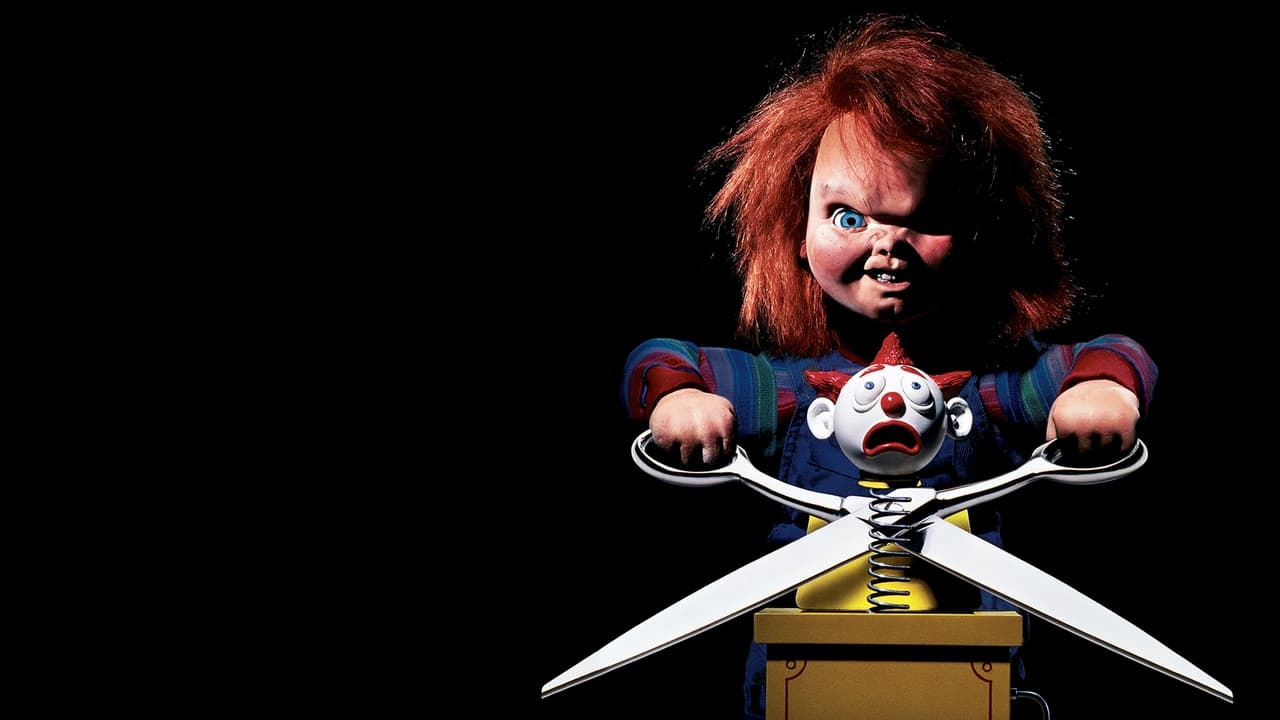

Child's Play 2
“Sorry Jack... Chucky's back!”
Chucky is reconstructed by a toy factory to dispel the negative publicity surrounding the doll, and tracks young Andy Barclay to a foster home where the chase begins again.
About Child's Play 2
Why Child's Play 2 is still worth talking about
You only have to set your brain to the film’s premise for a second before the dark joke lands: the people who made the killer toy decide the smart move is to put him back together. Play Pals’ attempt at corporate reassurance turns into the exact opposite — and that tidy, managerial hubris is the engine of the picture.
John Lafia directs the whole thing at a sprightly clip; it runs 84 minutes and wastes very little time. The central players are clear — Alex Vincent’s Andy Barclay is still the kid who won’t shut up about what he’s seen, Christine Elise is Kyle, the foster-teen who doesn’t have time for fairy tales, and Brad Dourif supplies the voice of the doll that just won’t accept its fate. Put like that it sounds like a simple slasher sequel, and it is. But in its best moments Child’s Play 2 pairs the cosy anxieties of family and home with the cold, corporate impulse to cover up and move on — and that tension gives the film a shape that’s worth revisiting.
The idea that sets Child's Play 2 in motion
At root, the film starts with a corporate decision: Play Pals wants to prove its product is safe. That tidy-idea logic — fix the image, fix the problem — is what pushes the story forward.
Meanwhile, Andy Barclay is eight and living in foster care. He’s not a mysterious loner; he’s a kid whose past means people don’t believe him. Into his orbit comes Kyle, a cynical, streetwise teenager the Simpsons also foster. Their chemistry — reluctance turning into a small, grudging trust — is the movie’s emotional ballast.
The horror arrives both absurd and domestic. Chucky slips back into circulation and starts making mischief that looks like a bad kid’s prank at first — the sort of thing that gets Andy punished at school — and then escalates. What begins as embarrassment for Andy becomes a full-scale threat that forces him and Kyle to stick together.
That compression — childhood, punishment, and the sudden leap to mortal danger — is why the setup works: the stakes feel urgent because they’re personal, and the route from family tension to genuine peril is kept very direct.
Why Andy Barclay matters
Andy Barclay is the tiny stubborn centre that holds the film together. Alex Vincent plays the role; the movie gives Andy a very particular problem: he’s the kid who told the truth and was punished for it, which leaves him isolated and understandably defensive.
That background — his mother institutionalised for supporting his story — matters because it makes Andy less of a scream-and-run protagonist and more of someone trying to be heard. The arc isn’t about becoming brave so much as being trusted, which is nicer and more specific than the usual slasher shorthand.
He also functions as the film’s family touchstone. A lot of the scares are framed around the attempt to make a house feel like a home again, and Andy’s presence gives those scenes a moral weight: this isn’t just about stopping a toy, it’s about protecting a fragile domestic life.
Finally, Andy’s relationship with Kyle is crucial. He’s the earnest, frequently overruled child; she’s the older foster who’s seen too much. Their slow, practical alliance is both believable and the smartest choice the movie makes for keeping the audience invested in what happens next.
Child's Play 2 has more on its mind than the plot suggests
On the surface it’s a slasher: a single antagonist causes chaos. But the film keeps returning to a handful of ideas — mortality, family and the influence of corporate power — and those repeats give the little picture a bigger bite.
Mortality and lifespan are played with in a literal way: something that should be harmless refuses to stay dead. That stubbornness turns the usual horror gag into a clumsy meditation on what happens when life is treated like a product.
Family and home are repeatedly put under pressure. Andy’s situation — a child shuffled through foster care and longing to be believed — means the movie’s scares often double as questions about trust and the safety of domestic spaces. And then there’s loss and the desire for freedom. The film keeps nudging at what people will do to cover hurt: families try to rebuild normality, corporations try to tidy reputations, and the characters try, clumsily and bravely, to take back control.
Child's Play 2 could not belong to any other decade
Released in 1990, the film sits at the cusp of a decade that liked to mix tones — horror with a wink, seriousness with a sillier streak. Child’s Play 2 is very much that hybrid: part straight-ahead slasher, part black comedy.
That mixture lets the movie be brisk and crowd-pleasing while still worrying at slightly larger anxieties: what corporations do to manage problems, and how families try to hold together when the rules change.
It’s short and sharp in a way that feels of its time. The pacing and willingness to move from domestic argument to gruesome set-piece without apology matches the era’s appetite for efficient, memorable genre movies.
So the film is of the 1990s both in tone and tempo: lean, a little brash, and not shy about pairing small human moments with louder, more sensational horror beats.
What has aged — and what hasn't
The things that still land are the human bits: the film’s focus on family and the fragility of home still feels immediate. When the story threatens a house and the people in it, the threat feels concrete rather than merely theatrical.
Andy and Kyle’s patchy alliance also holds up. There’s a simplicity to their bond — two practical kids forced into teamwork — that reads well today because it’s not dressed up as anything it isn’t.
Some of the horror’s smaller beats keep their bite, too. The idea of a doll slipping into a family space and pretending to be another toy is still undeniably creepy; it turns the ordinary — a child’s plaything — into something untrustworthy.
On the other hand, the film’s speed means there’s less room for nuance; everything accelerates from schoolyard humiliation to life-or-death consequences in quick succession. That pace is part of its charm, but it can make some emotional moments feel earned more by momentum than by deep build-up.
Why Child's Play 2 still matters
There are a handful of moments from the film that keep getting talked about because they’re neat, nasty and unmistakable. The corporate decision to put the doll back together (and the chaotic reanimation that follows) gives the film a grotesque, almost farcical set-up that sticks in the memory.
The movie also doubled down on giving Andy a life beyond being a scream-figure: he’s been in foster care since his mother supported his story, and the Simpsons’ uneasy attempt at parenting creates domestic tension that the horror then punctures.
Kyle’s presence matters to the film’s afterlife. A streetwise foster-teen who slowly becomes Andy’s ally, she gives the movie a practical, no-nonsense energy that balances the child’s frightened insistence. And then there are the set pieces — the doll doubling as another child’s toy, the escalation of killings that take the threat from the home to the factory, and the molten-plastic finale — all of which combine grim humour with outright gore in a way that sticks with you.
Does Child's Play 2 still hold up?
Yes — if you’re looking for a short, punchy horror that wears its intentions on its sleeve. John Lafia’s 84-minute follow-up doesn’t pretend to be anything lofty: it’s a brisk genre picture that doubles as a weird little family drama and a critique of corporate tidy-ups.
Andy’s plight — a child shuffled through foster care who can’t make adults believe him — keeps the film emotionally anchored, and Kyle’s arrival gives it a sparky, pragmatic counterpoint. That pair is why the film’s shocks matter; they’re not just set pieces, they threaten people trying to keep a house together.
If you want subtlety, this isn’t the film for you. But if you want pace, dark laughs and a handful of grotesque, memorable sequences — the doll pretending to be another toy, the factory finale — Child’s Play 2 still delivers.
So yes: watch it. It’s the sort of sequel that makes a toybox feel uncanny again, and it does it in under an hour and a half. Short, nasty, and oddly warm when it needs to be — the perfect late-night pick for anyone in the mood to be both amused and mildly horrified.