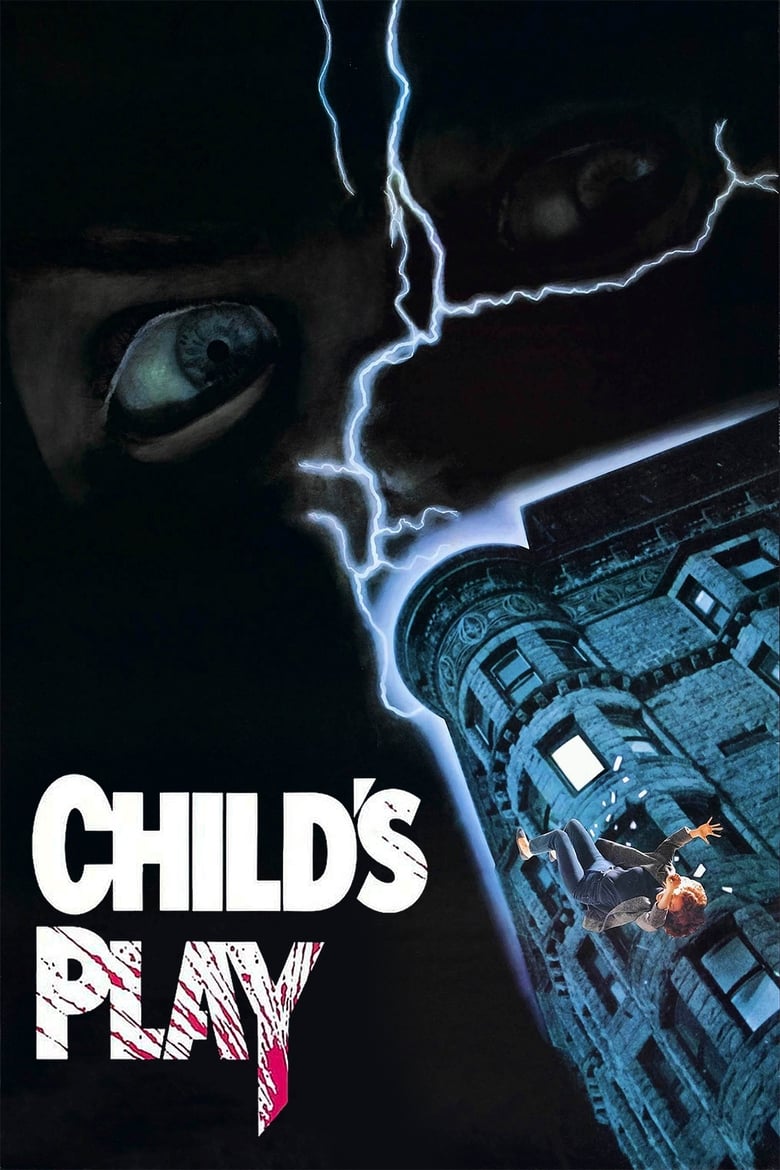
Child's Play
“You'll wish it was only make-believe.”
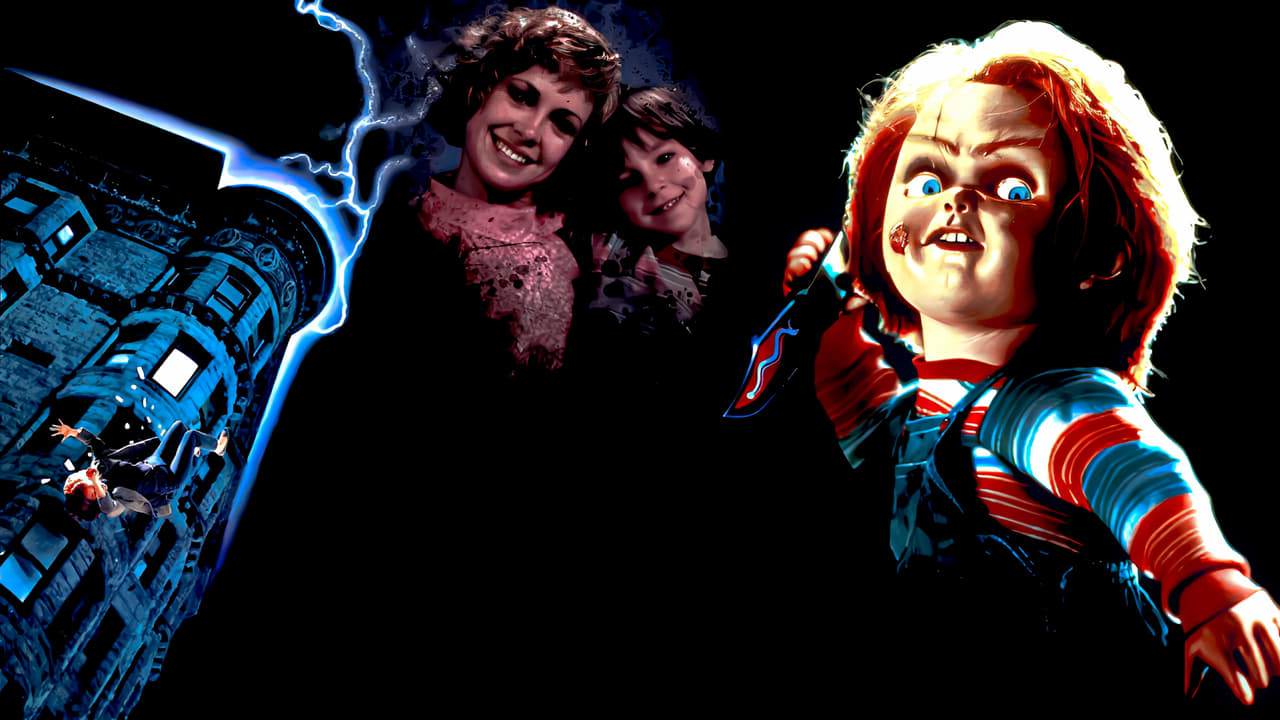
After being shot in a toy store, a serial killer transfers his soul into a Good Guy doll. A mother then gifts it to her six-year-old son Andy, which unleashes terror upon the city.
About Child's Play
Why Child's Play is still worth talking about
It opens like a crime thriller: a detective chasing a serial killer through the city and into a toy shop. That sequence hands the film a neat, ugly premise — this isn't a ghost story or a demonic possession in the abstract, it's a cop putting a violent man out of commission in a place built for children.
The violent man refuses to die quietly. While shot and dying he uses voodoo to move his soul into a Good Guy talking doll. A lightning strike and an explosion leave a small object where there should be a body, and the detective finds the corpse beside the toy. That single transfer — criminal life into manufactured childhood — is the motor that keeps the whole film moving. Tom Holland directs the lean, 83-minute picture released in 1988, and the cast puts the family at the centre: Catherine Hicks as Karen, Alex Vincent as her son Andy, Chris Sarandon as Detective Mike Norris, with Brad Dourif inhabiting the voice of Chucky. It’s short, sharp and never pretends to be anything other than a horror film with a clever central twist.
The idea that sets Child's Play in motion
The film trusts its hook and doesn't waste time dressing it up. A killer's soul ending up in a child's doll is a tidy escalation — suddenly the thing a small boy adores might be an actual murderer.
That tension becomes personal rather than abstract when Karen brings the doll home for Andy and he is instantly smitten. The home, which should be sanctuary, now contains an object that can move and speak without batteries and may be dangerous.
When the doll first moves violently and attacks, Karen tries to tell the detective, but she's not believed. Skepticism from the adult world turns the whole situation nastier: the child who knows the truth is left without allies.
So the setup works because the threat is both literal and intimate — a household item that refuses to stay harmless, and a family forced to argue about what is real before they can protect each other.
Why Chucky matters
Chucky matters because the film makes you treat a toy like a suspect. Brad Dourif provides the voice, but the character's power comes from what he does inside that doll: he moves, he lies, and he exacts revenge on people who crossed him.
He kills without ceremony — attacking a babysitter with a hammer and causing her to fall to her death — so the doll's smallness only makes the violence feel crueller. A child's companion turns into something that betrays both trust and expectation.
There are rules to his menace. When Chucky seeks out his old voodoo teacher he learns — and reveals to the audience — that the longer he stays in the doll the more 'human' he becomes, but he can escape only by taking over the first person he confessed his identity to: Andy. That tether ties the horror back to the family and to the boy specifically.
Because Chucky isn't merely a moving object or a vague evil force, he becomes a character with single-minded goals and a logic. That clarity is why the doll remains memorable: small, fixed, and personally dangerous to the people who care about Andy.
Child's Play has more on its mind than the plot suggests
On the surface it's a horror film and a whodunnit of a peculiar kind. Below that, it's a movie about family — about how adults try to protect a child and how children trust without reservation.
Freedom runs through the story as well: a criminal literally escapes death by slipping into something designed to be obedient and confined, then discovers a new kind of liberty inside the doll — but a liberty that grows complicated as 'human' traits creep in.
Mortality and lifespan are quietly present. A body that should die persists in a toy-form, which forces the film to ask, in its own blunt way, what it means to outlive your original body and whether manufactured life carries the same stakes. And fear is domestic here. The house and the people who inhabit it, the very places we expect safety, are where loss and danger happen. That concentrated setting keeps the film emotionally immediate; the threats feel like intrusions into everyday life, not distant nightmares.
Child's Play could not belong to any other decade
Child's Play arrived in 1988, at the tail end of a decade that loved mixing genres — slasher mechanics with psychological nastiness and a hint of mystery. The film sits squarely in that era's appetite for finding terror in ordinary things.
Being an '80s movie in this sense isn't about costumes or tunes; it's about a period taste for compact, high-concept premises. A cop, a killer and a toyshop make for a pitch that demands attention — the decade liked ideas you could explain at a party.
The year also matters because the film keeps its runtime brief and its idea tight. At 83 minutes it does what many 1980s horrors do: set up a striking conceit, push it hard, and bring it to a decisive, sometimes blunt end.
What has aged — and what hasn't
Several of the film's central worries still land. The idea of the family home being compromised — that a beloved object could turn dangerous — is a straightforward fear that survives time. When Karen returns to find the scene with Norris leading the investigation, the emotional stakes are immediate.
The way the doll behaves — moving and speaking without batteries — keeps a chill because it's simple and concrete. Modern viewers don't need complicated explanation to feel unsettled by a toy that behaves like a person.
Some sequences maintain shock precisely because they treat violence with bluntness: Chucky killing someone in revenge with a household-level effect, or scenes where Andy is forced to flee and is knocked unconscious. Those beats still read as ruthlessly efficient storytelling rather than indulgent set-pieces.
So what endures is the film's tight focus on home, fear and family. The premise still reads as invasive and personal, and that intimacy is what helps Child's Play play to a modern audience.
Why Child's Play still matters
There are images from the film that stick: a killer transferring himself into a child's doll, a mother realising the toy moves without batteries, and a small boy left looking back at the ruined remains of what's been his friend. Those moments anchor the movie in memory.
The moral knot — a criminal clinging to life inside a manufactured child companion — gives the story a memorable spine. It converts a marketable consumer object into something morally and physically dangerous, and that flip remains unnerving.
The film also keeps the family at its emotional core: Andy's captivation with the doll, Karen's desperate attempts to protect him and the police's scepticism all combine into something more resonant than a simple villain-chase. Finally, the movie's ending beats — which involve violent confrontations, a burned doll returning to menace the characters, and a final, decisive act to put an unnatural life to rest — give the whole thing a definitive, if grim, closure that people remember.
Does Child's Play still hold up?
Yes — but with a clear condition: if you come for clever premise and tight, domestic horror, Child's Play delivers. The core concept (a murderer transferring his soul into a Good Guy doll) is compact and unnerving, and the film uses its brief 83-minute runtime to keep tension taut.
The central relationship — a boy enchanted by a toy that may be a killer, and a mother trying to be believed — remains the film's emotional engine. Scenes where Karen discovers the doll moving and where Chucky attacks someone the family trusts are still effective because they hit low and close to home.
The finale gives the story finality: a burned Chucky returns, the stakes spike, and the characters are forced into direct action to stop the unnatural life. That decisive ending, capped by the image of a traumatised Andy looking back at the doll's remains, leaves an aftertaste that's hard to shake.
So yes: watch it. Child's Play still bites because its idea is narrow, mean and personal — a horror movie that knows where to aim its nastiness, and doesn't waste time missing its mark.