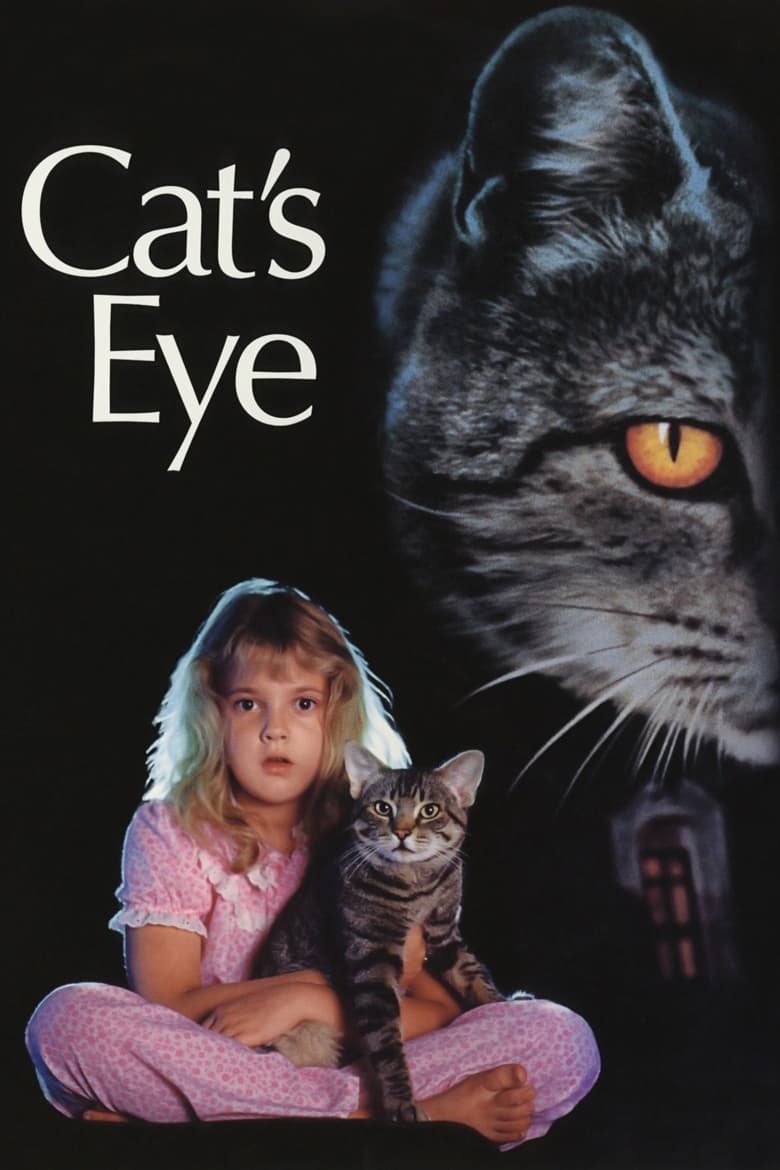
Cat's Eye
“Follow the newest cat-and-creature game as played through.”
Three short stories linked by a stray cat that roams from one tale to the next, in this creepy triptych that begins as Dick tries to quit smoking by any means necessary. Next, we meet Johnny, an adulterous man who's forced by his lover's husband onto a building's hazardous ledge. Finally, Amanda is threatened by an evil gnome who throws suspicion on the family cat.
About Cat's Eye
Why Cat's Eye still works
Think of Cat's Eye as a neighbourhood of short, sharp scares with a tabby as the connective tissue. The film opens with a stray tomcat hiding from a dog in a delivery truck that ends up in New York City — an unshowy setup that gives the movie a roaming, streetwise centre rather than a single protagonist.
Lewis Teague keeps things moving; at 94 minutes the film doesn’t linger. That economy helps because Cat's Eye is juggling tones — horror, thriller, even comedy — without letting any one mood overstay its welcome. And then there’s Amanda. Drew Barrymore’s character is the emotional anchor in the final strand, so the film’s journey feels less like a parade of gimmicks and more like a handful of threats circling the idea of family and the places we call safe.
The idea that sets Cat's Eye in motion
Cat's Eye doesn’t centre on one villain or one location. Instead, a wandering tomcat stumbles into a trio of human problems, and the film lets us watch how those problems react to an outside, animal presence.
One thread follows Dick Morrison, a man who finds himself enrolled in a terrifying programme to quit smoking — a programme that uses threats to loved ones as enforcement. You see the pressure build when, during a traffic jam, Dick succumbs to an old pack of cigarettes and is caught in a brutal demonstration of what’s at stake.
Another sequence puts the cat into the orbit of a gambling crime boss, after a road incident leaves the animal on Cressner’s turf. That situation spirals into a wager and a grotesque pay-off, showing the film can be as acutely tense as it is unsettling.
All of these strands are tied together by the cat’s journey; its arrival, departures and occasional interventions give the anthology a surprisingly coherent through-line.
Why Amanda matters
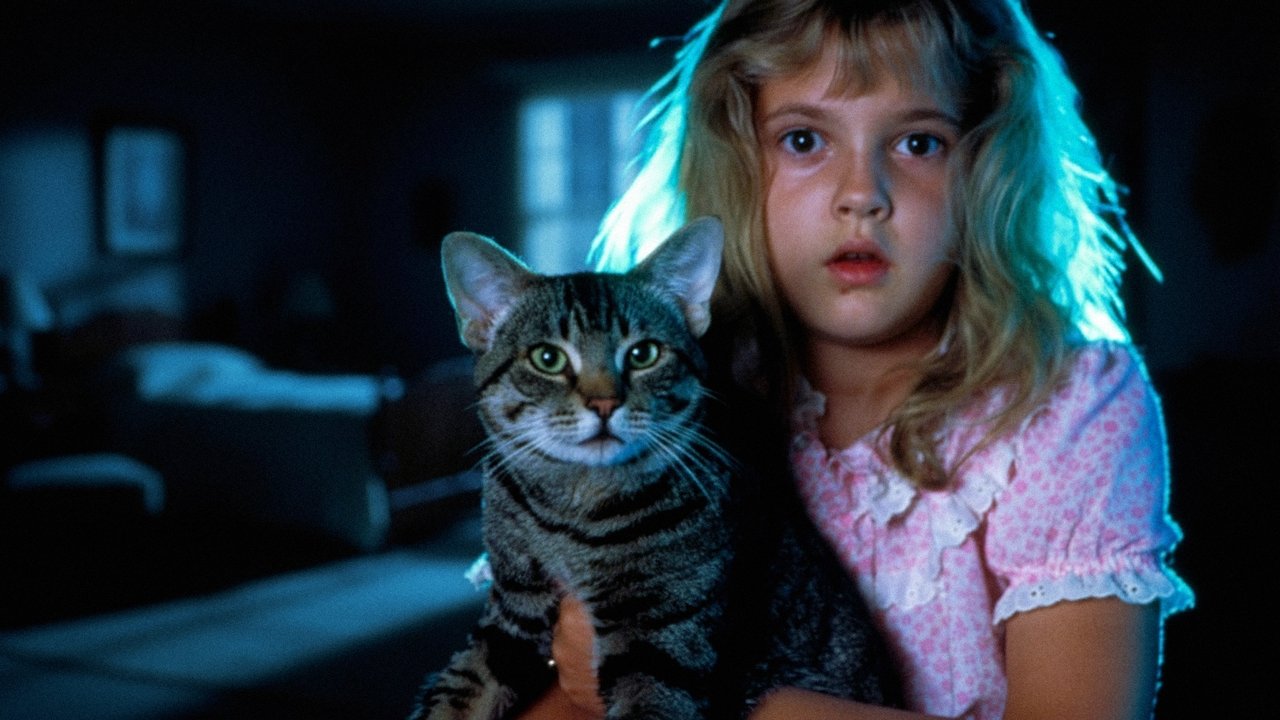
Amanda is the film’s soft centre. Played by Drew Barrymore, she’s the child who initially appears on the cat’s horizon as a disembodied plea for help and later becomes his adopter in Wilmington, North Carolina.
Her household is where Cat's Eye turns from spectacle into something domestic and intimate. Amanda’s mother dislikes cats and, despite Amanda’s protests, sends the tomcat outside — a small domestic quarrel that leaves the film vulnerable to a far nastier intrusion.
That intrusion is a tiny, malevolent troll who kills Amanda’s pet bird Polly and attempts to steal the girl’s breath. The threat is weirdly intimate: it invades a bedroom, wedges a door shut and targets the private space of a child at night.
Amanda matters because she gives the cat a reason to be heroic in a way the earlier urban episodes don’t: her danger makes the film care about home, family and protection in the smallest, scariest way.
Cat's Eye has more on its mind than the plot suggests
At face value Cat's Eye is a collection of horror vignettes. Under the skin it keeps circling the same worries: family, fear, and the idea that home is not always safe.
The Quitters, Inc. thread makes parental protection literal — the film stages the worst-case scenarios a family could imagine to force compliance. That business about threats being hidden from a spouse shows how secrecy and authority can sit inside domestic life like a slow poison.
The movie’s predators aren’t always other people. The troll attacks the private, intimate act of sleep; the casino sequence menaces dignity and security. Together they make a small argument: danger often arrives where you feel least defended. And because those threats are aimed at family — rather than anonymous crowds — the film’s scares land on the part of you that worries about the people you’d choose to protect first.
Cat's Eye could not belong to any other decade
Released in 1985, Cat's Eye wears its decade in the way it mixes tones and paces itself — brisk, eager and a little bit reckless. The film combines horror, thriller, adventure, mystery and comedy in a single short feature, which feels very much of the mid‑eighties appetite for genre blending.
That era loved idea-driven premises and high-concept hooks; here the high-concept is simple and odd: what if a roaming tomcat threaded together three different threats? The result is an 80s-friendly experiment in storytelling economy.
Being from 1985 also helps the film feel compact: it doesn’t dawdle. At under an hour and a half it moves from one scenario to the next with the sort of confidence you expect from that moment in the decade when genre films were happy to try anything.
What has aged — and what hasn't
What still clicks is the film’s fixation on home and the idea that ordinary places can be invaded. Those strands — family, fear, home — are timeless, and Cat's Eye uses them economically, which makes much of the film still work in a single sitting.
The tomcat as a through-line is also a neat choice that survives repeated viewings: the animal’s fretful persistence gives the anthology emotional continuity rather than a contrived framing device.
Some of the film’s harsher elements — the stakes Quitters, Inc. lays out and the way threats are hidden from loved ones — land differently for modern viewers, who might find the premise of brutal, punitive enforcement a little uncomfortable. But because those dangers are framed around family safety, they remain narratively potent.
And the Cressner episode — the pet ending up on a crime boss’s doorstep after a road incident — still reads as an absurd, slightly grotesque detour that the movie gets away with because it never forgets what it’s really about: protecting the vulnerable.
Why Cat's Eye still matters
People remember Cat's Eye because it strings together memorable, oddball set-pieces around a very simple centre: a stray tomcat. That stray starts the film and moves through the city, turning up in an alarmingly violent quit-smoking clinic, in a casino boss’s penthouse and finally in front of a little girl who needs a friend.
The Quitters, Inc. sequence is unsettling because the clinic supervisor outlines consequences that are not abstract — he demonstrates them on an animal, and the threat hangs over Dick Morrison’s family life. It’s the kind of moral squeeze that sticks with you.
Then there’s the Atlantic City detour: a road incident lands the cat with Cressner, a gambler who wagers on anything, and that escalation into blackmail and a perilous ledge sequence gives the film a grotesque, pulp energy. Finally, the film’s tenderness is revealed in Wilmington, where the tomcat becomes General and defends Amanda from a tiny, vicious troll. That moment — small, domestic and violent all at once — is why the movie remains a curious, fond memory for many who grew up with it.
Does Cat's Eye still hold up?
Yes — but with a small asterisk. Cat's Eye is 94 minutes of economical, sometimes knuckle-tight storytelling from Lewis Teague that mixes horror, thriller and odd comedy around a deceptively sturdy through-line: a stray tomcat with a nose for danger.
If you respond to horror where the stakes are domestic — secrets, family safety, the terror of something small getting inside your house — the Amanda strand alone makes the trip worthwhile. The Quitters, Inc. material and the Cressner sequence provide grimmer flourishes that balance the final act’s comfort.
A modern viewer might wince at some of the harsher ideas on display, but the film’s focus on family and protection still provides emotional purchase. Plus, the structural cheek of letting a cat move the story between tones keeps it refreshing.
So yes: watch Cat's Eye if you’re in the mood for a compact, slightly peculiar thriller anthology that remembers to care about the people (and the cat) it’s putting in peril. It’s a reminder that sometimes the smallest protector makes the loudest statement.