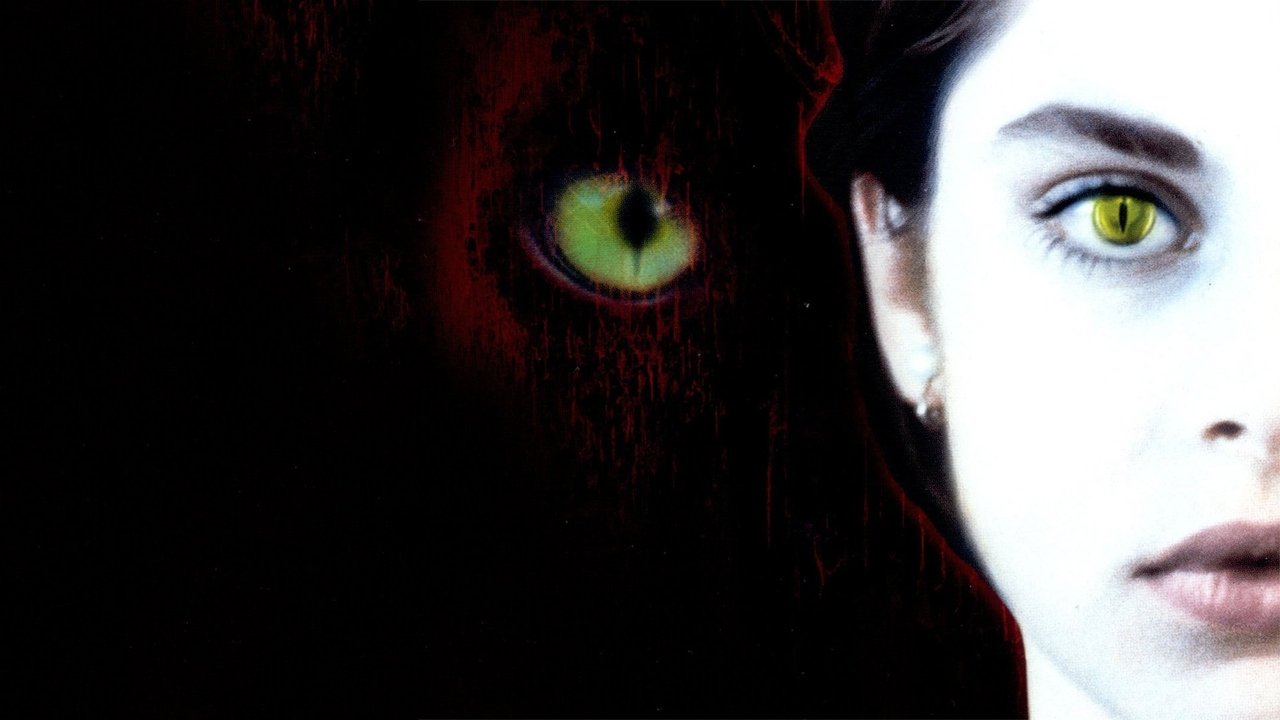
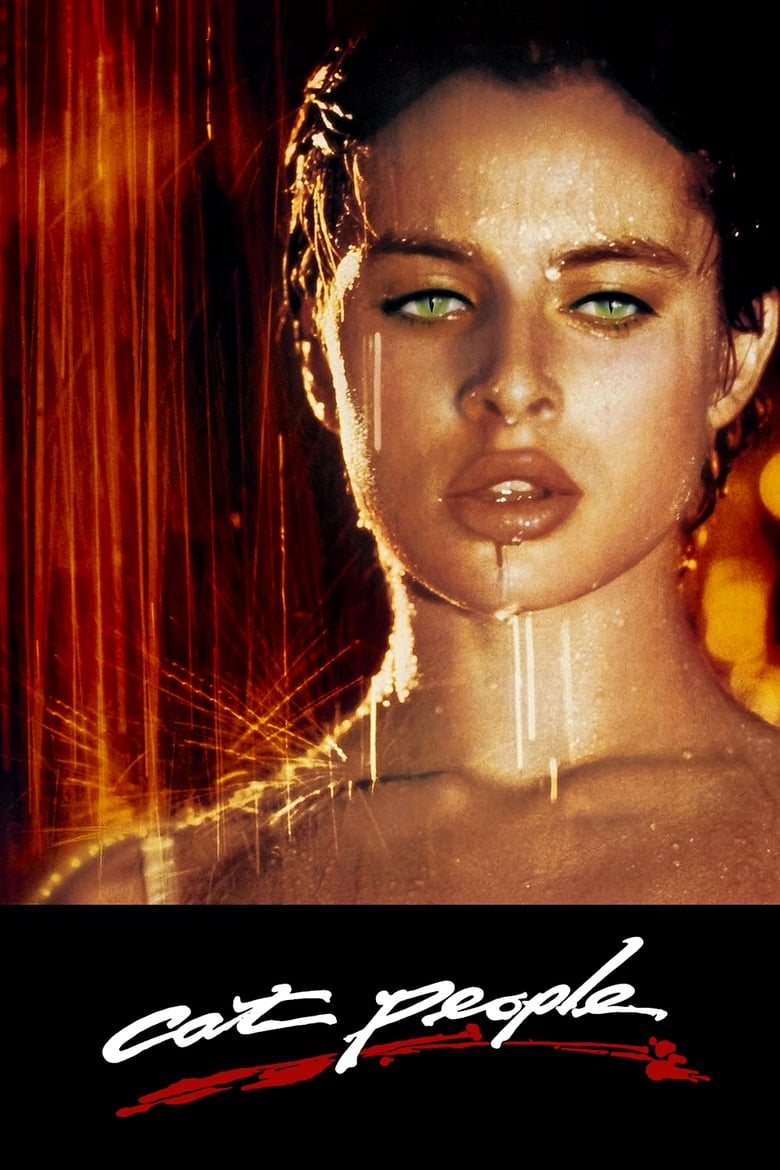
Cat People
“They are something more than lovers who are about to become something less than human.”
After years of separation, Irena Gallier and her minister brother, Paul, reunite in New Orleans. When zoologists capture a wild panther, Irena is drawn to the cat – and zoo curator Oliver to her. Soon, Paul will have to reveal the family secret: that when sexually aroused, they revert into predatory jungle cats.
About Cat People
Why Cat People still stands out
It starts with a ritual and a panther. A girl bound to a tree; a big cat stepping up and putting its paws on her. It’s a simple, arresting image that refuses to be decorative.
That opening sets the tone for Paul Schrader’s 1982 Cat People — a 118-minute horror that never quite settles for straightforward monster business. Instead it uses the supernatural as a way to look at people who don’t fit, and the mess that makes when desire, family and fear collide. At the centre of all this is Irena Gallier, played by Nastassja Kinski — a woman with a past, shipped from Canada to New Orleans to find the brother she’s been separated from. The film’s heart is not just the panther; it’s the human trouble the beast both hides and exposes.
The idea that sets Cat People in motion
The film gives us a clear, economical hook: Irena arrives in New Orleans to reconnect with her brother Paul, carrying a childhood no one wanted to talk about. That displacement — the orphan with a secret — is the story’s engine.
She’s drawn to a newly captured panther at the local zoo and lingers after closing time. That curiosity is small and human, and it’s what pulls her into a world where the lines between human and animal start to blur.
Meanwhile, a complex web forms around her: rivalries, protectors, and the awkward danger of a woman whose sexuality is treated as both threat and mystery. Alice, for example, knows she’s competing for Oliver’s attention and immediately sizes Irena up.
All of these set-pieces — the orphaned newcomer, the animal that won’t quite behave, the jealous lover — give the film a compact premise that lends itself to slow, mounting unease rather than sudden shocks.
Why Irena Gallier matters
Irena is the film’s quiet centre. She’s the outsider who arrives from Canada to New Orleans looking for family — and finds instead a set of expectations she can’t quite meet.
Being orphaned and raised in foster care gives her a kind of fragile freedom: she’s unmoored, but also not entirely free. That tension — wanting connection while fearing its costs — propels her choices.
Her presence matters because the movie isn’t interested in the panther as spectacle so much as how the idea of the panther warps the people around her. Irena is the reason love turns complicated, and why protection becomes control.
And when those complications resolve, it’s her absence from ordinary life that leaves the deepest impression: the story keeps circling back to what she loses and what others lose because of her.
Cat People has more on its mind than the plot suggests
On its surface Cat People is monster cinema with a sexual edge. Underneath, it’s a film about wanting and the fear that wanting will destroy you or the people you love. Love, loss and the awkward, sometimes ugly authority of others are constantly in play.
The film treats intimacy as a risk. Irena’s confession of virginity to Alice — itself a strangely exposed moment — feeds directly into the anxieties surrounding her relationships. Sexuality here isn’t just eroticism; it’s a trigger that exposes rivalry, shame and desire.
There’s also a persistent sense of contested humanity. Characters try to contain, label or cure what they don’t understand: authority takes the form of religion, the police, even the zoo staff who decide what is dangerous. That impulse to control only amplifies the tragedy. Ultimately, the film keeps tugging between home and freedom. Irena wants belonging, but the very things that could offer safety threaten to take away her freedom — and that contradiction gives the story its mournful, unsettling charge.
Cat People could not belong to any other decade
Cat People landed in 1982, and that timing matters. It’s an early‑80s picture that sits at the intersection of genres — horror, erotic thriller, monster movie and drama — a mix the decade liked to toy with.
The film’s appetite for blending mood, sexuality and genre melodrama feels very much of that moment: not a throwback and not quite contemporary either. It occupies a specific cool spot in the era’s batch of films that were willing to be uncomfortable.
Put simply: the film isn’t an accidental period piece. Its confidence in marrying psychological unease with genre beats feels rooted in the early 1980s’ appetite for riskier R-rated storytelling.
What has aged — and what hasn't
The film’s core situation — Irena arriving from Canada to reconnect with Paul in New Orleans — still reads as quietly unsettling. The dislocation and the sense that she doesn’t belong are timeless feelings.
Themes such as fear, home and safety remain understandable. The movie mines those emotions directly: it’s not trying to be clever about them, which helps certain scenes still land for a modern viewer.
Where it can jar is in the handling of intimacy and gendered danger. The idea that Irena must shelter from physical intimacy or be punished by fate is narrative shorthand that feels blunt now. Seeing a character’s sexuality continually treated as peril can be uncomfortable in ways the film doesn’t always interrogate.
And the aftermath — the men left circling in unfulfilled relationships — keeps the story feeling melancholy rather than triumphant. That particular sorrow still works today; some of the film’s attitudes toward vulnerability feel more dated.
Why Cat People still matters
People remember Cat People because it mixes mythic moments with intimate, uncomfortable human drama. The film opens with ritual and big cats; that image — the panther that calmly rests its paws on a bound girl — stays lodged in the memory.
What cements the movie in the mind are its set-pieces: the woman at the zoo who won’t leave the panther’s side; the grisly suggestion of a panther’s victims reduced to puddles of flesh; the discovery of a basement full of shackles and bones. Those moments are blunt, weird and difficult to forget.
At the same time the film is about small, human rivalries: Alice’s jealousy of Irena, Oliver’s choices, and the way authority figures try to make sense of the monstrous. That mixture — myth and domestic mess — makes the movie linger more than a straightforward creature feature would. Finally, the moral mess of the story — the werecat heritage, the terrible bargains demanded by mating, and the final image of Irena trapped as a panther behind bars — gives the film an emotional aftertaste. It’s ugly and mournful, and that combination is exactly why viewers who grew up with it still bring it up.
Does Cat People still hold up?
Yes — but with an asterisk. Cat People remains worth watching for viewers who want their horror mixed up with melancholia and odd moral knots. It’s not a comfort watch; it’s the kind of film that leaves you unsettled in a specific way.
Nastassja Kinski’s Irena arrives in New Orleans carrying an orphaned past and a strange destiny, and the film consistently puts human relationship problems at the front of its monstrous business. That focus on messy people over pure spectacle is the movie’s strength.
That said, some of the film’s attitudes toward intimacy and the penalties it applies to female desire feel blunt today. The story treats sexuality as danger in ways that modern viewers may find heavy-handed. But the trade-off is a rare kind of emotional cruelty that lingers, for better or worse.
If you’re curious about an early‑80s horror that prefers sorrow and awkwardness to jump scares, Cat People is still worth your time. It’s a film where the panther is never merely a monster — it’s a mirror, and sometimes mirrors are the least comfortable things in the room.