
Carrie
“If you've got a taste for terror...Take Carrie to the prom!”
Withdrawn and sensitive teenager Carrie White faces bullying from her classmates and abuse from her fanatically pious mother. When she begins to suspect that she has supernatural powers, things take a dark and violent turn.
About Carrie
Why Carrie still works
Carrie is, at heart, a film about being small and seen at the same time. Sissy Spacek’s sixteen-year-old Carrie White exists in that awkward, exposed half-place where you’re painfully visible to your peers and completely invisible to the adults who ought to protect you.
Brian De Palma keeps the story lean — the movie runs for just 98 minutes — and refuses to separate its teen-trouble elements from its horror. That means the gym-class panic, the cruel prank at the prom and the slow unravelling at home all sit beside one another without apology. You end up watching a coming-of-age and a catastrophe in the same breath. And yes, there’s a cluster of memorable players around her: John Travolta as the delinquent boyfriend Billy Nolan, William Katt as the decent-sounding Tommy Ross, Nancy Allen as Chris Hargensen and Piper Laurie as Carrie’s fanatical mother. They’re the people who push and pull at Carrie until the situation bursts — or burns.
The idea that sets Carrie in motion
The engine of the story is a simple, terrible humiliation. Carrie experiences her first period after gym and, because no one has taught her what’s happening, she panics. What starts as private confusion becomes public cruelty when classmates mock her in the showers.
The gym incident isn’t a throwaway: it’s the detonator. A few of the girls double down on cruelty. Chris Hargensen and her boyfriend, Billy Nolan, plan something deliberate and grotesque — they sluice animal blood into a bucket and position it above the school's stage so humiliation will be spectacular and total.
Running alongside the bullying is Carrie’s discovery that she can move things with her mind. She pieces that ability together by reading and experimenting; it’s not a monster arriving from nowhere, but something that grows from her own fear and anger.
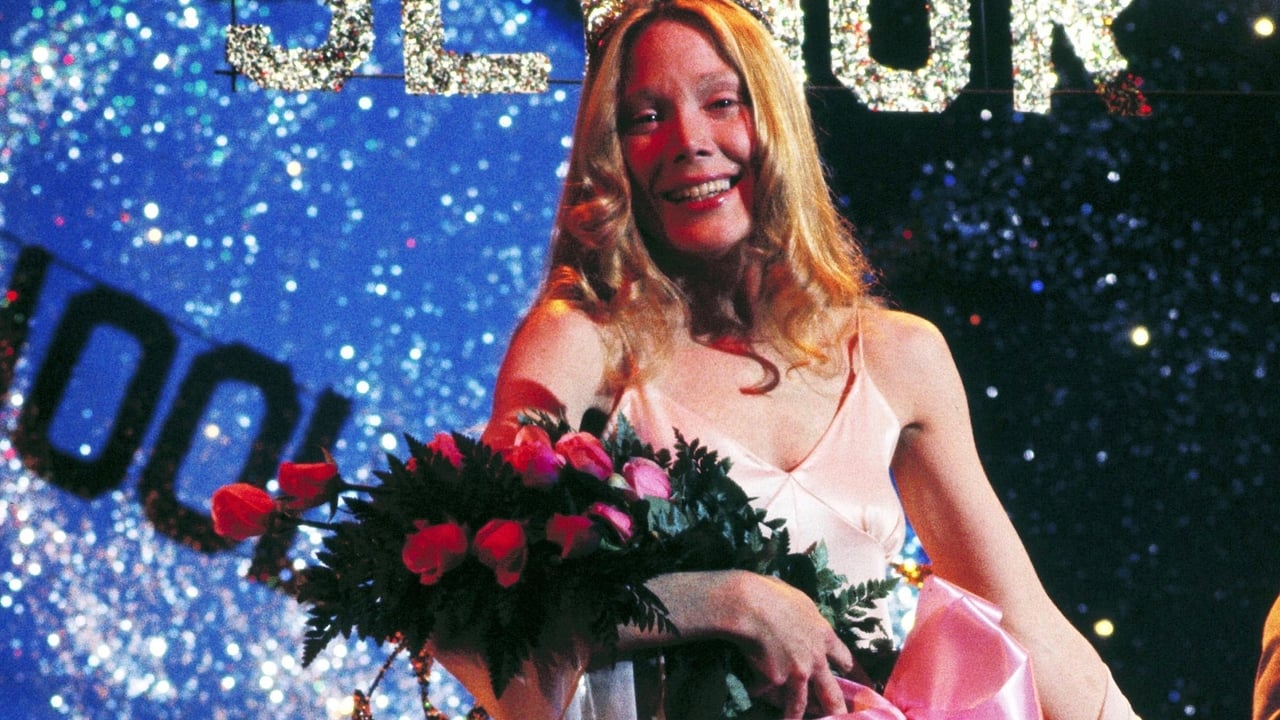
When the prank takes place at prom — the evening that should have been an attempt at acceptance — the setup’s traumas collide. Miss Collins misreads Sue’s attempt to help as part of a plot and ejects her, leaving Carrie exposed at the worst possible moment.
Why Billy Nolan matters
John Travolta is credited as Billy Nolan — and the character matters because he’s the sort of adolescent who treats cruelty like a social tool. He isn’t merely present at the scene; he helps plan the tangible horror that tips the film from humiliation into catastrophe.
Billy is part of the deliberate attempt to make Carrie’s humiliation theatrical. The pig-blood idea — breaking into a farm, slaughtering animals and rigging the school stage — is a committed act of malice. It’s cruelty taken off the cuff and made ornate.
He’s also complicit in the prom moment itself: Chris and Billy hide under the stage while other students rig the ballots so Carrie will be crowned. That mixture of plotting and seats-back amusement — they make it an event — tells us why Billy matters. He’s not an accident; he’s choreography for cruelty.
Finally, the character’s presence helps expose what the movie cares about: family and the failures of the people who should keep kids safe. Billy’s role is a reminder that the most dangerous acts in the film are social ones — the ones that let a group make a private person public and vulnerable.
Carrie has more on its mind than the plot suggests
On the surface Carrie is a horror about telekinesis and a prom prank gone wrong. Underneath it’s a film obsessed with family — and how family can be a place of punishment rather than sanctuary.
Closely related is the idea of home and safety. The film keeps returning to places that are meant to protect Carrie — school, home, the prom — and quietly shows how inadequate those protections are. That contrast makes the horror feel less fantastical and more like a consequence of negligence and fanaticism.
Authority is another current running through the film. Teachers, parents and peers all exercise power over Carrie in different ways, often misunderstanding or misreading her. The punishments and restrictions she faces are less about discipline and more about control. Lastly, there is a shadow of mortality and lifespan: the way the movie speeds from a girl’s first, bewildering steps into adulthood to a moment when that growth destroys everything around her. It’s a compact tragedy disguised as a supernatural event.
Carrie could not belong to any other decade
Carrie was released in 1976 and wears that year on its sleeve in the way it mixes genres. The movie doesn’t decide to be just a teen drama or just a horror — it happily sits between those boxes in a way that feels very of its moment.
There’s a bluntness to the storytelling that suits the mid-70s: compressed runtimes, moral blunt-force choices and an appetite for collapsing private discomfort into public spectacle. The film’s willingness to take adolescent embarrassment and push it to an almost mythic extreme fits the era’s appetite for bold, sometimes ruthless filmmaking.
In short, the film reads like a 1970s picture because it refuses to compromise between melodrama and menace. It treats teenage life as material for serious cinematic stakes, not just a comic subplot.
That decisiveness — a refusal to be cosy about its subject — is part of why the film belongs to its decade rather than borrowing the shape of another era.
What has aged — and what hasn't
The parts of Carrie that still hit are its central emotional mechanics: a teenager humiliated for something intimate, an unforgiving home, and the escalation when nobody steps in properly. The film treats bullying as consequential, not merely mean-spirited background, and that emphasis still reads sharply.
Certain moments of domestic confession haven’t softened either. The reveal about Carrie's conception — and the way her mother’s guilt, shame and fanaticism operate — keeps the sense of the home as a hazardous place intact. It’s intimate horror, and intimacy rarely dates as quickly as fashions do.
On the other hand, the film’s status as a teen picture sometimes means some emotional shorthand is used: the prom functions as a mythic rite, and a single prank is exaggerated into an entire town’s undoing. Modern viewers accustomed to different tones in teen cinema may find that compression blunt.
Finally, the sequence where someone tries to run Carrie down as she walks home underlines a central truth: the film’s violence is social as much as physical. That notion — that social cruelty can become lethal — hasn't lost its teeth.
Why Carrie still matters
People come back to Carrie because its set pieces keep looping: the locker-room panic, the tampons and ridicule, the prom coronation that turns catastrophic. Those moments are simple and savage, easy to describe but hard to forget.
The film also matters because it ties supernatural ability directly to social experience. Carrie’s telekinesis is not an abstract power; it grows out of repeated humiliation and fear. That makes the film feel less like a ghost story and more like an amplified social parable.
Character choices fuel that aftertaste. Sue’s attempt to make amends by arranging Carrie’s prom invitation, Chris and Billy’s calculated cruelty and the chain of misunderstandings among teachers and parents — all of that keeps the tragedy firmly social rather than simply supernatural. And finally, the movie’s last images — the school burning, the town’s sudden calculus of who survives and who does not, and the nightmare ending with a hand reaching from the rubble — give the film a kind of stubborn, unsettling finality. It’s the sort of ending that leaves a question rather than a neat lesson.
Does Carrie still hold up?
If you’re wondering whether Carrie is worth a watch now the answer is: yes — but for particular reasons. It’s compact (98 minutes), decisive and uninterested in pulling punches. That means the film still packs a concentrated shock in the way it links teenage shame to catastrophic consequences.
It’s not a comfortable watch. The initial humiliation in the showers — a scene about ignorance and mockery — and the later, staged humiliation at the prom remain hard to look at. The presence of characters who orchestrate that cruelty, such as Billy Nolan, keeps the film tethered to human nastiness rather than leaning solely on supernatural spectacle.
At the same time the family angle, especially Carrie’s relationship with her mother and the home as a place of danger, keeps the film emotionally present. The movie uses horror to ask what happens when the places that should shelter you instead punish you.
So yes: watch it. Not as a piece of nostalgia, but as a spare, often ruthless little fable — a film that reminds you how quickly ordinary cruelty can become extraordinary violence, and how small, private humiliations can change everything.