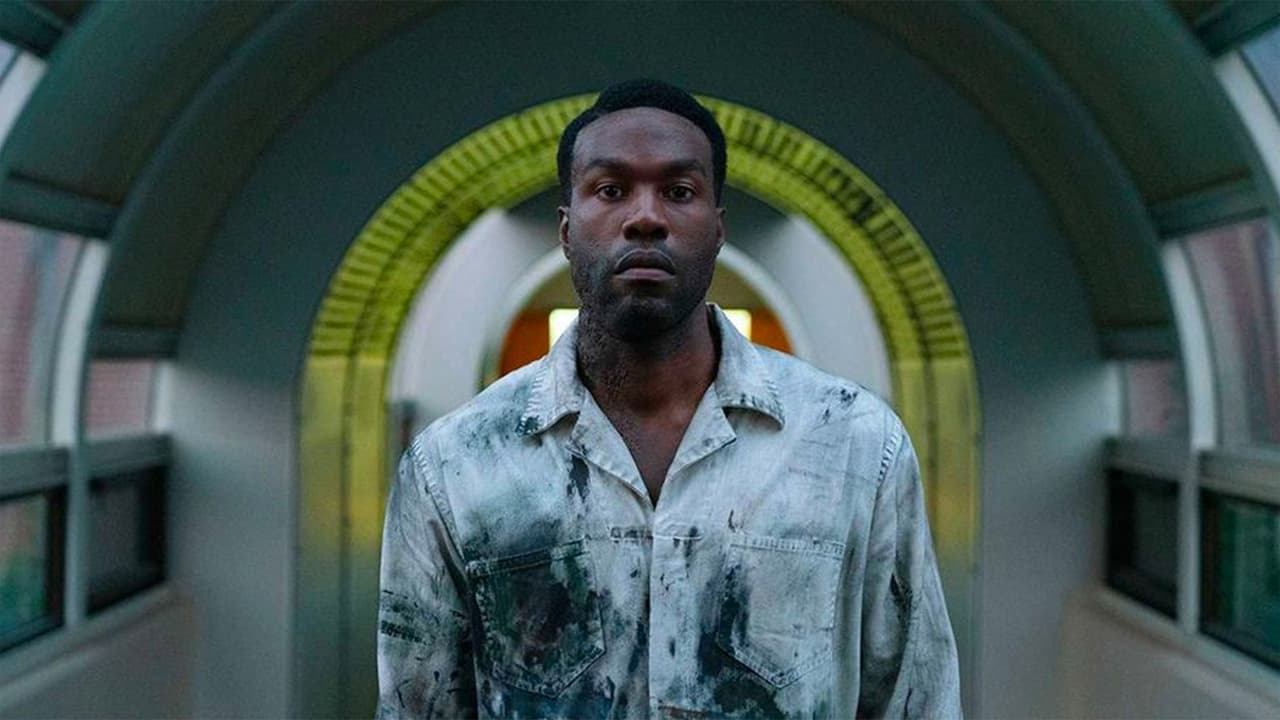

Candyman
“Dare to say his name.”
A Chicago artist's sanity starts to unravel, unleashing a terrifying wave of violence when he begins to explore the macabre history of the Candyman.
About Candyman
What Candyman gets right
Right away, Candyman reminds you it’s not a playground ghost story. It reaches back to Cabrini–Green in the late 1970s, where the brutal death of Sherman Fields — a homeless man with a hook — sets the terrible origin for the legend that still rattles the neighbourhood decades later.
Nia DaCosta directs, and the film moves briskly: at just 91 minutes it keeps its eye on the central pulse rather than going off on too many tangents. The story centres on Anthony McCoy, an artist whose search for inspiration drags the past into the present and forces questions about who owns a story. This is horror that likes company. It’s a slasher and a supernatural thriller, yes, but it’s also a film about family, loss and mortality — about the authority of memory and the weird, fierce ways people protect those they love. Those ideas give the scares a bit more bite.
The idea that sets Candyman in motion
The engine of the film is simple: an artist looking for material finds the wrong thing. Anthony hears the old Helen Lyle story, goes into the projects and begins to tinker with an idea that has very ugly roots.
A chance sting — literally, a bee bite — introduces him to William Burke, the laundromat man who actually saw Sherman killed. William hands Anthony the spine of the legend: say the name five times to a mirror and you call something terrible back.
That unpleasant ritual isn’t just an urban legend here; it’s a device that drags different generations into the same conversation. Teenagers who joke in a school bathroom turn that dare into real blood, and Anthony’s curiosity opens a line between past violence and present life.
Against that, there’s a quieter, nastier revelation: Anthony isn’t simply an outsider studying the myth. His search forces him into family history he didn’t know he had, and the story stops being an academic exercise and starts costing people their lives.
Why Anthony McCoy matters
Anthony isn’t just the hero — he’s the reluctant antenna for other people’s pain. He’s introduced as a working artist in Chicago in 2019, living with Brianna, who runs a gallery. That setup makes his obsession feel personal rather than academic.
He goes into the projects searching for material and meets William, who connects him to a history Anthony didn’t know he belonged to. The discovery that he was born near Cabrini–Green and that his family hid parts of that past reframes his curiosity as a kind of inheritance.
Anthony’s art becomes a conduit for names and faces that have been erased or ignored. Those paintings are not just gothic props; they’re shorthand for memory — and what happens when memory is weaponised or withheld.
All of which matters because the film treats family as the thing that both protects and entraps. Anthony’s story isn’t only about a curse; it’s about what happens when the people closest to you keep quiet to survive.
Candyman has more on its mind than the plot suggests
Beneath the knives and the mirror ritual, this is a film that keeps returning to family — not just who you’re related to, but who you protect and how. The secrecy around Anthony’s origins drives a lot of the pain.
Mortality sits beside that. The movie fiddles with lifespan: some deaths are final, others are recycled into myth and used again. It’s interested in how communities pass hurt from one generation to the next.
Loss is constant. People lose bodies, homes, dignity and, crucially, truth. Authority — whether police, neighbourhood consensus or art-world gatekeepers — shows up as part of the machinery that decides who’s believed and who’s discarded. And threaded through all of this is belief itself. The supernatural element isn’t only jump-scare fuel; it’s the physical outcome of a community’s refusal to name its violence and failures.
Candyman could not belong to any other decade
Coming out in 2021, this Candyman wears the moment like a glove. It’s a movie that wants to have conversations about ownership — of land, of art, of stories — and those were very much the conversations people were having in the early 2020s.
It’s also a film that refuses to treat its central legend as mere nostalgia. By reconnecting 1970s violence to present-day questions about gentrification and memory, it places old horrors into the context of contemporary debates.
So while the film uses a classic horror setup, its appetite is modern: it wants to debate as it frightens. That combination is part of why the 2021 timing feels like more than a release date — it’s the right moment for this version of the tale.
What has aged — and what hasn't
The parts that still land are the ones that don’t rely on cheap novelty. The film’s link to Cabrini–Green and the murder of Sherman Fields gives it a weighty, uncomfortable history that still hits — the origin point feels sturdier than a throwaway urban-legend setup.
The family elements also retain punch. Anthony’s discovery about his origins and the way his mother’s secrecy reframes everything is the kind of emotional pivot that survives repeated viewings.
Some sequences — like the teenagers who summon the Candyman in a toilet cubicle and the fallout from that — are built on basics of horror that remain effective because the stakes are immediate and personal.
Overall, what ages best is the way the story ties personal grief to collective memory. That connection keeps the film from being just another haunted-house exercise.
Why Candyman still matters
Candyman stubbornly keeps the old story in play while asking who gets to retell it. That tension—between a community’s buried truth and an artist who digs it up—gives the film something to say beyond scares.
The movie leans on history: Sherman’s killing and the lie that followed are the sort of ugly local facts that stick with you. Anthony’s paintings and the notion of a growing hive of wronged men being named in turn give the film a grim ritual logic.
William’s plan to resurrect that hive as retaliation against gentrification makes the myth feel active rather than passive. The legend isn’t merely haunting the city; people are using it as a tool, for protection, for vengeance, for attention. Finally, the film’s credits underline that the story is meant to spread: the end sequence assembles a lineage of names and faces, a reminder that the horror here is communal and cumulative, not isolated.
Does Candyman still hold up?
Yes. This Candyman is worth your time. It’s compact, purposeful and unafraid to make its scares serve a conversation about family, memory and the things a community refuses to name.
Nia DaCosta’s 2021 take keeps the classic idea — say the name, and something answers — but it pairs that ritual with a modern anxiety: who inherits the costs of past violence? Anthony’s investigation, his ties to Cabrini–Green and the revelations about his mother turn a horror trope into something more complicated.
If you want a remake that’s mostly spectacle, this isn’t it. If you want a tight horror film that makes you think while occasionally making you flinch, then it’s exactly the sort of film that plays well now.
Watch it because it remembers the past without being trapped by it — and because it insists, bluntly, that names and stories matter in ways we often pretend they don’t.
Explore the Horror
The Candyman franchise centres on the terrifying urban legend of a supernatural killer summoned by speaking his name into a mirror. Beginning with the acclaimed 1992 film, the series explores folklore, trauma, violence and the legacy of the Candyman legend across generations.
EXPLORE FRANCHISE →