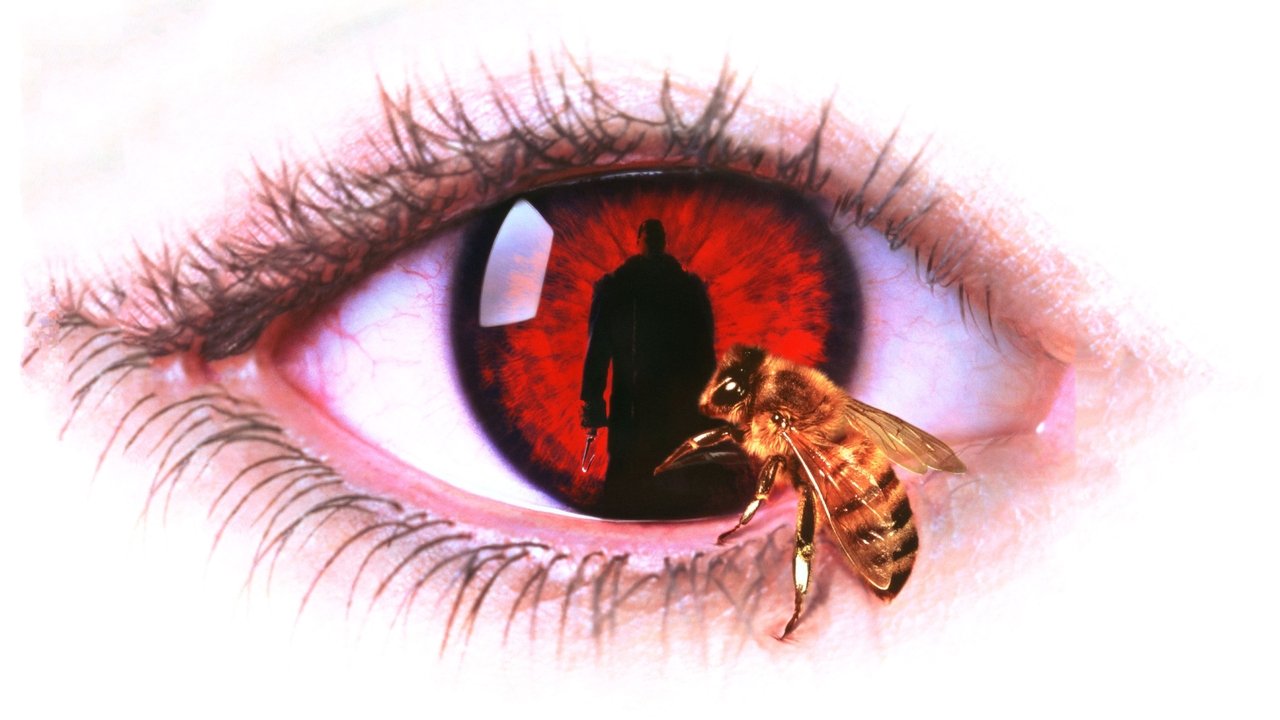

Candyman
“We dare you to say his name five times.”
The Candyman, a murderous soul with a hook for a hand, is accidentally summoned to reality by a skeptic grad student researching the monster's myth.
About Candyman
What Candyman gets right
The easiest way to recognise Candyman is the rule everyone remembers: speak his name five times in front of a mirror and something terrible answers. That central dare gives Bernard Rose’s 1992 film a neat, terrifying engine — it turns curiosity into risk and folk-belief into a weapon.
The film follows Helen Lyle, an anthropology graduate student at the University of Illinois Chicago, who arrives at the story as a researcher rather than a scream queen. Her academic approach gives the movie permission to ask awkward questions about how legends circulate and why they stick. It helps that the cast knows what story they’re in. Virginia Madsen plays Helen opposite Tony Todd as Candyman, and the film uses its compact 99-minute runtime to fold urban legend, murder at Cabrini–Green and personal stakes into one focused thriller about family, protection and loss.
The idea that sets Candyman in motion
The film’s spark is straightforward: Helen is studying urban myths and ends up investigating a string of murders locals blame on a figure called Candyman. That investigative frame keeps the plot moving without getting bogged down in endless exposition.
One of the human stakes Helen encounters is Anne‑Marie McCoy, a single mother with an infant called Anthony — the child who makes the legend suddenly feel very close and very urgent.
We also learn the violent origin story behind the name: the man who became Candyman was hunted in the late 1800s after an interracial relationship, and the mob’s brutality is the seed from which the modern terror grows.
Tension ratchets when Helen, already pulled into the mystery, spots evidence tying the legend to actual people and places after a personal crisis leads to a photograph she recognises. That collision of research and personal peril is the engine that drives the rest of the film.
Why Helen Lyle matters
Helen matters because she isn’t just a frightened person running from a thing — she’s the lens the film uses to study belief. As an anthropology graduate student, she approaches the legend like data to be gathered and explained, which makes her loss of distance all the more alarming.
That academic curiosity also makes her the kind of character who asks the obvious questions: why do people tell these stories, and whom do they serve? The answers she uncovers tie straight into the film’s concerns about family and friendship.
Her relationship with Bernadette starts as a scholarly partnership — they repeat the name together in a sceptical experiment — but it’s also a friendship that anchors her when the investigation turns dangerous.
Finally, Helen’s encounters with the mothers and children of Cabrini–Green shift the movie from intellectual exercise to personal crisis. Once a child’s welfare is on the line, her study becomes rescue, and that change is what gives the film its emotional teeth.
Candyman has more on its mind than the plot suggests
On the surface, it’s a horror about a name and a mirror. Underneath, it’s mostly about people trying to keep the people they love safe. Parental protection is everywhere: Anne‑Marie’s fear for her son and Helen’s increasingly desperate effort to protect him reshape the story into something more than a simple slasher.
Loss shadows the film — not just in the murders but in the history that made Candyman possible. The origin story of brutal racial violence gives the spectre a weight that’s not purely supernatural; it’s a violence that was done and then remembered as a story.
Freedom and a sense of home — who gets them, who is denied them — are quiet pressures behind many scenes. The legend is used by the community to explain, to warn and sometimes to cope. And fear itself is part of the economy: Candyman explicitly bargains with it, promising to release a child if someone helps feed his legend. That transaction — fear traded for safety — is the moral knot the film tightens until the end.
Candyman could not belong to any other decade
Being a 1992 film matters because this is a picture that wears a precise early‑90s mood: it mixes horror with social curiosity and refuses to let genre thrills be entirely separate from social questions.
That combination — a slasher‑adjacent ghost story that also wants to be an examination of how communities tell their own stories — felt very of its moment in 1992, when filmmakers were often probing genre for smarter material.
At the same time, its compact running time means the film moves quickly from research to dread, which keeps it feeling brisk rather than indulgent in that particular early‑90s way.
So while some aspects feel anchored to a period when urban legends and media-savvy scares were a cultural conversation, the film’s concerns are presented in a tightly focused package that reads as distinctly early 90s.
What has aged — and what hasn't
The film’s core business — a community’s stories colliding with individual lives — still lands. The idea that a legend sits on top of a history of real violence (the film makes plain that the corpse was burned on the site where Cabrini‑Green would later stand) gives it a seriousness that feels less like a dated gimmick and more like a deliberate choice.
Family and home remain emotionally immediate. The threat to a baby named Anthony turns the movie from an academic exercise into a sprint; the parental‑protection stakes still provoke a strong reaction.
Not everything needs defending: the way fear is used as currency in the plot — with Candyman promising to free Anthony if Helen helps him spread terror — still reads as an unnerving bargaining of people’s safety against superstition.
And for lingering chills, the film’s last shocks still register: a home-seeming place can be compromised, and an apparently private mirror moment later becomes the vehicle for revenge. That final business — a name spoken in private, a terrible return — continues to unsettle.
Why Candyman still matters
People remember Candyman because it combines a hooky folk rule with a messy, human core. Helen’s research into urban legends — and that moment when she and Bernadette treat the mirror as an experiment — gives the film a clever starting point that makes everything that follows feel earned rather than arbitrary.
The movie also stakes out real human territory: Anne‑Marie and her infant make the abstract horror suddenly very concrete, and the film repeatedly forces the question of what adults will do when a child’s safety is on the line.
Its origin story, revealed by an expert Helen consults, ties the ghost to a history of racial violence — the lynch mob, the missing hand and the bees — which adds an emotional weight beyond standard genre scares. Finally, the film closes with a series of public reckonings: a funeral, a mural and the sense that stories outlast their tellers. Those images solidify the idea that legends are social objects, and they leave a picture of aftermath that’s hard to shrug off.
Does Candyman still hold up?
Short answer: yes — if you’re after a horror that wants to be about people as much as scares. At 99 minutes, Bernard Rose’s 1992 picture doesn’t overstay its welcome, and it keeps the tension tight by making Helen’s curiosity matter to other characters, especially the parents in Cabrini‑Green.
The film’s core transaction — a promise from Candyman that Anthony will be spared if the legend is fed — gives the scares a moral edge. That bargain between fear and protection makes the stakes readable to anyone, even decades on.
There are parts that feel of their time, but the movie’s interest in family, home and what people will do to protect children feels surprisingly modern. Helen’s role as a researcher-turned-rescuer provides a clear throughline, and the ending’s mirror business (a private invocation with public consequences) still lands a proper jolt.
So watch it for the idea as much as the hooks: Candyman remains a film that remembers why stories are told — and how, sometimes, saying a name aloud changes who you are willing to save.
Explore the Horror
The Candyman franchise centres on the terrifying urban legend of a supernatural killer summoned by speaking his name into a mirror. Beginning with the acclaimed 1992 film, the series explores folklore, trauma, violence and the legacy of the Candyman legend across generations.
EXPLORE FRANCHISE →