C.H.U.D.
“They're not staying down there anymore!”
A rash of bizarre murders in New York City seems to point to a group of grotesquely deformed vagrants living in the sewers. A courageous policeman, a photojournalist and his girlfriend, and a nutty bum, who seems to know a lot about the creatures, band together to try and determine what the creatures are and how to stop them.
About C.H.U.D.
Why C.H.U.D. still works
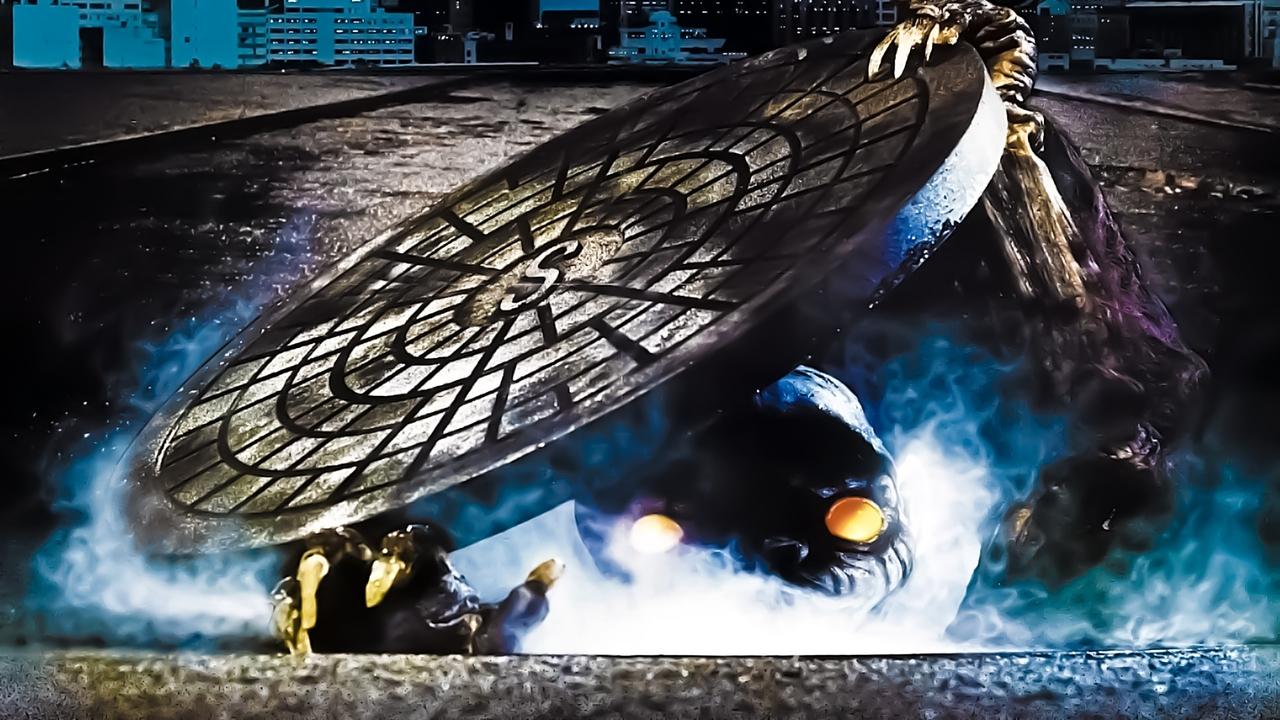
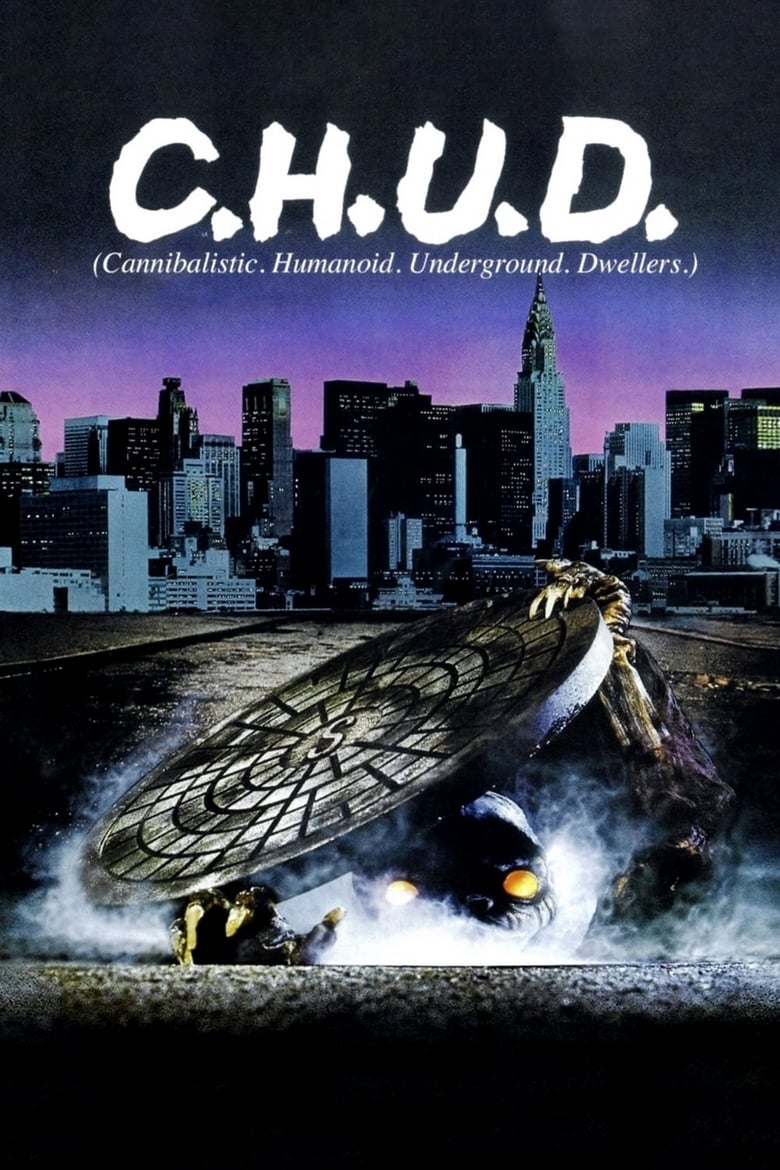
That opening — Flora Bosch walking her dog, a manhole, then an attack — is the film in miniature. It's blunt, a neat little promise that danger doesn't live in the suburbs or on some faraway island but directly under the city's feet.
C.H.U.D. moves fast. At 96 minutes it wastes no time: Douglas Cheek's direction keeps the set pieces tight while the movie hops genres like a kid in a sweet shop — horror, monster, zombie, slasher, even a bit of sci-fi and B-movie silliness all bundled together.
And at the centre is George Cooper, played by John Heard: a former fashion photographer turned street documentarian who drags the audience down into the sewers with him. That choice — a lens turned toward the city's invisible people — gives the film a moral stubbornness that still makes it worth revisiting.
Why George Cooper matters
George Cooper isn't a detective, a cop or a scientist. He's a photographer who used to work in fashion and has now chosen to photograph the city's homeless — the "undergrounders" who live in sewers and subway tunnels.
That bit of backstory does more than give him credentials; it flips the usual monster-movie perspective. Instead of arriving to zap the threat from afar, Cooper already spends his life looking into corners other people avoid.
Because he's a former insider of the glamour world who has walked away, his presence in the story feels like curiosity plus conscience: someone who can frame suffering and make it visible. The camera is his tool and his point of view, and the film keeps returning to what it means to watch.
He also lives with his girlfriend Lauren, which keeps him tied to a life above ground; he’s not a doom-obsessed loner, he's someone who has chosen to keep one foot in both worlds. That split helps the movie care about the people it shows rather than using them purely as set dressing.
C.H.U.D. has more on its mind than the plot suggests
On the surface it’s a monster film: things that were once human become monsters and eat people. But C.H.U.D. layers a few clear ideas beneath that simple engine.
Fear is obvious — the movie trades on that animal, street-level dread of something coming up through a grate. It uses the monsters to make the atmosphere itself feel unsafe.
Authority is another running note. The story hints that people in power aren't always looking out for ordinary folk, and that institutional secrecy can be as dangerous as any creature in the sewer.
Freedom and consumerism sit behind the grooves too: the city’s margins are where people live without the polish of headline life, and the film treats those margins as both vulnerable and invisible to the consumer-driven surface world.
C.H.U.D. could not belong to any other decade
C.H.U.D. landed in 1984, right in the middle of an era that enjoyed mixing out-there concepts with cheap thrills. That combination — high-concept paranoia carried by B-movie instincts — is very of its time.
The film’s willingness to be a monster picture and a political sting at once fits the decade’s appetite for genre hybrids. The result feels like an 80s creature feature written to make you squirm and wince at the people you trusted above ground.
There’s also a particular speed and economy to the storytelling common in 1980s genre films: it runs for 96 minutes and never lingers for reasons beyond moving the plot or the scares forward.
Put simply: C.H.U.D. wears its decade like an overcoat — not because of flashy period style, but because it pairs suspicion of institutions with a straight-for-the-gut monster movie energy that the 80s loved.
What has aged — and what hasn't
Some of the movie’s scaffolding still pays off. The decision to centre a photographer documenting 'undergrounders' gives the story a human anchor that doesn't feel throwaway — you can see the film trying to make the unseen seen.
The presence of characters like "The Reverend", who runs a local shelter, adds a strand of genuine care into the proceedings; the film isn't simply using the homeless as fodder for scares, it acknowledges them as people with networks and advocates.
On the other hand, the way the plot literally turns contact with toxic by-products into a route to monstrosity reads differently in a modern room. The idea that the underground population has been physically transformed by contamination is a blunt metaphor, and it ties the film’s social curiosity to a horror conceit that can feel uncomfortable if you overthink it.
Still, the basic emotional engine — fear of what lurks below and sympathy for the overlooked — carries through. When C.H.U.D. remembers its human subjects, it gains teeth beyond simple creature thrills.
Why C.H.U.D. still matters
There are images from the film that stick: Flora Bosch at the manhole and then being dragged into the sewers; a diner attack that finally makes the disappearances public. Those moments are simple and direct, the kind of scenes that lodge in memory because they are both grotesque and narratively decisive.
Beyond the shocks, the movie matters because it pairs an everyman investigator — George Cooper, who photographs undergrounders — with figures who actually try to help, like A.J. "The Reverend" Shepherd. That mixture means the film isn't just interested in screams; it's interested in the people being screamed about.
It also keeps a political edge. The story’s suggestion that superiors and an NRC figure called Wilson are involved in covering up dangerous waste gives the film a bite: the monsters are frightening, yes, but there's also a bureaucracy willing to hide the truth.
Taken together, the memorable scenes, the angle of looking at the city's invisible people and the willingness to point fingers at tidy institutions are why C.H.U.D. still gets a look-in from viewers who grew up with it — it’s a creature picture with civic teeth.
Does C.H.U.D. still hold up?
Yes — with a big caveat. If you enjoy 80s B-movie energy, blunt creature horror and a story that dares to accuse the people above ground while the monsters do the dirty work, C.H.U.D. delivers. It’s 96 minutes of economical, often filthy fun directed by Douglas Cheek and anchored by a central character who actually looks at the city's unseen residents rather than just screaming at them.
The film's strengths are its directness and its appetite for mixing genres: it can be a monster movie, a bit of social commentary and a paranoia thriller all before the credits roll. George Cooper and A.J. "The Reverend" Shepherd provide the audience with human eyes and human concern amid the chaos.
Where modern viewers may hesitate is the bluntness of the metaphor that links homelessness to mutation, and the way the plot leans on institutional secrecy for dramatic teeth. Those are not fatal flaws, but they are reminders that the film trades subtlety for impact.
So should you watch it? If you want a compact, occasionally thoughtful piece of 80s horror that understands both how to scare and how to point a finger at people in suits, absolutely. If you expect nuance, temper your expectations — C.H.U.D. prefers to bite you hard and then laugh while you pick yourself up.