
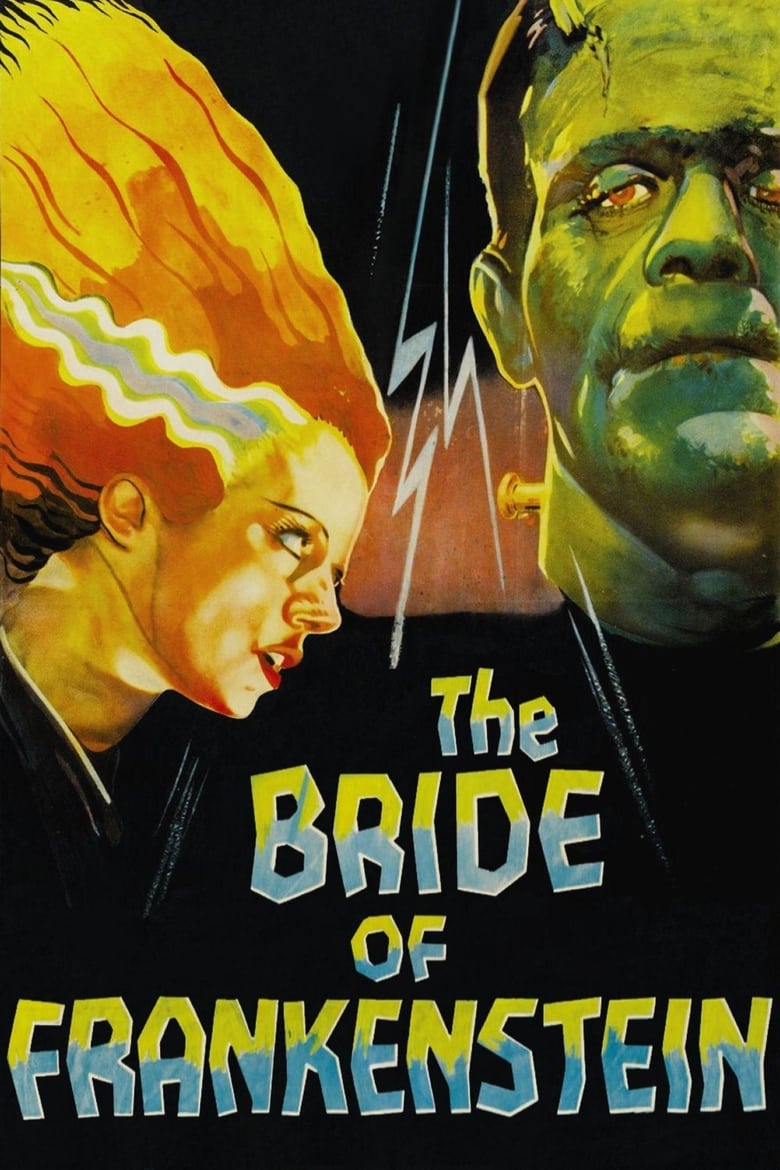
Bride of Frankenstein
“More fearful than the monster himself!”
Dr. Frankenstein and his monster both turn out to be alive after being attacked by an angry mob. The now-chastened scientist attempts to escape his past, but a former mentor forces him to assist with the creation of a new creature.
About Bride of Frankenstein
Frankenstein's monster is still the reason this movie works
Bride of Frankenstein begins the way you’d hope a tale about creations and creators might: a fireside story. In a storm-buffeted castle Percy Bysshe Shelley and Lord Byron heap praise on Mary Shelley, and the film politely tells us there’s more to the Frankenstein story yet to unfold. It’s a reminder that this isn’t a patchwork cash-in: it’s a deliberate continuation.
James Whale runs the show. His direction keeps the running time tight — the whole film sits at 78 minutes — but it never feels rushed; every odd aside and awkward friendship is allowed to land. And central to those moments is the creature himself: Boris Karloff’s monster remains the film’s axis, the figure who drags the movie’s ideas about belonging and otherness into plain view. Genre-wise the movie sits where horror and science fiction overlap, with an undercurrent that invites readings beyond simple shocks. It’s a small, strange picture that keeps circling the same questions — mortality, friendship, home — until you realise they’re what the film is actually about.
The idea that sets Bride of Frankenstein in motion
Whale’s sequel opens by settling us back in the aftermath of the earlier film: villagers celebrate the apparent death of the Monster, and there’s a world that has to reckon with the damage left behind — human and otherwise. The picture keeps its premise economical, then lets the characters around it make the nervous choices.
At the centre is Henry Frankenstein, returned to his fiancée Elizabeth and nursed back to health. He swears off his previous work, and yet the film is clear-eyed about obsession: renunciation and longing can sit side by side.
That longing is baited by Doctor Septimus Pretorius, who presents Henry with a new, stranger project. Pretorius has been making small artificial beings of his own and proposes a further experiment: a mate for the Monster. It’s an idea that tests loyalties and forces the moral questions hinted at in that opening fireside scene.
The practical stakes are simple and immediate. Elizabeth’s safety becomes the pressure point that will draw everybody — creator and creation alike — back into the workshop. The setup works because it turns an abstract debate about playing God into urgent, domestic choices.
Why Frankenstein's monster matters
Boris Karloff’s creature remains the film’s beating heart, but not merely because he’s frightening. The movie keeps bringing him into situations that ask a very human question: can someone who has been repeatedly rejected ever stop needing to belong?
It’s in the small scenes where the point lands. The Monster finds companionship in unlikely places — an old blind hermit who, grateful for the company, teaches him words such as "friend" and "good" and shares a meal. Those few moments turn him from a roaring engine of destruction into someone the audience understands.
The tragedy is that tenderness never gets a clean run. Each attempt at human contact — from the villagers to the shepherdess — ends in panic and, eventually, violence. The final humiliation comes when the promised companion is made and then recoils from him; that single rejection crystallises everything the Monster has been through.
Put simply: the Monster matters because he carries the film’s moral weight. He’s not just what Henry created; he’s the measuring rod for every other character’s conscience.
Bride of Frankenstein has more on its mind than the plot suggests
On the surface it’s a horror story about a creation that keeps returning, but under that there’s a persistent preoccupation with limits: how long can life be stretched, what does loss do to those left behind, and where is safety even possible?
Mortality and lifespan sit uneasily through the film. Henry’s medical recovery is an odd counterpoint to his criminal curiosity: he renounces the old experiment, and yet the lure of recreating life — of beating death, or at least pushing at its edges — is never far away.
The film also cares about home. Elizabeth’s castle is where the human family tries to restore order; it’s meant to be a safe place. The Monster’s invasions expose how fragile that domestic safety is, and how quickly grief and fear can dislodge the ordinary comforts that people cling to. Finally, humanity and friendship thread the picture. The Monster’s brief, fragile connections show that the film’s horror comes less from the unnatural and more from the social failure to recognise another being’s needs.
Bride of Frankenstein could not belong to any other decade
This is a 1935 film in both shape and temperament. It’s compact — brisk storytelling is a virtue here — and it moves between moods quickly: comedy, dread, pathos, then back again. That economy is very much of its time.
There’s also a mood to the communal reactions in the movie that feels period-specific. The villagers’ triumphant gathering around the burning windmill after the earlier film’s finale gives the world a brittle, public theatre of justice that the sequel continually punctures.
And yet the era doesn’t feel decorative. The film’s concerns are the kind that mattered to audiences then — order, the danger of scientific hubris, and the idea that communities enforce moral boundaries — so the decade imprints itself in the story choices rather than just the costumes or sets.
In short: Bride of Frankenstein reads as a 1930s film because it responds to the anxieties and storytelling habits of that moment, not because it wears period frills.
What has aged — and what hasn't
A lot of what still lands today is emotional rather than technical. The film’s interest in home and safety — the attempt to rebuild normal life after violence — remains a recognisable human problem, and the picture treats it with unexpectedly sharp empathy.
Friendship, too, survives the decades. The sequences where the Monster experiences simple human kindness feel direct and moving, even now, because they’re not coy. They’re short, clear scenes that ask you to pay attention to someone who is ordinarily ignored.
There are moments that rely on narrative speed: the returning body, the quick legal panic, the leverage of Elizabeth’s safety. That briskness helps the film still feel alive rather than museum-piece stale.
So if you’re watching Bride of Frankenstein today, you’re likely to be struck by how small, specific and human its concerns are — and how those concerns continue to matter.
Why Bride of Frankenstein still matters
Part of the film’s hold comes from how thoroughly it commits to its odd choices. From the opening literary framing in the castle to Pretorius’s bizarre tinkering, the movie keeps riffing on the idea of making life — and the consequences that follow.
Pretorius’s proposal to provide the Monster with a companion raises a question that many other horror films skim over: what responsibility does a creator have to what they’ve made? That alone gives the movie a moral engine people come back to talk about.
Then there are the quieter, human moments that stick: the hermit who offers the Monster a meal and a word like "friend," the daily domestic life at Elizabeth’s castle, the villagers’ fearful zeal. Those touchpoints make the film emotionally portable across generations. And finally, the ending — the rejection of the hoped-for companion and the Monster’s ultimate choice to trigger the lab’s destruction — leaves an image that’s both bleak and inexorable. It’s the kind of final decision that stays with you because it resolves the story’s central dilemmas in one awful, simple move.
Does Bride of Frankenstein still hold up?
Yes. Bride of Frankenstein’s short running time and tight focus mean it wastes nothing: James Whale directs a story that’s compact and clear, and Boris Karloff’s Monster remains the moral centre around which everything spins. The film asks old questions — about mortality, the limits of science and the fragility of home — and refuses easy answers.
It isn’t a glossy blockbuster, nor does it pretend to be; it’s a 1935 picture that uses economy to its advantage. The plot’s pressure points — the return of Henry to his castle, Pretorius’s proposition, the creation of the Bride and her rejection — all serve a consistent emotional argument rather than mere set-pieces.
If you’re uncertain whether the subject matter will speak to you now, consider how the film frames its conflicts: not as abstract intellectual games but as choices that affect ordinary relationships. That keeps it human and watchable.
So go and watch it. It’s not just a historical curiosity: it’s a tight, sometimes startling film that still asks useful questions about what we owe each other when we try to defeat death.