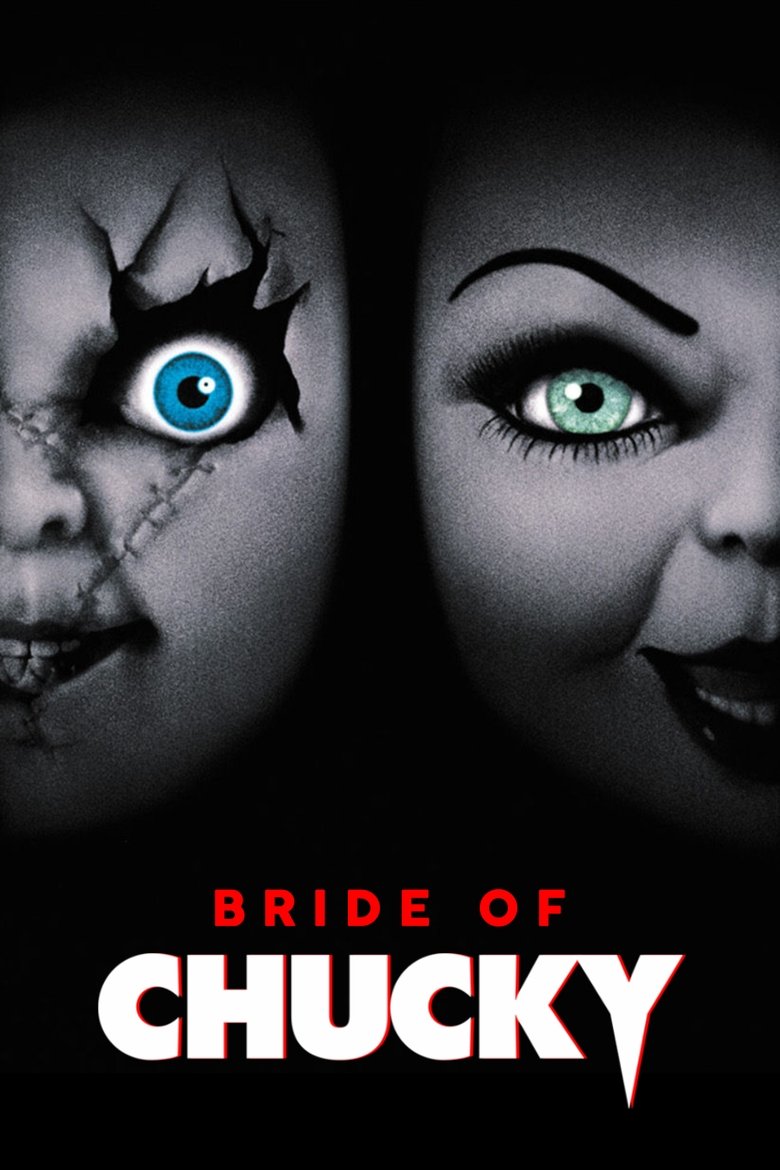
Bride of Chucky
“Chucky gets lucky.”
For ten years, the tortured soul of serial killer Charles Lee Ray has been imprisoned inside a child's doll. Chucky is reborn when his old flame, Tiffany, rescues his battered doll parts from a police impound. But Chucky wants his new playmate cut down to size, so he transforms his blushing bride into a stunning little terror. Chucky and Tiffany can't wait to start their own homicidal honeymoon. When this demonic duo hits the road and hooks up with a pair of unsuspecting newlyweds, they leave a trail of murder and mayhem behind them. Chucky's back!
About Bride of Chucky
What Bride of Chucky gets right
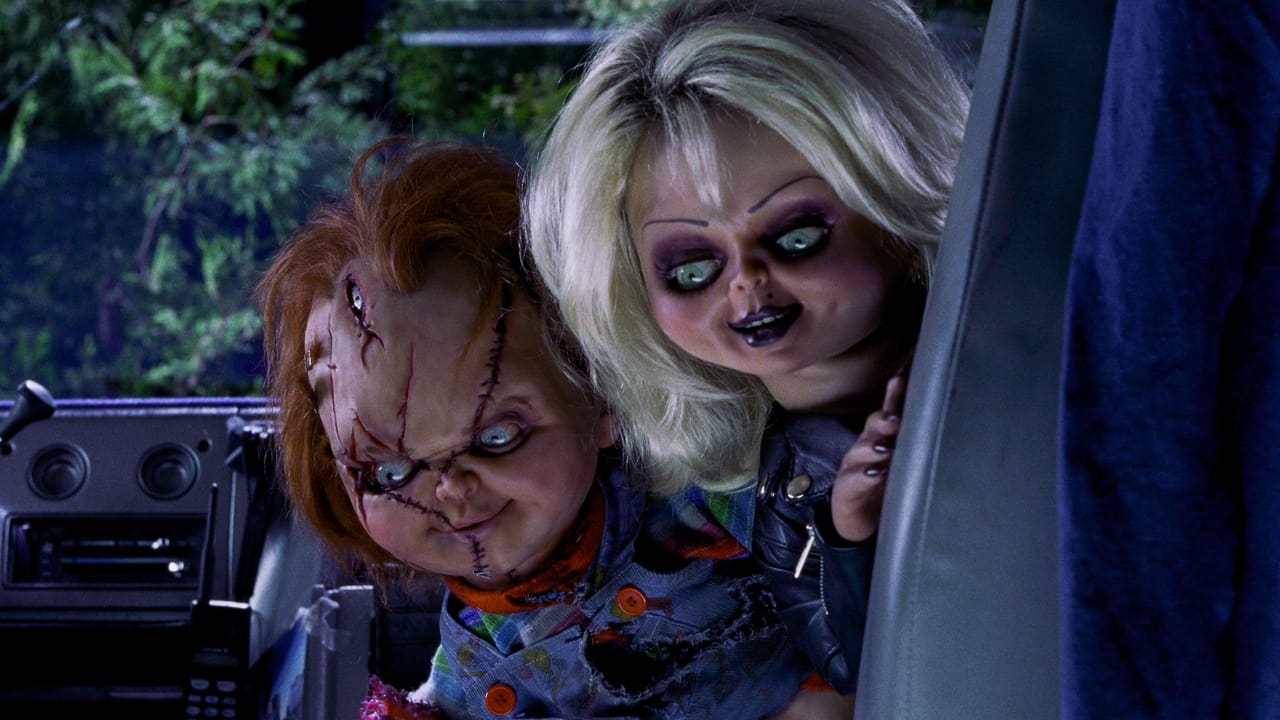
There’s a particular joy to a movie that begins with someone buying back a broken toy and deciding murder is the handy option. Bride of Chucky wastes no time: Tiffany bribes a police officer for Chucky’s remains, mends him in a trailer, performs a voodoo revival and, from there, everything gets messy and oddly domestic.
That combination — horror mechanics shoved into a relationship comedy — is the film’s personality card. It’s compact, cheeky and unapologetic about its tone. Ronny Yu keeps the film moving; it’s an 89-minute sprint in which murderous jealousy, black humour and actual proposals coexist without much fuss.
And yes: Chucky is back in voice and presence — Brad Dourif is the link to the doll’s teeth-and-all mischief — but the movie is just as much Tiffany’s story as it is his. That shift makes Bride of Chucky feel like a new chapter rather than a retread.
The idea that sets Bride of Chucky in motion
The premise is deliciously simple: Tiffany brings Chucky back from the dead and, within minutes, their old, toxic dynamic is back in full swing. That early sequence — the bribery, the repair and the ritual — explains everything you need to know about how this one will behave.
From there the plot straps the pair to a road trip with human targets and two young people who are mostly in the wrong place at the wrong time. The film keeps switching gears between slapstick-inflected murder and a surprisingly clear sense of stakes: survival, escape and the bizarre hope of getting your old life back.
That setup works because it doesn’t overcomplicate things. The supernatural rules are simple — if they want new bodies they need an amulet buried with Chucky’s human corpse — and the characters move the story forward through greedy, childish or defensive choices.
By keeping the premise tight and the rules visible, Bride of Chucky lets its darker jokes land without losing the audience in mythology.
Why Chucky matters
Chucky matters here because he’s not just the monster — he’s the catalyst for a strange, bizarrely human relationship. Brad Dourif’s presence, as the voice and continuity of the doll, keeps the figure recognisable, but the story lets Chucky change shape from pure menace to something motivated by jealousy, possessiveness and even infatuation.
That twist — Chucky realising he’s in love with Tiffany — turns the usual slasher dynamic inside out. Suddenly the murders, the schemes and the tantrums look less like a single-minded killer’s spree and more like a very bad, very violent courtship.
His concrete plan — return to the grave, dig up the Heart of Damballa and get new bodies — gives Chucky a practical objective that fuels the action. It’s less about ideology and more about survival and ownership, and that makes his scenes both dangerous and oddly petty.
Ultimately, Chucky works as a character because he’s both toy and tantrum: small enough to be absurd and large enough in motive to carry the film’s darker, stranger comedy.
Bride of Chucky has more on its mind than the plot suggests
Beneath the blood and the one-liners, the film keeps returning to mortality. Doll or human, the characters are painfully aware of lifespan — that urgency propels many decisions, and it’s what makes the Heart of Damballa subplot feel urgent rather than just macabre.
Love is never sentimental here, but it’s real in its own warped way. Chucky’s possessive attachment to Tiffany and Tiffany’s refusal to be sidelined turn the movie into a perverse romance — a pair of damaged people trying desperately to stay together, even if it means murdering anyone in the way.
Freedom is another constant. Tiffany specifically wants back into a life she recognises; the dolls want escape from their plastic prisons. That desire to reclaim agency — however twisted the route — gives the film energy beyond jump scares.
Even authority and loss appear as recurring beats: police interference, planted evidence and the fallout from earlier deaths ripple through the plot, reminding you that these murderous impulses don’t happen in a vacuum.
Bride of Chucky could not belong to any other decade
Released in 1998, Bride of Chucky arrives at the tail end of a decade that liked to mash genres together and wink at the audience. The film’s mixture of slasher beats, teen-road-trip elements and self-aware comedy fits that late-90s appetite for films that could be cynical and affectionate at the same time.
It feels distinctly of that moment because it trades on franchise familiarity while deliberately leaning into parody and pastiche. By 1998 audiences were fluent in horror conventions, so the film gets to have fun with them rather than explain them.
The result is a movie that wears its decade on its sleeve without needing nostalgic frills: it understands how to move fast, be referential and still make the central ridiculousness — two murderous dolls arguing about marriage — feel entertaining rather than tired.
That 90s personality gives the film permission to be brash, slightly transgressive and oddly tender all at once.
Why Bride of Chucky still matters
People remember Bride of Chucky because it dared to change the franchise’s tone and keep the heart of the toy-turned-killer intact. Tiffany’s decision to revive Chucky, the playpen humiliation, and the later revenge that strands her soul in a bride doll are grotesque but oddly memorable beats — the kind of imagery that sticks.
The Heart of Damballa quest gives the film a simple, pull-yourself-back-up goal that keeps the plot moving and makes the road-trip murders feel like part of a single project rather than disconnected set-pieces.
Most of all the film leans into character weirdness: Chucky falling in love, the couple proposing and having sex, and the film’s willingness to play a marriage plot for laughs and horror make it stand out. Those choices move the franchise into stranger territory and give viewers something to argue about.
Finally, the movie’s madcap finish — a brief resurrection, a furious birth of a baby doll and an ending that doesn’t quite tie everything neatly — keeps the memory alive. It’s the sort of finale that leaves you smirking and a little unsettled, which is exactly the point.
Does Bride of Chucky still hold up?
Yes — if you want something sharp, compact and a little bit unhinged. The film knows what it is: a slasher that also wants to be a nasty romantic comedy about two extremely bad lovers trapped in plastic. That unexpected emotional twist — Chucky’s jealousy and actual attachment to Tiffany — lends the movie more shape than a straight shockfest would have.
It’s short and decisive: in 89 minutes it sets up the stolen remains, the voodoo revival, the Heart of Damballa hunt, and a trail of desperate, selfish choices that end in messy, comic payoff. The rules are clear and the cast of humans and dolls propel the story with enough momentum to keep you watching.
If you’re after subtlety, this isn’t it. But if you’re willing to accept bloody silliness powered by a darkly comic relationship, it still delivers. Chucky’s return, the couple’s warped romance and the film’s refusal to tidy the ending all combine into a satisfying oddity.
So yes — watch it. Preferably with someone who appreciates black comedy and has a strong stomach for matrimonial mayhem.