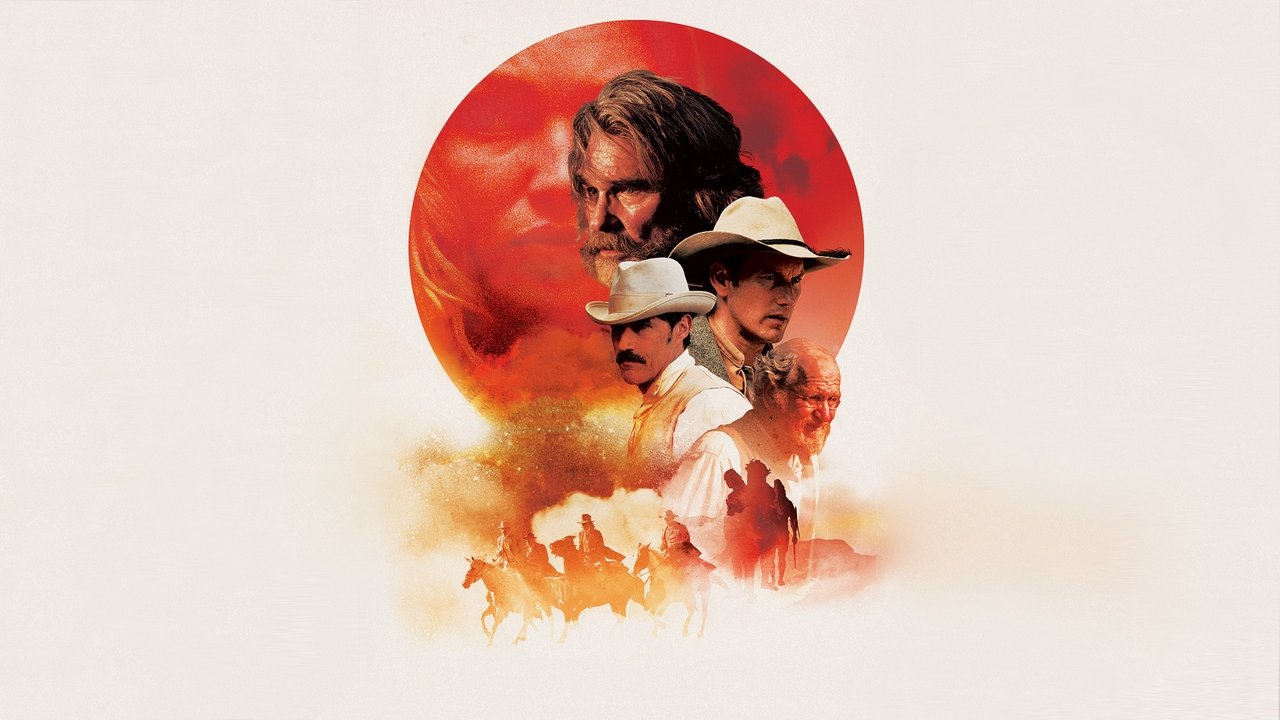
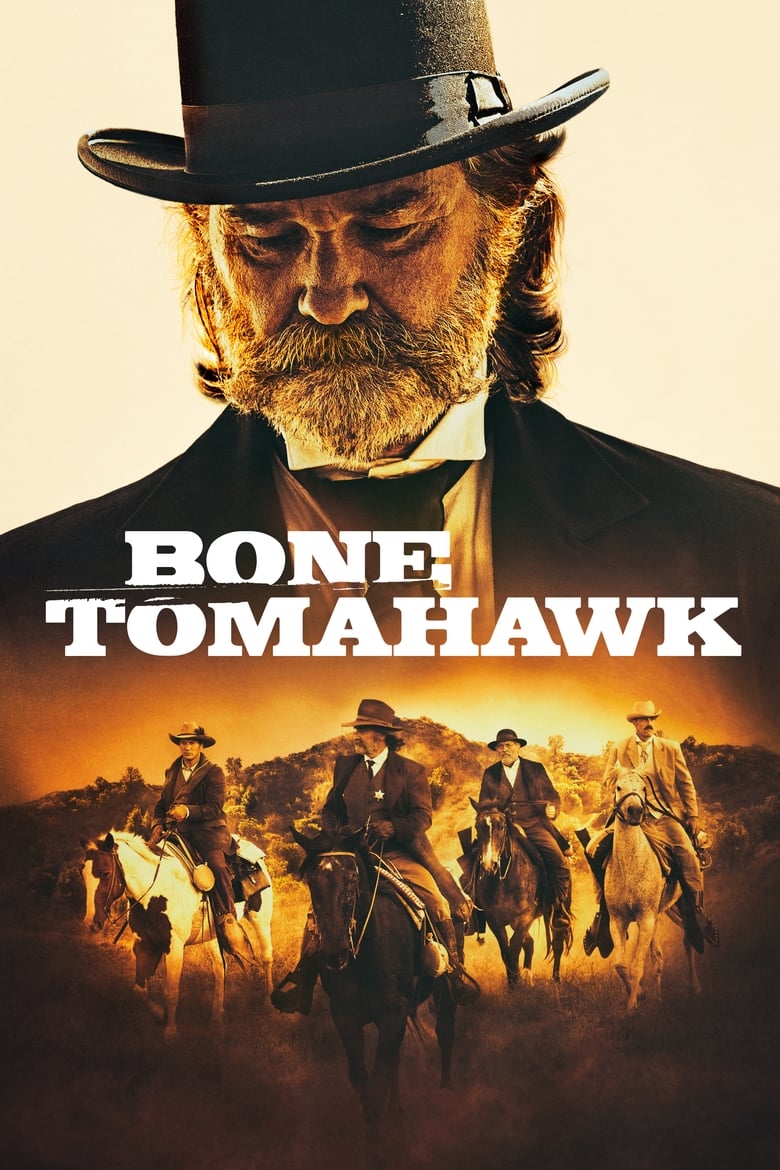
Bone Tomahawk
“Death comes for all men.”
During a shootout in a saloon, Sheriff Hunt injures a suspicious stranger. The doctor's assistant, wife of the local foreman, tends to him in prison. That night, the town is attacked and they both disappear—only the arrow of a cannibal tribe is found. Hunt and a few of his men go in search of the prisoner and the foreman's wife.
About Bone Tomahawk
Why Bone Tomahawk still works
Bone Tomahawk opens with a simple, nasty set piece: two brigands stumble on a Native American burial site and the encounter goes catastrophically wrong. That jolt — ordinary men running into something older and crueller — sets the tone Zahler keeps for the whole 132‑minute ride.
It’s a film that looks, talks and moves like a Western but behaves like a horror: restrained at first, then increasingly uncompromising. The mixture is deliberate — Steven Craig Zahler wrote and directed it — and gives the movie an odd, stubborn personality that still lingers.
And at the centre of it is Sheriff Franklin Hunt, the helmsman for this cross‑genre trip. You sense early that the film wants to test people — their courage, their loyalties, their idea of duty — and it trusts these characters to carry the test without editorialising.
The idea that sets Bone Tomahawk in motion
The film’s engine is almost embarrassingly simple: an ordinary criminal encounter spirals into something monstrous. A poisoned liquor flask ends up in a fire with lethal results, and that single moment widens the story’s world.
From there, one man refuses to leave what’s been done unanswered. Arthur follows the trail into the valley — not because it’s clever, but because it’s personal.
And the movie keeps the consequences tight. Arthur’s pursuit becomes less about maps and more about resolve, the sort of insistence that turns a personal search into a dangerous obligation.
Even in those quieter beats — the following of a trail, a single whistle that gets no answer — Bone Tomahawk reminds you how a small, stubborn choice can carry the weight of the whole film.
Why Sheriff Franklin Hunt matters
Sheriff Franklin Hunt is the film’s anchor: the man the town looks to when ordinary nastiness tips into true danger. You meet him as the person called to sort the mess when a deputy flags a suspicious brigand — and that matters because Hunt accepts the job of making things right.
The film gives Hunt authority by simple means. A deputy’s report leads to an interrogation; that straightforward sequence tells you Hunt’s not armchair law. He’s someone who steps in and takes responsibility.
Hunt’s world is full of ugly surprises — the troglodytes’ flask being thrown into a fire is one example of the brutality waiting beyond the town’s borders — and he’s the character who must reckon with that brutality on behalf of others.
Put bluntly: Hunt matters because he’s the line between the town’s fragile normality and whatever lurks outside it. The story asks him to hold that line, and the movie lets the consequences of that choice land.
Bone Tomahawk has more on its mind than the plot suggests
On the surface it’s a rescue — someone goes out to fetch people who’ve gone missing. Underneath, the film keeps returning to the idea of courage: what it demands, and the thin line between bravery and recklessness.
Heroism here isn’t glamorous. It’s the slow, often costly decision to stand up when the sensible thing would be to turn away.
Parental protection is threaded through the story in quieter moments, the sort of motivation that makes a seemingly irrational pursuit understandable; it’s why characters put themselves in harm’s way for someone else’s sake.
Freedom is the last note: the film watches what people will surrender to keep their families and their towns safe, and asks whether that loss is an acceptable price.
Bone Tomahawk could not belong to any other decade
Released in 2015, Bone Tomahawk sits squarely in the 2010s moment when filmmakers were less afraid to blur genre lines. Label it a Western with teeth — because it is both a frontier drama and, at times, a very uncomfortable horror.
That blending felt of a piece with the decade’s appetite for films that challenge audience expectations rather than politely conforming to them.
Put simply: the movie’s decade gave it permission to be odd and uncompromising, and Bone Tomahawk used that permission to push a classic genre into stranger, darker territory.
Why Bone Tomahawk still matters
People remember Bone Tomahawk because its stakes are never abstract. Sheriff Hunt puts together a rescue party — a plainly stated mission — and that clarity lets the film pile on moral weight without confusing the audience.
Arthur’s insistence on joining the hunt, despite his injury, turns the movie into a study of stubborn devotion. That personal thread reframes the film’s violence as the cost of care, not spectacle.
There are moments you don’t forget: Hunt’s tactical gambits involving a poisoned flask, the brutality visited on captives, and the desperate, intimate violence the film permits us to see. Those beats don’t exist to shock for shock’s sake; they make the threat feel real.
And the ending image — the broken promise, the men moving away from a valley that clearly changed them — leaves a residue. The film doesn’t tidy things up, and that refusal to offer a neat moral wrap‑up is part of why people keep coming back to it.
Does Bone Tomahawk still hold up?
Yes. Bone Tomahawk’s mix of Western duty and horror’s bluntness still reads as a deliberate, coherent choice rather than a gimmick. It was made in 2015 by Steven Craig Zahler and it plays like a film confident in its own pitch: long enough (132 minutes) to let characters breathe, and steady enough to let consequences land.
What keeps it watchable is the human commitments at its centre. From the sheriff who arrests a guilty man to the husband who follows a trail into danger, the movie asks characters to put love and duty ahead of comfort — and then shows what that looks like up close.
If you’re sensitive to unpleasant violence, this isn’t cosy viewing. But if you want a film that treats courage and parental protection as things worth testing, it still earns your time.
Bone Tomahawk doesn’t apologise for being harsh. It offers a straight question about what we owe to others — and if you let it, that question will sit in your head long after the three gunshots you hear in the distance.