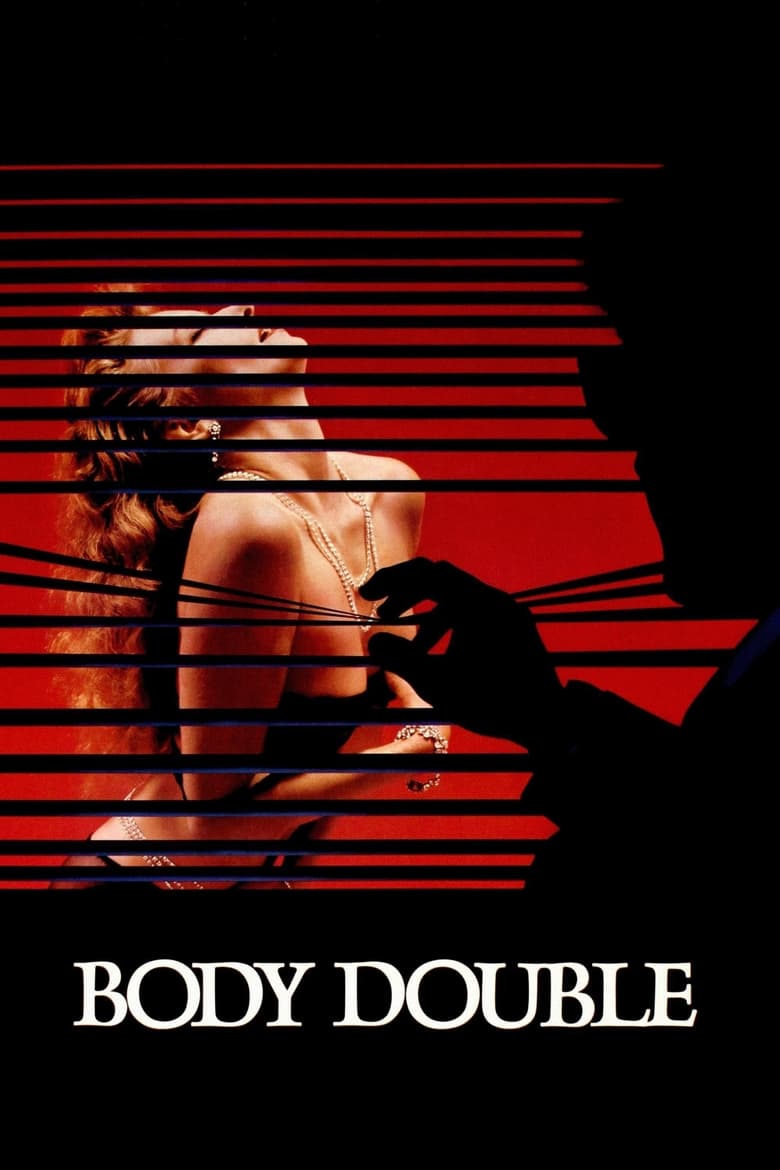
Body Double
“You can't believe everything you see.”
After losing an acting role and his girlfriend, Jake Scully finally catches a break: he gets offered a gig house-sitting in the Hollywood Hills. While peering through the beautiful home's telescope one night, he spies a gorgeous woman dancing in her window. But when he witnesses the girl's murder, it leads Scully through the netherworld of the adult entertainment industry on a search for answers—with porn actress Holly Body as his guide.
About Body Double
Why Body Double still works
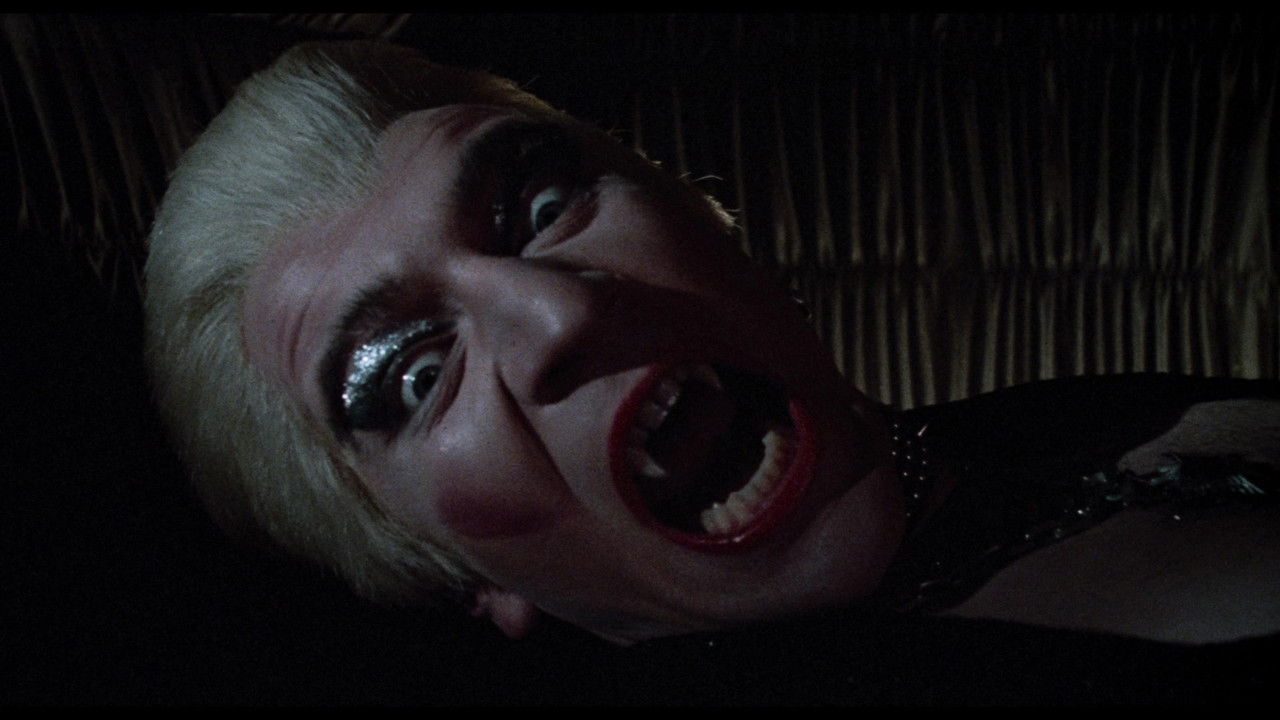
Body Double opens with a small, simple setup that keeps tugging at you: Jake Scully is an actor who can’t even finish a low-budget vampire shoot because he’s terrified of enclosed spaces. That professional failure does more than establish a flaw — it leaves him unmoored.
Brian De Palma wheels him into an ultra-modern empty house with a telescope pointed at the next-door window. Through that lens Jake finds a nightly ritual — a woman who dances at a certain time — and the film’s contract with the audience is made right there: we will watch, and the film will make watching matter. It helps that the players are clearly arranged — Craig Wasson as Jake, Deborah Shelton as the window woman and Melanie Griffith later drawing the film’s other side of performance — so the camera can turn voyeur and the story can slowly tighten like a fist.
The idea that sets Body Double in motion
The premise is tidy and mean in equal measure. Jake Scully’s claustrophobia costs him a role, which collapses his life into sudden instability — he returns to find his relationship gone and, briefly, a home to sleep in is taken from him too.
A method acting class supplies the human link: that’s where he meets Sam Bouchard, and where Jake’s fears — and the childhood origin of them — are put on display. It’s a natural place for curiosity to turn into something more dangerous.
Sam’s generosity — an invitation to house-sit an architect’s empty place in the Hollywood Hills — comes with a built-in temptation. There’s a telescope aimed at the building opposite, and every night a woman performs an erotic dance at a precise time; Jake starts to watch.
Watching turns into following. He tails the woman to a motel, and his behaviour later brings police scrutiny after evidence that places him close to the victim is discovered. That slim, theatrical chain of events is what the rest of the movie unspools.
Why Jake Scully matters
Jake is not a swaggering hero. He’s a working actor who has just lost the one thing that gave him an identity — a role he literally couldn’t hold onto because of his claustrophobia. That professional wobble leaves him exposed in the worst possible way.
When he comes home to find his girlfriend cheating, he’s cast adrift. The plot’s small generosity — a spare house to sleep in — is the kind of flimsy safety net this character will fall through and then learn to crawl out of.
Jake’s significance comes from how personal everything is for him: fear, loss and the need for a foothold. He’s not merely a detective’s suspect or a plot device; he’s the man whose fragile life makes the film’s dangers feel like real ones.
And because the movie keeps returning to that vulnerability — the claustrophobia, the homelessness, the moral discomfort of watching — Jake becomes the hinge on which the thriller’s moral tension turns.
Body Double has more on its mind than the plot suggests
Under the sex-and-suspense surface, Body Double keeps returning to home and safety. The empty house that promises refuge instead becomes a place of exposure — Jake’s telescope is meant to grant him privacy and direction, but it draws him into someone else’s life.
Fear is literal here. The film foregrounds Jake’s claustrophobia from a method acting class confession through to the moment he must face tight, life-or-death space. That arc — being undone by a fear and later finding the nerve to move through it — gives the movie emotional weight.
Mortality sits beside that fear. The story plays close attention to what a single violent event does to someone’s sense of being safe, and to the practical consequences when authority figures treat a watcher as suspect rather than victim. Family and loss are quieter notes in the background: Jake’s dislocation, the betrayals that leave him without a house or a partner, make the film less about sensational thrills and more about what happens when the things that should protect you don’t.
Body Double could not belong to any other decade
Body Double arrived in 1984 and wears that year like its frame. It is very much a product of 1980s filmmaking — a time when mainstream movies often mixed mystery, eroticism and genre play.
That intersection — the film’s willingness to be a thriller and an erotic mystery at once — feels rooted in the era. In short: this is a movie that belongs to its moment without needing to apologise for the mix.
Saying it’s an ’80s film doesn’t reduce it to a style exercise. The decade simply provided the appetite for pictures that were prepared to take audience complicity seriously, and this one does so in a way that reads as of its time.
If you’re going back to it now, expect a film that is recognisably a child of 1984 — in attitude and in the kinds of risks it will take with tone and content.
What has aged — and what hasn't
A lot of the film’s fundamentals age well because they’re human ones: the terror of being exposed, the shame of being suspected and the weird intimacy of watching someone through a lens. Those are not tricks of fashion; they’re basic anxieties.
The house-as-safety-net trick still works. An empty, modern place intended as refuge becomes a staging ground for danger, and the telescope remains a brilliant little device for turning a domestic window into a public stage.
Jake’s arc — losing a job because of a phobia, being homeless, then being forced to face that fear — keeps the stakes personal. The scene in which his claustrophobia again incapacitates him, and the later moment when he finds the strength to climb out, still lands because it’s about one man’s small, painful work.
Some of the film’s pleasures are easier to appreciate now as craft: the way tension builds from ordinary actions, and the way the narrative keeps returning to the price of voyeurism. The ending, which returns Jake to the role he lost, also gives the film a neat, if slightly dark, bookend.
Why Body Double still matters
People keep circling back to Body Double because it gives them distinct, repeatable moments: the telescope that makes a neighbour into a nightly spectacle, the scene where watching becomes culpability, and the later unmasking that reframes everything that came before.
The movie stages a set of uncomfortable reversals. A performance is used as a lure; a watcher is treated like a suspect; a friend’s hospitality becomes a snare. Those concrete turns are the items viewers remember and argue about.
There’s also the sheer perversity of its plotting: characters impersonate others, arrangements are weaponised and a staged dance becomes evidence in a much darker plan. Those beats are sturdy memory hooks because they turn ordinary social exchanges into crimes. Finally, it’s the personal beats that linger — Jake’s displacement, the way authority doubts him, the unexpected reveal — which give people something to talk about beyond mere plot cleverness.
Does Body Double still hold up?
Yes — with a caveat. If you want a lean, watchful thriller that makes its central conceit (a man, a telescope, a house) feel consequential, Body Double still delivers. It is a product of 1984 and of Brian De Palma’s taste for theatrical setups, and it runs a tight 113 minutes doing the business.
The film asks you to be uneasy about looking: Jake is literally an actor who lost work because of a fear, then drifts into voyeurism and suspicion. That sequence — loss, displacement, and the moral cost of watching — reads today as a clear through-line.
There are moments of plot nastiness that still surprise: the manipulation of performance (a woman used to mimic another), the discovery that appearances can be manufactured, and the unmasking that reframes everything. Those are imaginative, even now.
If you like thrillers that keep the threat domestic and personal, and don’t mind being made complicit on occasion, Body Double is worth the watch. It’s an old-fashioned set of mechanical pleasures — plot gears, a character to worry about, and a house that betrays its promise of safety.