Black Sunday
“STARE INTO THESE EYES...Discover deep within them the unspeakable, terrifying secret of BLACK SUNDAY...It will paralyze you with fright!”
A vengeful witch, Asa Vajda, and her fiendish servant, Igor Jauvitch, return from the grave and begin a bloody campaign to possess the body of the witch's beautiful look-alike descendant: Katia. Only a handsome doctor with the help of family members stand in her way.
About Black Sunday
Why Black Sunday is still worth talking about
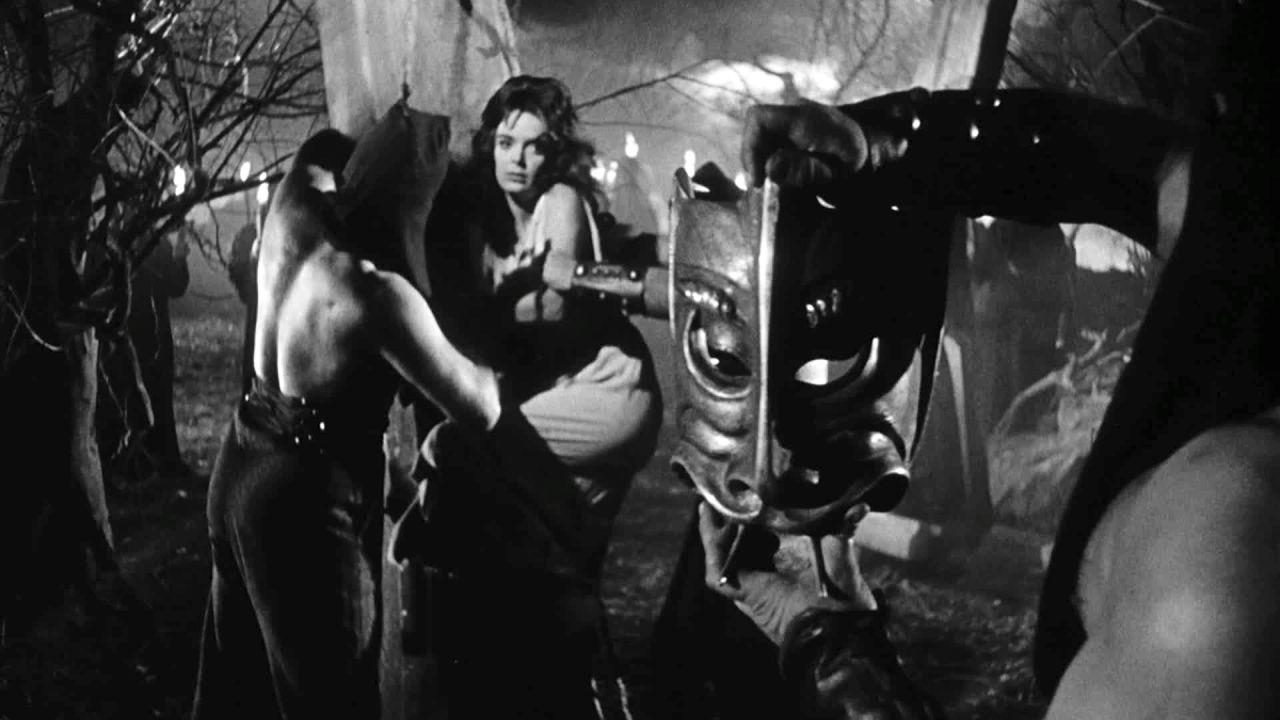
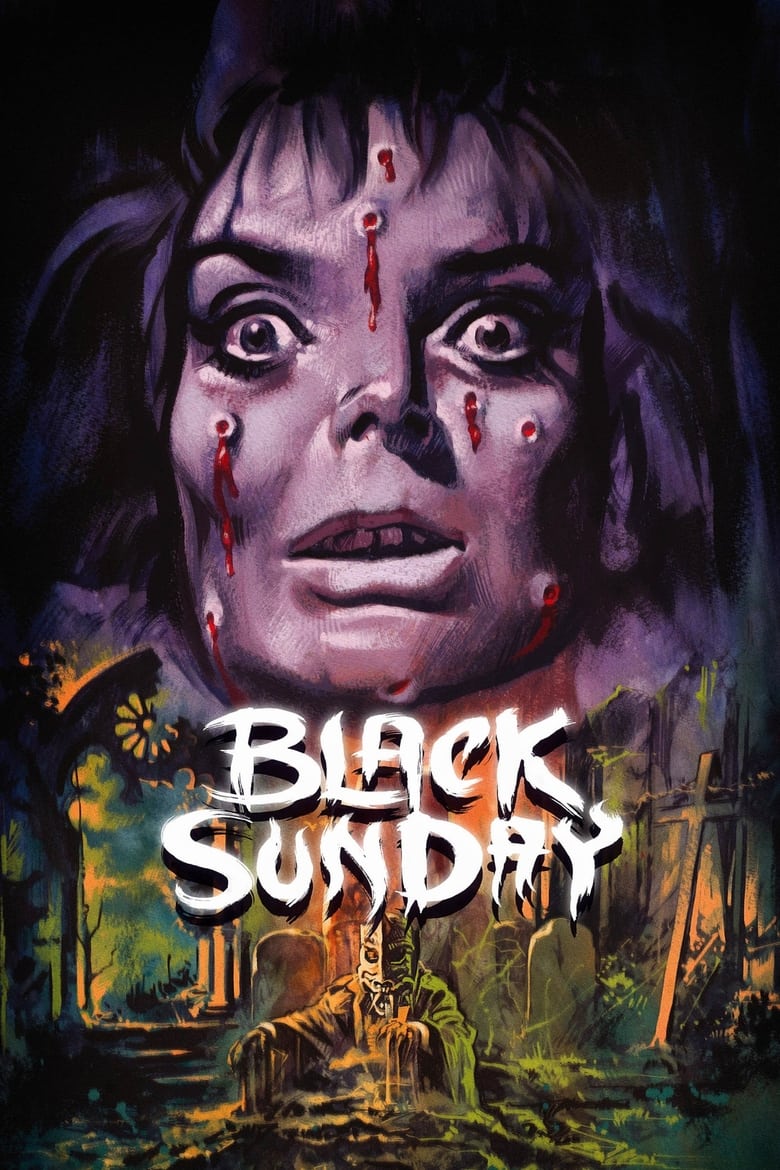
Black Sunday arrives with an image that lodges itself in the head: bronze masks with inward‑pointing spikes hammered into faces. It’s violent, literal and not remotely coy — the sort of first impression that makes you sit up and pay attention.
Mario Bava directed the whole compact exercise; at 87 minutes it doesn’t waste a single beat. The film wears a range of labels — horror, gothic, supernatural — but those tags only tell you the packaging. What really sticks is the moral grit beneath it: a vow of vengeance, an old curse and the way the past refuses to stay buried. At the centre of it all is Asa Vajda/Katia Vajda, played by Barbara Steele, which gives the movie something both pretty and poisonous to orbit. That pairing — elegance and threat — is why people still reach for Black Sunday when they want their scares with a small, sharp sting.
The idea that sets Black Sunday in motion
The engine of Black Sunday is tidy: an ancient wrong, buried grudges and an accidental release. When Dr Choma Kruvajan removes Asa’s death mask he exposes a corpse and a loose thread that the living would have done better to leave alone.
A single cut of blood is the literal plot switch: Kruvajan’s injury awakens something that was meant to stay dead. From there the film keeps its chain of cause and effect clear — the revenant seeks what she needs, and people with ordinary responsibilities get pulled into extraordinary danger.
Complication arrives in human form. Dr Andrej Gorobec is distracted by Katia’s melancholy beauty, and that distraction gives the curse room to manoeuvre. It’s a small human mistake with large consequences.
What makes the setup work is its economy: the supernatural threat is immediate, the stakes are personal, and the film treats the chain reaction like a neat, grim puzzle — one wrong move and the machines of vengeance start turning.
Why Asa Vajda/Katia Vajda matters
Asa and Katia are two sides of the same dangerous coin: one name from the past, one name in the present, and the film keeps them tautly linked. Barbara Steele plays both, which means the movie’s centre is a doubling — beauty and threat folded into one figure.
The backstory is blunt and old‑fashioned in the best way: in 1630s Moldavia, Asa and her paramour are condemned for sorcery, and Asa vows revenge on a family line. That foundation turns the later events from random misfortune into the fulfilment of a promise. It gives the resurrected witch a motive that feels elemental: it’s family business writ terrible and absolute.
At the castle we’re told Katia lives with her father and brother Constantine; the villagers call the place haunted. That domestic detail keeps the horror close to home — you don’t need a phantom city to make the threat intimate.
And the human response anchors the supernatural. Gorobec’s immediate attraction to Katia isn’t plot padding; it’s the human misstep that lets the curse reach out. Asa/Katia matters because she is both the cause and the mirror — what the men see and what the past becomes when it comes back to collect.
Black Sunday has more on its mind than the plot suggests
On the page that lists themes you’ll find mortality, loss and lifespan — and Black Sunday keeps returning to those notes with a steady hand. It’s a film that literalises the fear of time: bodies decay, beauty fades and, crucially, there’s a way of cheating the ledger that carries a price.
The movie treats loss not as a background grief but as a practical engine. Asa’s vengeance is bound up with stolen youth: the plot depends on taking life from the living to refill the dead. That makes the horror feel less like abstract menace and more like a transaction gone morally rotten.
Fear sits everywhere: not just the obvious fright of a corpse that walks but the softer, human terror — the way Prince Vajda is so overwhelmed by a visit from the reanimated that he becomes paralysed with it. That kind of panic makes the supernatural feel plausible because it’s mirrored in ordinary bodies reacting badly to the impossible. Put simply: Black Sunday isn’t only about whether the witch gets stopped. It’s also about the way we measure time, what we will do to postpone endings, and how dangerous it is to think you can outrun mortality.
Black Sunday could not belong to any other decade
Black Sunday landed in 1960, and that placement matters: it’s an early‑60s horror that still smells faintly of the 1950s’ appetite for clear, direct genre storytelling while pointing forward to darker, more psychological horror to come.
Calling it a 1960 film isn’t just bookkeeping. The timing gives it a particular posture — compact, genre‑happy and willing to be both gothic and modern in one short ride.
It’s also a product of the decade’s appetite for concise, shelf‑friendly films; at 87 minutes it’s lean, Which keeps the narrative pressure tight and the atmosphere concentrated.
So while the trappings are old‑world — castles, curses, revenants — the film’s rhythm and refusal to linger make it feel like a piece of filmmaking that belongs to its moment: straddling the old gothic and whatever the 60s would become next.
What has aged — and what hasn't
A lot of Black Sunday’s central ideas still hit. The vampire premise — a dead woman trying to reclaim youth — is timeless enough to survive changing fashions. When the film stages Asa draining Katia of her youth, the emotional arithmetic remains clear: it’s about fear of loss and the cruelty of theft disguised as revival.
The atmosphere of being trapped in a family place that everyone whispers about still works. Katia living with her father and brother in a supposedly haunted castle keeps the threat domestic, which is easier for modern viewers to buy than a faraway apocalypse.
But some choices read differently now. The backstory includes suggestions of an intimate relationship between Asa and her paramour that, in context, may feel awkward or blunt to contemporary eyes. The film’s very literal solutions — nail through the eye, masks hammered into faces — are effective but are also reminders that the movie doesn’t soften moral retribution for nuance.
In short: the film’s core—fear, mortality and the brutal lengths to which someone will go to stop time—still works. Certain historical touches and narrative bluntness can be jarring, but they’re part of the bargain: Black Sunday is direct where modern horror often prefers layers.
Why Black Sunday still matters
There are a few sequences you don’t forget: the spiked death‑masks hammered home, Kruvajan’s blood accidentally reviving Asa, and the steady progression from curiosity to catastrophe. Those are the sorts of images and plot pivots that make a film linger in memory.
Asa’s vow of revenge — the curse on a family line — is narratively neat, too. It makes the horror procedural; there’s a promise that will be kept, and the plot is the bookkeeping of that promise being carried out. That clarity gives the film a kind of narrative muscle: cause, consequence, ritual.
The film also keeps its supernatural mechanics simple and visible: the witch contacts her paramour, a dead man rises and children’s testimony points the living toward truth. That straightforwardness helps the story travel beyond its original audience — you can explain the spine of Black Sunday to someone quickly and the main beats still make sense. Finally, the ending — villagers and priest acting together to end the threat by burning Asa — returns the story to a communal act of justice. That collective closing has a cathartic tug that explains why viewers who grew up with the film remember its arc as a complete, if bleak, moral tale.
Does Black Sunday still hold up?
Yes — if you’re after a short, sharp piece of gothic horror that treats its premise seriously and moves fast. Mario Bava’s 1960 movie doesn’t pretend to be subtle about its supernatural bargains: it’s about a woman who refuses to accept death and the dirty work that involves.
At 87 minutes it’s economical; the story is direct and the stakes are clear. If you want a modern slow‑burn meditation on grief, look elsewhere. If you want a compact myth about mortality that gets to the point, this one still does the job.
There are elements that may feel blunt now — the implication of an intimate relationship in the past and the film’s literal, often physical means of resolving the undead — but those same things give it its unmistakable spine. Black Sunday offers moral clarity rather than moral ambiguity, and that’s a legitimate way to scare an audience.
So should you watch it? If the idea of curses, stolen youth and a film that refuses to apologise for its gothic nastiness sounds like your bag, then absolutely. Black Sunday still bites — and sometimes that’s precisely the point.