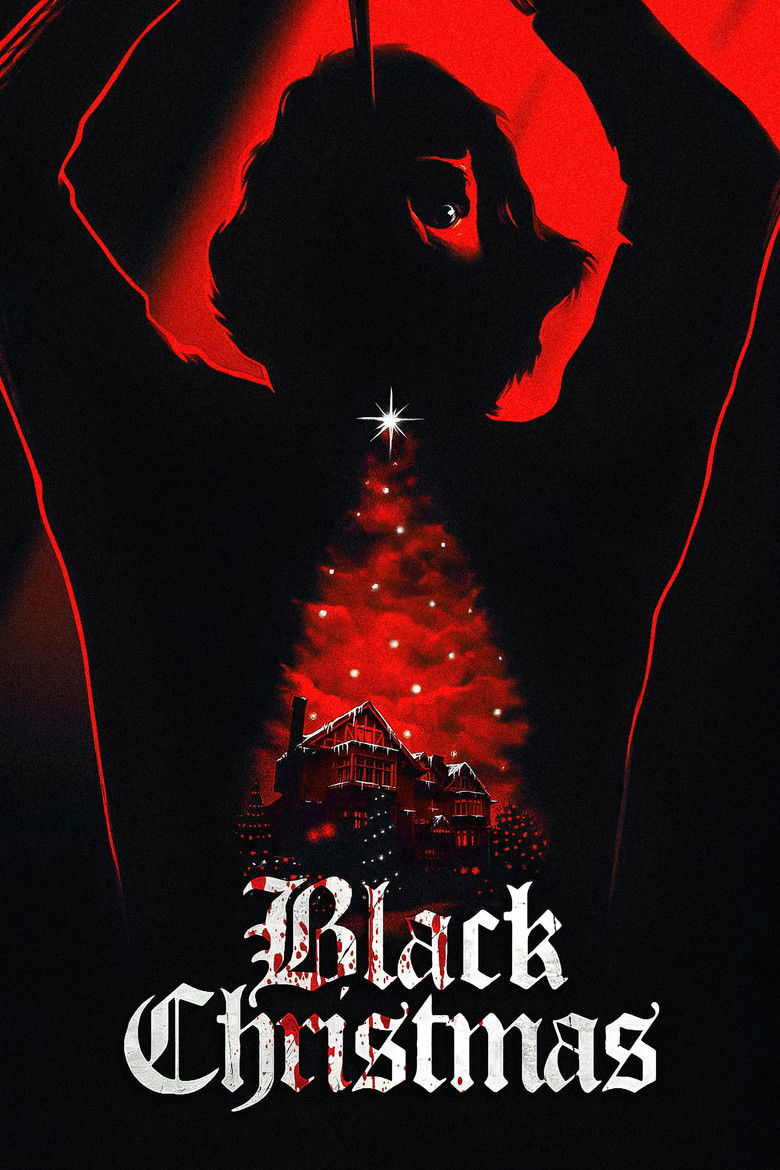
Black Christmas
“If this picture doesn't make your skin crawl... it's on TOO TIGHT.”
As the residents of the Pi Kappa Sigma sorority house prepare for the festive season, a stranger begins to harass them with a series of obscene phone calls.
About Black Christmas
What Black Christmas gets right
Black Christmas opens on a deceptively simple terror: someone unseen climbs the outside of a sorority and makes their way into the attic. That image — an intruder above the party — quietly rewrites the idea of safety; the roof no longer protects you, it watches you.
Bob Clark directs with a short, economical runtime that never lingers on anything it doesn't need to. The plot moves tight and purposeful through a handful of characters, with Olivia Hussey as Jess Bradford taking much of the narrative pressure.
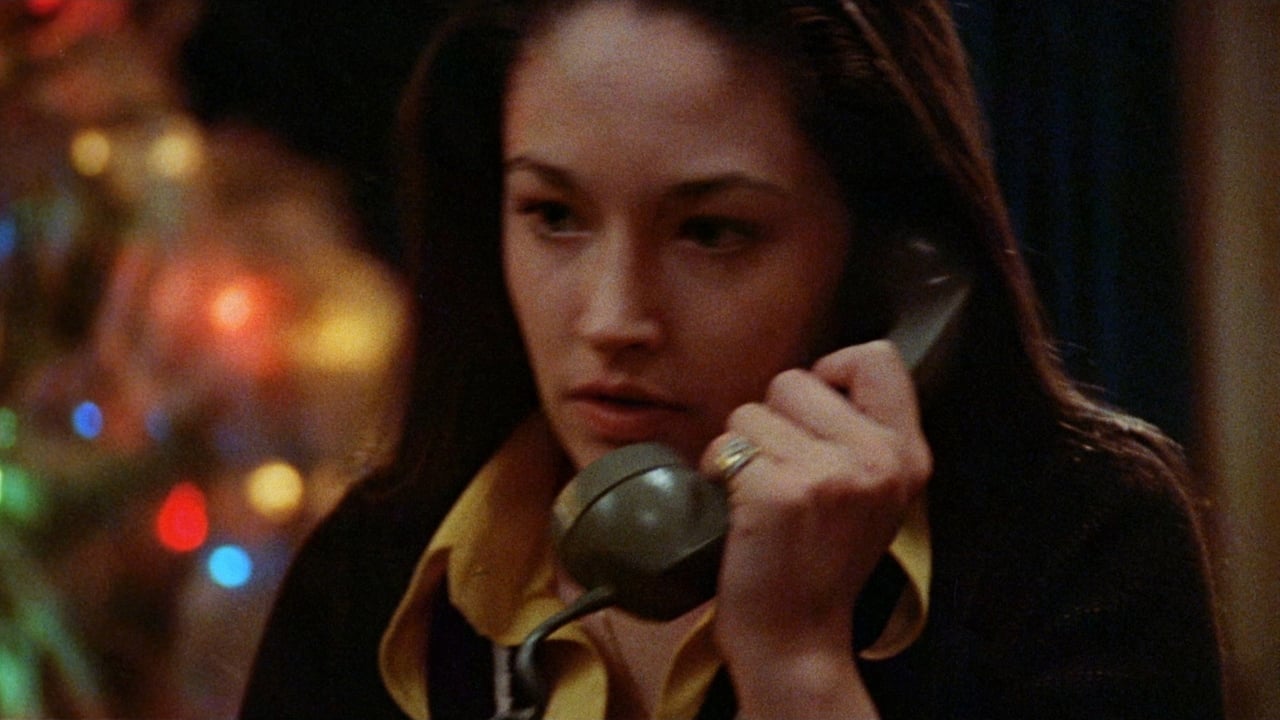
What keeps people returning is how the film places fear in ordinary domestic noises: the ring of a house phone, a stranger's obscene whisper from an anonymous caller, a hatch that opens in the dark. Those elements feel personal rather than theatrical, and that’s what makes the movie linger.
The idea that sets Black Christmas in motion
At its heart the film stages a basic, terrifying question: what if the thing menacing you is already inside your home? From the obscene calls that startle the sorority to the discovery that the voice may be much closer than anyone suspects, the setup makes ordinary domestic routines suddenly hazardous.
That sense of enclosure matters. After the police leave a tracing attempt, characters believe the threat is something they can manage — so when they take precautions like locking the house, the movie turns those sensible steps into a trap.
Small errors and misread signals have big consequences. One character retires to bed after an asthma attack, another goes to investigate and never returns — and the film uses those ordinary moments to raise the stakes.
It works because the premise is simple and logical: the home is supposed to be a refuge, and when that refuge is compromised the audience feels the breach on a visceral level.
Why Jess Bradford matters
Jess Bradford is the film’s practical centre. She’s the one who answers the obscene calls that unsettle the house, and because those calls are addressed to her household the danger becomes domestic and immediate.
Her personal life complicates the situation: she tells her boyfriend Peter that she’s pregnant and plans to terminate the pregnancy, a revelation that creates real tension between them. That argument echoes through later events, turning private conflict into a thread the movie keeps pulling.
Jess also functions as the point where outside authority and the house's own systems collide: she tries to involve the police after another call, and the film makes us watch how that attempt to get help plays out — not as a neat solution but as another chain of choices and mistakes.
Put simply: Jess is the film’s anchor. When the world of the house starts to fracture, we experience the fear through her decisions and missteps rather than as distant scares.
Black Christmas has more on its mind than the plot suggests
On the surface it’s a slasher set at Christmas; underneath it’s a study of what happens when the things that should protect you stop doing that job. Home and safety are constantly probed — a sorority house, meant to be a community, becomes a maze of hidden danger.
Mortality is never far away. Ordinary activities — packing a bag, answering a phone, going upstairs — acquire finality because the intruder's presence turns routine movement into life‑and‑death choices.
Authority is shown as fallible. Attempts to get help happen, but the movie pays attention to the ways those attempts can be late, inadequate or misdirected, which makes the danger feel lonelier and more immediate.
And above everything sits fear: an everyday, domestic fear that grows because the menace is both anonymous and intimate, a voice on the line and a presence in the rafters.
Black Christmas could not belong to any other decade
Black Christmas arrived in 1974, and that timing matters because the film treats domestic breakdown and institutional doubt as normal features of its world rather than sensational extras. The 1970s cinema climate allowed a quieter, more patient kind of horror that trusted mood over spectacle.
This is not a movie that tries to overwhelm you with effects; it relies on slow, accumulating dread and the idea that ordinary people — students, housemothers, local cops — must navigate a crisis without grand resources. That approach feels of its moment.
The result is a horror that leans into realism: the plot steps feel plausible and the stakes are personal, not mythic. In that sense, Black Christmas wears its year openly; it’s a 1974 film because it can show a breakdown of trust without promising tidy resolutions.
Being of the 1970s gives it permission to be unsettling in small, domestic increments rather than insisting on big set‑piece catharsis.
What has aged — and what hasn't
The film’s central idea — that a home can be penetrated and corrupted — remains potent. Even now, there’s an immediate shiver when the phone rings or when a hatch creaks: those noises still trigger a basic protective reflex.
The way fear is made mundane also holds up. Because threats arrive through everyday actions, the movie still gets under the skin without needing modern shocks or gimmicks.
Where viewers might be less tolerant today is in the ways authority and help are portrayed: the film’s depiction of official responses as slow or ineffectual can feel frustrating rather than cleverly subversive, depending on what you expect from modern thrillers.
But if you come for claustrophobic dread and the slow accumulation of terror inside a house that should be safe, Black Christmas still delivers the goods.
Why Black Christmas still matters
Certain images from the film stay with you: the unseen climber on the exterior, the recurring obscene calls, and the repeated sense that someone is watching from above. Those moments are simple but memorably unnerving.
The film also strings together a series of ordinary decisions that go wrong: a young student goes upstairs to pack and is murdered; a housemother goes searching and is killed in the attic; a carolling interruption leaves a woman vulnerable and then brutally murdered with a small, domestic object. Those beats make the horror feel disturbingly plausible.
There’s also a brutal, almost bureaucratic slide into misidentification and misunderstanding: a panicked killing in the basement leaves Jess beside a dead boyfriend while the police assume the worst, and the house is briefly pronounced safe even though threats remain above. That lingering disbelief — the hatch opening after the authorities have left — is the film’s final, chilling punctuation.
All of this adds up to a movie people remember because it treats the domestic as the true site of danger and refuses to tidy the ending into reassurance. The house keeps the last secret, and the phone keeps ringing.
Does Black Christmas still hold up?
Yes — if what you want is a tight, unnerving study of domestic collapse rather than a modern effects-driven scare‑fest. The movie’s premise is compact and undeniably effective: anonymous obscene calls, an intruder in the attic, and the steady erosion of the idea that a house keeps you safe.
Olivia Hussey’s Jess is the narrative fulcrum, and the film lets her attempts to get help, her private argument about pregnancy, and the panic that follows carry the emotional weight. Those choices make the danger feel immediate and the consequences believable.
It’s not flawless. Some viewers may bristle at the police responses and at how luck — or misfortune — drives certain outcomes. And the film’s refusal to offer neat consolation means it can feel bleak. But that uncompromising tone is also its strength.
If you’re planning to watch Black Christmas now: expect a compact 98‑minute exercise in domestic dread from a 1974 sensibility. It doesn’t shout. It seeps. And that, in a house where everyone should be safe, is worse.