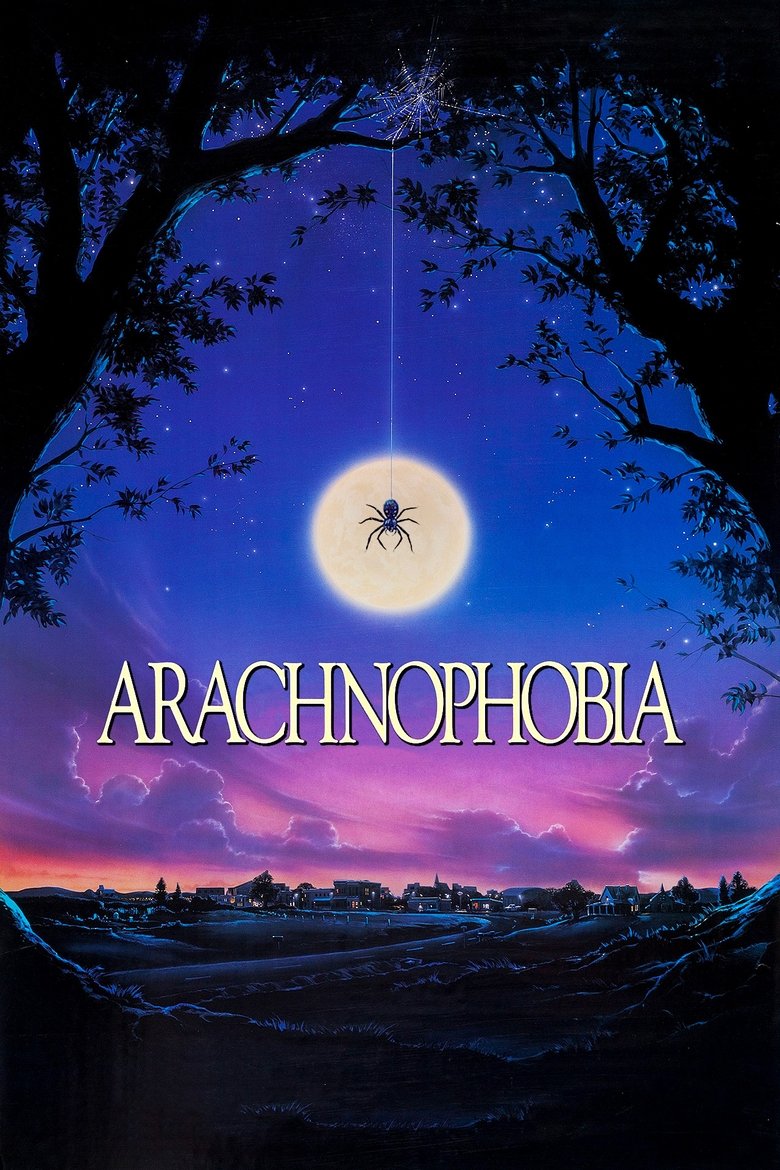
Arachnophobia
“Eight legs, two fangs and an attitude.”
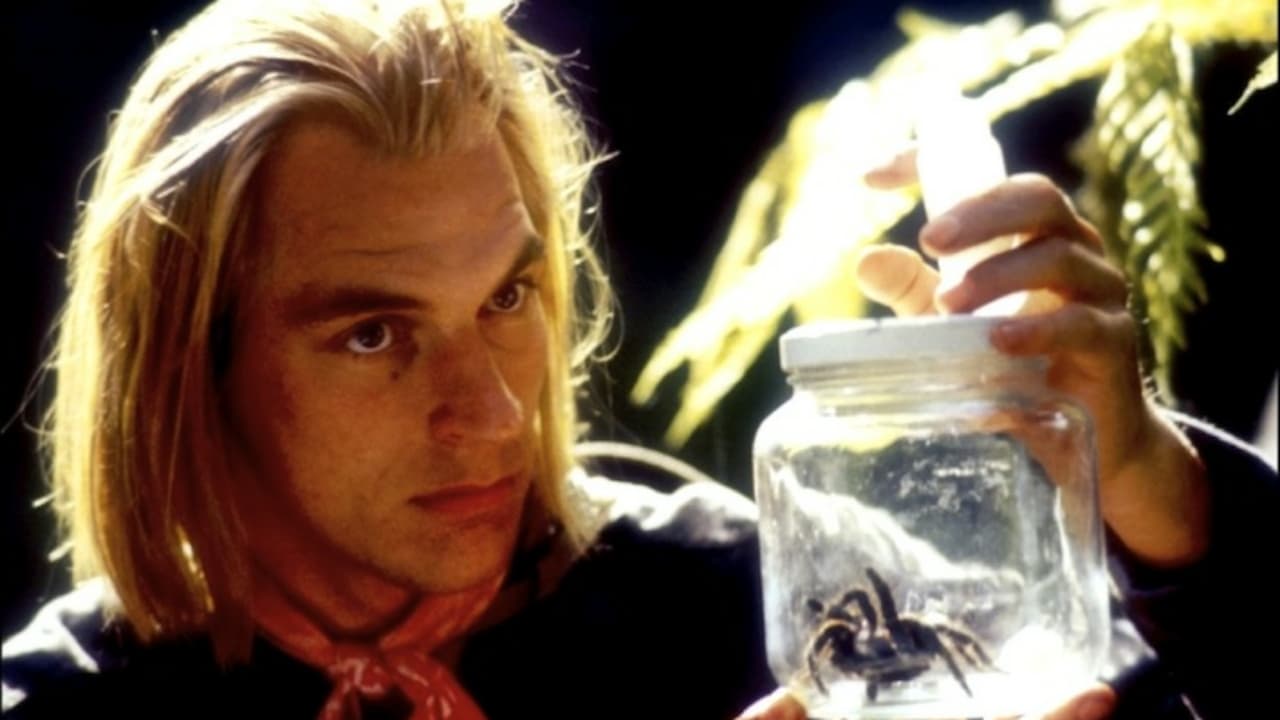
A large spider from the jungles of South America is accidentally transported in a crate with a dead body to America where it mates with a local spider. Soon after, the residents of a small California town disappear as the result of spider bites from the deadly spider offspring. It's up to a couple of doctors with the help of an insect exterminator to annihilate these eight legged freaks.
About Arachnophobia
Why Arachnophobia is still worth talking about
You remember the setup immediately: an expedition in Venezuela returns with a body, and an unwanted passenger crawls into a coffin. That one conceit — a tiny, lethal hitchhiker — sends the film tumbling out of the jungle and into the Jennings’ barn, where domestic life starts to feel dangerously porous.
Frank Marshall keeps the picture fleet-footed across its 105 minutes, steering a blend of scares and comic relief through a community that gradually stops trusting its own house. Jeff Daniels is at the centre as Dr. Ross Jennings, the family physician whose new life in Canaima is supposed to be quieter than San Francisco — until the dead crow on his doorstep says otherwise. What makes Arachnophobia worth another look isn’t just the arachnids; it’s how the story folds together family, fear and the business of keeping people safe. The film treats those ideas as a neighbourhood problem, and that gives its scares a kind of domestic, everyday sting.
The idea that sets Arachnophobia in motion
The story opens like a tidy chain of cause and effect. A spider from an expedition makes its way home in a coffin and, via a crow, ends up dead on the Jennings' lawn — a domestic intrusion with a very foreign origin.
Ross Jennings has moved from San Francisco to take over a retiring town doctor’s practice, expecting a calmer pace. Instead, he finds patients dying in ways that don’t add up: a woman collapses and a footballer drops dead shortly after routine checkups, and Ross begins to suspect something else is at work.
Those early mysteries cohere once autopsies reveal bite marks. With Sam Metcalf gone, Ross becomes the town doctor and the weight of responsibility narrows his options: this is now his problem to diagnose, and then to stop.
The movie keeps its premise tight — an invasive species, domestic vulnerability, and a doctor whose role forces him to confront both fear and loss. That focused setup is why the relatively simple idea sustains the film’s mix of comedy and horror.
Why Dr. Ross Jennings matters
Ross Jennings isn’t a dramatic loner or a tough-guy hero. He’s a sensible family physician who has tried to trade the city for a steadier, quieter life — and then inherits a town full of unexplained deaths. That dissonance makes him interesting: his professional duty collides with an ordinary domesticity that’s being slowly eroded.
As the town’s doctor — a position cemented after the elderly Sam Metcalf dies — Ross moves from outsider to the person everyone looks to for answers. It’s a useful dramatic trick: the protagonist is forced to carry the community’s fear and the family’s safety on his shoulders.
The stakes become painfully personal when the infestation turns the Jennings’ own home into a battleground. Ross falling through the floor into the wine cellar — the spiders’ second nest — turns the abstract threat of 'infestation' into something immediate and claustrophobic.
In the end, the family’s decision to return to San Francisco after surviving the ordeal underlines what mattered to Ross all along: his professional life is wrapped up with protecting the people he loves. That domestic thread keeps the film grounded when the plot gets overtly monstrous.
Arachnophobia has more on its mind than the plot suggests
On the surface it’s a creature movie: a foreign species turns up and bad things happen. Below that, though, is a movie thinking about family — not as wallpaper, but as something that can be attacked and defended. The Jennings family are not background props; their safety is the engine that makes Ross act.
Mortality sits beside lifespan as a quieter concern. The crossbreeding of the Venezuelan spider with a local house spider and the short-lived soldiers the film describes turn the creatures into a ticking problem, a species lifecycle that threatens to outrun human reaction time.
Home and safety is where the film lands its emotional punches. The barn and the wine cellar — places you’d expect to be private or secure — become invasion sites, which changes what 'safety' means in a small town. That displacement gives the horror a domestic sting: you can’t just evacuate emotion the way you evacuate a building. Finally, parental protection and fear are threaded through the action. Ross’s decisions are not abstract heroic gestures; they’re responses to the idea that someone has to keep the people under their care alive. The film's scares are effective because they’re personal, not merely monstrous.
Arachnophobia could not belong to any other decade
Released in 1990, Arachnophobia arrives at the very start of the decade and wears that timing lightly but distinctly. It’s a studio-picture approach to genre: compact, mix-and-match and engineered to pull both laughs and gasps.
That positioning — a mainstream comedy-horror with the production values and running time that aim for broad audiences — feels of its moment. The film is designed as a communal viewing experience: something families could go to together and then talk about.
Being of the 1990s also means the movie trusts a straightforward premise to carry it. There’s no need for heavy irony or genre deconstruction; the picture sets up a problem, rallies a cast of town characters and lets the conflict play out in a familiar, satisfyingly paced way.
What has aged — and what hasn't
Some elements of Arachnophobia still land: the core family thread and the way the threat invades everyday spaces feel tidy and honest. The film makes the horror local and human, so the suspense often works regardless of the decade.
The premise itself—an expedition returning a dangerous creature hidden in a coffin—remains an economical, creepy engine. It’s the kind of plot turn that still makes you lean forward: a small foreign element slipping unnoticed into home life.
Where the movie shows its age is mostly in tone rather than story. Certain genre rhythms and the film’s broad population of town characters are stamped with a 1990 production sensibility, which will either charm or feel dated depending on your tolerance for that era's studio pacing.
In short: the emotional seams — family alarm, the erosion of home as sanctuary and the sheer animal dread of being cornered — survive the years. The final post-rescue beat, where the Jennings family prefers an earthquake to the memory of deadly spiders, still nails the film’s particular mix of relief and gallows humour.
Why Arachnophobia still matters
People who remember Arachnophobia tend to remember the narrative shorthand: a scientific expedition, a hidden spider in a coffin and a small town forced to reckon with a very unnatural problem. Those beats are simple and memorable in the way a good high-concept idea is: easy to retell, quick to picture.
The film also keeps a long list of town characters on hand — the mortician, the sheriff, the coroner, the entomologist and the wary locals — which lets it hop between comic set pieces and genuine procedural puzzling. That community texture is part of why the story feels lived-in rather than purely schematic.
There’s a biologist’s thread running through the plot: the discovery in Venezuela, the mating with a house spider and the short-lived soldiers that make the infestation both urgent and theoretically solvable. It’s a tidy way to turn a small problem into a town crisis. Finally, the ending — the family's return home and the weary preference for an earthquake over spiders — leaves the viewer with the film’s specific tone: relief, a touch of black humour, and the recognition that 'home' is a fragile thing worth defending.
Does Arachnophobia still hold up?
Yes — if you come for a compact, character-forward creature picture that treats domestic life as the real battleground. Frank Marshall keeps the focus on a doctor and his family, and that personal centre is what still makes the film tick.
If you’re sensitive about spiders, some sequences will still do their job. But the movie’s lasting usefulness isn’t just the jump-scares; it’s the way it frames fear as a neighbourhood problem that demands practical, sometimes painful, solutions from ordinary people.
On a rewatch, expect some 1990s studio-ness in tone and pacing. That won’t bother every viewer; for many it adds to the film’s straightforward charm. The core themes — family, home, mortality — remain clear and carry emotional weight regardless of how effects-age.
So yes: watch it. Sit with the Jennings, follow Ross as he realises this is no ordinary medical mystery, and enjoy a creature movie that remembers to make its scares mean something about protecting the people you love. And when the credits roll, you might well agree with them — an earthquake is preferable to anything you brought back from an expedition.